





 Portuguese
  English
  Spanish
  6 min of reading
  0 comments


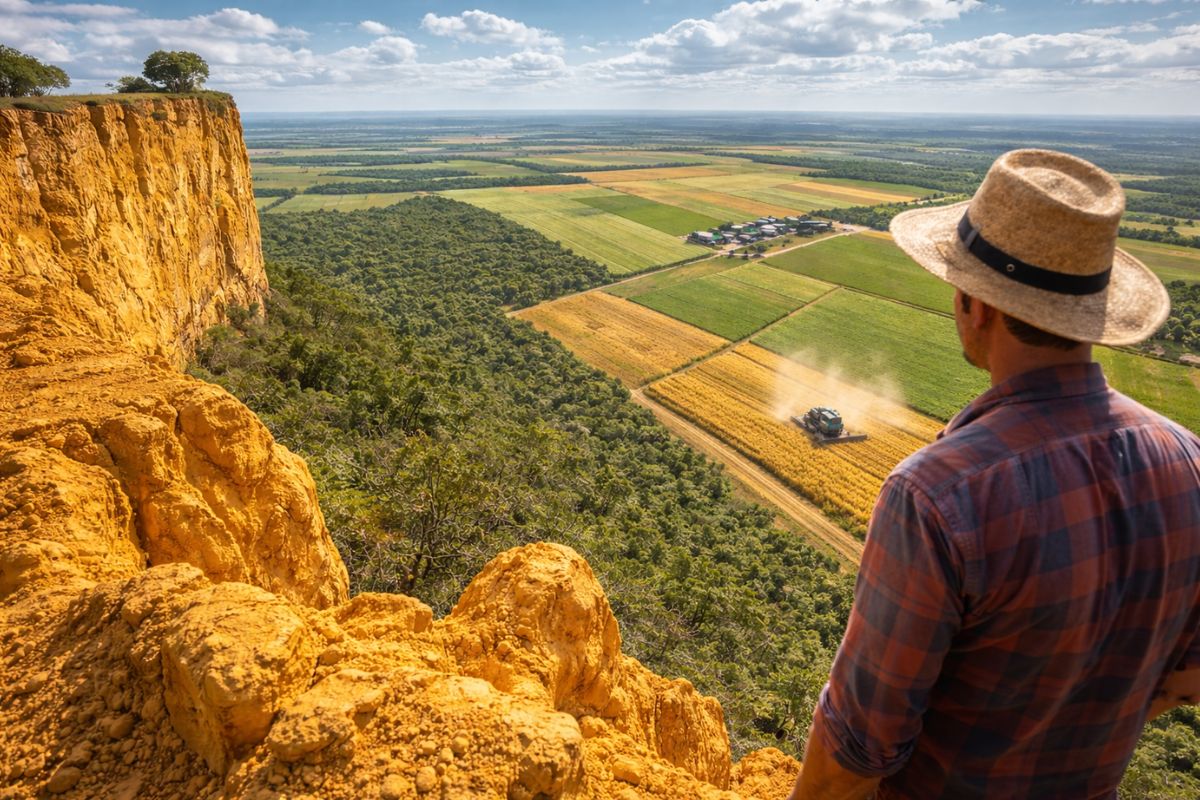
The yellow clay with up to 80% clay content is located on a plateau of 1 million hectares in the region of Dom Eliseu and Ulianópolis in Pará, and producers who adopted no-till farming with straw are increasing their yields from 60 to over 80 sacks of soy per hectare and are managing to grow a second corn crop where it was once considered impossible.
At the top of a plateau in northern Pará, at an average altitude of 300 to 350 meters, there is soil that is changing the agricultural history of one of the poorest regions in Brazil. According to the Noticias Agricolas – Official portal, the yellow clay in this area is a latosol with 60% to 80% clay content covering an area of approximately 1 million hectares between the municipalities of Dom Eliseu and Ulianópolis, and it is proving to be one of the most fertile soils in Brazil’s new agricultural frontier. Producers who previously harvested once a year are now harvesting twice, and some even three times.
What makes this yellow clay so special is the combination of natural fertility with climatic challenges that are being overcome through technique and persistence. The region has only six months of rain, with an extremely short planting window, and for decades producers left the land idle for eight months a year. Now, with no-till farming and soil cover, experts and farmers are extending the productive period and transforming this plateau of yellow clay into an agricultural hub with the potential to rival traditional regions of the cerrado.
What is yellow clay and why is it so different from the rest of Pará
The northern region of Pará is known for sandy, low-fertility soils that require heavy investment in correction to sustain grain agriculture. The plateau of Dom Eliseu is the exception.
-
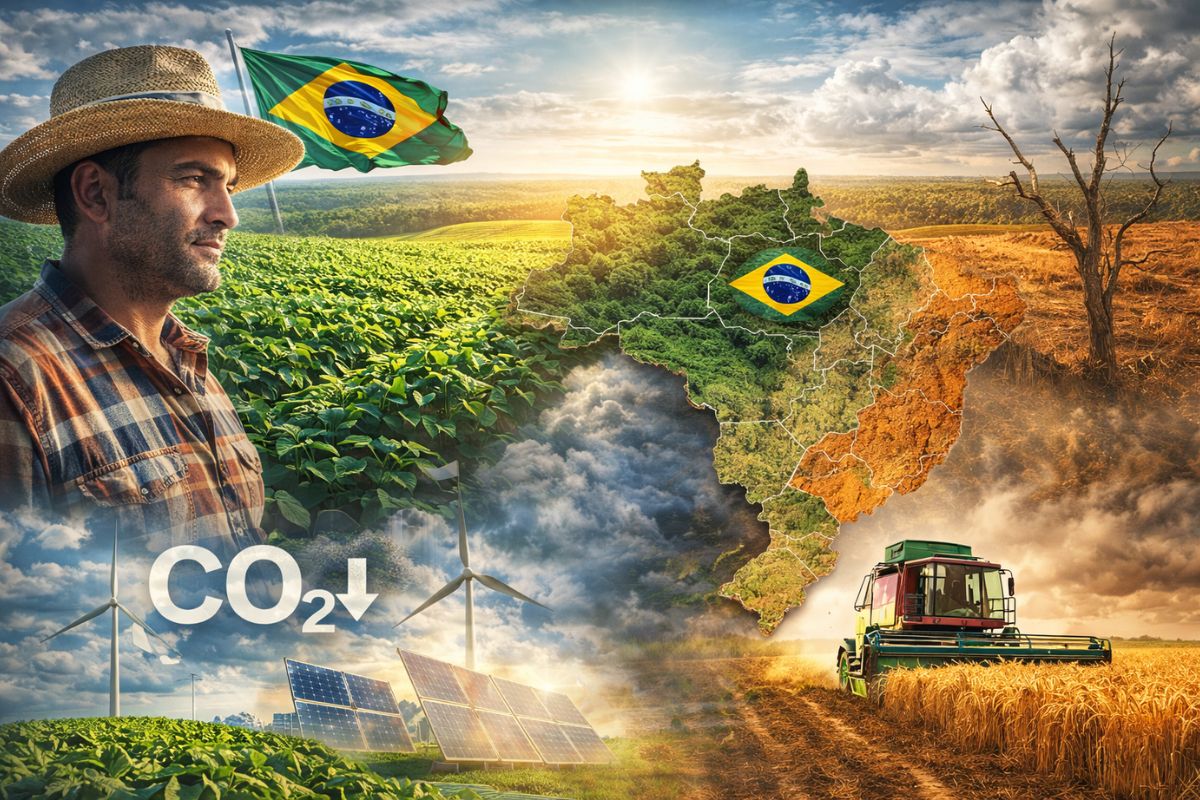
Brazil has avoided deforestation of 50 million hectares in the last three decades thanks to increased productivity in the field, and now low-carbon agriculture wants to prove that the country is part of the climate solution and not the problem.
-
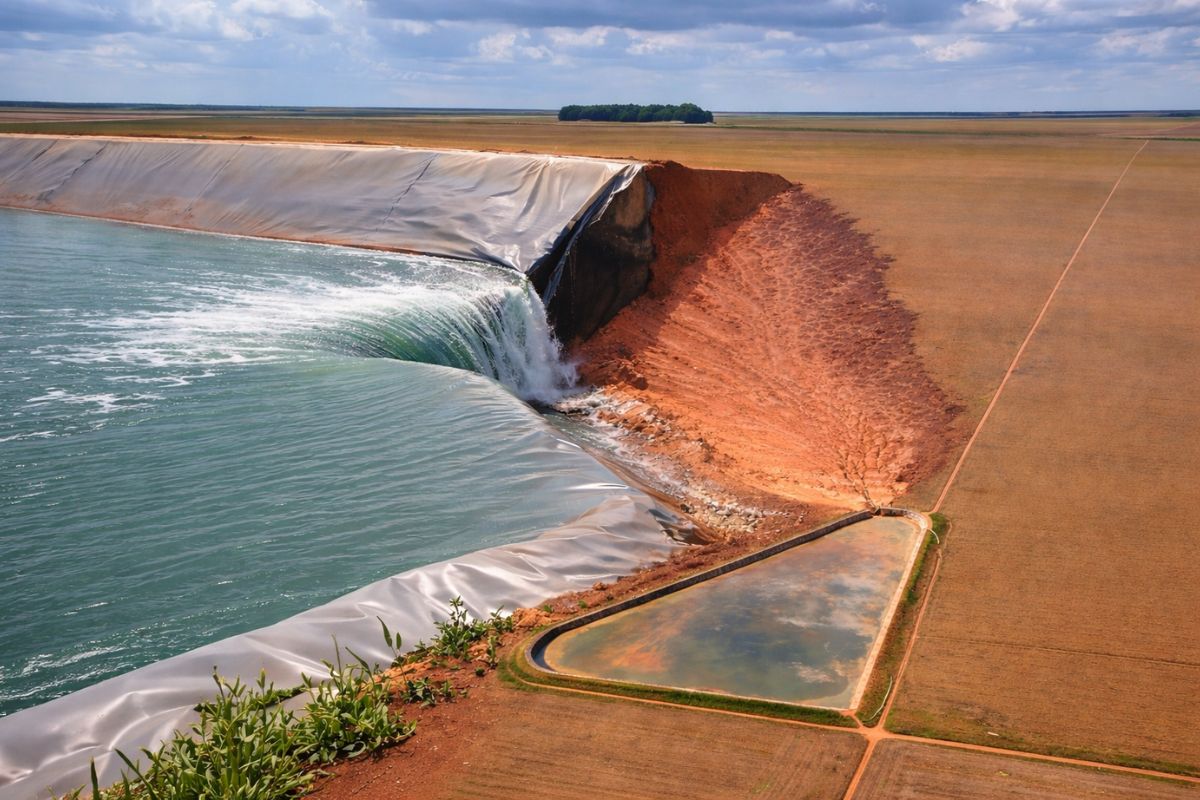
Irrigation pond breaks on a farm in southern Piauí, leaving the reservoir empty and a trail of damage; nearly 1 billion liters flood a soybean field, causing losses, with no injuries reported, and the causes still officially unknown.
-
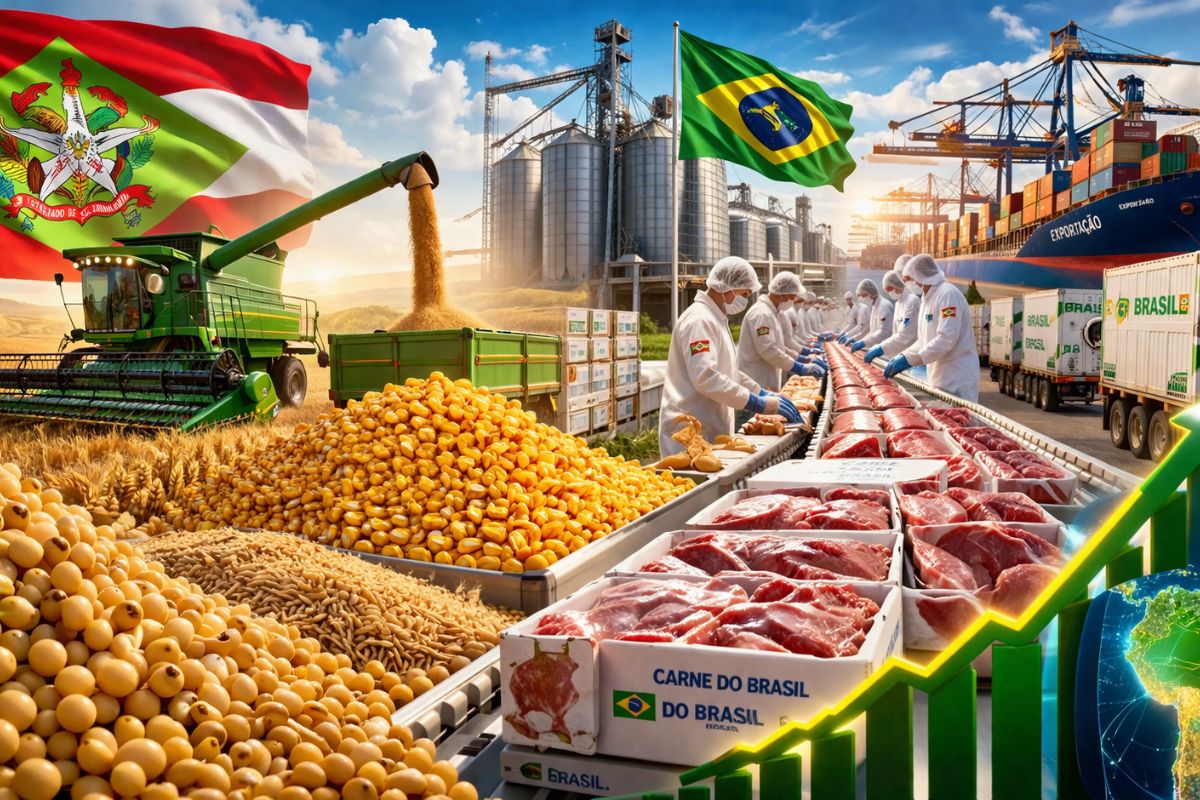
Santa Catarina harvested 7.85 million tons of grains and exported 2 million tons of meat in 2025: a growth of almost 6% in the food industry, which is four times higher than the national average and drives the entire Brazil.
-
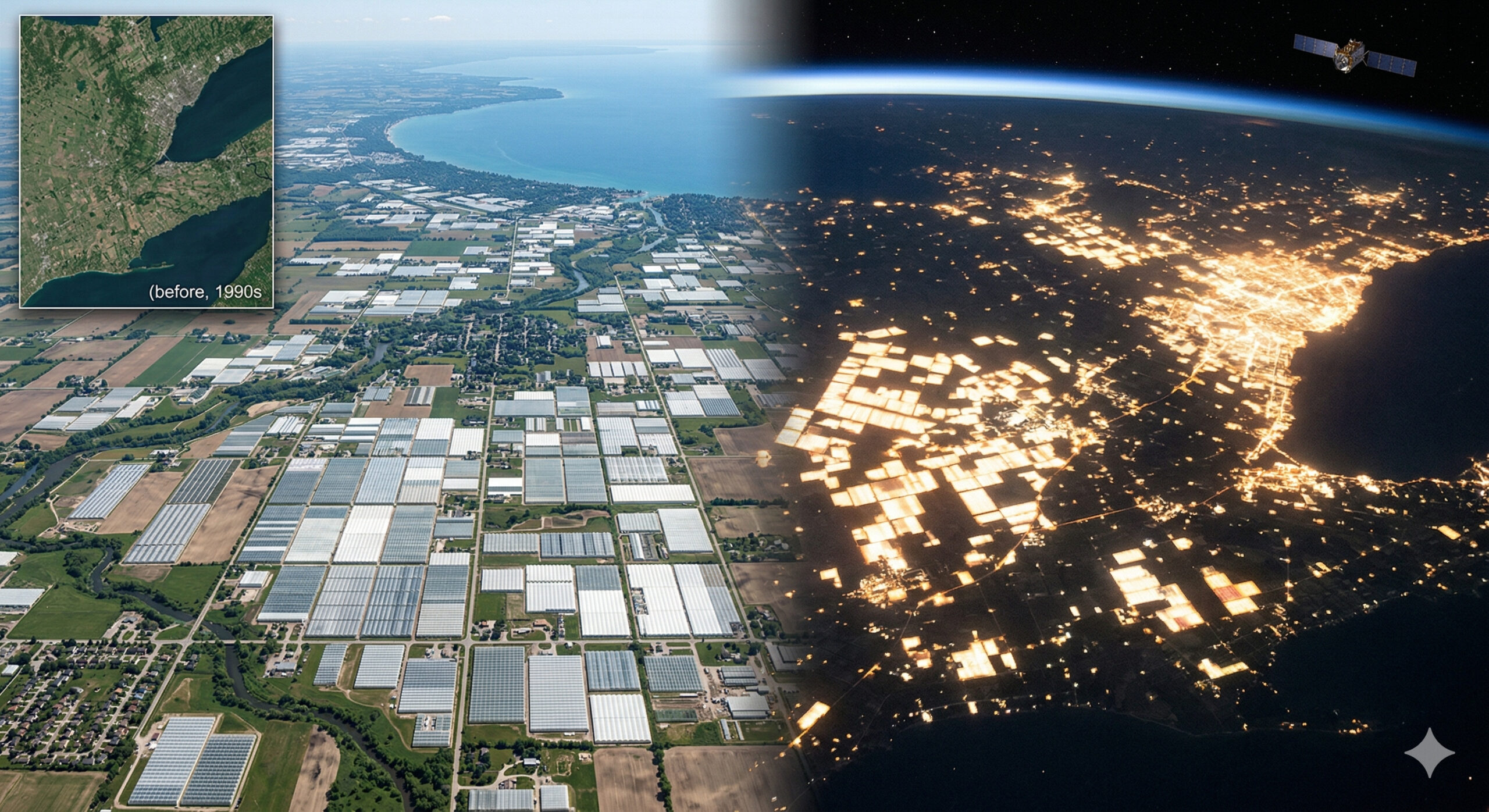
The expansion of greenhouses in southern Canada has become so intense that it has changed the appearance of the soil and even the nighttime glow of the region, transforming Ontario into one of the most visible agricultural hubs in North America from space.
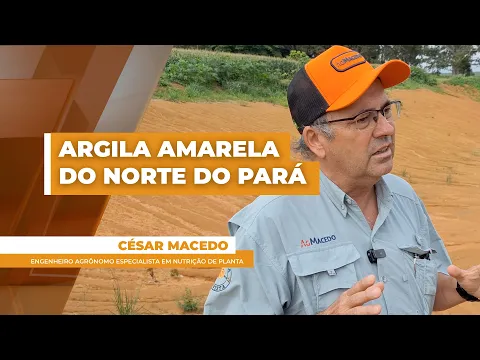
The yellow clay that covers this area is a latosol that technicians classify as LA-6, with clay content ranging from 60% to 80%, a completely different profile from what is found in the lowlands around.
This soil has naturally good conditions for agriculture. Without much treatment, the yellow clay already yields between 60 and 65 sacks of soy per hectare.
With proper fertilization, productivity increases to 70 to 75 sacks, and with management techniques such as no-till farming and straw cover, several producers are already exceeding the mark of 80 sacks per hectare.
It is a soil that responds well to investment, in a region that still has plenty of room to grow; much of the area is underutilized pasture that can be converted into grain crops.
The biggest challenge for those planting in the yellow clay of northern Pará
The fertility of the yellow clay is only half of the equation. The region’s climate imposes a severe restriction: rains begin in November, consolidate in December, and end at the end of April.
There are five months of effective rainy season, with an extremely short planting window for those who depend on soil moisture to sow. Without technique, the producer plants in December and harvests only one crop, spending the rest of the year looking at idle land.
Plant nutrition specialist César Macedo, who has worked in the region for 26 years, explains the bottleneck: “We have a very short planting window and a very short harvest period. This is a complicating factor.”
In addition to the rainfall regime, the region faces persistent cloud cover during the harvest season, which reduces sunlight, and plants need sun to complete their cycle. The combination of little rain at the beginning, a lot of cloud cover at the end, and only four months of truly productive period made the second crop almost impossible in the yellow clay of northern Pará.
How no-till farming is breaking the barrier of the second crop in yellow clay
The solution found was to advance the planting to fit a second crop before the rains end. But planting earlier requires soil moisture, and in November the rain is still weak.
The technique that made this advancement possible was no-till farming with straw cover: the straw acts as a film over the yellow clay that retains the little moisture from the first rains, allowing sowing with only 20 millimeters of precipitation.
The result completely changes the producer’s calculations. Those who previously harvested one crop of soy with 60 sacks now harvest soy with 80 sacks and still plant corn or sorghum in sequence. “First soy, then corn with brachiaria, and then cattle. In theory, we would do three crops.”, explains César Macedo.
There are already producers in the region who can complete this triple cycle of soy, corn, and livestock in the same year, on the same yellow clay that just a short time ago only supported one harvest. About 80% of the producers on the plateau have already adopted no-till farming.
The logistical advantage that the yellow clay of northern Pará offers

In addition to soil fertility and productive potential, the region has a competitive advantage that many Brazilian agricultural frontiers lack: proximity to an export port.
The plateau of yellow clay in Dom Eliseu is only 350 kilometers from the port of Barcarena, in Pará, a drastically shorter distance than that which producers from Mato Grosso or Goiás travel to market their harvests.
This proximity reduces freight costs, which is one of the biggest bottlenecks to agricultural profitability in Brazil. For a producer who harvests two or three crops a year on fertile yellow clay and pays little freight to reach the port, the financial equation is extremely favorable.
The region still needs improvements in infrastructure; the roads are poor and need paving, but the economic potential is evident. “Where soy goes, progress comes, wealth comes,” summarizes the local sentiment.
The future of the yellow clay plateau and what is needed for the potential to be realized
The region is in the third phase of its productive history. In the 1970s, there was timber extraction. Then, livestock farming. Now, grain agriculture is taking the lead over the yellow clay of the plateau.
There is still a lot of underutilized pasture area that can be converted to crops, improving the soil with grains before receiving cattle again in an integrated system. This is not about opening new forest areas, but converting existing pastures for more productive use.
What is lacking, according to specialists working in the region, is the dissemination of technical knowledge. Some producers still resist no-till farming due to a lack of information, preferring the traditional tillage method that limits the productivity of yellow clay and makes the second crop unfeasible.
“We need to pave this road for future generations”, said César Macedo at the end of the field visit, a phrase that works both literally and figuratively.
The yellow clay plateau of northern Pará has soil, has a defined climate, has proximity to a port, and has people willing to work. What is missing is infrastructure and knowledge for the potential to turn into distributed wealth.
Did you know about this region of yellow clay in northern Pará? Do you think it can become one of Brazil’s major agricultural frontiers? Let us know in the comments.







Seja o primeiro a reagir!