





 English
  Francês
  Alemão
  Italiano
  Japonês
  Norueguês
  Portuguese
  Spanish
  4 min of reading
  0 comments


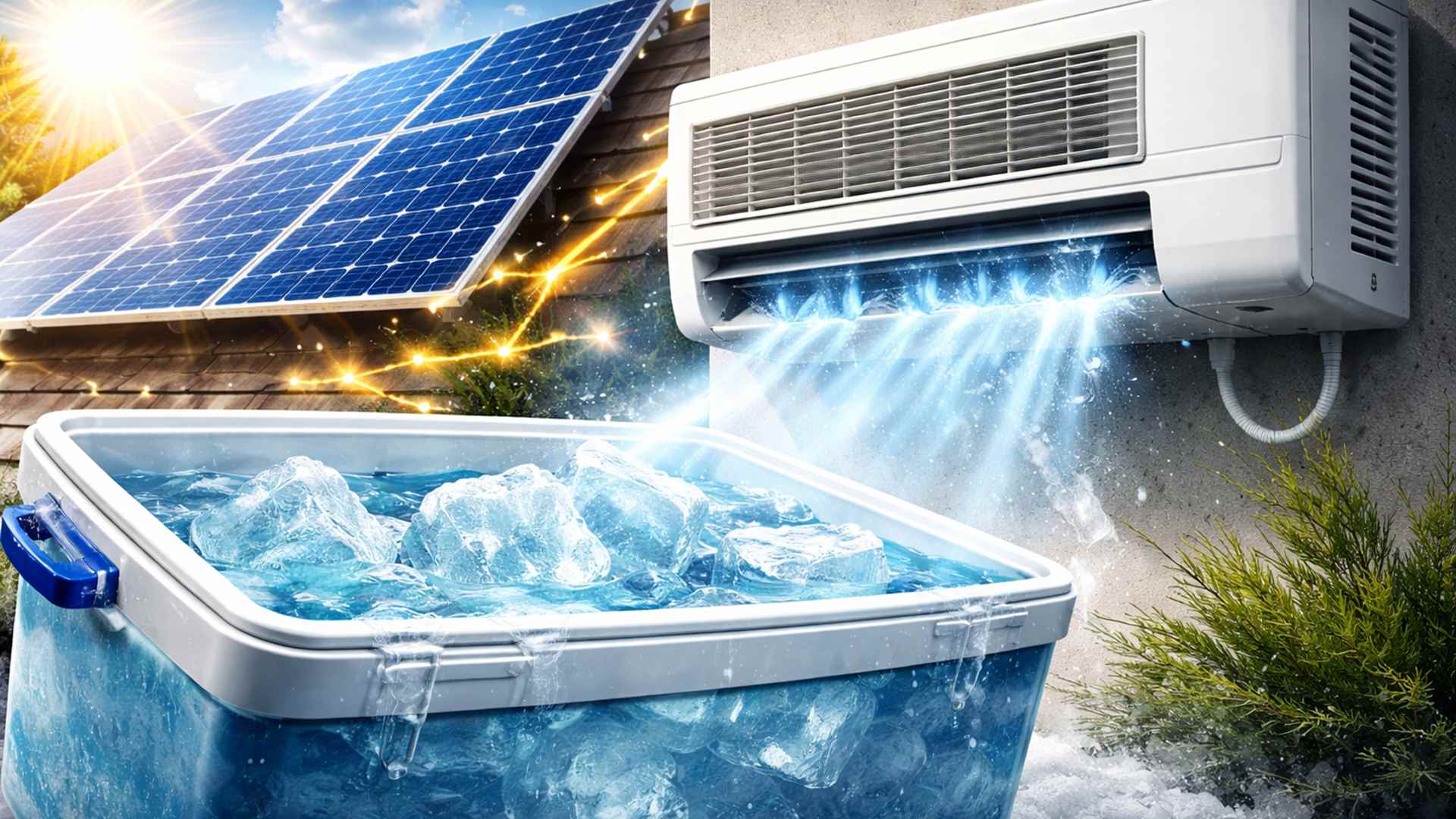
A solar air conditioning system built with three panels, battery, compressor, and a bucket of water managed to freeze ice during the day and then release cooling for hours, pointing to an off-grid alternative to cool small spaces
A homemade solar air conditioning system created by a resident of Florida managed to operate off the electrical grid by freezing 2.5 MJ of ice and then using that stored cold to generate about 700 W of effective cooling per hour. The proposal combines solar panels, battery, compressor, and a separate thermal circuit to cool spaces with nearly zero electricity consumption at the point of use.
Air conditioning system uses solar energy to freeze water
The project starts with three standard 100-watt solar panels installed on a vehicle. They send power to a charge controller, responsible for managing the charging of a 35 amp-hour lead-acid battery and preventing overcharging.
When this battery reaches full charge, a microcontroller activates an inverter. This equipment converts the direct current from the battery into alternating current to power the compressor of a miniature refrigerator.
-
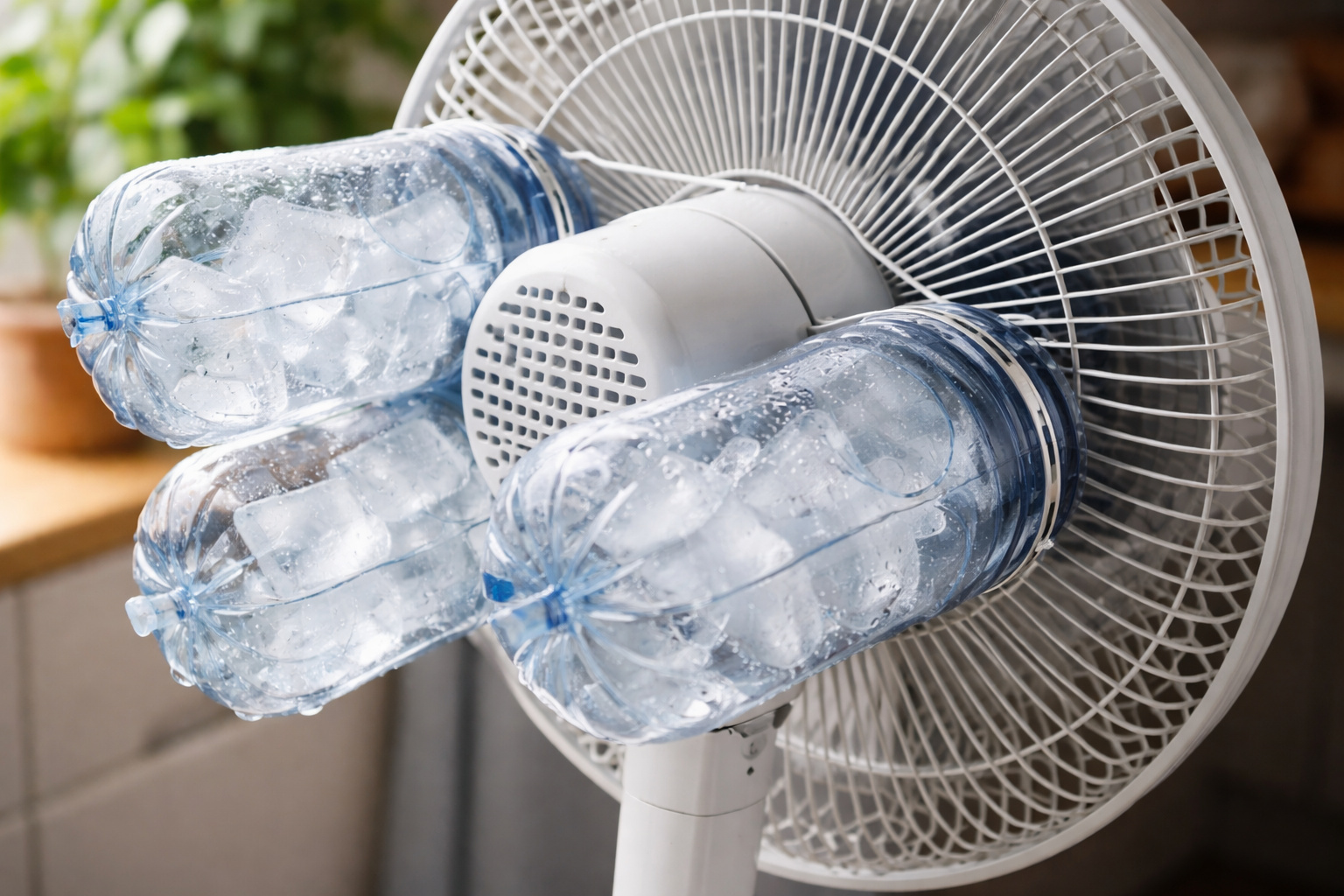
A trick with a fan and a PET bottle goes viral in the extreme heat of 2026 and promises to cool the environment while using almost no electricity.
-
A 176,000-hectare farm in the Northeast is up for sale for R$ 1.2 billion, featuring a runway, fuel station, river, schools, and warehouses, and has become a phenomenon on social media due to its size, which surpasses that of Brazilian capitals.

-
Finding a 3.9 mm larva of the lionfish in the Amazon raises maximum alert and indicates that the invader may already be reproducing in the region.

-
On a tiny island of 6.3 hectares, Mitsubishi created a city for over 5,000 residents, sustained by underwater coal mining, until the project’s collapse left ruins that still impress Japan.


The compressor works with refrigerant R600, also identified as n-butane, in a sealed closed-loop system. Its function is to remove heat from a bucket with 2 gallons of water, surrounded by foam panels about 1 inch thick and fiberglass insulation.
Over several hours under the strong Florida sun, the system cools the water until it turns into a solid block of ice. This freezing stores approximately 2.5 million joules of thermal energy inside a common plastic container.
The insulation reduces the return of heat to the system at a rate of about 7 to 8 watts. As a result, the ice can remain frozen for several days with minimal loss, easily exceeding the cooling needs of a single night.
How the air conditioning system releases cold on demand
Once the ice is formed, a separate glycol circuit comes into operation. A small pump circulates a mixture composed of 50% water and 50% ethylene glycol through 6 meters of copper tubing coiled inside the frozen block.
As it travels through this tube, the fluid absorbs the cold stored in the ice. It then goes to a standard automotive radiator equipped with a small fan, which blows the cooled air into the surrounding space.
The pump and fan consume only a few watts. Because of this, the battery can keep them running even after sunset, without requiring significant energy expenditure.
In practical tests, the system significantly cooled the cabin of a truck for several hours on a hot day. According to the project description, this result served to validate the concept under real usage conditions.
The discharge capacity was approximately 700 watts of effective cooling per hour. The performance was described as comparable to that of a small window air conditioner, but with nearly zero electricity consumption at the point of use.
Why ice becomes the center of the proposal
The basis of the idea lies in using ice as a form of thermal storage. According to the system description, 1 cubic meter of ice can store about 93 kilowatt-hours of cooling capacity.
This volume was presented as comparable, in terms of energy, to a large set of chemical batteries.
The difference, according to the project, is that ice offers this capacity at a fraction of the cost and without degradation over the charge and discharge cycles.
The explanation is that water does not lose its latent heat of fusion, regardless of how many times it freezes and thaws. This allows the process to be repeated without the performance loss typical of chemical storage systems.
In this arrangement, the most energy-demanding step is concentrated at the moment when the compressor freezes the water. This process occurs precisely during peak solar generation periods, when the panels could reduce power or even discard excess energy.
The stored cold is released passively later, when cooling becomes necessary. Thus, the cooling load is transferred to the night and early morning without relying on the electrical grid.
Structure was designed to enhance usability
The architecture was described as easily scalable. Larger water reservoirs and the addition of more solar panels could proportionally increase the cooling production.
According to the system’s creator, 1 cubic meter of ice would already be sufficient to provide cooling for a small house. The proposal was also noted as particularly suitable for cabins, trailers, and structures isolated from the electrical grid.
The project uses common commercially available parts, including solar panels, battery, compressor, copper piping, and radiator. The microcontroller, in turn, automates the compressor cycle based on voltage, protecting the battery and seeking to maximize freezing time.
The experiment description also highlights the weight of air conditioning in global electricity consumption. Today, this use accounts for about 10% of global electricity demand, in a scenario that, according to the text, continues to expand rapidly.
In light of this situation, the system developed in Florida was presented as a functional off-grid alternative. The proposal combines solar generation, thermal storage in ice, and controlled release of cold to provide cooling when it is most needed.








Seja o primeiro a reagir!