






 Portuguese
  Spanish


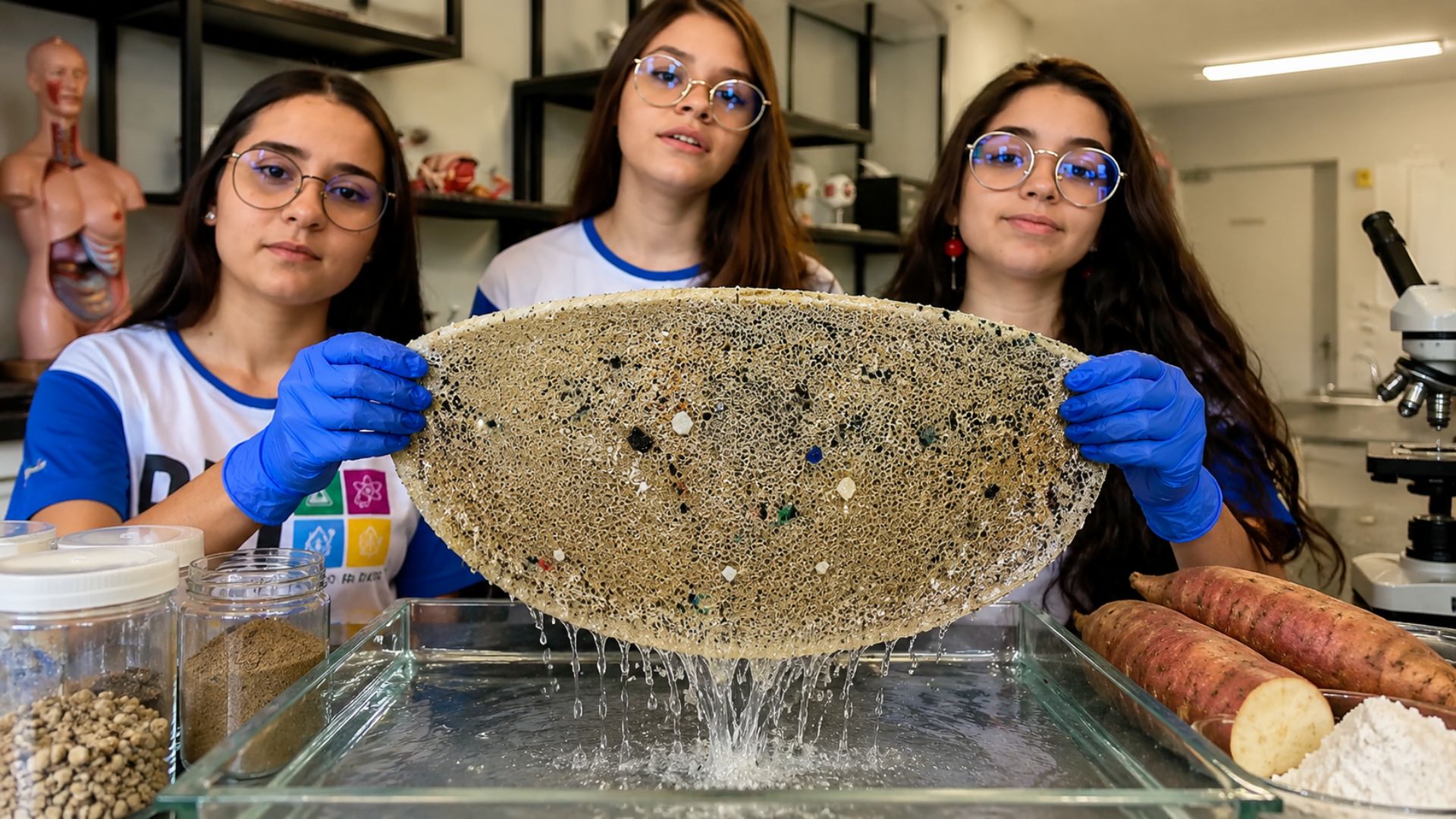

Students from Campina Grande developed an experimental membrane with montmorillonite clay and sweet potato starch to retain microplastics in water, in an award-winning project at Febrace and still in testing phase before possible application in treatment systems.
Three students from SESI School Prata Unit, in Campina Grande, Paraíba, developed an experimental microfiltration membrane to retain microplastics present in water, using montmorillonite clay and starch, including starch extracted from sweet potatoes.
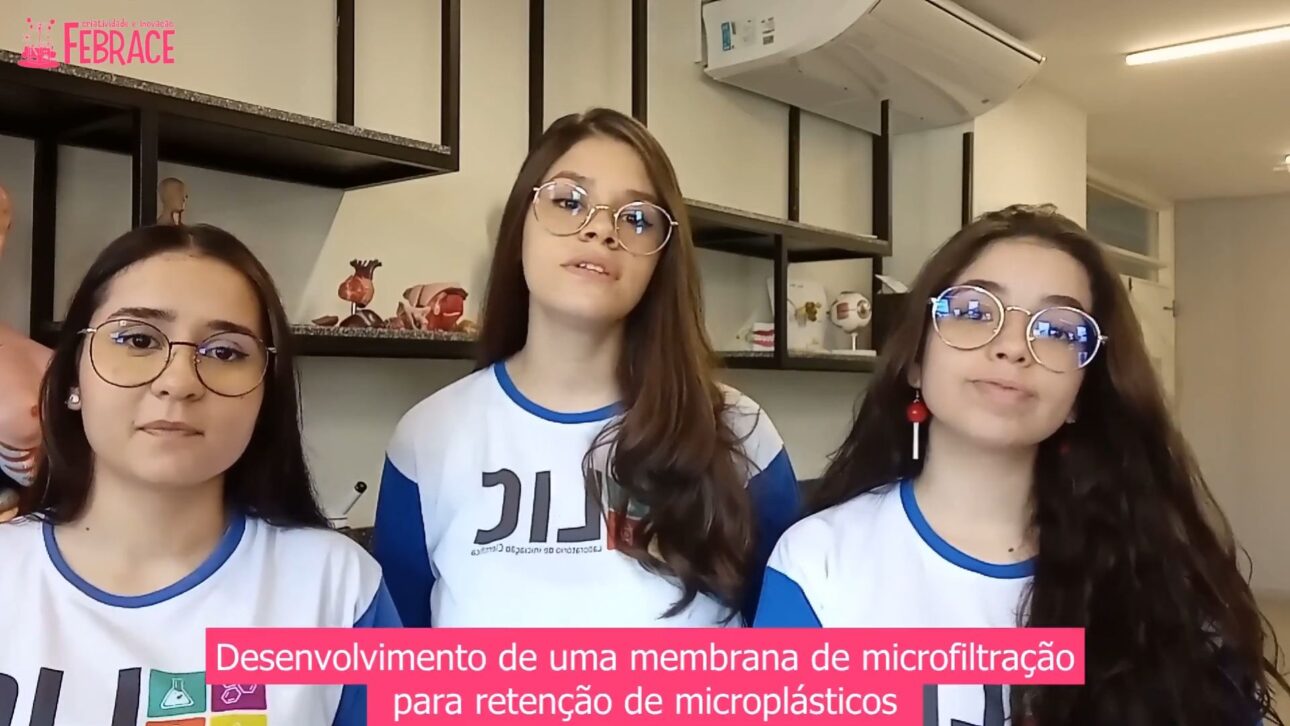
Called M-Plasfil, the project was a finalist at Febrace 2023 and received an award in the Engineering category, with a proposal aimed at filtering plastic particles too small to be seen with the naked eye.
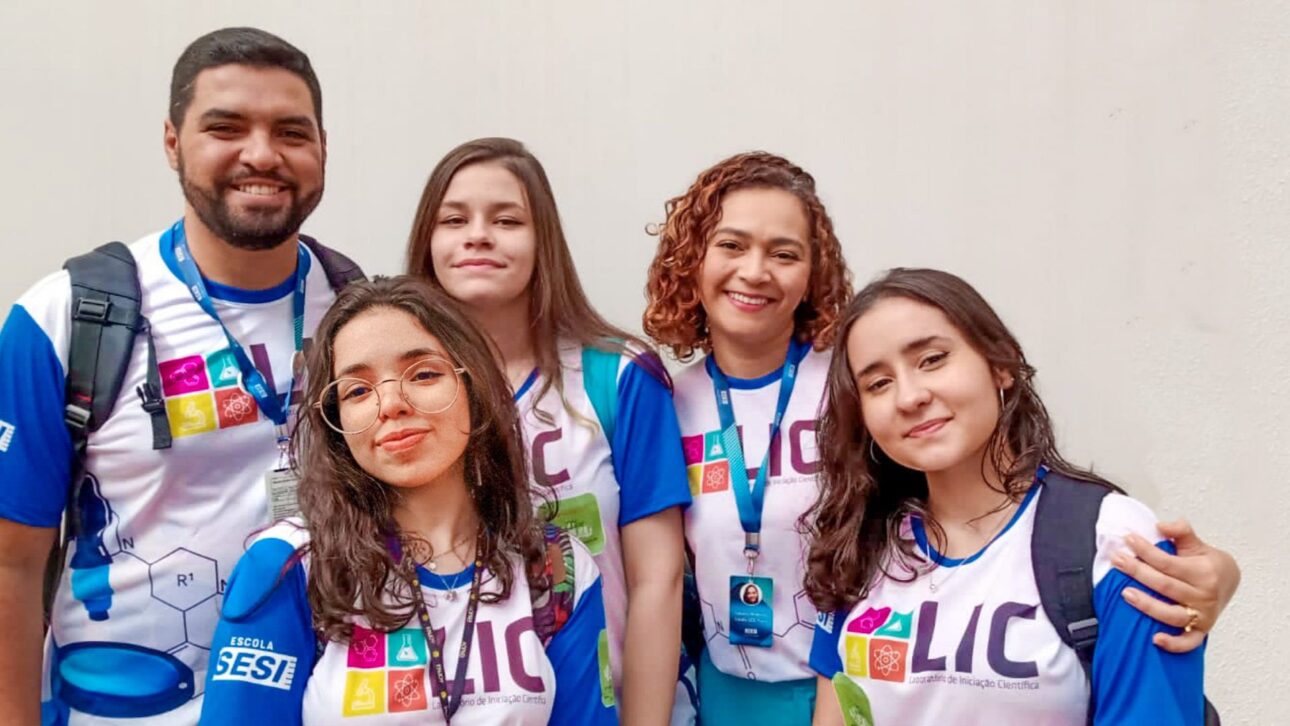
The research was conducted by Maria Helena Dantas de Lima, Maria Luiza Souza Dantas, and Maria Gabriely Félix de Siqueira, under the guidance of Eduardo Adelino Ferreira and Fabiana Medeiros do Nascimento Silva.
-
Couple buys a plot of land without running water in Australia and, while clearing an old gold mine, removes up to 50 tons of debris, opens a 100-meter tunnel almost 19 meters deep, and transforms the space into an underground cellar to host guests, now included in a house listed for A$ 1.695 million.

-
With more than 15,000 pallet positions, dispatching over 128,000 tons per year, and a real-time control tower, Nestlé establishes in PE a R$ 86 million mega logistics center that integrates Purina, carries out around 10,000 annual deliveries, and reduces service time in the Northeast by up to 96 hours.
-
Ship with a capacity equivalent to 3,500 20-foot containers arrives in Rio de Janeiro and inaugurates a direct maritime connection with the Manaus Free Trade Zone, placing eight Brazilian ports on the same cabotage route.
-
Restorers climb scaffolding in Boston’s oldest church, remove seven layers of white paint, and reveal angels painted around 1730, hidden for over a century in the arches of the temple linked to Paul Revere and the beginning of the American Revolution.


On the official Febrace page, the work appears in the Engineering area, subcategory of Materials and Metallurgy, linked to SESI School Prata Unit.
The main objective was to produce a membrane capable of testing the retention of microplastics and evaluating the filtering viability of the material under experimental conditions.
The proposal used inputs linked to the regional context, such as chocolate B montmorillonite clay and porogenic agents from Paraíba, combined with two types of starch used in the formulations.
Membrane with clay and sweet potato starch
The M-Plasfil was constructed from different formulations, allowing the students to compare the behavior of the samples and seek adjustments in the material’s performance.
This variation in composition was part of the method adopted to improve the membrane before filtration tests with synthetic flow containing microplastics.
After manufacturing, the membranes underwent evaluations of resistance, utility, selectivity, and permeability, stages used to observe the material’s behavior during water passage.
In the tests, the prototype received a synthetic flow with microplastics, a condition adopted by the students to simulate the presence of micropollutants during the filtration system evaluation.
The experimental validation occurred after the flow passed through the membranes, with microscopic observations made to verify the retention of particles in the developed material.
This procedure was described in the abstract presented to Febrace as part of the initial proof of the prototype’s functionality in a laboratory environment.
According to the official project description, the membranes showed high water resistance at different temperatures and validated the action of retaining micropollutants during the tests.
The technology, however, remains in the laboratory phase and still depends on new stages of characterization and testing before any large-scale use.
Microplastics in water and a challenge for sanitation
Microplastics are very small fragments of plastic materials, formed by the degradation of larger waste or released by industrial and domestic activities.
Due to their small size, these particles can circulate in aquatic environments and create additional challenges for water treatment processes.
The concern is also related to the interaction of these particles with other substances present in the environment, as described by the students in the project summary.
In the research presentation, the authors state that harmful compounds can adhere to microplastics in aquatic environments, which increases the relevance of studies on the retention of these residues.
The Paraíba initiative addresses this environmental problem with a solution developed within basic education, with materials evaluated in experimental tests.
Instead of starting from an industrial structure, the research works with accessible materials with the potential for adaptation to studies applied in sanitation.
The chosen focus relates scientific investigation to a concrete demand of the population: the quality of water consumed in homes.
According to the project description, the membrane was designed to retain microplastics present in the water used for household supply in Campina Grande.
SESI School Project Gained National Recognition
In addition to the school stage, M-Plasfil was developed at the Scientific Initiation Laboratory of SESI School and the New Materials Laboratory at the Federal University of Campina Grande.
The information was released by the Federation of Industries of the State of Paraíba and indicates the participation of academic structure in the development of the work.
At Febrace, the project ranked 3rd place in the Engineering category and received recognition from affiliated exhibitions, such as the Scientific Exhibition of Innovation, Technology, and Engineering and the Science Fair of the Potiguar Semi-arid.
With this result, the work became part of the set of awarded initiatives of SESI School of Paraíba in the 2023 edition of the fair.
Febrace registered the project as a finalist under the code ENG-1852, with the title “M-Plasfil: development of membrane for microfiltration and retention of microplastics.”
The official listing also confirms the authorship, guidance, educational institution, and classification in the area of Materials and Metallurgical Engineering.
The award does not turn the membrane into a ready product for treatment plants, but confirms that the prototype has undergone an initial stage of experimental validation.
School scientific projects can present promising initial results, provided that laboratory limitations are maintained in the public description of the research.
Bench Tests Before Reaching Treatment Plants


The summary presented to Febrace informs that the next phases include the use of the Freire method of analysis by FTIR and the validation of the prototype at bench scale.
These steps are intended to expand the characterization of the material and test performance under more controlled conditions before eventual implementation.
The FTIR technique, an acronym for Fourier Transform Infrared Spectroscopy, is mentioned in the project as part of the continuation of the analysis.
In the case of M-Plasfil, this procedure appears as a future step, and not as a result already concluded in the available documentation about the research.
The application in treatment plants, therefore, remains as a subsequent goal and depends on further technical verifications at bench scale.
So far, what is confirmed is an experimental membrane tested with synthetic flow containing microplastics, microscopic observation of the retained particles, and an award at a science fair.
The choice of clay and sweet potato starch places the project in studies on environmental technologies made with materials of regional origin.
By using available inputs and with lower industrial complexity, the research evaluates an initial phase filtration alternative, still limited to tests conducted in the laboratory.
In the educational field, M-Plasfil represents an example of scientific investigation developed in basic education with teacher guidance, experimentation, and public presentation of the results.
The experience of the students from Campina Grande brings together sanitation, materials science, and school innovation around a topic that still requires continuous research.
The project remains in the development phase, with no record of commercial application or operational use in public water treatment systems.
The confirmed stage is the initial validation in a prototype, with plans for new bench tests before any progress towards a broader scale.


