





 Portuguese
  English
  Spanish
 3 min of reading


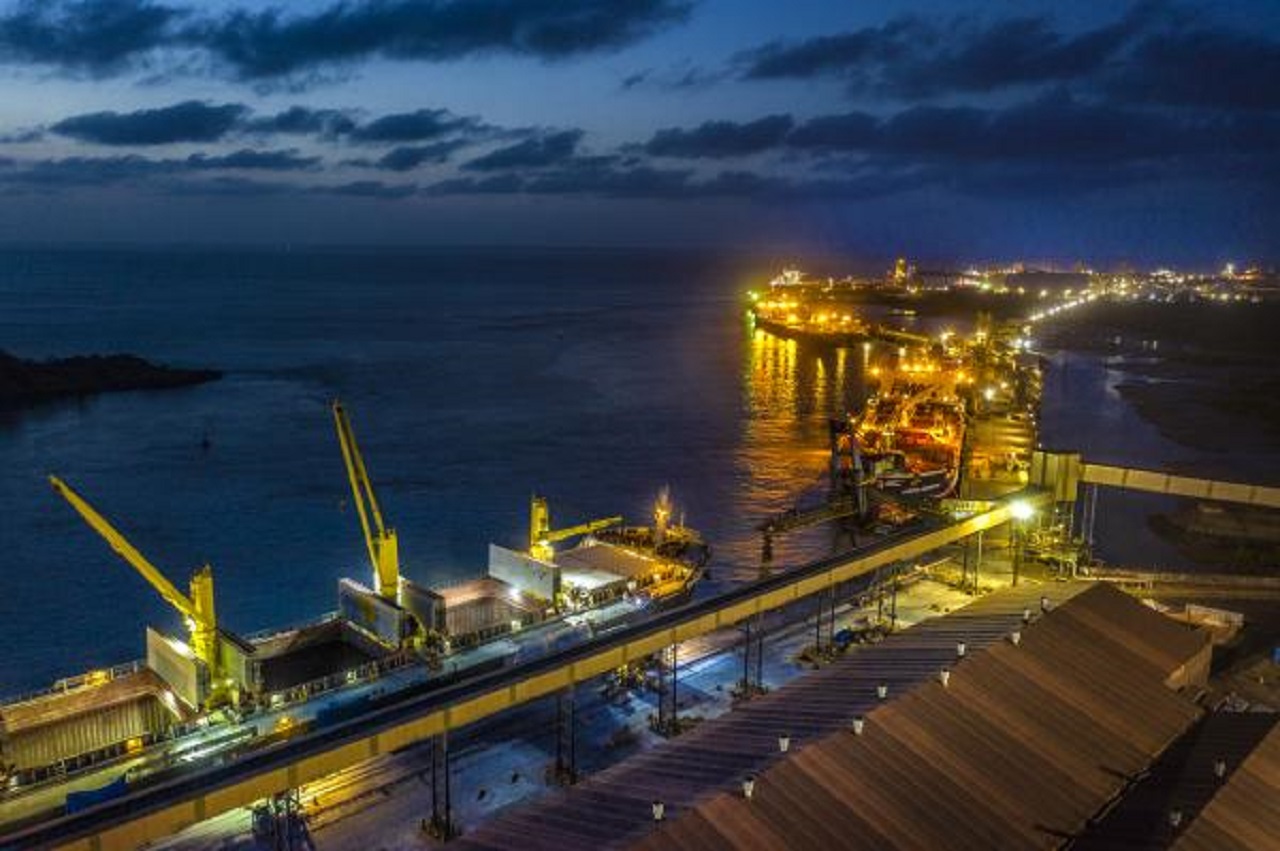
The Itaqui Port Is Expanding Its Liquid Bulk Terminals to Meet Demand from High Grain Production, Which Is Up 5% Compared to Last Year.
The Itaqui Port closed the first quarter of this year with 6.2 million loads handled, representing a 5% expansion compared to the same period last year. The highlight is the volume of soybeans, which expanded by 29%, and corn, which grew by 137% compared to the first quarter of last year. In March alone, the Itaqui Port handled 2.5 million tons of cargo in its liquid bulk terminals, the best March in the history of the Maranhão port. In addition, the high grain production also set a record for soybeans, with 1.48 million tons of the product, surpassing the 2015 mark when 1.43 million tons of soybeans were handled, as well as petroleum derivatives for the domestic market, with 393.9 thousand tons.
Itaqui Port Is Expanding Liquid Bulk Terminals
According to data from the Brazilian Institute of Geography and Statistics (IBGE), Brazil is expected to break a record in grain production this year, with an estimated harvest of 258.9 million tons. The estimate from the Systematic Agricultural Production Survey (LSPA) was released last week.
To meet the transportation needs of this grain production, as well as the entire logistics chain of agribusiness, which also involves the fertilizer and fuel sectors, the Itaqui Port is expanding its liquid bulk infrastructure and making investments in technologies to ensure higher productivity and consolidation for the various production chains being handled.
-
With 74% of companies facing difficulties in hiring, technicians and engineers in renewable energy are becoming scarce in Brazil and are essential to support the expansion of solar, wind, and green hydrogen projects.

-
Europe is trying to create an ammonia-powered marine engine without auxiliary fuel, which could unlock the race for giant emission-free ships. The technology aims to eliminate one of the biggest obstacles to clean maritime propulsion.
-
A 4,500-ton frigate with just over 100 crew members, state-of-the-art radar, and cruise missiles is being touted as the new standard of naval warfare in the 21st century.
-
The first commercial hydrogen-powered ferry enters operation in the U.S., eliminates the use of diesel, uses fuel cells to generate clean energy on board, and transforms San Francisco Bay into a landmark of the new era of emission-free navigation.

With Tegram expanding, which includes, in addition to the VLI terminal, the two berths for simultaneous activity, the expectation is to close this year with a volume greater than 13.9 million tons of grains handled.
9.2 Million Tons of Liquid Bulk Handled
-
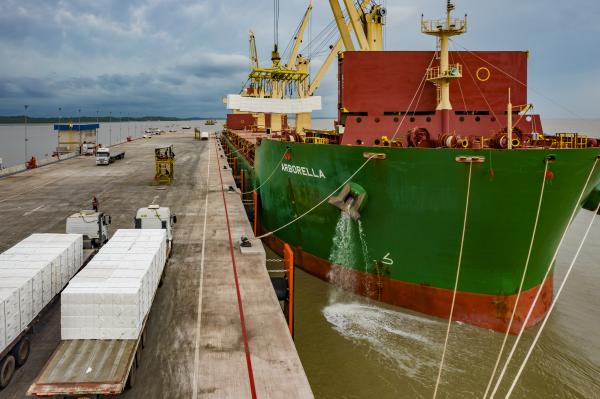
Berth 99, investment by Suzano in the public port, which includes a warehouse in the final stages of completion – image: Disclosure -
In the first quarter of the year, 6.2 million tons of cargo were handled, 5% more than the volume recorded from January to March 2021 – Disclosure
A possible decline in fertilizer imports, which mainly come from the Russia due to the war with Ukraine, is expected to be offset by larger volumes imported from new markets such as Morocco, Canada, Egypt, Tunisia, and Iran.
Throughout this year, the expansion of the liquid bulk terminals is underway to meet the high demand for grain production. Investments will be made in rail access, with the development of the rail pear project (long and medium term).
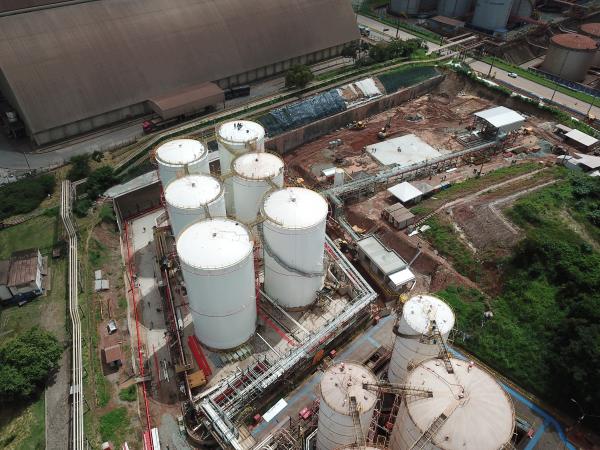
At the beginning of this month, the expansion of terminal 1 of Granel Química at the Itaqui Port was delivered, increasing its storage capacity to 96,000 m², which represents an increase of approximately 30%. The estimate is that 9.2 million tons will be handled.
EMAP Announces Investments of R$ 500 Million
This month, berth 99 was also delivered, an investment by Suzano in the public port, which includes a warehouse in the final stages of completion. In an auction four years ago, the company secured the right to invest and explore the area for 25 years, which can be extended up to a maximum of 70 years.
Therefore, it will be possible to expand the volume of cellulose exports produced in the municipality of Imperatriz. In addition to private investments in the Itaqui Port, EMAP announced a R$ 500 million package to be implemented over the next three years.
The package includes projects in the technology sector, sanitation, quay structure works, and a set of projects to strengthen the port’s cargo handling capacity.









Seja o primeiro a reagir!