





 Portuguese
  English
  Spanish
  3 min of reading
  0 comments


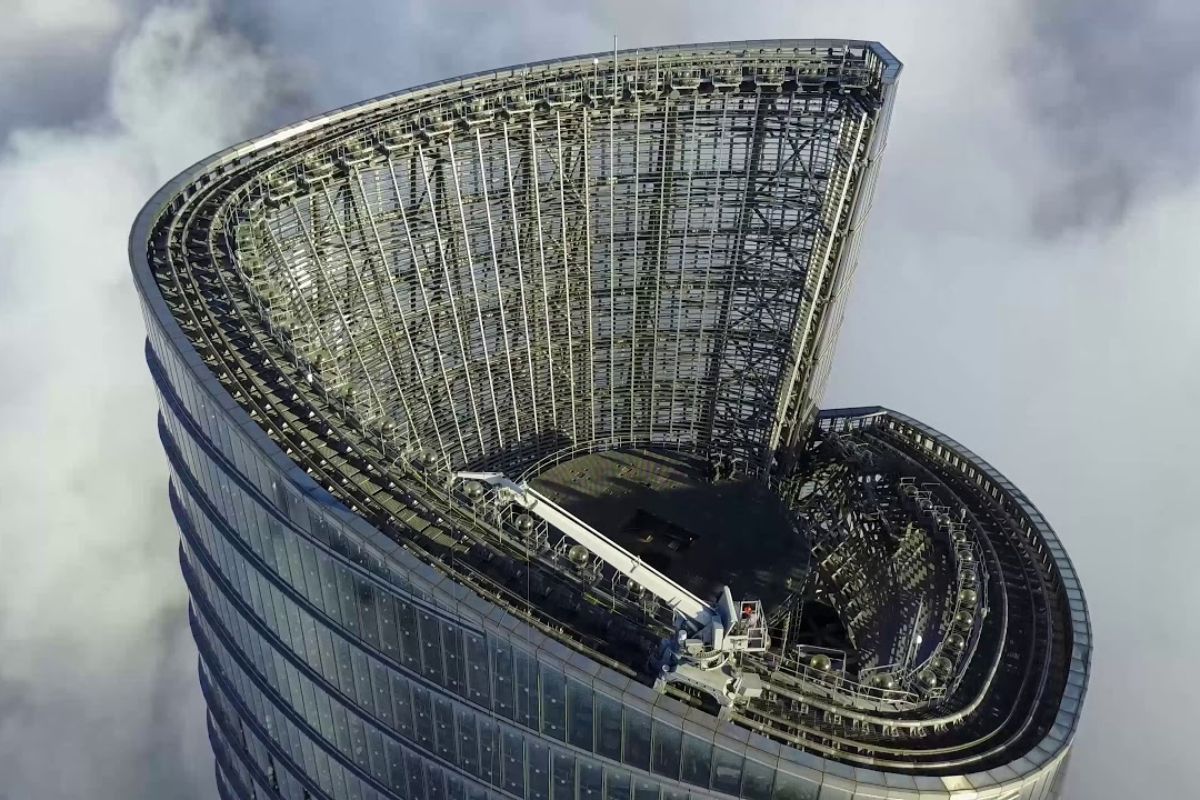
The Tallest Tower in China Reduces Wind Pressure by 24% with Twisted Facade and Houses a 1,000 Ton Mass Damper at the Top to Stabilize the Structure
The tallest tower in China is the Shanghai Tower, at 632 meters and 128 floors, an icon that combines cutting-edge engineering, energy efficiency, and solutions for occupant comfort. The twisted design of the facade breaks the airflow and reduces wind load by about 24%, allowing for a leaner structure and material savings.
At the top, a 1,000 ton tuned mass damper acts as a dynamic counterweight, minimizing oscillations on windy days or during tremors. The result is stability, comfort, and safety, without sacrificing views and public spaces distributed across multiple levels.
How the Twisted Design Brings Down the Wind
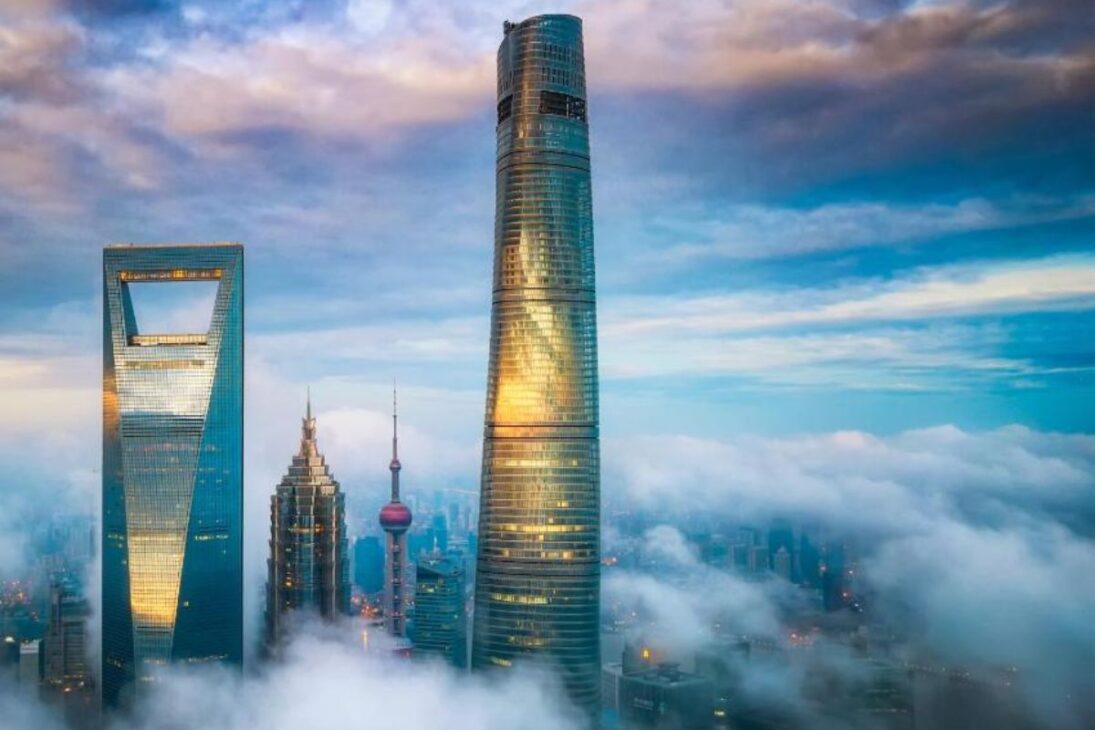
The Shanghai Tower was designed as nine stacked cylindrical volumes wrapped in a glass skin that twists gently as it rises.
-
Material present in millions of kitchens raises global alarm after causing severe lung disease and leading to multimillion-dollar lawsuits in the United States.

-
A person became a millionaire with just a 10-hour video of a lit fireplace on YouTube.

-
The Finnish armored vehicle Patria AMV 8×8 with eight wheels stands out with mine protection, advanced armor, modular design, and high mobility in military operations that redefine modern combat.

-
Workers manually excavate 6 million kilograms of ice to open a cave that allows observation of how a glacier is melting from the inside.

This twisting interrupts vortices and redistributes pressures around the building.
In practice, the shape reduces wind force by approximately 24% compared to a conventional tower of the same height.
This pressure drop allows for less steel and concrete in the superstructure without compromising safety.
Form and function go hand in hand: the architectural gesture is both an aesthetic signature and a structural solution for a 632-meter skyscraper.
The “Brain” of Stability Is at the Top
At the crown, the tower houses a 1,000 ton tuned mass damper.
This is a large weight installed on a system of springs and dampers that moves slightly in the opposite direction of the building’s oscillation.
When the wind pushes the structure, the device responds like an intelligent pendulum and neutralizes part of the movement.
The goal is twofold: to protect the structural elements and enhance human comfort.
At extreme heights, oscillations that would be imperceptible in common buildings can disturb users. The TMD reduces this effect and maintains the feeling of a “solid” floor even hundreds of meters above the ground.
Double Skin, Indoor Gardens, and Efficiency
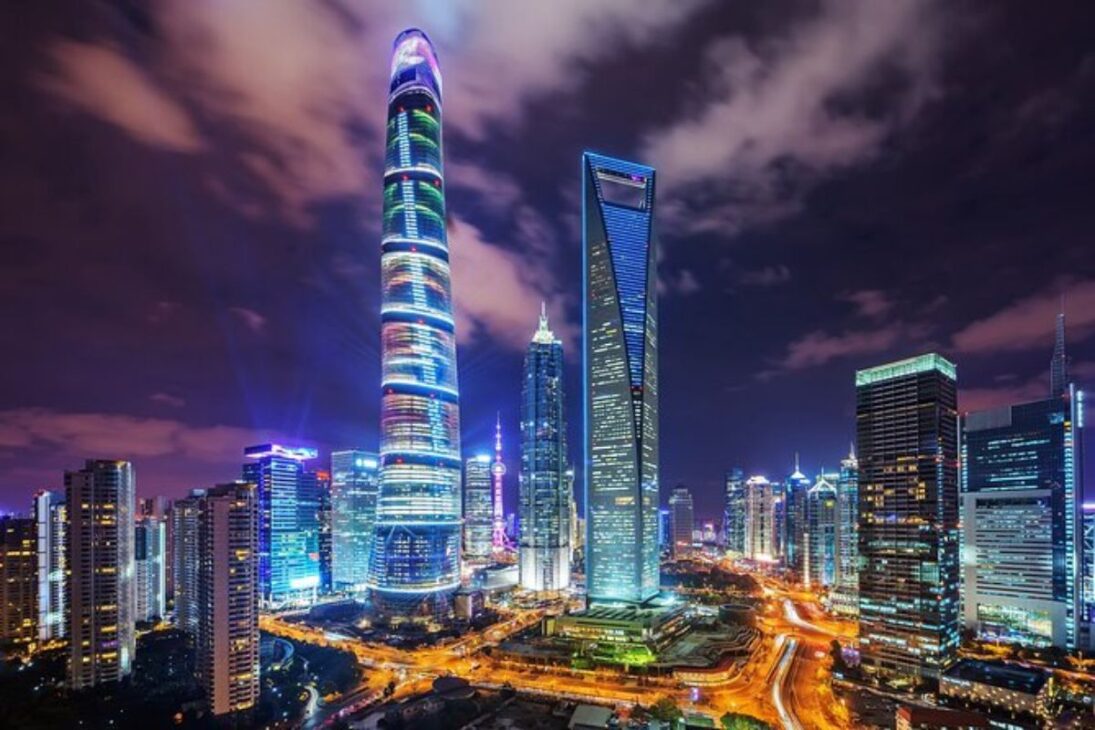
The double glass facade creates an air cushion between the inner and outer skins.
This space houses nine vertical gardens at different levels, which function as internal squares and help with natural thermal conditioning.
By better insulating the interior, the building requires less energy for heating or cooling.
The building also integrates rainwater harvesting for non-potable uses and lighting and ventilation strategies that reduce electrical loads.
This set of features has earned top environmental certifications and established the tower as a global benchmark in sustainability applied to skyscrapers.
What Fits in 632 Meters
With 128 floors above ground and five basements, the tower concentrates offices, a hotel, an observation deck, and communal areas.
The high-speed elevators shorten vertical journeys in a matter of seconds, connecting the ground floor, sky gardens, and observatory.
The usable area exceeds half a million square meters, with capacity for up to 16,000 people.
The user experience is part of the design.
The interspersed gardens break the monotony of height, create pauses in the vertical space, and add a public character to the building, something rare in corporate megatowers.
How Much It Cost and Who Paid
The project had an estimated cost of 2.4 billion dollars, with financing led by the municipality of Shanghai.
Construction began in 2008, was completed at the end of 2015, and opened to the public in 2016.
The investment financed anti-wind technology, damping systems, and green solutions, not just the constructed volume.
This engineering package allows for reduced operational costs over the life cycle.
In buildings of this scale, every percentage point of efficiency represents significant savings for decades.
Why This Matters for Cities and Builders
The tallest tower in China shows that in megatypes, aerodynamics is infrastructure. In windy regions, the building’s shape is as relevant as the strength of materials.
Designing the form to “work with” the wind cuts structural costs and reduces vibrations.
There is also an urban message: skyscrapers can offer qualified internal public spaces.
By creating sky gardens and shared pathways, the tower dissolves the boundary between private building and city, elevating the quality of everyday use, not just the spectacle of height.









-

-

-

-

-

-

63 pessoas reagiram a isso.