





 Portuguese
  English
  Spanish
  3 min of reading
  0 comments


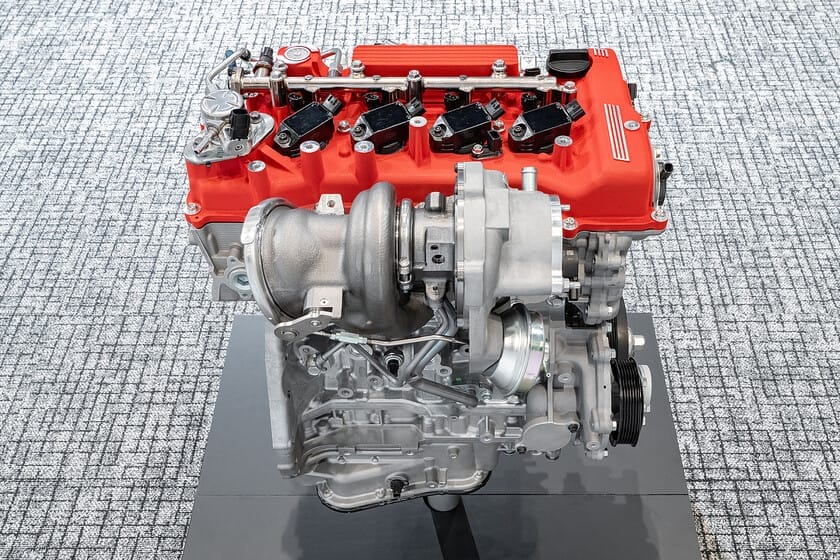
Discover How Toyota Is Saving The Internal Combustion Engine With New Fuel Technologies. Efficiency, Sustainability, And Innovation Define Toyota’s New Engines
Three years ago, Toyota presented a unique development: a car based on a hydrogen combustion engine. According to them, this project offered a carbon-neutral alternative to electric cars due to its virtually zero carbon dioxide emissions.
The problem is that the technology was not fully refined, and getting it to work properly was complex. Hydrogen burns faster than gasoline and generates more heat, so achieving the perfect balance involved, among other things, extremely precise control of the heat generated by the engine and the fuel injection.
The work on this project seems to be going very well, because the people at Toyota revealed a new type of low-emission combustion engines. The company’s CTO, Hiroki Nakajima, revealed some details at a conference in Tokyo on May 28.
-
It surpassed the T-Cross, Creta, and Tracker: with nearly 8,000 units sold, the Volkswagen Tera was the best-selling SUV in March 2026.
-
Honda performs miracles in fuel consumption with a hatch that marks 13.2 km/l in the city and 15 km/l on the highway, leaving Polo, HB20, 208, and Onix behind and becoming a reference among compact cars without resorting to turbo or hybrid systems.

-
Six diseases that seem common but can prevent the renewal of the driver’s license for the elderly throughout Brazil and surprise experienced drivers — could any of them affect you without showing clear signs?

-
With 122 hp, fuel consumption of up to 17.7 km/l, and a trunk capacity of 440 liters, this hybrid SUV impresses even though it costs up to R$ 47,000 more than the Yaris — meet the Toyota Corolla Cross.
A New Milestone In Engine Development
According to reports from Automotive News, previous experience in developing cars powered by hydrogen was crucial to achieving this new milestone. In fact, the long-term goal is for the fuel of the future of these cars to also be hydrogen.
The engines developed by Toyota are between 10% and 20% smaller than conventional engines. Nevertheless, they are capable of delivering fuel efficiency as good as or better than the current ones. They can use carbon-neutral special fuels such as synthetic fuels, biodiesel, or hydrogen, but they can also use gasoline.
The compact size helps position them as partners in hybrid systems with electric motors as traveling companions. Nakajima is particularly optimistic about the project: “This could be a revolutionary solution. The new engine has a huge margin for maneuver.”
Efficiency and Sustainability
The people at Toyota did not provide specific details in many areas, but they emphasize that the thermal efficiency of these engines is significantly better than that of their gasoline-based alternatives.
These engines are expected to hit the market capitalizing on the need to comply with the Euro 7 regulation, which will come into effect in 2027. According to Nakajima, “the engines will be completely different from today’s conventional engines.”
Competition and Collaborations
Competitors like Hyundai and Kia are also working on an engine of this type, but additionally, at the press conference where Toyota participated, joint efforts between Subaru and Mazda in the same direction were announced.
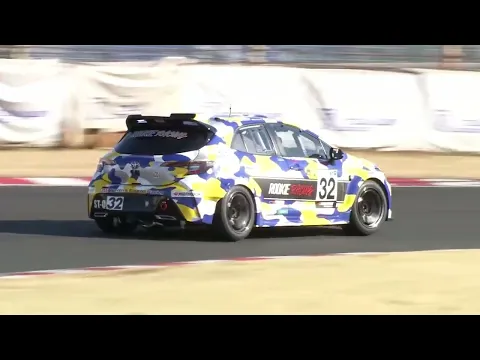
Toyota aimed to showcase the possibilities of this technology at the Fuji Speedway circuit in a 24-hour endurance test. Akio Toyoda, the president of the company founded by his grandfather, drove the latest version of the modified GR Corolla, which was based on this new engine.
Among the improvements in the new model were a new liquid hydrogen pump, as well as a larger hydrogen tank to increase autonomy by 50%.

Challenges and Confidence in the Future
The car, however, experienced significant issues with the ABS braking system and also with fuel pressure, which kept the GR Corolla stationary for nine of the 24 hours of the test.
Still, Toyota is fully confident in this technology, and it may indeed become a future alternative to combustion engines that seemed doomed by many manufacturers. Some of them have even backtracked and no longer plan strategies focused on electric cars.









Seja o primeiro a reagir!