





 Portuguese
  English
  Spanish
  4 min of reading
  1 comment


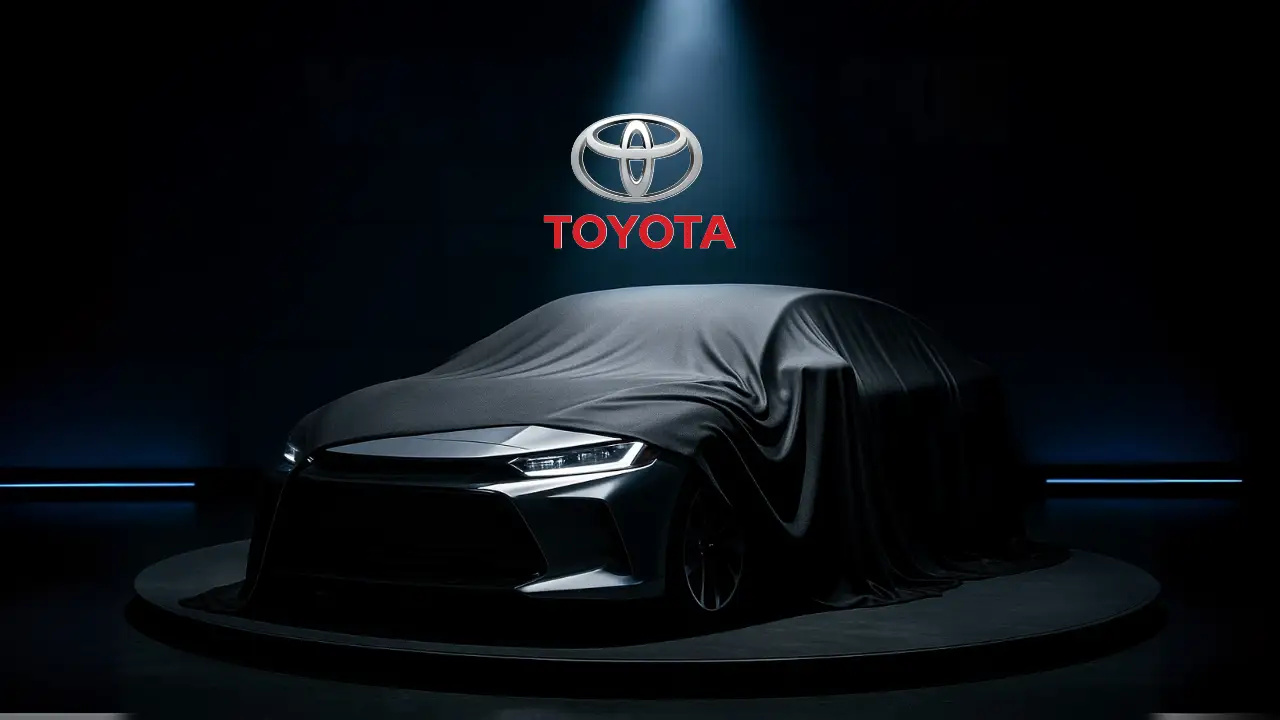


A Bold Move by Toyota, Huawei, and Xiaomi: The bZ7 Electric Sedan Features Next-Generation Engine and Smart Cockpit, Promising to Compete with Tesla in China
A bold move by Toyota in the largest market for electric cars in the world! Toyota, globally known for its excellence in hybrid vehicle production, has decided to step up in the electric car race. And it is not alone in this. Together with three Chinese giants, GAC, Huawei, and Xiaomi, the Japanese brand unveiled a project that promises to shake up the market: the bZ7 electric sedan, a model designed to compete directly with the Tesla Model S in the Chinese market.
It is no exaggeration to say that this is one of the most strategic and bold partnerships seen in the recent automotive industry. After all, it combines the best in engineering, mobility technology, and connectivity, aiming for nothing less than the top of the premium segment in China, which today leads the world in the race for electrics (according to the International Energy Agency, IEA).
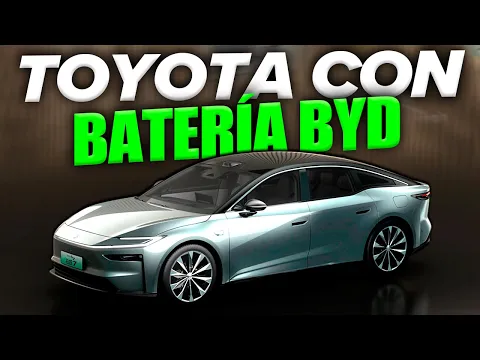

Toyota’s Customized Platform and Plenty of Embedded Technology
The announcement was made during Toyota Technology Day 2025 in Beijing. At the event, the Japanese automaker confirmed that it is developing, alongside GAC, two new platforms dedicated exclusively to next-generation vehicles, including pure electric cars, plug-in hybrids, and models with range extenders.
-
The Toyota Hilux is R$ 75.5 thousand cheaper and bets on the 2.8 turbodiesel engine with up to 204 hp and 50.9 kgfm to catch up with the VW Saveiro, which leads with 4,472 sales.
-
The new Renault Koleos has a screen exclusively for the passenger that is invisible to the driver, heated rear seats, and 29 assistance systems, but its Chinese competitors cost R$ 40,000 less and deliver more power.
-
The car stored for 38 years: when opening the barn door, what appears is breathtaking and looks like a scene from a movie!

-
Fiat works miracles in the Brazilian market, lowers the price of its 0 km hatch to R$ 69,990, reestablishes the model as the cheapest car in the country, and reignites the battle against Kwid and C3.

The first of these platforms will be used for compact and medium cars, measuring up to 5 meters in length. The second, more robust platform, is designed for larger vehicles over 5.30 meters, and it is specifically this platform where the bZ7 will be built.
In addition to the platform, GAC Toyota presented its innovative intelligent digital chassis, a structure equipped with electromagnetic dampers and dual-chamber pneumatic suspension, which automatically adjusts to road conditions. This is made possible by an advanced embedded artificial intelligence system, which is also being applied in GAC’s internal processes, such as research, development, quality control, and logistics (as announced on GAC’s own website).
However, there is still no official confirmation on whether this technology will be fully shared with Toyota’s global projects or remain restricted to the Chinese market.
Revolutionary Engine from Huawei and Cockpit That Looks Like a Sci-Fi Movie
The bZ7 electric sedan will be the first car in the world to feature the new DriveONE powertrain developed by Huawei, one of the biggest names in global technology. The standout feature of this electric motor is the complete integration of the motor, MCU (Motor Control Unit), and inverter into a single module, optimizing space, weight, and energy efficiency, something not previously seen in the market.
Huawei is also responsible for the smart cockpit, equipped with the Huawei HarmonyOS (Hongmeng) operating system, which is already a benchmark for connectivity, integration with smartphones, native applications, and even voice control. Furthermore, the bZ7 will feature LiDAR, a technology that allows for accurate environmental reading, essential for semi-autonomous driving systems and next-generation ADAS assistants.
According to information released by the Chinese media Sohu, the sedan will also have an intelligent virtual assistant that starts as a “thoughtful butler” between 2026 and 2027, but will evolve into a true “symbiotic partner” by 2028, capable of understanding, anticipating, and even interpreting the driver’s emotional state.
“Our goal is to create a vehicle that is not only efficient but also understands and meets the emotional needs of users,” stated a Huawei spokesperson during the event.
Xiaomi Joins the Game with Premium Sound and Futuristic Internal Communication
If Huawei is responsible for the engine and the brain of the car, Xiaomi, which recently launched its own electric car, the Xiaomi SU7 (see more details here), takes on the responsibility of ensuring a premium sound experience within the bZ7 cabin.
The company will be in charge of the high-definition audio system, as well as the internal communication system, which uses cameras and screens distributed throughout the cabin to enable occupants to converse clearly, even in noisy environments or when at opposite ends of the vehicle.
This solution, according to Xiaomi itself, was designed to enhance not only comfort but also the safety of passengers, especially on long trips.
Tesla in Sight: Competitive Price and Abundant Technology
Officially presented to the public in April 2025, the Toyota bZ7 is already confirmed for launch in the first quarter of 2026, exclusively in China. The aim is clear: to steal market share from the Tesla Model S by offering a premium electric sedan equipped with cutting-edge technologies, but at a more accessible price, something that has yet to be officially disclosed but promises to be competitive.
In 2024 alone, over 9 million electric cars were sold in China, according to data from the China Association of Automobile Manufacturers (CAAM), consolidating the country as the largest market in the world in this segment.
Will the formula work? Time will tell. But one thing is certain: when a giant like Toyota teams up with heavyweights like GAC, Huawei, and Xiaomi, the entire industry pays attention. Let us know in the comments what you think!









É claro que os japoneses estão famintos nesse mercado de carros elétricos. Tem força pra isso em qualquer mercado.