





 Portuguese
  English
  Spanish
  4 min of reading
  0 comments


Toyota Criticizes Competitors for Calling MHEV Systems Hybrids and Reignites the Debate on Transparency in Electric Car Ratings. The Discussion Involves Brands Like Fiat, Kia, Peugeot, and Chery, Which Use the Term “Hybrid” in Semi-Hybrid Models.
Toyota has raised the stakes in the debate over labeling electrified vehicles, accusing competitors of confusing consumers by calling 48-volt mild-hybrid systems (MHEV) hybrids.
The message came from Sean Hanley, Vice President of Sales and Marketing at Toyota Australia, who advocated for a clear distinction between full hybrids, performance hybrids, and mild-hybrid solutions.
In his words, “a 48-volt system, in our opinion, does not represent hybrid propulsion,” emphasizing that it is up to manufacturers to accurately explain what they are selling.
-
After 10 months of work and six months of almost total dedication, a student creates a wind turbine that exceeds 500 revolutions per minute and could help lower electricity prices in urban areas.

-
Brazil exposes critical fragility in air defense, says site. With few Gepard, Igla-S, and RBS 70 systems, the country does not cover medium altitude and remains vulnerable to drones, missiles, and attacks that cause billions in recent wars.

-
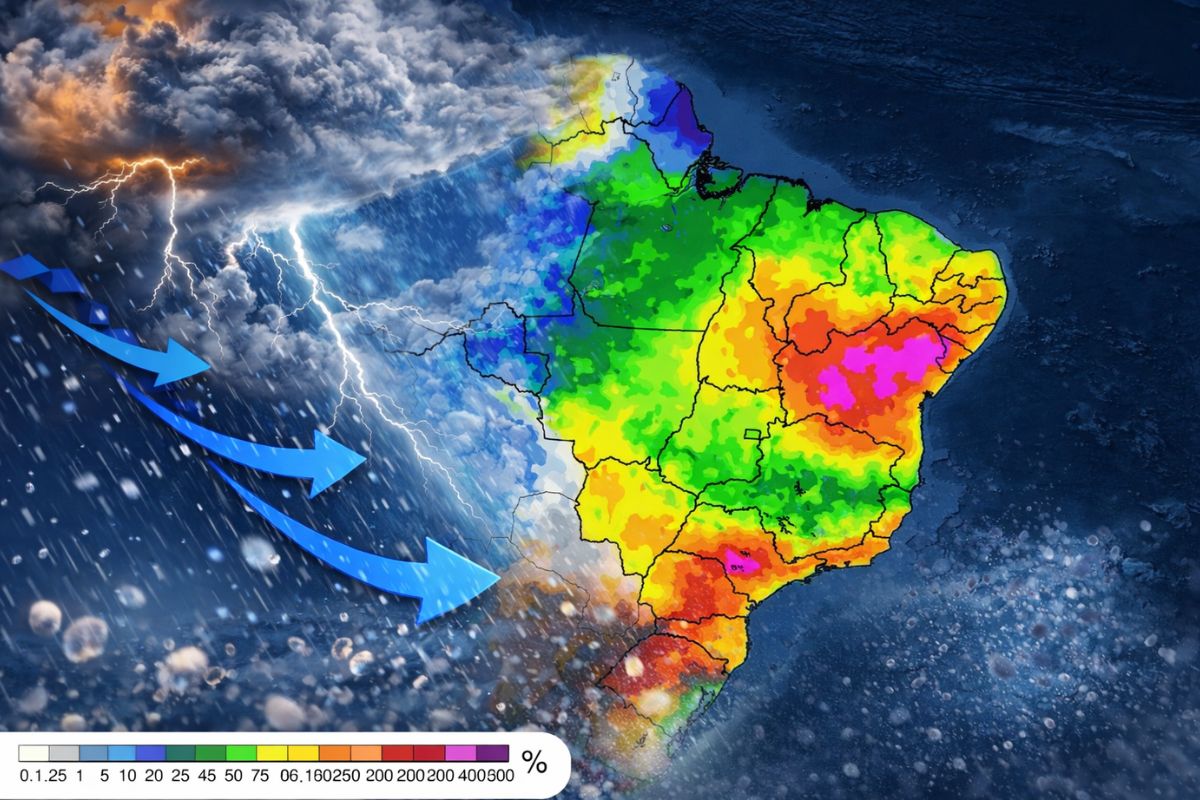
The truce after the last cyclone is over: a new cold front is hitting five states between Saturday and Sunday with up to 100 millimeters of rain, risk of hail, and wind gusts that could cause damage from Rio Grande do Sul to São Paulo.
-
Robots already operate oil rigs without humans, connect pipelines on their own, and inspect platforms in the dark, and the world’s largest drilling company plans to cut 75% of the crew at each well.

In Brazil, the discussion has immediate consequences because Fiat, Kia, Peugeot, and CAOA Chery market models with MHEV architecture and use the term “hybrid” in their communications — in some cases with the caveat that it refers to mild-hybrid or “bio-hybrid.”
This practice clashes with the technical argument defended by Toyota: to be genuinely hybrid, a vehicle must be able to move only with the electric motor in certain situations, which does not occur in 12V or 48V MHEVs.
What is MHEV and Why Doesn’t It Drive “Alone” in Electric?
In MHEV systems, the alternator is replaced by a compact motor-generator powered by a low-voltage battery (12V or 48V).
This setup does not drive the wheels; it assists the combustion engine during starts, acceleration, and energy recovery, resulting in small reductions in fuel consumption and emissions, as well as smoother stop/start operations.
Because it does not provide independent electric traction, MHEV cannot run in 100% electric mode, unlike full hybrids (HEV) and plug-in hybrids (PHEV).
Toyota’s Target: Label Clarity
According to Hanley, Toyota “will make it very clear what a hybrid for efficiency is, what a hybrid for performance is, and what an MHEV system is.”
In Australia, the brand’s 48V models — such as Hilux and Land Cruiser Prado — do not carry the word “Hybrid”; they are named V-Active, precisely to avoid confusion.
“They are not hybrids, by any means,” emphasized the executive while advocating for standardized terminology.
How Brands Communicate in Brazil
The presentation style varies among automakers.
Kia promotes the Stonic as “its first hybrid SUV,” explaining in technical materials that it is a 48V MHEV system.
Peugeot gathers its “hybrid models” featuring MHEV technology on an official page, highlighting efficiency gains without changing driver habits.
CAOA Chery uses the commercial label Hybrid Max Drive for the Tiggo 5x and Tiggo 7, both with mild-hybrid architecture.
Fiat, in turn, has adopted the Bio-Hybrid badge for the Pulse and Fastback, using ethanol in the equation and still referring to the solution as hybrid in institutional communication.
The Irony of the Global Market: Hilux “Hybrid 48V” Outside Australia
While the Australian subsidiary avoids the term, Toyota Europe and the UK themselves label the pickup as Hilux Hybrid 48V in official materials, describing the system as “48V hybrid technology.”
This exposes a nomenclature asymmetry across regions and helps explain why consumers encounter different messages about the same hardware.
Local Standards Gain Strength
In Brazil, the debate about classification progressed in 2025.
The Brazilian Electric Vehicle Association (ABVE) stopped considering mild-hybrids up to 48V as electrified vehicles in its reports, arguing that the most accurate method is to separate technologies that do not offer electric traction from those that do.
The change aligns with what Toyota advocates and may influence advertising, incentives, and efficiency comparisons.
What is at Stake for the Consumer
The battle over terminology is not a mere detail. If a car does not move exclusively by electricity in any scenario, calling it “hybrid” without qualifying as mild-hybrid could inflate expectations about economy and emissions.
On the other hand, manufacturers that choose different commercial designations — such as Bio-Hybrid or Hybrid 48V — seek to highlight incremental gains and compatibility with local fuels, such as ethanol, without promising autonomous electric driving.
The central point, as summarized by Hanley’s remarks, is “to make clear what is being purchased”.
Transparency and Standardization: Next Steps
There are signs that standardization may advance due to pressure from entities, regulatory bodies, and competitors.
Terms like HEV (full hybrid), PHEV (plug-in hybrid), and MHEV (mild-hybrid) are already used globally and could be featured prominently in sales materials, advertisements, and badges on cars.
Additionally, technical sheets and manuals should clearly indicate whether or not the model offers independent electric propulsion.
In markets where Toyota avoids the term “Hybrid” for 48V and in others where it adopts “Hybrid 48V,” the consensus involves explaining what each architecture delivers in practice to avoid misleading consumers.
Even though brands highlight real consumption gains with mild-hybrid solutions, the discussion remains: without effective electric traction, shouldn’t the public be informed more explicitly about the limitations of these systems?








-

-

2 pessoas reagiram a isso.