





 Portuguese
  English
  Spanish
  4 min of reading
  0 comments


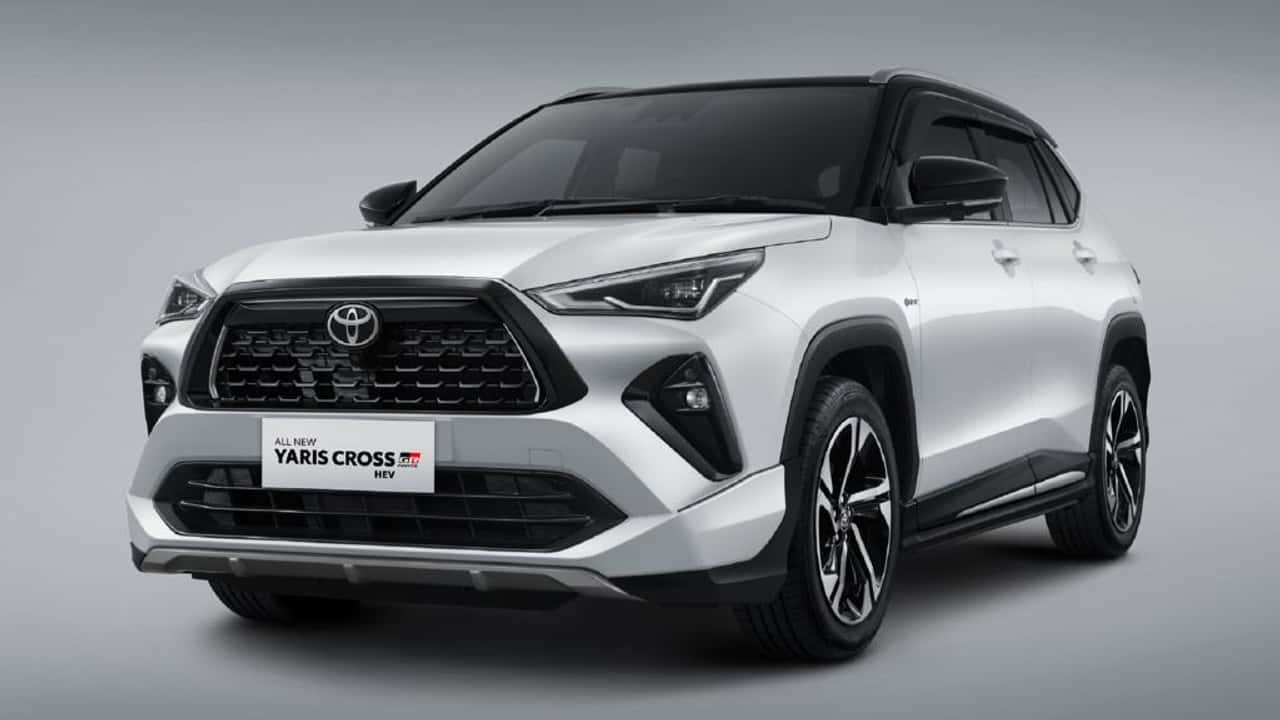
The New Toyota Yaris Cross Arrives in Brazil with a Flex Hybrid Version and Engine Produced in the Interior of São Paulo, Highlighting the Manufacturer’s Strategy to Adapt Its Model to the Local Public.
The Brazilian hybrid vehicle market is about to gain a novelty that promises to catch the attention of consumers and elevate the standard of national automotive production.
However, in a strategic move, Toyota seems to be withholding crucial details about the new model to create an even greater impact at the time of launch.
At the center of this revolution is the Toyota Yaris Cross, which, in addition to bringing a flex hybrid version, will have its combustion engine produced in the manufacturer’s own factory in Porto Feliz, in the interior of São Paulo.
-
Less than a Tera TSI, up to 710 km of range and charging in 9 minutes: the new BYD Song Ultra expands the Chinese brand’s bet on increasingly faster, more technological, and competitively priced electric SUVs.

-
With a 1.0 engine producing 75 hp and costing less than R$ 70,000, Fiat’s car returns to the podium as the cheapest in the country; a temporary promotion for the 2026 Like version reduces the price of the Fiat Mobi.
-
With a mild hybrid system of 48 V, 176 hp and a price of R$ 175,990 in the Sahara version, the new Jeep Renegade changes mostly on the inside, improves slightly in fuel consumption, and remains almost the same car.
-
With a 293.5 cm³ engine and a range of up to 400 km with a 14.1-liter tank, the Honda CB 300F Twister 2026 has up to 24.7 hp, an initial price of R$ 25,150, and already exceeds R$ 29,000 in the Fipe Table.

The decision is part of the Japanese brand’s localization strategy, aimed at strengthening its presence in the national market and offering a model specifically adapted for Brazil, according to the president of Toyota do Brasil, Evandro Maggio, speaking to Auto Data.
National Production: Focus on Porto Feliz and Sorocaba
Evandro Maggio highlighted that the Porto Feliz unit will be responsible for producing the combustion engine, a fundamental part of the flex hybrid version of the Yaris Cross.
This measure not only boosts national manufacturing but also reduces production costs and allows for greater control over the technology used, contributing to a model with the ideal profile for the Brazilian consumer.
The Sorocaba plant, also located in the interior of São Paulo, was chosen to host the final assembly of the vehicle, operating in the new unit referred to as “Plant 2.” According to Maggio, “This is another platform that will be assembled in the new factory.
It is a model developed for the local market, tailored for Brazil. Its viability for export is under study.”
Hybrid Technology with Brazilian DNA
The Indian version of the Yaris Cross uses the 2NR-FBE engine, the same found in the version of the Yaris sold in Brazil.
However, the hybrid engine of the Brazilian Yaris Cross will need some modifications to fit the flex system, a characteristic that differentiates the national model from those produced abroad.
In India, the Yaris Cross features a version of the 2NR-VEX engine, which operates on the Atkinson cycle and is combined with a CVT transaxle, lithium battery, and an electric motor producing 80 horsepower and 14.3 kgfm of torque.
In Brazil, the hybrid engine to be produced promises to achieve a combined power of up to 113 horsepower, taking into account adaptations for the flex system.
This modification in the Yaris Cross engine indicates Toyota’s commitment to adapting its technologies to Brazilian specifics, especially considering the popularity of flex vehicles in the country.
“Delivering 91 horsepower and 12.3 kgfm, the 1.5 hybrid system will have to operate as the FBE in Brazil, meaning it will have to be flex and this should raise its power to around 93 horsepower,” explained Maggio.
Future Outlook: National Batteries by 2026
Another novelty mentioned by Maggio concerns the battery of the Yaris Cross, an essential item for the model’s hybrid system.
According to the executive, Toyota is already planning to create a specific area in the new facilities to assemble lithium-ion batteries by 2026.
This measure aims to reduce costs and make the Yaris Cross a more affordable option in the hybrid SUV market, placing Brazil in a central role in the manufacturing and supply of these critical components.
According to Maggio, this long-term planning for local battery production reflects Toyota’s vision to strengthen the hybrid vehicle production chain in Brazil, making the country a reference in manufacturing sustainable models.
Toyota Yaris Cross: Technical Features and Expectations
The combination of a flex engine with hybrid technology allows the Yaris Cross to operate with total power between 111 and 113 horsepower, aligning with the expectations of the Brazilian public seeking a compact SUV with good performance and fuel economy.
With the launch of the Yaris Cross, Toyota aims to attract an audience that prioritizes vehicles with cutting-edge technology, energy efficiency, and a reduced environmental footprint.
At the same time, the manufacturer is studying the feasibility of exporting the model, indicating that the Yaris Cross Hybrid Flex could eventually be a Brazilian product with international relevance.
What stands out now is the possible acceptance of the national audience in the face of a hybrid that combines sustainability with appealing power.
Toyota’s strategy to locally produce key elements of the Yaris Cross, such as the engine and, in the future, the battery, demonstrates an audacious move that could influence other manufacturers to follow suit.







-

Uma pessoa reagiu a isso.