






 Portuguese
  Spanish


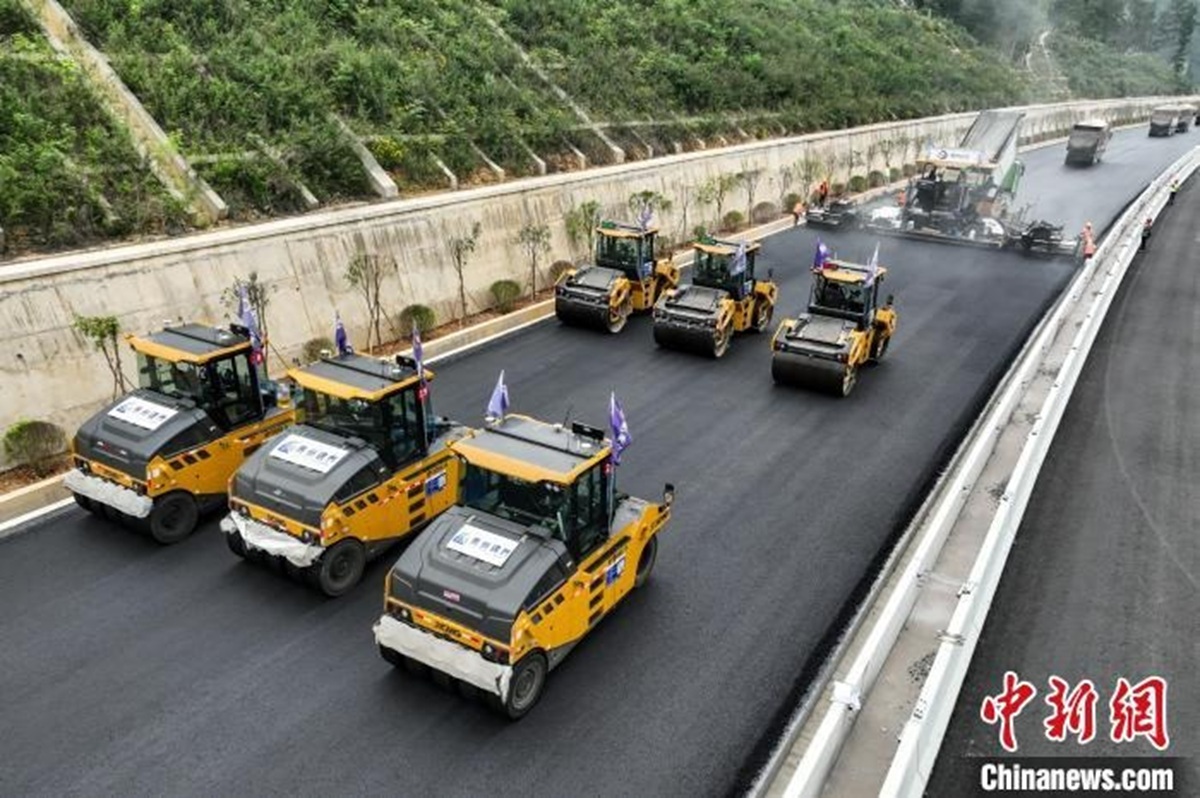


Nocturnal Operation on the Fourth Ring Road of Beijing Mobilized Teams and Machines to Recover 2.4 Km of Road in Six Hours, Avoiding Closures, Congestions and Impacts on Daily Urban Traffic
Chinese workers applied 8,000 tons of asphalt and recovered a stretch of 2.4 km of the Fourth Ring Road of Beijing in just six hours overnight, avoiding closures, congestions, and delays on one of the busiest highways in the Chinese capital.
The operation took place during a unique nighttime period, a strategy adopted to prevent the total closure of the road or the gradual blocking of lanes, a common practice in major urban centers that usually causes prolonged disruptions to daily traffic.
The intervention occurred on the Fourth Ring Road of Beijing, one of the city’s main traffic arteries, where repairs of this extent would typically require days or even weeks of continuous work in other countries.
-
AI Security System in Brazil Aims to Cut False Alarms by Differentiating Pets from Intruders, Enhancing 24/7 Monitoring for Homes and Businesses

-
Archaeologists Discover 1,500-Year-Old Byzantine Mosaic with Greek Biblical Inscription in Israel, Uncover Ruins of 10 Buildings Near Kiryat Gat
-
Ohio Carpenter Finds 308-Gram Meteorite the Size of a Baseball After Dreaming of Its Location

-
Chinese Student Builds Humanoid Robot for $2,100 at Age 20, Now Leads Robotics Startup in China



Concentrated Execution and Large-Scale Logistics
The application of the 8,000 tons of asphalt was done in a synchronized manner, with teams working simultaneously along the 2.4 km damaged stretch, allowing the entire section to be completed before the morning flow began.
Infrastructure managers opted to concentrate all human resources, machines, and materials in a single night, eliminating the need for partial closures and reducing operational impacts on urban transport.
The result was the complete clearance of the highway even before the first drivers left home for work, keeping the city’s routine without noticeable changes in traffic.
Work Pace Known as “China Speed”
The achievement reinforces the concept known as “China Speed,” a term used in the construction sector to describe the high speed of execution of large-scale projects in the country.
This pace had previously drawn attention, such as in the case of a Chinese company that managed to erect a complete apartment building in just 29 hours, an episode widely cited in the sector.
The combination of centralized planning, continuous execution, and intensive mobilization of resources has made yet another milestone in Chinese infrastructure possible, consolidating a model of rapid construction in complex urban environments.
Historically, road projects of this size involve long timelines and prolonged traffic impacts, but the experience in Beijing demonstrates an alternative approach focused on short, concentrated interventions with high technical capacity.




No Brasil ia demorar 2 semanas e ainda seria necessário pagar um aditivo para a empreiteira.
Na Marginal Tietê em São Paulo abriu um buraco em Abril/25 e a previsão é que termine os trabalhos em Abril/26.
Só quem utiliza a Marginal Tietê todos os dias é que sabe o tamanho do transtorno.
É vergonhoso. Sim é obra da Sabesp aquela que foi privatizada e que ninguém sabe para onde foi o dinheiro da venda.
Quer saber no Brasil é igual também.
Você contrata o pedreiro por diária ou semanal, pra fazer o muro da frente demora em média 6 meses.
Agora se você optar por empreitada, na outra semana vai ficar devendo pra todos, pedreiro, material, e ajudantes, pois aí em 3 dias já está pronto o pior é que nem a luz, nem a água ou o gás ficam atrasados nesse tempo.
Kkkk