





 Portuguese
  English
  Spanish
 4 min of reading
  0 comments


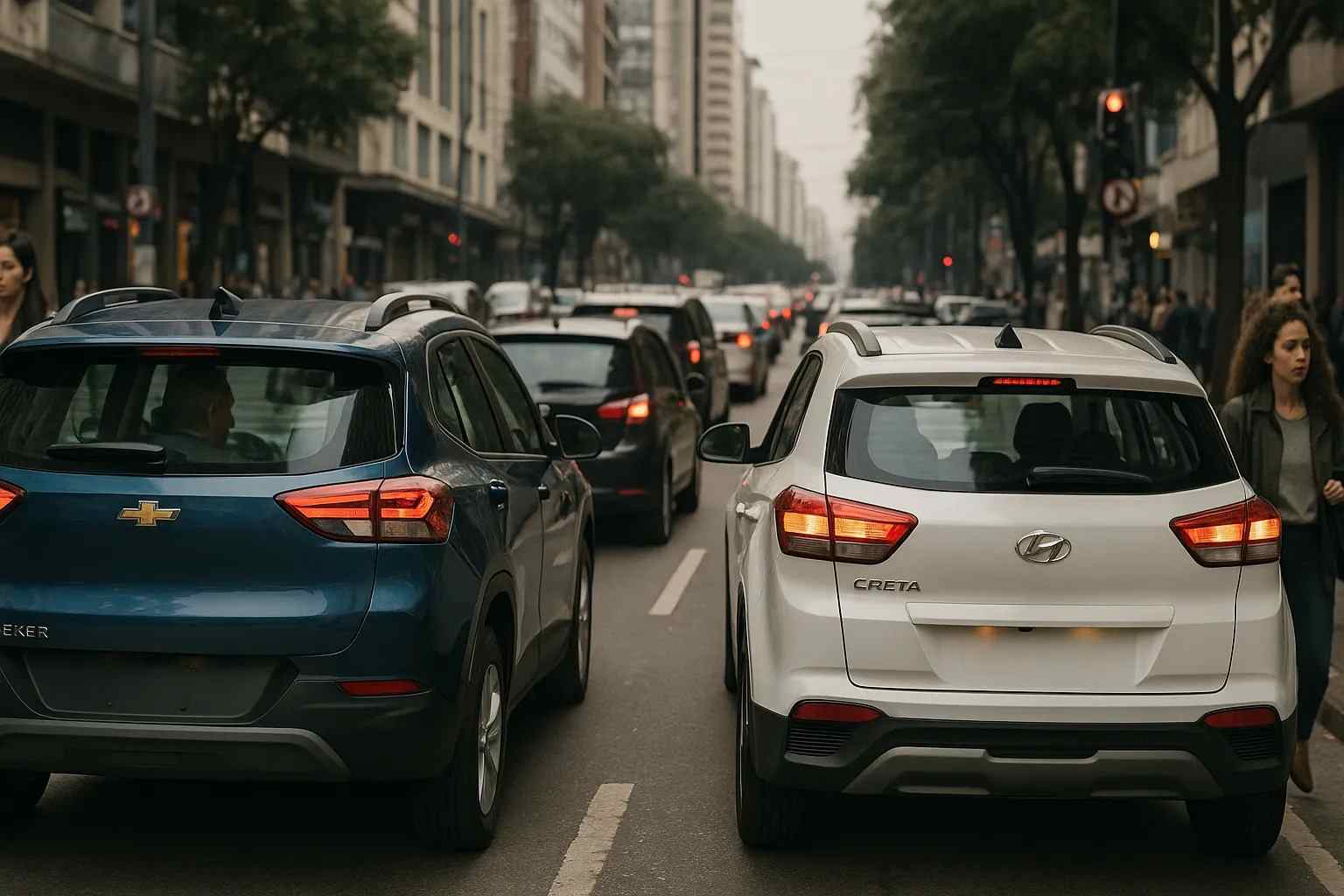
Have you ever stopped to think if the SUV consumes more fuel just when you need it the most? The heavy traffic of Brazilian capitals turns every trip into a test of patience — and of wallets. In these moments, every liter counts. And when the competition is between two of the country’s best-selling compact SUVs, Chevrolet Tracker and Hyundai Creta, the question arises: which one delivers more economy in urban driving, both with gasoline and ethanol?
Which SUV Consumes More Fuel: See Complete Comparison Between Tracker and Creta
The official data from the Brazilian Vehicle Labeling Program (PBEV), organized by Inmetro, helps to answer. Let’s look at the detailed numbers, always considering the 1.0 turbo automatic engines, which are the most sold in both lines:
- Chevrolet Tracker 1.0 Turbo AT
- Gasoline: 11.2 km/l in the city and 13.6 km/l on the highway
- Ethanol: 7.7 km/l in the city and 9.4 km/l on the highway
- Tank: 47 liters
- Hyundai Creta 1.0 Turbo AT
- Gasoline: 11.0 km/l in the city and 12.5 km/l on the highway
- Ethanol: 7.6 km/l in the city and 8.2 km/l on the highway
- Tank: 50 liters
In practice, these numbers mean that, in intense urban traffic, the Tracker delivers up to 0.2 km/l more range with gasoline and 0.1 km/l with ethanol. It may seem like a small margin, but in daily use — especially for those who travel 40 to 50 km per day in capitals — this represents almost a full tank of savings at the end of the year.
-
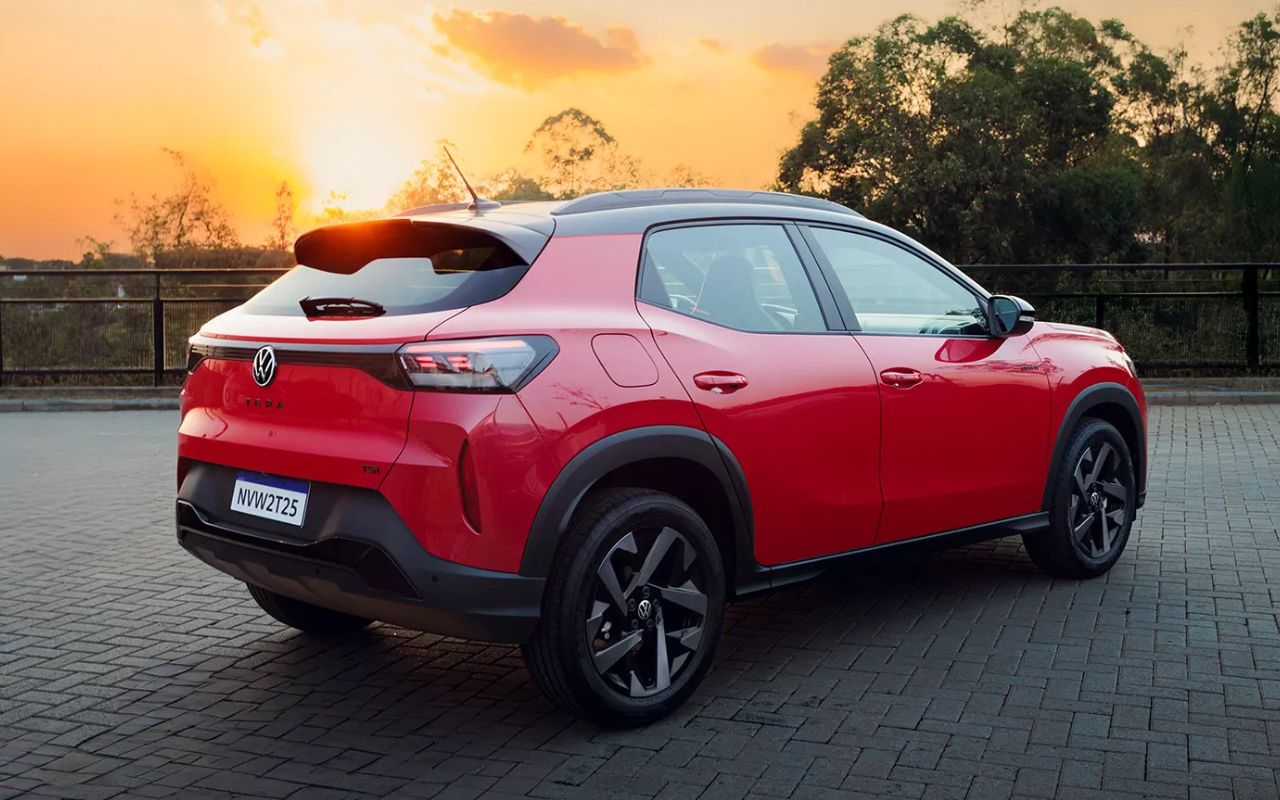
It surpassed the T-Cross, Creta, and Tracker: with nearly 8,000 units sold, the Volkswagen Tera was the best-selling SUV in March 2026.
-
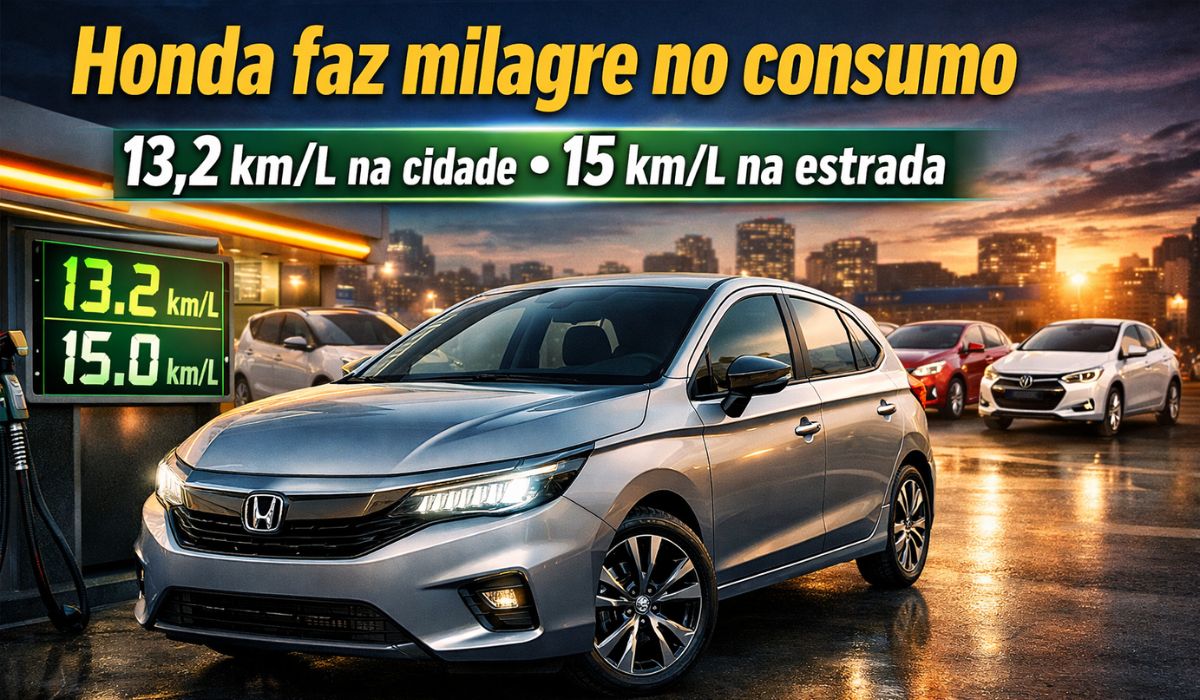
Honda performs miracles in fuel consumption with a hatch that marks 13.2 km/l in the city and 15 km/l on the highway, leaving Polo, HB20, 208, and Onix behind and becoming a reference among compact cars without resorting to turbo or hybrid systems.
-
Six diseases that seem common but can prevent the renewal of the driver’s license for the elderly throughout Brazil and surprise experienced drivers — could any of them affect you without showing clear signs?

-
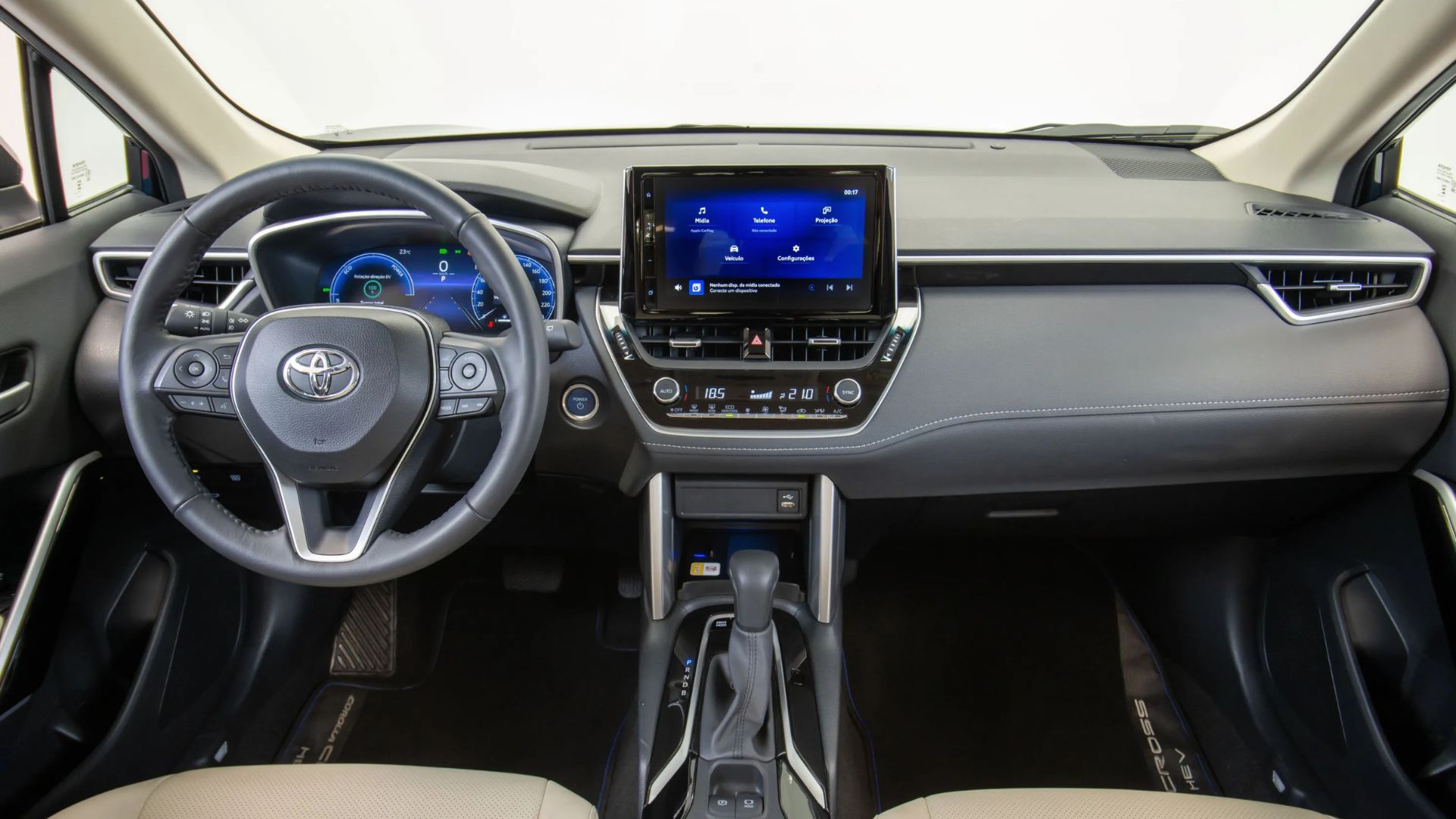
With 122 hp, fuel consumption of up to 17.7 km/l, and a trunk capacity of 440 liters, this hybrid SUV impresses even though it costs up to R$ 47,000 more than the Yaris — meet the Toyota Corolla Cross.

The Creta, on the other hand, compensates with a larger tank, which increases the overall range on highways, but maintains higher consumption in traffic jams. This pattern is reported in tests by magazines like Quatro Rodas as well as in technical analyses by Inmetro itself.
Why Does Urban Consumption Vary So Much?
The traffic in large capitals is relentless on any engine. Constant braking, heavy air conditioning use, and short accelerations demand more fuel. In this scenario, both the Tracker and Creta suffer, but the difference appears in details such as vehicle weight, transmission adjustment, and turbo calibration.
The Creta, being slightly heavier (1,300 kg compared to 1,250 kg of the Tracker, on average), tends to require more effort on starts. Meanwhile, the Tracker, although lighter, feels the continuous use of the air conditioning more. According to specialized publications like Autoesporte, the difference of up to 10% in urban consumption between drivers with different styles is common, showing that human factor is decisive.
How to Save in Daily Life with Any SUV
>Whether Tracker or Creta, you can apply 8 practical measures to reduce expenditures in city traffic:
- Drive Progressively – accelerate smoothly, without abrupt starts.
- Maintain Correct Tire Pressure – low pressure increases resistance.
- Keep Up With Maintenance – filters and spark plugs in poor condition compromise efficiency.
- Avoid Excess Weight – every 50 kg extra in the trunk increases consumption.
- Use Air Conditioning Wisely – at low speeds, prefer to ventilate the car.
- Plan Routes – traffic apps help avoid heavier traffic jams.
- Turn Off the Car During Long Stops – minutes in “neutral” accumulate wasted liters.
- Refuel at Trusted Locations – tampered fuel increases consumption and damages the engine.
Tracker or Creta: Who Has the Edge in the City?
By the numbers, the Tracker proves to be slightly more economical, especially for those who use the car almost exclusively for urban trips. The Creta, however, offers a larger tank and a proposal for more generous interior space, factors that may weigh in the choice of those who prioritize comfort or travel a lot on highways.
In real terms, considering gasoline at R$ 5.80, those who drive 1,000 km per month in the city will spend:
- Tracker: about 89 liters → R$ 516 per month
- Creta: about 91 liters → R$ 528 per month
With ethanol at R$ 3.80, the difference remains proportional:
- Tracker: 130 liters → R$ 494 per month
- Creta: 132 liters → R$ 501 per month
It may not seem like much, but after 5 years of use, this difference can exceed R$ 700 just in fuel, not considering maintenance and upkeep.
More Than Consumption: Other Factors in the Choice
- Maintenance: the Creta has slightly more expensive maintenance, but well-defined intervals set by Hyundai.
- Insurance: the Tracker tends to be cheaper for urban driver profiles, according to specialized brokers.
- Resale: both have good acceptance, but Chevrolet has seen more stable appreciation in the used market over the last three years.
In the battle between Tracker and Creta, those seeking to understand if an SUV consumes more fuel in heavy traffic find a close competition. The numbers show a slight advantage for the Tracker, but the Creta compensates in other aspects, such as space and range on trips. In the end, the decisive factor may not just be the car, but the driver’s style — and daily choices that turn the tank into an ally or a villain.









Seja o primeiro a reagir!