





 Portuguese
  English
  Spanish
  4 min of reading
  0 comments


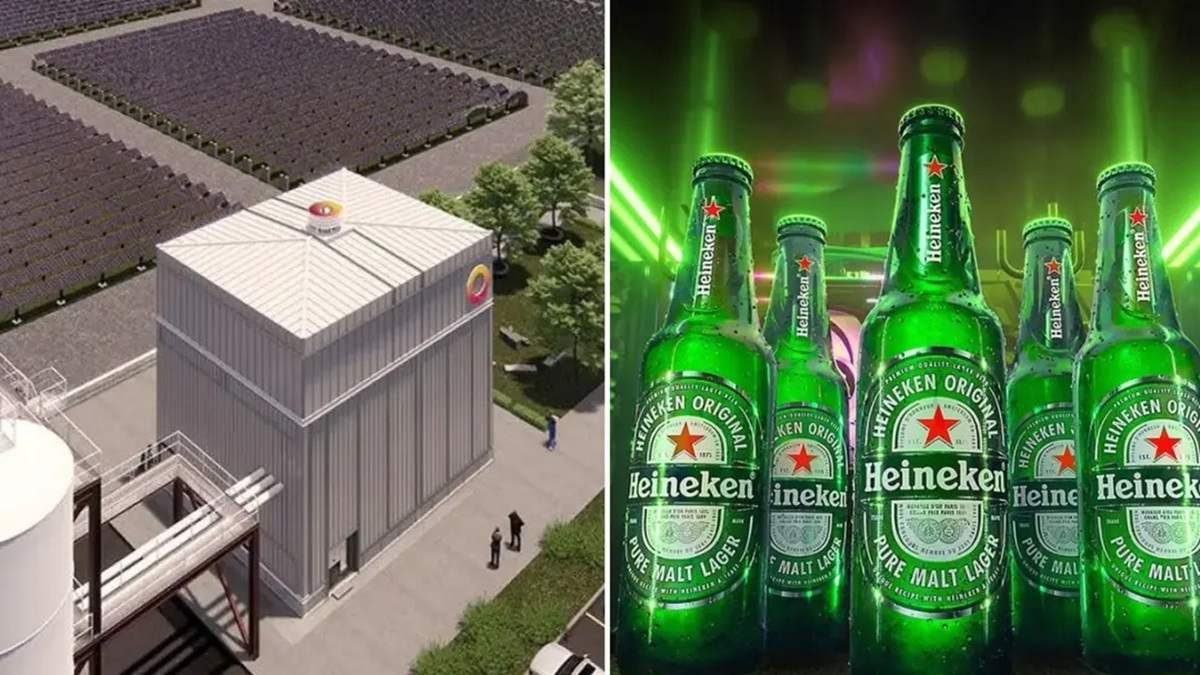
The Installation of the 100 MWh Thermal Battery at the HEINEKEN Brewery in Lisbon Ensures Continuous Renewable Steam, Reduces Emissions, and Marks an Important Advance in the Goal to Decarbonize All Production by 2030
The Central de Cervejas e Bebidas, HEINEKEN’s brewery and malt factory located in Lisbon, Portugal, is about to inaugurate an important change in its production process. Rondo Energy and the energy producer EDP are installing a 100 MWh thermal battery, which will play a decisive role in the energy transition of the unit.
This is the largest thermal battery ever used in the global beverage industry, capable of supplying 7 MW of steam using exclusively renewable electricity.
The project takes HEINEKEN’s Portuguese operation to a new level of sustainability, as it allows for the replacement of fossil fuels with a high-temperature steam solution without altering the beer manufacturing process.
-
How the terraforming of Mars can transform the planet: artificial aerosols can increase the temperature by up to 35°C in 15 years, creating conditions for liquid water.

-
Scientists drilled nearly 8,000 meters into the ocean floor above the fault that caused the 2011 tsunami in Japan and discovered that a layer of clay 130 million years old was responsible for making the wave much worse than any model had predicted.
-
Thousands of years after causing the largest eruption of the Holocene, one of the world’s largest supervolcanoes is rebuilding itself beneath the sea south of Japan, receiving new magma and alarming scientists with its transformation.

-
China has activated a magnet 700,000 times more powerful than the Earth’s magnetic field that operates for over 200 consecutive hours while consuming little energy, and now the world wants to know what Beijing plans to do with this technology in 2026.

The battery will utilize energy from solar sources and the electrical grid, always prioritizing the consumption of renewable electricity.
Towards a Fully Decarbonized Brewery
The Rondo thermal battery (RHB) stores electricity in the form of heat in refractory bricks and releases this heat as steam for 24 hours. The system eliminates the need for combustion and thereby reduces direct emissions from beer production.
EDP will be responsible for supplying renewable steam directly to the factory through a heat supply model, while Rondo provides the battery, and EDP manages the energy supply.
According to Magne Setnes, Supply Chain Director at HEINEKEN, the partnership with the two companies represents a strategic opportunity. “By combining our strengths with EDP and Rondo, we are discovering new ways to drive our brewery operations more efficiently,” he stated. He added that the project reduces dependence on conventional energy and demonstrates how innovation and partnerships generate improvements in the supply chain.
HEINEKEN has set long-term goals to reduce its environmental footprint. The company aims to achieve net-zero emissions across its entire value chain by 2040 and to decarbonize all production units by 2030.
The Lisbon factory already utilizes solar energy and electric heat pumps for water heating, and the new thermal battery will enable the provision of high-temperature steam completely free of carbon, which is considered one of the most difficult elements to electrify in the sector.
The initiative also aligns with Portugal’s national goal of reducing greenhouse gas emissions by 55% by 2030. By integrating local solar energy and advanced thermal storage, the operation becomes a sustainability reference in southern Europe.
Miguel Stilwell d’Andrade, CEO of EDP, highlighted the relevance of the initiative. For him, the installation of the world’s largest thermal battery in the beverage sector represents more than a technological advance.
“This is not just about technology; it’s about proving what is possible when we dare to push the boundaries,” he stated. He emphasized that the partnership raises the standard of sustainability and shows concrete paths for the industrial future.
How the Rondo Thermal Battery Works
The Rondo thermal battery captures electricity during off-peak hours and converts it into high-temperature heat, which is stored in brick materials. This heat is then released as steam on demand, allowing continuous processes for 24 hours without using combustion.
The technology can operate at pressures exceeding 100 bar, making it suitable for various industrial uses. Additionally, it offers energy flexibility, as it absorbs excess solar energy when available and reduces the overload on the grid during peak times.
With this approach, replacing gas boilers becomes possible, reducing emissions and long-term energy costs. The technology can benefit sectors such as food processing, paper, and pharmaceuticals, as it requires few changes to factory infrastructure.
Support from European Green Investment
Rondo projects in Europe are supported by the European Investment Bank (EIB) and Breakthrough Energy Catalyst, which provided €75 million. The aim is to accelerate the use of large-scale thermal batteries on the continent.
Karl Nehammer, Vice President of the EIB, stated that decarbonizing industry with accessible renewable energy is a priority for the group. He mentioned that the new Climate Bank Roadmap prioritizes innovative solutions like Rondo’s thermal battery, considered an example of a public-private partnership with expansion potential.
Eric Trusiewicz, CEO of Rondo, highlighted the importance of the installation in Portugal. According to him, the company is pleased to implement its first thermal battery on the Iberian Peninsula and to support HEINEKEN in its emissions reduction goals.
He stated that the technology can help industries across the region reduce costs, emissions, and seize new opportunities.










Seja o primeiro a reagir!