





 Portuguese
  English
  Spanish
  5 min of reading
  0 comments


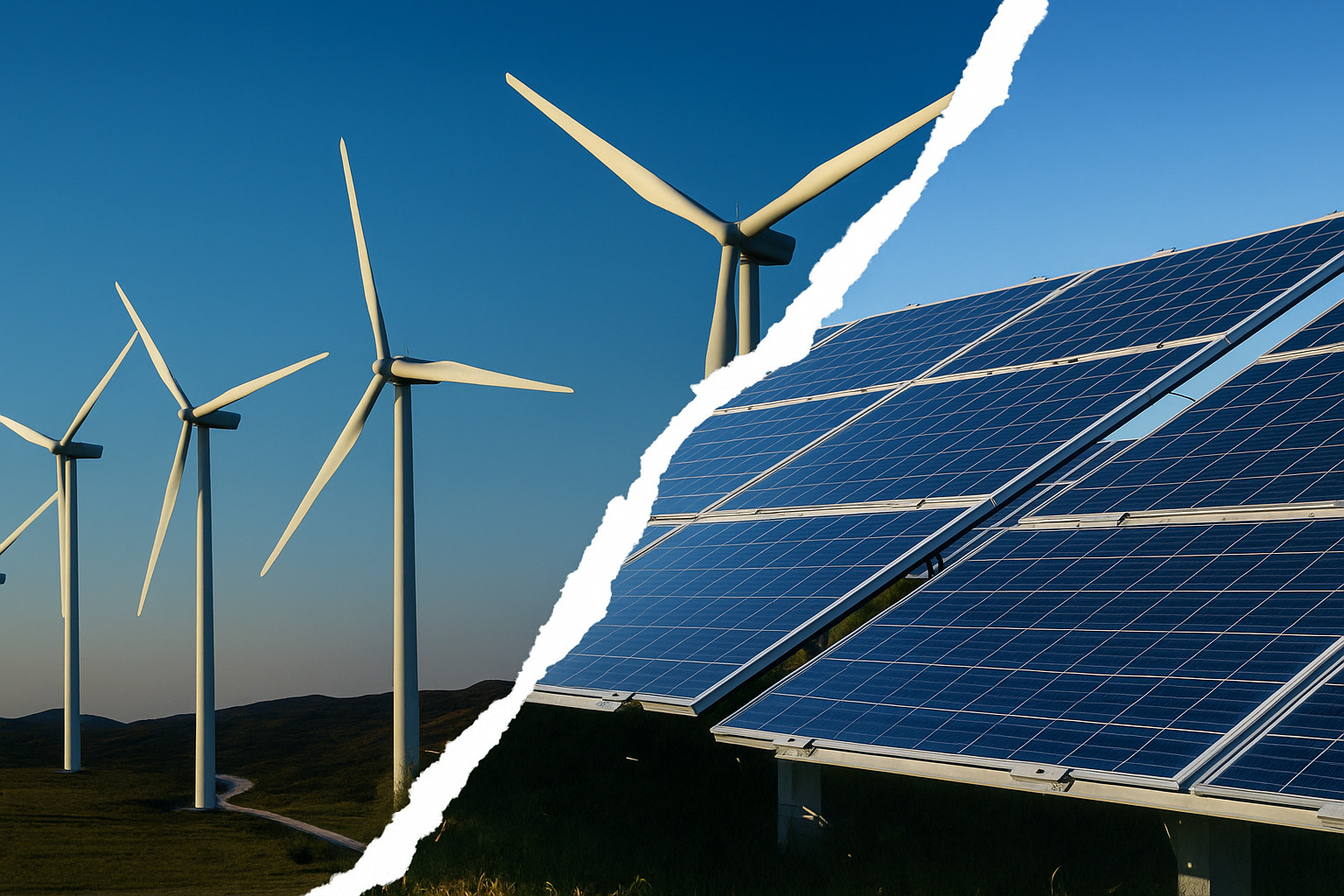
Understand How The Energy Transition Causes Job Losses In The Automotive And Auto Parts Sectors In Different Regions Of The World.
The energy transition is profoundly transforming the automotive and auto parts industry worldwide. In fact, it promotes the gradual replacement of internal combustion engines with cleaner alternatives, such as electric, hybrid, and hydrogen-powered vehicles.
Although necessary to reduce emissions and mitigate environmental impacts, this change generates significant effects on the labor market, causing job losses in the sector in various regions. Furthermore, this transformation requires governments and companies to rethink production strategies and public policies to balance innovation and social protection.
Historically, industrial transformations have always altered employment. For example, the Industrial Revolution attracted workers from the countryside to cities and replaced many manual jobs with machines.
-
How green infrastructure and renewable energy at the World Cup transform the logistics of the largest sporting event on the planet in North America.

-
The Cagece and UFC project advances in sustainable innovation with biogas by converting waste into renewable energy, reducing environmental impacts, and increasing sanitation efficiency with concrete and measurable results.

-
Paranaense students develop a system that transforms farm waste into clean energy and revolutionizes sustainable agribusiness.

-
The Ministry of Defense installs a giant photovoltaic plant and ensures a stable supply of clean energy in Maturacá, in the Amazon.

Today, the energy transition presents a similar scenario, but in a different technological and environmental context. Thus, the automotive industry needs new knowledge and skills, while traditional roles lose relevance, directly affecting workers and component suppliers.
At the same time, this change demands reorganization of production lines, logistics systems, and supply chains, reinforcing the complexity of the process.
Consequently, companies and governments need to reconcile technological innovation with social stability. They must seek strategies to ensure that job losses in the sector do not lead to a prolonged crisis. Therefore, strategic planning becomes essential to avoid severe economic and social impacts.
Impacts On Global Production And Employment
An example of this reality is the Chinese giant CATL, a producer of batteries for electric vehicles, based in Hungary. The company planned to create between 8,000 and 9,000 jobs; however, so far it has only hired 800 employees, about 10% of the projected amount.
The situation shows that even in promising projects, the adaptation to the new production model faces significant barriers, such as local resistance to environmental issues and logistical challenges. In Debrecen, the Hungarian city where the factory operates, residents express concern over toxic emissions and high water consumption in an increasingly dry region.
Therefore, social impacts accompany technological growth, requiring constant dialogue with the community.
Moreover, the European reality also reflects the impact of job losses in the sector. In Germany, automakers and auto parts manufacturers are facing difficulties. Ford announced the elimination of 1,000 jobs.
Volkswagen and Audi temporarily halted production and plan to reduce their workforce. On the other hand, Porsche, affected by the drop in luxury vehicle sales, decided that its future SUV will have versions with combustion and hybrid engines, indicating that the transition will not occur immediately or uniformly.
Additionally, auto parts manufacturers, essential to the production chain, are also suffering from the changes. Bosch, the largest global supplier, will cut 13,000 jobs by 2030.
Continental, Schaeffler, and ZF announced similar cuts, totaling thousands of jobs lost. Therefore, smaller companies in the sector, such as Fram and Trico, have requested protection against bankruptcy, reflecting the impact of industrial reorganization and the decline in demand for components related to combustion engines.
Consequently, job losses in the sector are spreading throughout the entire production chain.
Indeed, job losses in the sector not only affect large factories. Small and medium-sized enterprises, which rely on demand for parts and services, are also facing contraction.
The reduction in orders decreases the activity of workshops, local suppliers, and businesses linked to the automotive sector. Thus, the cascade effect highlights the need for careful planning to minimize social consequences.
Scenario In Asia And Social Impacts
In Asia, the situation is no different. In China, the price war among electric vehicle manufacturers has led to bankruptcies and consolidated the sector.
He Xiaopeng, founder of Xpeng, warns that the elimination phase of the Chinese automotive industry is expected to continue for at least five more years, likely leaving only five main brands. This scenario illustrates that job losses in the sector are a global phenomenon, affecting both industrialized countries and those experiencing rapid economic growth.
The social impact is intense. Older workers need to retrain, often in areas where they have no experience.
Communities dependent on engine and auto parts factories may experience increased unemployment and forced migration to urban centers. Therefore, coordinated public policies and technical training programs are essential to prepare professionals for the emerging market of electric vehicles and clean technologies.
Moreover, the energy transition is not just technological or environmental but also social and economic. Replacing combustion engines with clean alternatives demands investments in workforce training, infrastructure adaptation, and strategic planning to reduce the impact on employment.
However, the speed of change often outpaces the workforce’s ability to adapt, generating economic insecurity in regions dependent on traditional industries.
New Opportunities And Adaptation Challenges
The energy transition also creates new opportunities. Battery production, installation of charging stations, and research in clean technologies create high-skilled jobs.
However, the gap between lost jobs and new positions requires attention, as the experience of older workers does not always align with current demands. This mismatch reinforces the perception that the energy transition entails job losses in the sector, especially in regions dependent on traditional industries.
Historically, industrial crises have necessitated retraining and reintegration of the workforce. During the closure of heavy industries in the 20th century, governments and companies invested in education and training, creating opportunities in emerging sectors.
In the current scenario, this lesson remains valid: it is possible to reduce the social impacts of the energy transition through coordinated policies, strategic planning, and investments in innovation. Additionally, technological innovation opens up possibilities for new careers, such as battery engineering, electric vehicle maintenance, and energy management software development.
Thus, the energy transition not only transforms the sector but also requires workers to develop modern skills, encouraging inclusive evolution of the labor market.
In summary, the energy transition profoundly transforms the automotive and auto parts industry, bringing social and economic challenges. The job losses in the sector are inevitable, but they do not have to be irreversible.
With adequate public policies, professional training, and industrial planning, it is possible to balance environmental sustainability and social protection. Indeed, history shows that adaptation to new production realities is complex, but necessary to ensure that technological progress benefits workers and communities.
Perspectives For A Sustainable Future
The global impact of job losses in the sector reinforces the need for dialogue among governments, businesses, and civil society.
The energy transition, in addition to reducing emissions and promoting energy efficiency, must be accompanied by strategies that minimize negative social and economic effects. Thus, the industry evolves sustainably, promoting innovation, competitiveness, and preserving human dignity at work.
Therefore, the energy transition is more than a technological change: it requires attention to human impact.
The job losses in the sector highlight the complexity of this transformation and emphasize the importance of proactive measures to ensure that environmental advancement does not occur at the expense of social well-being.
Historically, industrial changes have brought similar challenges, but they have also opened pathways to new opportunities, demonstrating that adaptation and innovation are essential for a sustainable future.










Seja o primeiro a reagir!