





 Portuguese
  English
  Spanish
  4 min of reading
  0 comments


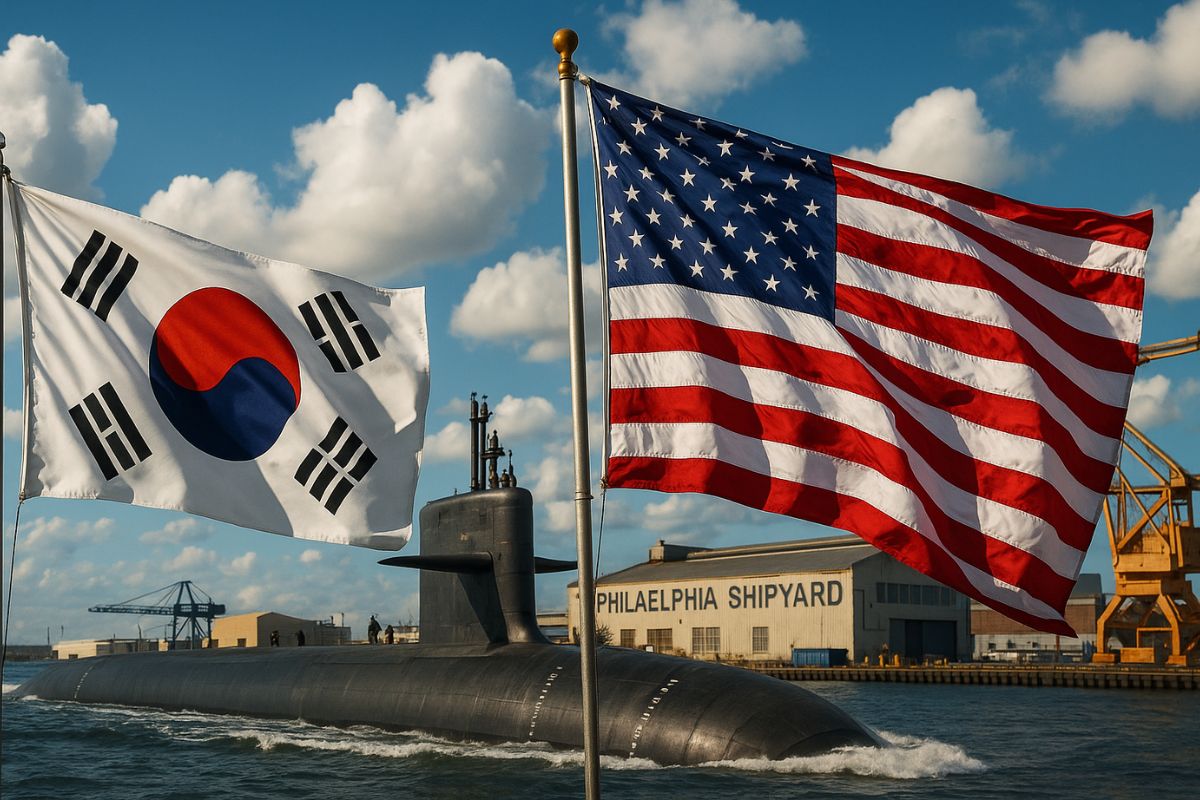
In Social Media, The American President Claimed To Have Given Approval For A Nuclear Submarine For South Korea, Mentioned Construction At The Philadelphia Shipyards And Conditioned Tariff Understandings On Payments And Energy Purchases, Recentering The Nuclear Submarine Issue In The Bilateral Agenda
According To The CNN Brasil Portal, The Announcement About The Nuclear Submarine Came From A Social Media Post On Wednesday When Donald Trump Declared That He Had Given “Approval” To South Korea To Move Forward With A Nuclear Propulsion Project. In The Same Message, He Stated That The Construction Would Take Place At The Philadelphia Shipyards, Linking The Gesture To The Narrative That The Military Alliance Is At Its “Strongest Point”.
According To The Report, Seoul Would Have Agreed To Pay US$ 350 Billion To Reduce Tariffs Imposed By Washington And Buy American Oil And Gas In Large Volumes. The Statement Resurrects The Discussion About The Nuclear Submarine For South Korea, A Historically Sensitive Topic Due To The Involvement Of Technology, Fuel, And Proliferation Safeguards.
What Was Said, By Whom And Where
In The Post, Trump Claimed That The “Approval” Covers A Nuclear Propulsion Submarine To Replace Diesel Units Considered Less Agile.
-
The Federal Revenue Service now automatically cross-references everything you declare with data from banks, credit cards, brokerage firms, and insurance companies, and any discrepancy between your income and your expenses triggers an alert in seconds.

-
Amid global tensions, Brazil blocks the United States’ proposal at the WTO and paves the way for a trade crisis and possible retaliations.

-
Shopee opens the largest logistics warehouse in Brazil in Guarulhos: 220,000 m² on Dutra, contract signed before construction, pays R$ 45/m² and accelerates deliveries at scale, putting pressure on Mercado Livre and Amazon.
-
After mistakenly transferring R$ 50,000 via Pix, a man will receive the amount back along with R$ 10,000 for moral damages from the recipient.

The Text Explicitly States That The Construction Would Occur “Right Here In The Good Old United States,” At The Philadelphia Shipyards, Giving An Industrial Address To The Proposal And Signaling Local Economic Impacts If The Promise Materializes.
The Message Also Reinforces The Line That “Our Military Alliance Is Stronger Than Ever”, Seeking To Frame The Nuclear Submarine As A Consequence Of Strategic Cooperation.
The Political And Symbolic Framing Is Central, As It Involves Projection Capability And Sensitive Industrial Chains.
Economic Conditions And Alleged Counterparts
The Announcement Was Accompanied By The Claim That South Korea Would Pay US$ 350 Billion To Alleviate Tariffs And Would Start Purchasing Energy From The U.S. On A Large Scale.
Put Side By Side, These Conditions Present A High-Impact Economic Package, Linked To The Movement Around A Nuclear Submarine.
From The Perspective Of Policy Formulation, Payments, Tariffs, And Energy Purchases Function As Bargaining Tools, While The Construction Site In Philadelphia Would Be The Visible Industrial Component.
The Link Between Economy And Defense Sustains The Discourse, Although Values And Timelines Need Formal Detailing To Measure Scope And Schedule.
What Seoul Seeks And Why It Matters
Before The Bilateral Meeting, The South Korean President Lee Jae Myung Indicated That He Would Push For Authorization Of Nuclear Fuel For Propulsion, A Step Considered Essential To Enable Such Programs.
The Request Was Described As A Necessity To Compete With North Korean And Chinese Capacities, Repositioning The Nuclear Submarine Within The Logic Of Regional Deterrence.
Historically, Governments In Seoul Have Demonstrated Interest In Nuclear Propulsion Platforms, While Washington Has Expressed Proliferation Concerns.
This Tension Between Operational Necessity And Non-Proliferation Rules Composes The Technical-Political Background Of Any Advances On The Topic.
Military And Technical Implications Of The Nuclear Submarine
A Nuclear Submarine Offers Greater Submersible Autonomy, Sustained Cruise Speed, And Prolonged Operating Window Without The Need For Frequent Refueling, Elements That Extend Patrol Coverage And Persistence In Disputed Areas.
In Practice, Acoustic Discretion And Range Can Alter The Local Balance, Especially Around The Korean Peninsula.
The Mention Of A Specific Shipyard Signals Concern Over Protection Of Sensitive Technology And Domestic Control Over The Supply Chain.
In Parallel, The Supply And Fuel Cycle Are Decisive Technical And Diplomatic Variables, As They Determine Inspection Regimes, Transfer Modalities, And Strictly Naval Use Guarantees.
Regional Context And Perception Of Threat
The Topic Gains Traction Amid The Narrative That North Korea Displayed A Nuclear Propulsion Submarine Under Construction, Presented As A Relevant Threat To Seoul And Washington.
In This Environment, The South Korean Nuclear Submarine Would Be Presented As A Symmetric Response, Elevating The Level Of Deterrence And Reaction Capability.
Still, Any Real Progress Depends On Formal Decisions, Technical Memos And Safeguard Arrangements That Translate Political Announcements Into Acquisition Programs.
Without A Timeline, Contract And Specifications, The Immediate Effect Is Political And Signaling, Impacting The Perception Of Risk And Enemy Calculations.
The Announcement Repositions The Nuclear Submarine At The Core Of The U.S.–South Korea Relations And Links The Discourse To Tariffs, Energy And Industrial Employment In The U.S., With Philadelphia As A Showpiece For Execution.
The Practical Viability Will Depend On Fuel, Safeguards, Hull Design, System Integration And Formal Agreements, Steps That Transform A Declaration Into Concrete Naval Capability.
In Light Of This Scenario, Do You Believe The Political, Technical And Economic Cost Of A South Korean Nuclear Submarine Would Bring More Security To The Region Or Open Up A New Round Of Escalation And Counterpositions?







Seja o primeiro a reagir!