





 Portuguese
  English
  Spanish
  7 min of reading
  0 comments



Trade between the US and China fell in 2025, but Beijing redirected exports, pressured global prices, and changed the global economic balance.
In 2025, data consolidated by the McKinsey Global Institute and analyses from Reuters showed that the direct flow of goods between the United States and China experienced a significant contraction, driven by a new cycle of tariffs linked to Donald Trump’s trade policy. According to McKinsey, US imports from China fell by about $130 billion in 2025, nearly three times the decline recorded in each of the previous two years, while specific sectors saw even sharper declines, such as smartphones, where the reduction of American sourcing from China was around 40%.
This contraction, however, did not signify a collapse of global trade. On the contrary, what was observed was a profound reorganization of international supply chains. McKinsey itself highlights that the United States continued to shift purchases from China to countries like Mexico, Vietnam, and other ASEAN economies, in some cases using these markets as an intermediate step in the trade flow, while Reuters reported that China ended 2025 with a record trade surplus of $1.189 trillion, sustained precisely by the expansion of exports to markets outside the United States. Therefore, trade between the two largest economies on the planet decreased directly, but continued to exist indirectly, redirected by other countries and industrial hubs.
China redirects exports and maintains growth even with high tariffs
Despite the reduction in direct exports to the United States, China did not record a proportional decline in its total foreign trade. According to data compiled by Reuters and reports from McKinsey, the Asian country ended 2025 with record levels of exports in global terms.
-
Why U.S. federal judges have increasingly blocked decisions by Donald Trump and how this wave of injunctions is reshaping the limits of presidential power.
-
The US bombs Iran’s largest oil center and raises global tension after Trump’s explosive ultimatum with a threat of total destruction.

-
Eurasia Group, a group that has accurately identified the biggest geopolitical risks of the last 20 years, issues a new warning and states that the greatest danger of 2026 does not come from China or Russia, but from within the United States itself, and that the world’s greatest power is dismantling the global order it created on its own.

-
Analysts monitoring global risks since 2017 warn that water is becoming a geopolitical weapon, half of humanity already lives under water stress, India has suspended its treaty with Pakistan, Ethiopia is operating a dam on the Nile without an agreement, and Turkey has already reduced the flow of the Euphrates by up to 90%.

This performance was made possible by a clear strategy of redirecting trade flows. Chinese companies began to expand their presence in emerging markets, especially in Asia, Africa, and Latin America, compensating for losses in the North American market.
Regions like ASEAN, a bloc that brings together Southeast Asian countries, recorded significant growth in imports from China. This movement not only absorbed part of the products that stopped going to the United States but also consolidated new consumption and distribution centers.
Price reduction boosts competitiveness of Chinese products abroad
One of the mechanisms used by Chinese exporters to maintain sales volume was price reduction. Sectors such as electric vehicles, electronics, toys, and consumer goods adopted aggressive strategies to attract new buyers.
Although there is no single percentage applicable to all segments, market analyses indicate that there were significant declines in average export prices, allowing Chinese products to become even more competitive in developing countries.
This strategy expanded China’s presence in markets where price is a determining factor, reinforcing its position as the leading global supplier of manufactured goods.
Southeast Asia becomes a key piece of the new global chains
Southeast Asia emerged as one of the biggest beneficiaries of this trade reorganization. Countries like Vietnam, Indonesia, Thailand, and Malaysia began to play a dual role in global supply chains.
On one hand, they increased their imports of Chinese products, many of which are subsequently re-exported. On the other hand, they expanded their own exports to the United States, taking advantage of more favorable tariffs.

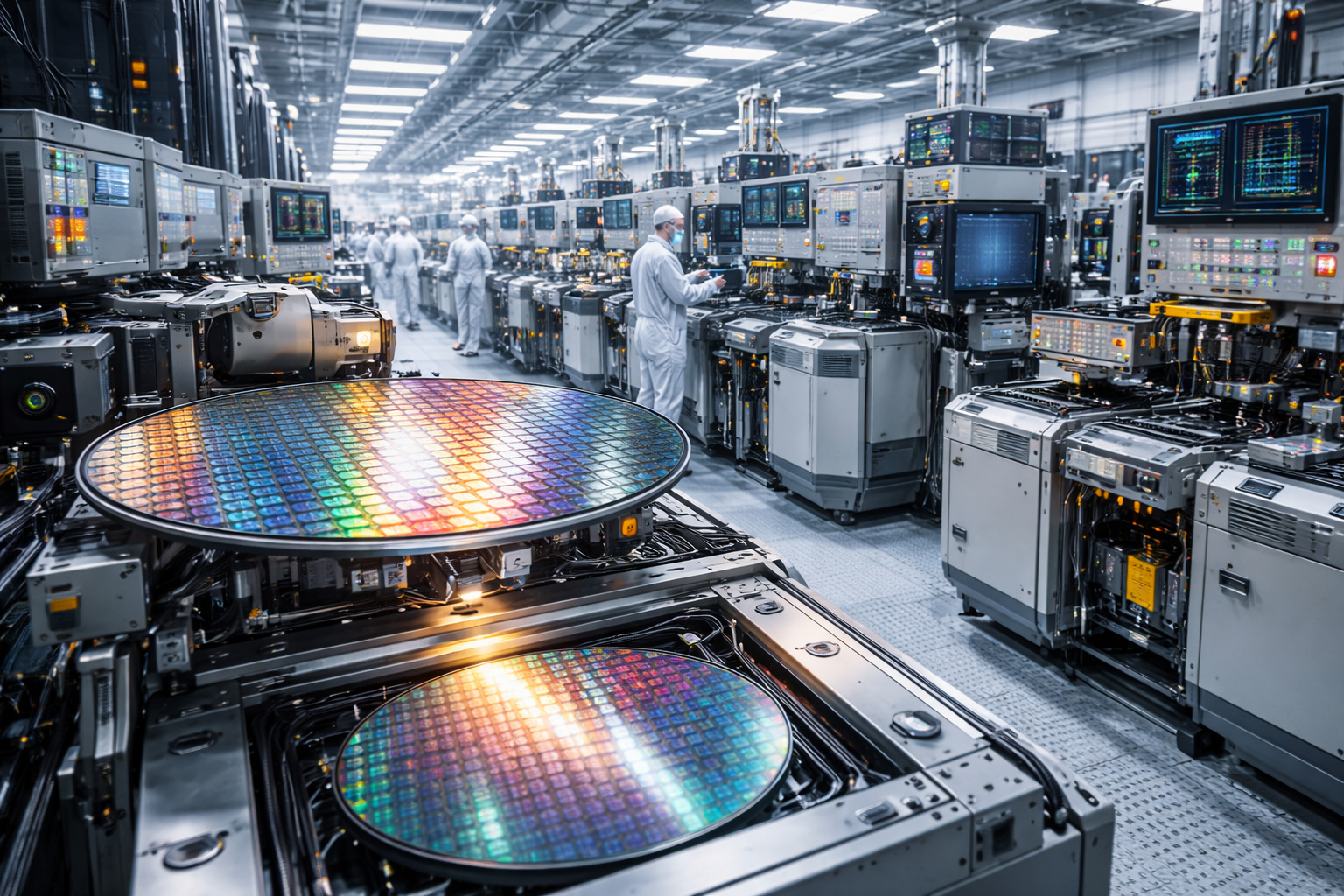
This phenomenon consolidated the model known as “China+1,” in which companies maintain production in China but use other countries as a complementary base for export, reducing direct exposure to American tariffs.
ASEAN, as a bloc, recorded a significant increase in trade volume with both powers, becoming one of the main balancing points of the new economic geopolitics.
United States replace Chinese suppliers with other countries
On the American side, the strategy adopted was supplier diversification. Data indicates that the United States managed to replace about two-thirds of the imports that previously came directly from China.
This substitution occurred mainly through countries like Mexico, Vietnam, and India, which began to fill the gaps left by the Chinese industry in certain segments.
This process, however, did not completely eliminate dependence on China, as many of the products exported by these new partners continue to use Chinese inputs in their production chain.
Europe faces simultaneous pressure from China and the United States
While Asia and emerging markets benefited from the trade reorganization, Europe began to face a more complex scenario. The European Union found itself positioned between two poles of economic pressure.
On one side, the increase in Chinese exports to the continent raised internal competition, especially in sensitive industrial sectors. Cheaper products began to compete with European manufacturers, pressuring margins and market share.
On the other side, the tariffs and trade barriers imposed by the United States also affected European companies, reducing competitiveness in one of their main export destinations.
This scenario became known as “double compression,” in which Europe simultaneously suffers from the influx of Chinese products and American trade restrictions, creating a challenging environment for its industry.
Brazil expands commodity exports and gains relevance in the global scenario
Brazil appears as one of the countries that managed to partially benefit from this global rearrangement. With China seeking new trade partners, Brazilian commodity exports gained even more relevance.

Products such as soybeans, iron ore, and oil recorded an increase in Chinese demand, reinforcing Brazil’s position as a strategic supplier of raw materials.
This movement expanded the country’s role within the global supply chain, especially in sectors related to energy and food.
Global chains become more complex and less direct
One of the most important effects of this transformation was the increased complexity of production chains. International trade ceased to follow direct flows between large economies and began to operate in multiple layers.
Products that were previously exported directly from China to the United States can now pass through various countries before reaching their final destination. This process involves additional stages of assembly, transformation, or simply redistribution.
The fragmentation of supply chains has made global trade more resilient, but also more difficult to trace and analyze, requiring new approaches to understand economic flows.
Trade war accelerates structural changes in the global economy
The impact of tariffs was not limited to isolated adjustments. What was observed was an acceleration of trends that had already been consolidating, such as the diversification of production chains and the regionalization of trade.
Companies began to review production strategies, seeking to reduce risks associated with geopolitical tensions. Emerging countries gained ground as industrial and logistical hubs.
This process indicates a transition from a highly globalized model to a more distributed and regionalized system, in which multiple economic poles coexist.
China reinforces its position as the leading global exporter even with restrictions
Even in the face of trade barriers, China maintained its position as the leading global exporter. The country’s industrial capacity, combined with its logistical infrastructure and production scale, allowed it to absorb impacts and redirect flows.
The rapid adaptation to new market conditions demonstrated the resilience of the Chinese economy, which continues to play a central role in international trade.
The decline in direct trade between the United States and China does not represent a complete distancing between the two economies, but rather a change in the way these relations manifest.
Indirect trade, mediated by third countries, maintains economic interdependence, albeit in a less visible way. At the same time, new trade alliances are emerging, altering the global balance.
The resulting scenario is more fragmented, yet highly interconnected, reflecting the complexity of contemporary economic relations.
Global impact goes beyond tariffs and impacts the entire dynamics of international trade
The tariffs applied in 2025 acted as a catalyst for a broader transformation. The impact was not limited to the two largest economies in the world but spread across different regions.
Emerging markets gained prominence, production chains were reorganized, and new trade flows emerged. The global economy began to operate with a more distributed logic, in which multiple centers of production and consumption coexist.
And you, do you believe that this global reorganization is here to stay or can it still be reversed in the coming years?
Leave your opinion in the comments and tell us how you see the future of trade relations between the major powers and the impact of this on the global economy.








Seja o primeiro a reagir!