





 Portuguese
  English
  Spanish
 5 min of reading
  7 comments


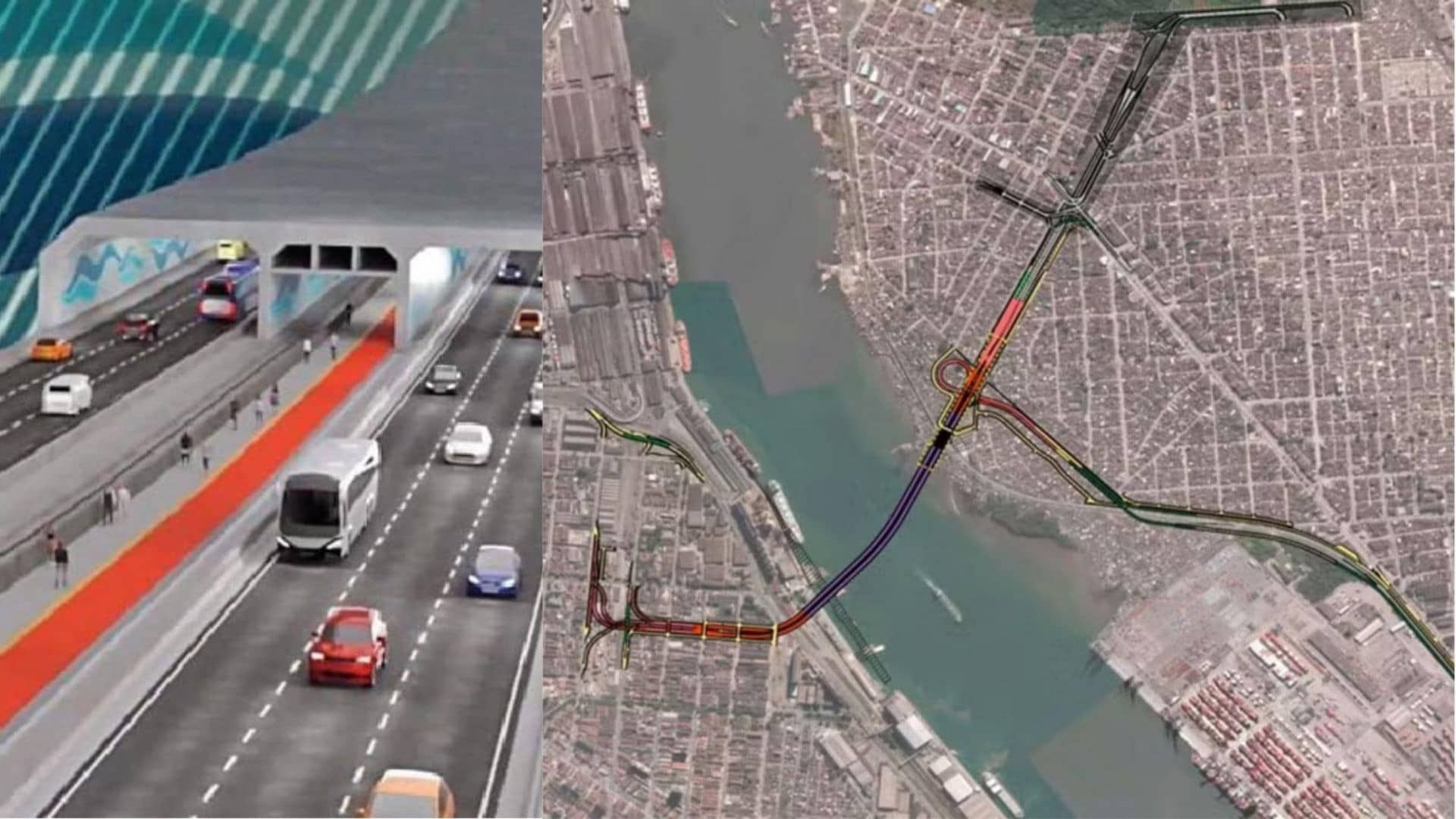


The Santos-Guarujá Immersed Tunnel Project Advances After PPP Approval and Promises to Change Mobility, Logistics, and Urban Connection Standards in the Bayside Region, With Direct Impacts on Daily Transportation and Port Operation.
The approval of the Public-Private Partnership (PPP) for the Santos-Guarujá Immersed Tunnel, published in November in the State Official Gazette, formalized the result of the auction held at B3 and moved on to the contractual signing phase.
Budgeted at R$ 6.8 billion, the project foresees a 1.5-kilometer tunnel, with 870 meters submerged under the Port of Santos channel, connecting Macuco in Santos to the district of Vicente de Carvalho in Guarujá.
The route, which currently can take up to one hour via alternative roads or long waits at the ferries, is expected to be traveled in about two minutes, according to technical estimates.
-
Neither the Pyramids nor the Great Wall of China, this gigantic construction in Spain is the human mark on planet Earth that intrigues the most when seen in images from space.
-
Surrounded by cliffs, mist, and chilling stories, the ancient Hotel del Salto has been reborn as a museum while still unable to shake off its reputation as a haunted place.

-
This star-shaped fortified construction, hidden near the border of Spain, may be the largest fortress on the planet.
-
Congonhas receives the monorail promised for the 2014 World Cup after more than a decade of delays and becomes the first airport in Brazil with integrated subway.

PPP, Investments, and Project Timelines
The international auction held in September at B3 confirmed the Portuguese company Mota-Engil Latam Portugal S.A. as the winner of the concession, after offering a 0.5% discount on the maximum expected compensation.

The contract, with a duration of 30 years, is awaiting only the completion of the pre-contractual due diligence and qualification steps.
The modeling anticipates a sponsored PPP, with revenue coming from tolls and annual public payments.
The Union and the Government of São Paulo will share the R$ 5.4 billion in public contributions, while approximately R$ 1.78 billion will be the responsibility of the concessionaire.
The reference schedule indicates the beginning of the definition of the module assembly dock in 2026, manufacturing from 2027, immersion until 2030, and operation commencement in 2031, according to official documents.
Structure, Modules, and Characteristics of the Tunnel
The crossing will feature six traffic lanes, three in each direction.
One of the lanes will be reversible for the future operation of the Light Rail Vehicle (VLT).
The project includes a bike lane and a walkway, totaling about 35 meters in width.
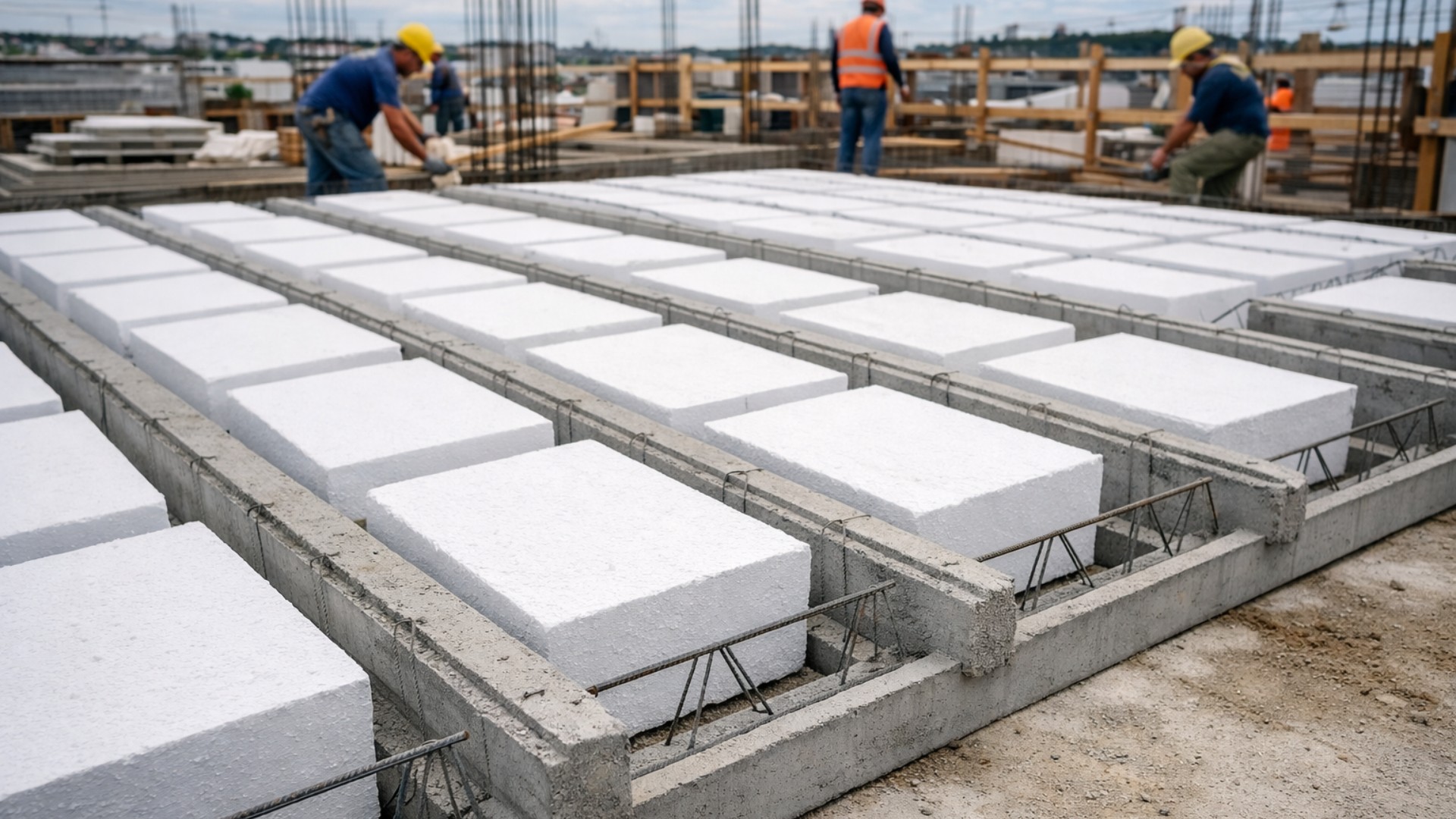
The submerged section will be approximately 21 meters deep, formed by six pre-cast reinforced concrete modules, each about 140 meters long.
These modules will be built in a dry dock, tested, and towed to the excavated bed before immersion.

Later, they will receive protection layers with sand and rocks, as per practices adopted in international immersed tunnels.
The Port Authority of Santos (APS) will monitor the stages, as the channel remains in continuous use and is undergoing deepening.
Impact on Crossing and Traffic Between Santos and Guarujá
Currently, the link between Santos and Guarujá depends mainly on the ferries, as well as the route via Cônego Domênico Rangoni Highway, which increases the journey by more than 40 kilometers.
The ferries face operational restrictions due to weather, maintenance, and limited capacity.
A wait of over an hour can occur during peak demand periods.
Studies used in the PPP modeling estimate that the tunnel should absorb 70% of current demand, reducing the usage of ferries.
Environmental assessments indicate that the reduction in travel time could lead to a up to 53% reduction in carbon dioxide emissions associated with the crossing between banks.

The project complements the PPP of coastal crossings, which anticipates fleet renewal and the introduction of electric vessels for the stretches that will continue to operate.
Role of the New PAC and Socioeconomic Effects
The tunnel is part of the New PAC, due to its impact on the flow of the Port of Santos, which accounts for a significant share of the country’s exports.
According to estimates from the state government and the concessionaire, the project is expected to generate about 9,000 direct and indirect jobs, with priority for residents of the Bayside Region.
Public authorities expect that approximately 2 million residents will benefit, in addition to tourists using the road system and the crossings in the region.
For the port sector, technicians estimate that separating urban traffic from cargo traffic could reduce operational costs and improve logistics efficiency.
The toll will be equivalent to that of the ferries on weekdays for light vehicles.
Pedestrians and cyclists will have free access.
Environmental Licensing, Eminent Domain, and Urban Adjustments
The preliminary environmental license issued by Cetesb authorized the project to move forward, with conditions that include environmental monitoring and mitigation of impacts in the estuary.
The installation license depends on the full compliance with these requirements.
Eminent domain proceedings are occurring in areas of the Outeirinhos and Macuco neighborhoods in Santos and in the retroport region in Guarujá.
The layout was adjusted by the state government to allow the implementation of a “superblock” with reconfigured access and the provision of 1,700 housing units.
Integration with VLT and Intelligent Toll Systems

The APS and the state government are studying the integration with the VLT Baixada Santista, which should utilize one of the internal lanes of the tunnel.
The toll system will be free-flow, with automatic charging and no physical barriers.
The projected capacity is 50,000 vehicles per day, according to the studies that supported the concession.
Safety, Monitoring, and Supervision
The project includes structural sensors, ventilation systems, drainage and fire fighting systems, as well as escape routes.
The operation will be the responsibility of the concessionaire, with auditing from state and federal agencies.
The TCU and the TCE-SP will monitor the economic-financial stability and compliance with contractual targets.
With the approval completed and the contracting process in its final phase, the tunnel advances to the stage of installing the construction sites and mobilizing heavy equipment, according to the state government.
Given the set of technical and operational factors, the question remains: will the new tunnel efficiently redistribute traffic in the Bayside Region, or will it stimulate a demand greater than the projected capacity?




Incrível a ideia, gastar 6,5 bilhões por um túnel submerso quando poderia fazer mais de 5 pontes que traria um benefício viário muito mais adequado.
Perguntaram se vai ter pedágio? Se é uma PPP com certeza vai ter….
Já se paga IPVA fora todos os outros impostos, renda, patrimônio e em tudo que é consumido e ainda se cobra pedágio para impedir um direito constitucional de ir e vir
Parabéns Tarcísio de direita e PT de esquerda, os dois estão trabalhando juntos por mais uma tarifa….
Acho que não vai dar certo a maioria dos políticos **** de esquerda vai querer roubar vai sair superfaturado vai acabar igual as obras do PT tudo parado pela metade durante anos por causa dos eleitores burrão que não sabe votar
O pior cego é aquele que se faz de cego so para não enxergar …..
….
Vota no ****, o **** e chama o outro de burrāo, e fde
Vai ter que pagar pedágio ?