





 Portuguese
  English
  Spanish
  3 min of reading
  0 comments


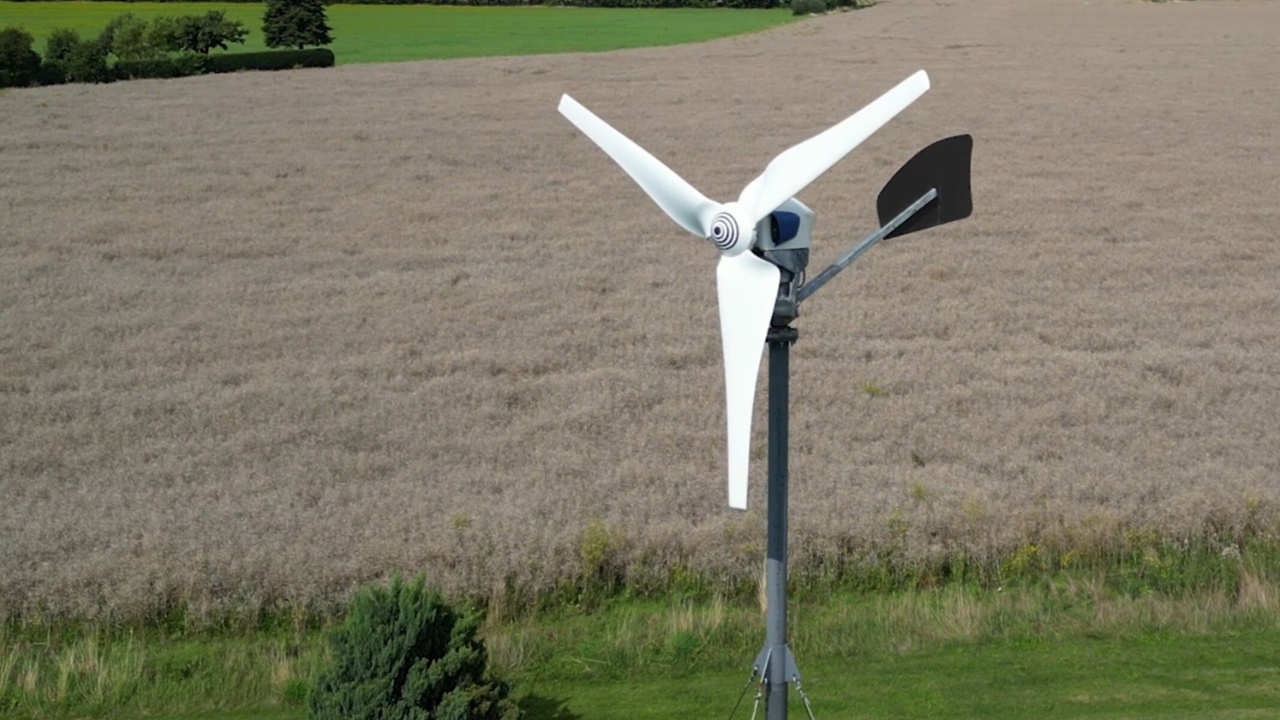
Researchers of the Fraunhofer Institute Developed an Ultralight Wind Turbine Capable of Generating Energy from Winds of Only 2.7 m/s. With an Innovative Design and 3D Production, the Project Promises to Democratize the Use of Wind Energy in Urban, Rural, and Humanitarian Areas.
The wind energy sector has just made a significant leap toward decentralization and accessibility. The Fraunhofer Institute for Applied Polymer Research (IAP), in partnership with the BBF group, announced the creation of an ultralight wind turbine specially developed to operate in areas with low wind speeds — one of the main challenges of current small turbines.
The first five prototypes have already been delivered and are in the installation phase at different strategic locations. The objective is clear: democratize access to clean energy and allow electricity generation in areas previously considered unfeasible, such as urban, agricultural, or peri-urban zones.
Unprecedented Efficiency in Weak Wind Conditions
Unlike conventional micro wind turbines, which only start operating with winds above 4 m/s, the new turbine from Fraunhofer IAP operates from 2.7 m/s, harnessing gentle and steady winds. This feature opens up new possibilities for energy self-consumption in regions with low wind occurrence — something that had limited the advancement of decentralized wind energy.
-
Giant of the winds in Rio Grande do Norte: Serra do Tigre Wind Complex receives new investments and accelerates the expansion of clean energy generation to supply millions of Brazilian homes.
-
Urgent energy transition: Greenpeace advocates for massive investments and points to Brazil as a global leader in wind energy production in the coming years.
-
Conflict in the Sertão: Rural communities in Rio Grande do Norte report issues with wind farms and the new challenges of clean energy in the semi-arid region.
-
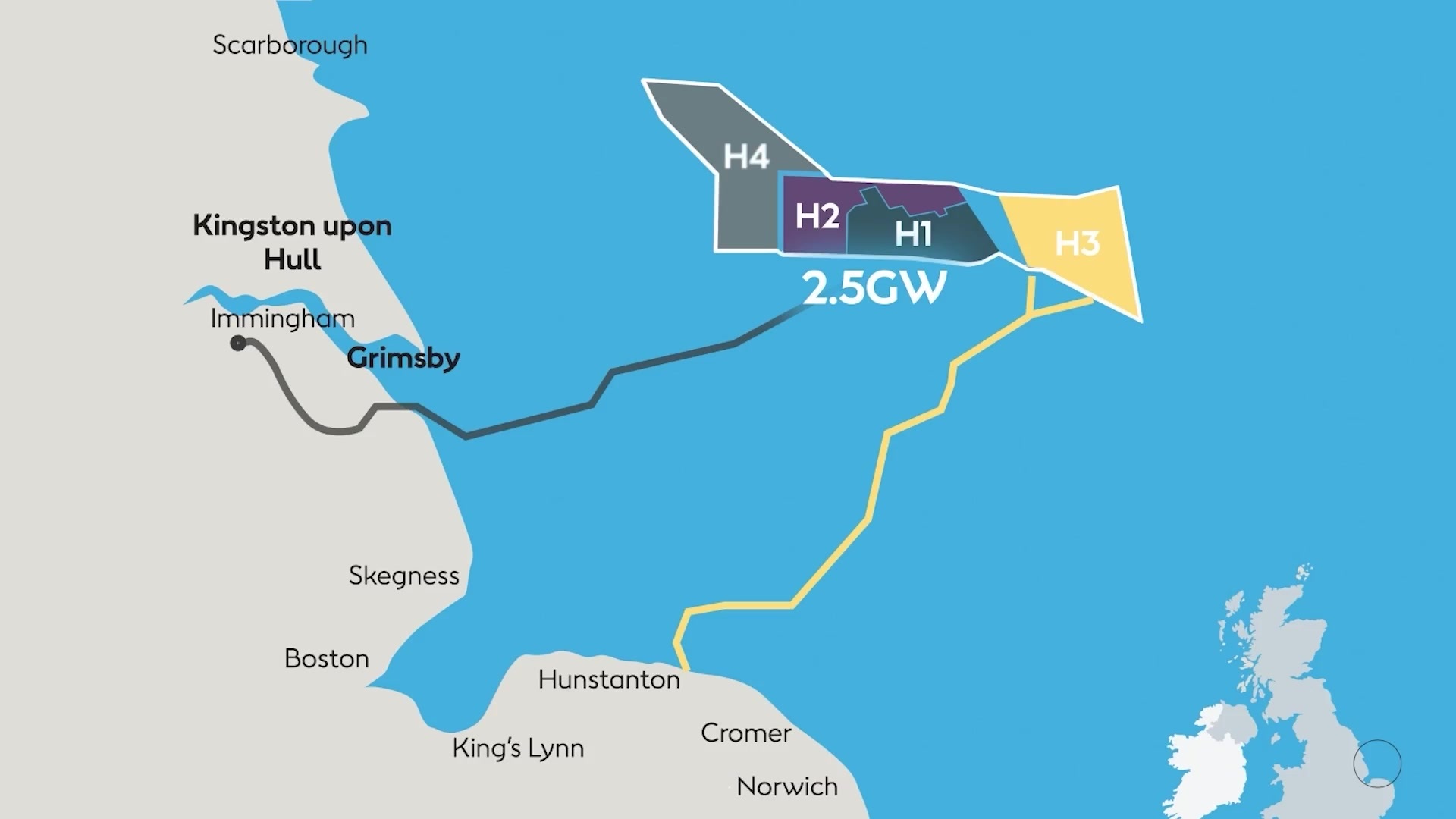
231 turbines of 260 meters at 160 km from the coast, monopiles weighing as much as nine blue whales embedded in the North Sea, and a crane ship taller than the Eiffel Tower: Hornsea 3 will be the largest offshore wind farm on the planet by 2027, and its first components have already arrived in England.

With 450 revolutions per minute (RPM) and a power of 2,500 W at 10 m/s, the model offers a performance 83% higher than similar systems available on the market. Its energy efficiency of 53% approaches the theoretical Betz limit (59%), meaning that more than half of the wind’s kinetic energy is converted into usable electricity — a remarkable achievement for compact turbines.
“Compact, ultralight, and efficient turbines enable truly autonomous generation. This development demonstrates how decentralized solutions can be integrated even in urban environments,” emphasized Raúl Comesaña M., director of BBF.
Innovative Structural Design and High-Performance Materials
The secret to the innovation lies in the blade design and lightweight structure. The blades are made with hollow composite materials, without a foam core, which reduces the overall weight by 35%. This lightness improves the starting ability in gentle winds, enhances structural safety, and facilitates installation on any type of terrain.
In addition to improved performance, the aerodynamic shape of the blades was designed to respond dynamically to wind changes. This means that, in strong gusts, the blades deform controllably, rotating out of the main flow and avoiding overloads.
This natural adaptation eliminates the need for electronic brakes or complex mechanical systems, which reduces maintenance costs and prolongs the turbine’s lifespan — a significant advantage in remote or hard-to-access applications.
3D Printing and Automation: The New Era of Wind Manufacturing
The production of the turbines represents another technological advancement. Utilizing large-format 3D printing (up to 2×2 meters) and the Automated Fibre Placement (AFP) method — which automatically positions reinforcement fibers in molds — the process ensures millimetric precision, waste reduction, and greater energy efficiency during manufacturing.
This type of production also reduces assembly time and allows for quicker customization of components, making local scale production and transportation with low logistical costs feasible.
Mobile, Rural, and Humanitarian Applications
With a compact design and reduced weight, the new turbines can be transported without heavy machinery and installed quickly by small teams. This makes them ideal for:
- Humanitarian aid campaigns and emergency camps
- Seasonal agricultural properties
- Sustainable events and rural self-consumption areas
- Hybrid systems (solar + wind) in schools, hospitals, and public buildings
- Small and medium enterprises with high electricity consumption
The researchers from Fraunhofer and BBF are already working on a new phase of the project: the development of monomaterial components, meaning parts made from a single type of recyclable polymer. This change aims to reduce the environmental footprint and facilitate the recycling of equipment at the end of its useful life, aligning with the principles of circular economy in the renewable energy sector.
The innovation shows how wind energy, combined with lightweight design and 3D printing technologies, can become more accessible, sustainable, and adaptable to the needs of the modern world — from urban centers to remote regions.






Seja o primeiro a reagir!