





 Portuguese
  English
  Spanish
  3 min of reading
  0 comments


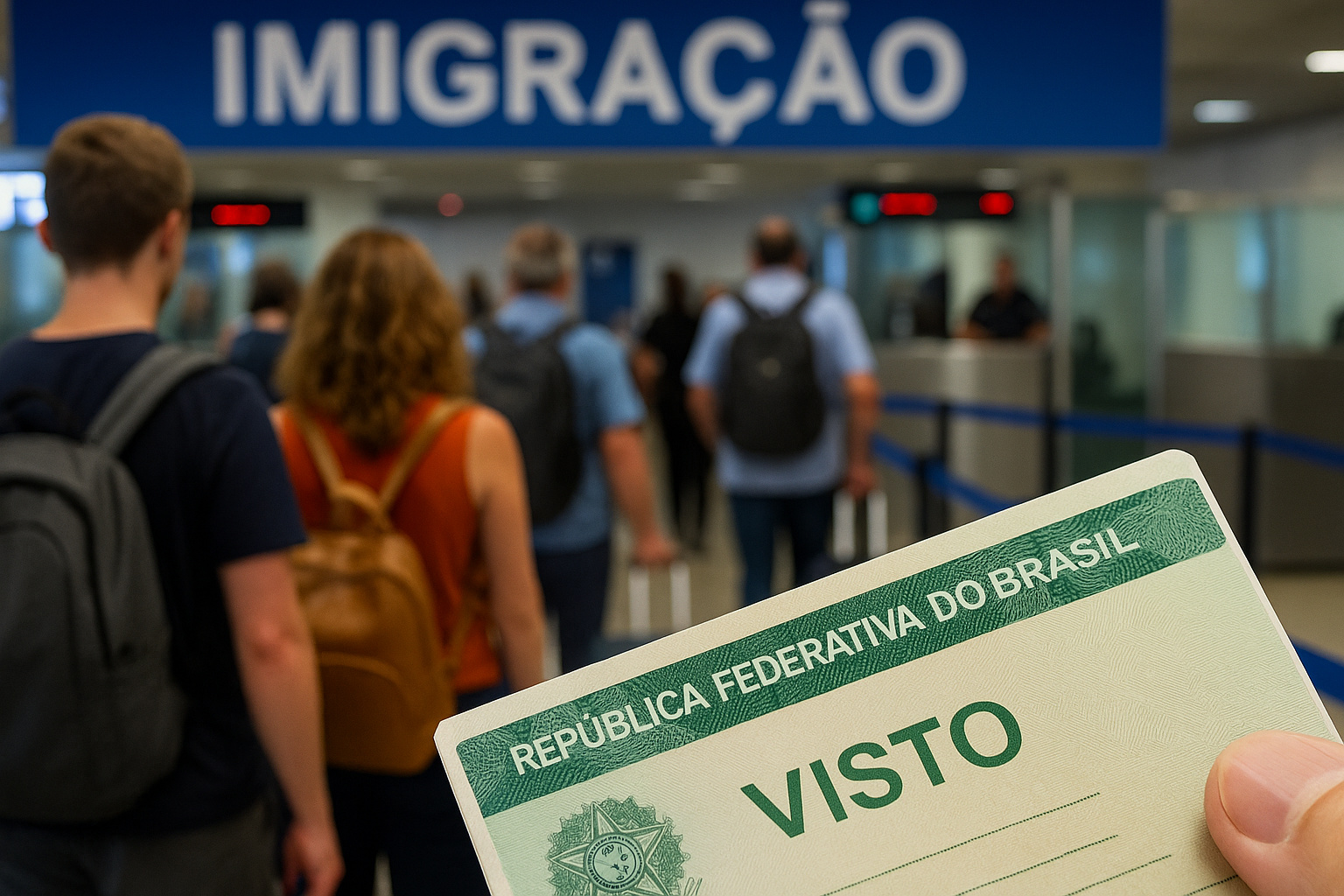
Government Decision to Resume Visa Fees Affected the Flow of Foreign Visitors in 2025
Despite Brazil starting 2025 with a 25.3% increase in the number of tourists from the United States, Canada, and Australia, the scenario changed. Since April, Embratur‘s data indicate a decline. The figures were collected by the Federal Police and the Ministry of Tourism.
The country received 320,229 foreigners from January to March. In the same period of 2024, there were 255,522. Since April 10, the imposition of visa fees has been back in effect.
In the second quarter of 2025, the total dropped to 176,491 tourists. This represents a 0.6% decrease compared to 2024. In 2024, the total was 177,526. The decline coincides with the presidential decree signed by Luiz Inácio Lula da Silva.
-
Middle East War Hits Fertilizers and Transportation and May Strain Brazilian Wallets

-
Russia Considers Suspending Gas to Europe After Surge in Energy Prices

-
How A War Thousands of Miles From Brazil Started Disrupting Global Shipping Routes, Raising Container Costs, and Putting Up to 40% of Brazilian Beef Exports at Risk

-
Iran-U.S. War Drives Up Oil Prices and Pressures Global Financial Markets


He canceled the visa exemption created in 2019, during the previous government.
Contested Reciprocity Measure
The government’s justification was diplomatic reciprocity. Itamaraty argues that it is unsustainable to maintain the exemption without a counterbalance. The decree, published in May 2023, aimed to pressure countries.
The U.S., Canada, Australia, and Japan were included. Only Japan suspended the visa requirement. Legislators began questioning the Executive‘s decision. They claim that the requirement affects the flow of tourists.
Senator Carlos Portinho (PL-RJ) states that the measure creates bureaucracy. For him, this harms the sector that generates billions for the national economy.
Senator Flávio Bolsonaro (PL-RJ) reported a project that seeks to overturn the decree. He believes that barriers discourage foreigners and impact hospitality, transportation, and food.


Economic Impact of Tourist Flow
Brazil received 6.7 million foreign tourists in 2024. There was a 14.6% increase compared to 2023. Only the U.S., Canada, and Australia accounted for 728,000 visitors in 2023. This represented a growth of 8% compared to 2022.
The Americans led the flow, responsible for 83% of the visitors from the three countries in the semester. This totals 410,000 tourists.
They represented nearly 8% of the 5.3 million foreigners between January and June 2025. The data comes from the Federal Police.
The fee of approximately US$ 80 per visa does not go into the General Budget of the Union. This amount goes to Itamaraty.
Critics argue that this undermines the economic argument for maintaining the visa requirement.
Congress Reacts and Tries to Overturn Decree
Legislators reacted since the beginning of the resumption of visas. In March 2025, the Federal Senate approved a project to overturn the decree. They argue that the Executive overstepped its bounds.
The project is still in the Foreign Relations and National Defense Committee of the House.
Additionally, the rapporteur is Deputy Marcel Van Hatten (Novo-RS).
Therefore, the text needs to go through the Constitution and Justice Committee. Then, it goes to the plenary. However, there is no set timeline for the vote.
In the meantime, sectors of tourism continue to pressure for flexibility. Furthermore, experts claim that Brazil has great potential.
Thus, the country needs to facilitate access for international tourists.
Itamaraty Maintains Firm Stance
Although facing considerable criticism, the Ministry of Foreign Affairs still maintains the visa requirement. Moreover, the decision generates debates.
Therefore, in a note sent to senators in 2025, Itamaraty defended the measure. Furthermore, aides assert that the policy follows the principle of reciprocity.
However, there has been no significant increase in tourists after 2019, therefore, data from the Federal Police confirm this decline.
For instance, the U.S., Canada, Australia, and Japan represented 8.8% of foreign visitors in 2019, when there was an exemption.
However, in 2024, the percentage dropped to 8.4%.
Thus, for the government, this shows that the exemption did not guarantee growth in international tourism.










Seja o primeiro a reagir!