





 Portuguese
  English
  Spanish
  5 min of reading
  0 comments


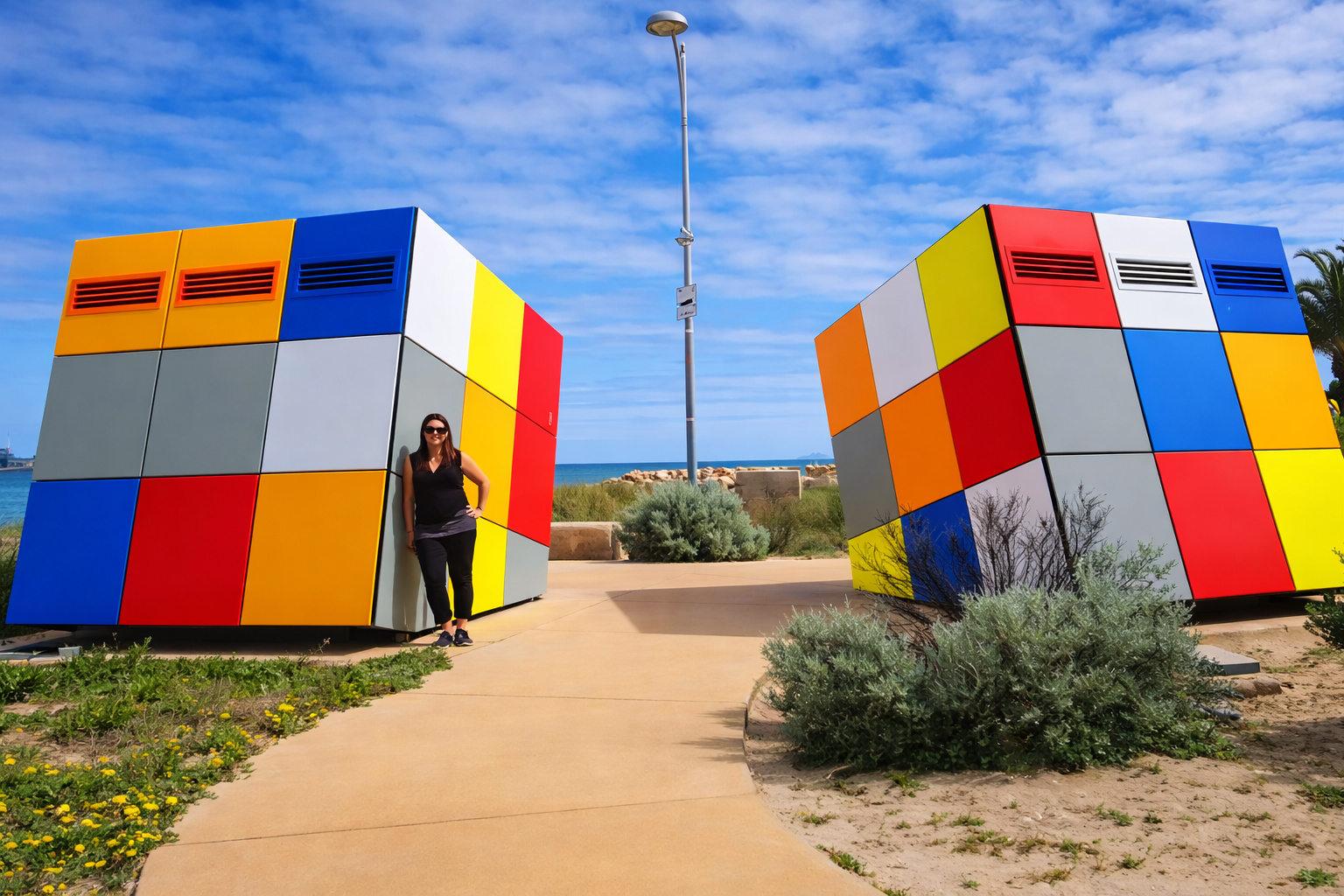
Installed in 2013 on the coast of Geraldton, Australia, the magic cube-shaped toilets combine modular design, resistance to the marine environment, and visual impact that transformed basic infrastructure into an urban attraction.
On the waterfront of Geraldton, in Western Australia, two small colorful cubes attract more attention than many monuments. They are public restrooms in the shape of a magic cube, installed in 2013 at Champion Bay Foreshore as part of an urban revitalization project.
Designed by local architects from Eastman, they transformed a basic necessity into a strong visual element, photogenic and functional, proving that even a restroom can become a tourist attraction.
The magic cube toilet attracted attention for its unique design and vibrant colors
The so-called “magic cube” toilets in Geraldton are two independent public restrooms, each about 2.5 meters wide and 2.5 meters tall. What makes them special is not their size, but their appearance.
-
Santa Catarina produces up to 7 times more than it consumes in some sectors, and its century-old industries founded by grandparents and great-grandparents now compete on equal footing with Germany and the United States in the international market.
-
U.S. war giant weighing 9,600 tons and equipped with long-range missiles is sent to the Atlantic to protect global internet and hunt submarines.

-
Storms on Jupiter are up to 100 times more powerful than on Earth and reveal extreme phenomena that challenge everything we know about weather.
-
With five floors, the building made of red sandstone, marble, and limestone surprises with its strength, appears to float, and remains stable even when submerged in water, thanks to its hydraulic engineering.

The facades are made up of panels in red, blue, yellow, green, and white, arranged in a “scrambled” manner, reminiscent of the famous Rubik’s Cube toy. The result is a compact block that stands out even from a distance.

Since their inauguration, the cubes have appeared in travel blogs, social media, and local tourist guides. The restroom, which usually goes unnoticed, has become a photo backdrop and a must-stop point.
How the magic cube toilet was made
The project was born within a larger urban regeneration plan. The area where the waterfront is located today had old railway lines, which were removed to make way for accessible public spaces, beaches, and gathering areas.
For this new scenario, the architects opted for a modular and prefabricated solution. This type of construction, common in Australia, allows for quick assembly, lower costs, and less environmental impact.
The cubes use materials such as composite panels and lightweight aluminum structures. This choice is not just aesthetic. In coastal regions, sea salt and strong winds quickly corrode traditional structures. Aluminum and durable panels increase longevity and reduce maintenance.
Additionally, the modular model avoids excessive use of heavy concrete and facilitates future adaptations in the urban space.
How the magic cube toilet works in practice
Despite the playful appearance, the operation is straightforward and efficient. Each cube houses an accessible unisex restroom, designed to serve both residents and tourists.
Ventilation occurs naturally, reducing odors and energy consumption. The disposal system is designed for high traffic, common in tourist areas.
The lighting uses LED technology with motion sensors, a standard adopted in public installations in Australia after 2010. This type of system can reduce energy consumption by 40% to 50% compared to older models.
There is also the possibility of integration with local solar panels, something common in public projects in the region, although specific details of the system are not widely disclosed.
What makes this toilet different from other public projects
The main differentiator of the magic cube toilet lies not only in engineering but in urban strategy.
The choice of an eye-catching design increases visibility. This helps reduce vandalism, as highly exposed structures tend to be more respected and socially monitored.
The smooth surfaces and anti-graffiti treatment facilitate cleaning, thus reducing maintenance costs over time.
Moreover, the visual appeal encourages usage. Public structures that appear well-maintained and interesting tend to have more utility for the population. In urban projects, this can mean more safety and greater foot traffic.
Costs, limitations, and criticisms of the magic cube toilet
Not everything was consensus from the beginning. With the increase in tourism and beach usage, criticisms related to the infrastructure arose.
In 2023, a petition with 112 signatures requested the replacement of the cubes with changing rooms that have hot showers. The main argument was overcrowding, especially among swimmers and beachgoers.
The city council defended the functionality of the restrooms and decided not to remove them. Instead, they opted to complement the structure.

In January 2026, an investment of about $160,000 was approved to install refurbished shipping containers next to the cubes. These new spaces function as changing rooms and storage areas for beach equipment, with public art decoration.
This solution demonstrates a clear advantage of modular architecture: it is possible to expand without demolishing what already works.
What this magic cube toilet reveals about modern cities
The case of Geraldton goes beyond a colorful restroom. It shows how design can change the perception of basic infrastructure.
When a city invests in simple yet well-thought-out solutions, the impact appears on multiple levels. There is aesthetic gain, increased use of public space, and even tourism enhancement.
Modular models like this also indicate pathways for other cities, including in Brazil. Reducing construction time from six months to about two, lowering costs, and facilitating maintenance are advantages that are hard to ignore.
Similar projects are already appearing in other parts of the world, such as the famous “Lobster Loos” in New Zealand, reinforcing a global trend of transforming the ordinary into something memorable.
Smart engineering and urban attractiveness
The magic cube-shaped toilets of Geraldton show that even basic structures can gain meaning when they combine smart engineering, accessible design, and urban vision. It is not just about a restroom. It is about how small design decisions can transform the experience of those who live in or visit a city.
In the end, there is a simple yet powerful provocation.
If a restroom can become a tourist attraction, what else in cities could be rethought with creativity?







Seja o primeiro a reagir!