





 Portuguese
  English
  Spanish
  4 min of reading
  0 comments


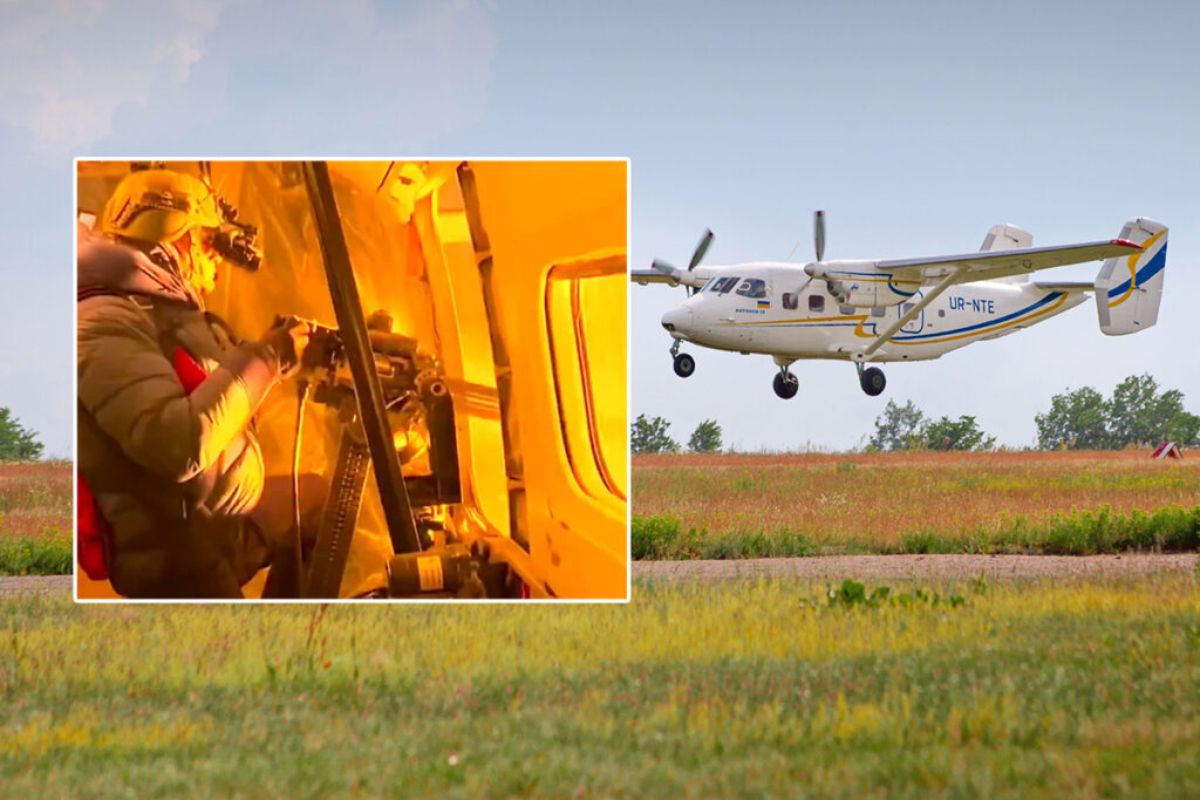
With Unreleased Footage Recorded by French TV, the Antonov An-28 Appears Armed with an M134 Firing from the Side Door, While Ukraine Expands Its Doctrine Against Drones with a Smaller Platform, Low Radar Signature, and Ability to Operate Near the Front Line on Short and Unpaved Runways.
The Antonov An-28 is no longer seen merely as a regional twin-engine aircraft, but has taken on the role of an anti-drone combat platform in an increasingly saturated air war scenario. The modification with a rotary machine gun on the side door signals a practical shift: using a lightweight aircraft to pursue slow targets at compatible altitudes and speeds.
The shift occurs after previous experiences with helicopters and single-engine planes, now focusing on a small fixed-wing aircraft airframe. More than an isolated innovation, the move indicates a continuous adjustment of doctrine, with quick responses to the pressure imposed by Russian and Iranian drones in Ukrainian airspace.
How the Antonov An-28 Was Transformed into a Drone Hunting Platform
The released images show military personnel firing from inside the aircraft through the side door, using an M134 machine gun.
-
Airbnb now offers private car service to pick you up at the airport in 125 cities around the world with a fixed price and no extra fees: the platform aims to become a complete hotel within your smartphone.

-
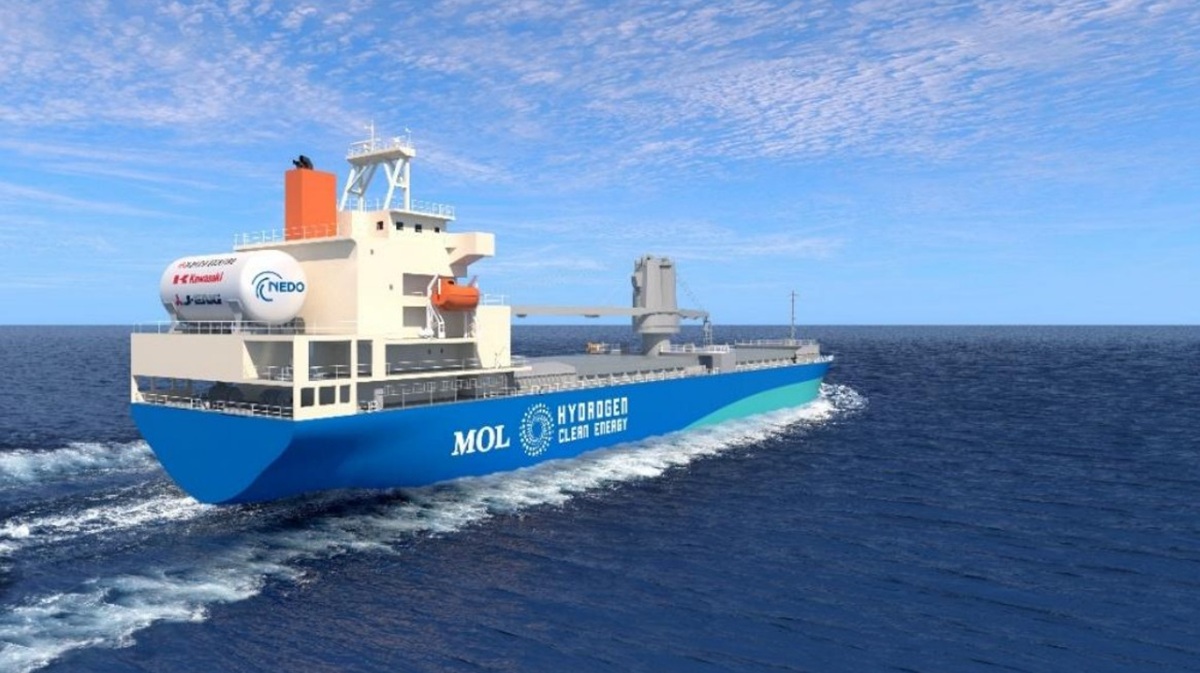
Japan tests for the first time a hydrogen-powered engine for large cargo ships and achieves over 95% of the fuel’s energy at full load, paving the way to equip a 17,500-ton cargo ship already planned for 2027.
-
A mega drill costing R$ 50 million, weighing 130 tons, and the only one of its kind in Brazil has arrived in Balneário Camboriú to build the foundations of the Senna Tower, the skyscraper that honors Ayrton Senna.

-
The first cold front of autumn arrives in São Paulo this Tuesday with a risk of storms, hail, and gusts of wind, but the real cold is not coming now: April will be dominated by above-average heat and may even see a heatwave.


This format deviates from the more common standard in fixed-wing aircraft, which historically favor forward armament or larger caliber cannons in fixed positions.
In the case of the Antonov An-28, the solution seeks compatibility with the type of threat faced: slower drones with a specific flight profile.
The choice of the M134, already widespread on land, naval platforms, and helicopters, enhances operational flexibility, but also imposes a high demand for coordination between crew, firing position, and piloting.
Why the Antonov An-28 Gained Space in This Role
The choice of the Antonov An-28 is not random. In addition to its production ties with Ukraine itself, the aircraft combines compact dimensions, a more discreet profile on the battlefield, and the ability to operate on short runways, even unpaved, which is a valuable characteristic near the front line.
Another point is the flight envelope. Due to its wing design and behavior at low speeds, the Antonov An-28 can make more controlled approaches to track slower targets.
In an environment where reaction time and operational proximity are crucial, this combination becomes a concrete tactical advantage.
What Changes in the Dynamics of Anti-Drone Air Combat
The introduction of the Antonov An-28 into this type of mission reinforces a trend: anti-drone warfare does not solely rely on sophisticated, high-cost systems, but also on adapted platforms that are available and capable of operating quickly on different fronts.
At the same time, this approach demonstrates how Ukraine has diversified its means to close the gaps between detection and engagement.
When helicopters, single-engine aircraft, and now regional twin-engine planes begin to perform complementary roles, the objective is to expand coverage and reduce vulnerability windows.
Operational Limits and Strategic Impact of the Adaptation
Although the adaptation of the Antonov An-28 opens possibilities, it does not eliminate risks. Operating in a war zone, with lateral firing and the need to approach targets, demands rigorous training, crew discipline, and precise control of each mission.
There is also a natural scale limit: transforming a regional aircraft into an anti-drone vector is a response of high tactical value, but it does not replace the entire air defense architecture.
The strategic effect emerges when this solution integrates with other layers of protection, creating a more resilient network against recurring attacks.
The conversion of the Antonov An-28 into a combat platform encapsulates the current moment of the conflict: accelerated adaptation, pragmatic decisions, and a quest for efficiency under extreme pressure.
Ukraine bets on a discreet aircraft, with flexible operation and direct employment against drones to close gaps that traditional systems may not always cover with the same agility.
In your view, does this type of adaptation with the Antonov An-28 tend to be a temporary war solution or can it become a permanent reference for anti-drone missions in other conflicts? And which factor weighs more in this outcome: cost, speed of response, or ability to operate near the front line?









-

-

2 pessoas reagiram a isso.