





 Portuguese
  English
  Spanish
  4 min of reading
  0 comments


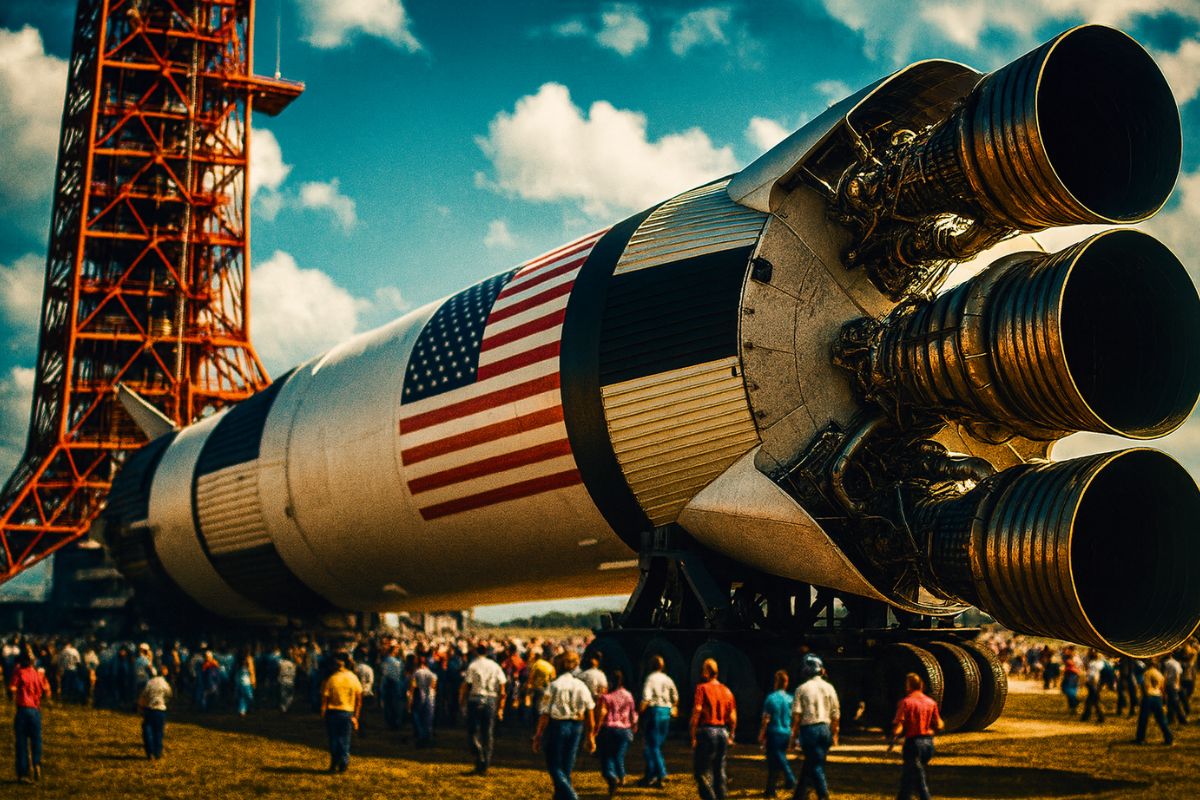
The Space Race Transformed the Apollo Program into an Unprecedented Effort of US$165 Billion, Mobilizing 400,000 People and Changing the Course of Technology, Science, and Global Geopolitics Forever
The Apollo Program, conducted by the United States from 1961 to 1972, was the heart of the Space Race, the technological and ideological showdown between the U.S. and the Soviet Union during the Cold War. With a budget equivalent to US$165 billion in current values and the involvement of over 400,000 professionals, the project culminated in the historic achievement of landing 12 astronauts on the lunar surface. More than just a political victory, Apollo cemented advancements in areas such as computing, materials, and telecommunications, shaping the technological infrastructure that would sustain the 21st century.
The Apollo 11 mission, which landed on the Moon on July 20, 1969, symbolized American triumph over the Soviets and demonstrated that ambitious, clear, and time-defined goals could turn the impossible into reality. The challenge of “landing a man on the Moon and returning him safely before the end of the decade”, proposed by John F. Kennedy in 1961, became the greatest catalyst for innovation ever recorded in peacetime.
From the Cold War to the Lunar Dream
The Space Race began with a symbolic defeat for the U.S.
-
A Brazilian island charges R$ 0.50 to receive visitors and prohibits any new residents.

-
Why was the Great Wall of China built? The truth that many are unaware of!

-
At 73.8 meters tall, the world’s tallest teapot-shaped building has 15 floors, ensures stability, and impresses with an internal space of 28,000 cubic meters.

-
Ambev has planted over 3 million trees and restored an area equivalent to the coastline from São Paulo to Natal, and the result after 15 years of silent investment has finally appeared for all of Brazil to see.


In 1957, the Soviet Union launched Sputnik 1, the first artificial satellite, followed by Yuri Gagarin, the first human in space, in 1961.
The impact was profound: Soviet success pressured Washington to create NASA and invest in unprecedented scientific and industrial mobilization.
Between 1961 and 1969, the United States transformed geopolitical fear into a driver of innovation.
The promise of Kennedy, made at the height of nuclear tension, became a national commitment.
The Apollo Program became the showcase of American power and the ultimate expression of the coordination between government, industry, and academia.
An Unprecedented Human and Technological Effort
Apollo was more than a space program: it was a continental-scale management engineering.
Over 20,000 companies and universities participated in the project, generating technologies that would influence everything from microprocessors to satellite communication systems.
At the program’s peak, 400,000 people worked directly or indirectly on its missions.
The Saturn V rocket, standing 111 meters tall and weighing 3,000 tons, became the most powerful artifact ever built, capable of placing a crewed spacecraft in orbit toward the Moon.
This collective effort established the model for megaprojects that continues to inspire space and industrial initiatives today.
The Conquest of the Moon and the Elevation of Apollo 11
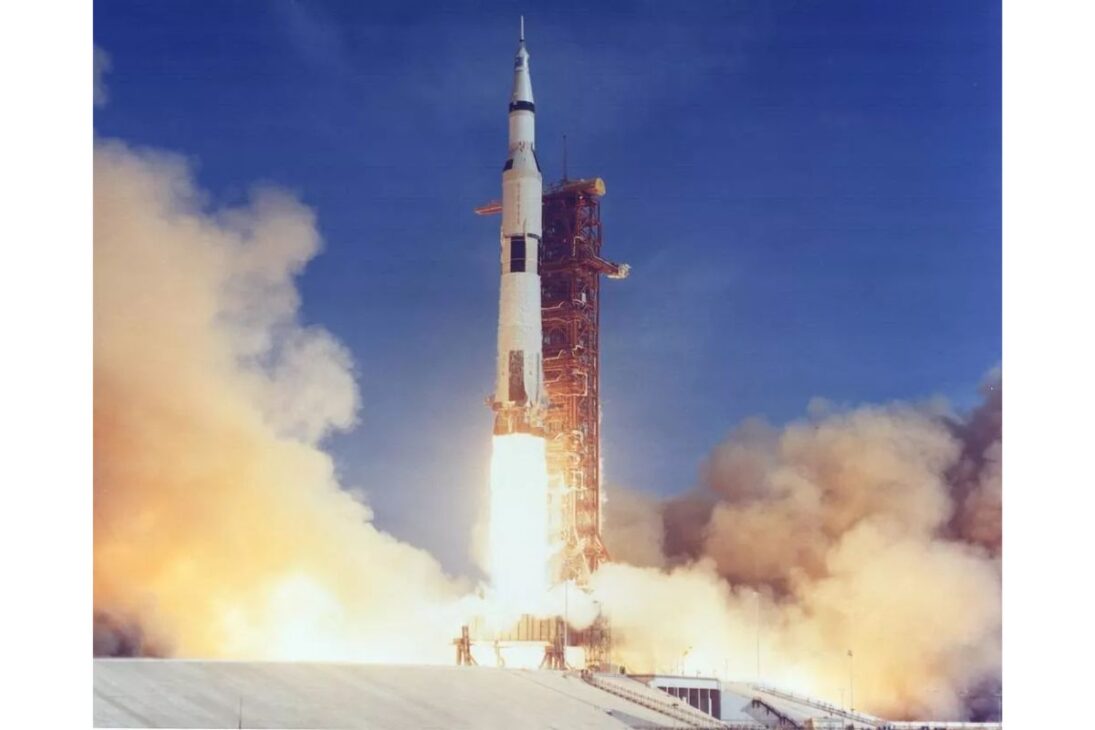
On July 16, 1969, Apollo 11 launched from Kennedy Space Center in Florida. Four days later, Neil Armstrong, Buzz Aldrin, and Michael Collins made history.
The landing in the region known as the Sea of Tranquility was watched by approximately 600 million people in a global broadcast.
When Armstrong took his first step, declaring “one small step for man, one giant leap for mankind”, the Space Race reached a symbolic conclusion.
American success contrasted with Soviet silence and redefined the global balance of power.
The mission lasted just over 21 hours on the lunar surface and left scientific records, geological samples, and a message on behalf of all humanity.
Scientific Advances and the Technological Legacy of the Space Race
The effects of the Apollo Program transcended the field of astronomy.
The technologies developed for the project propelled fields such as embedded computing, composite materials, telemetry, and control engineering.
The Apollo 11 software, led by scientist Margaret Hamilton, marked a milestone in the history of modern programming.
The program consolidated the presence of women and key mathematicians, such as Katherine Johnson, working behind the scenes at NASA.
These names, often forgotten in the official narrative, were crucial for the calculations that ensured safe landing and return.
The human and technological legacy of Apollo continues today in every NASA mission and in every satellite orbiting the Earth.
The Geopolitical Impact and the Renaissance of Lunar Exploration
American victory in the Space Race had an immediate effect: it solidified the United States as a global scientific power and symbolically weakened the Soviet bloc.
However, the end of Apollo in 1972 also marked the beginning of an era of pragmatism. High costs and a focus on reusable programs, such as the space shuttle, changed the course of exploration.
Today, NASA revisits this spirit through the Artemis Program, which honors the Greek goddess sister of Apollo.
With the goal of returning to the Moon in 2024 and establishing a permanent base, Artemis symbolizes the continuity of the vision initiated in the 1960s: using space exploration as a vector for innovation, cooperation, and collective inspiration.
The Apollo Program not only won the Space Race but defined the standard for how scientific knowledge, public investment, and human spirit can converge into something extraordinary.
The cost and risk were immense, but the return was incalculable.
More than half a century later, the dream of exploring space remains the greatest reflection of our curiosity and our capacity for overcoming.
And you, do you believe that the new era of lunar exploration will bring tangible benefits for life on Earth or will it just be a new symbol of power among nations?








-

Uma pessoa reagiu a isso.