





 Portuguese
  English
  Spanish
  5 min of reading
  0 comments


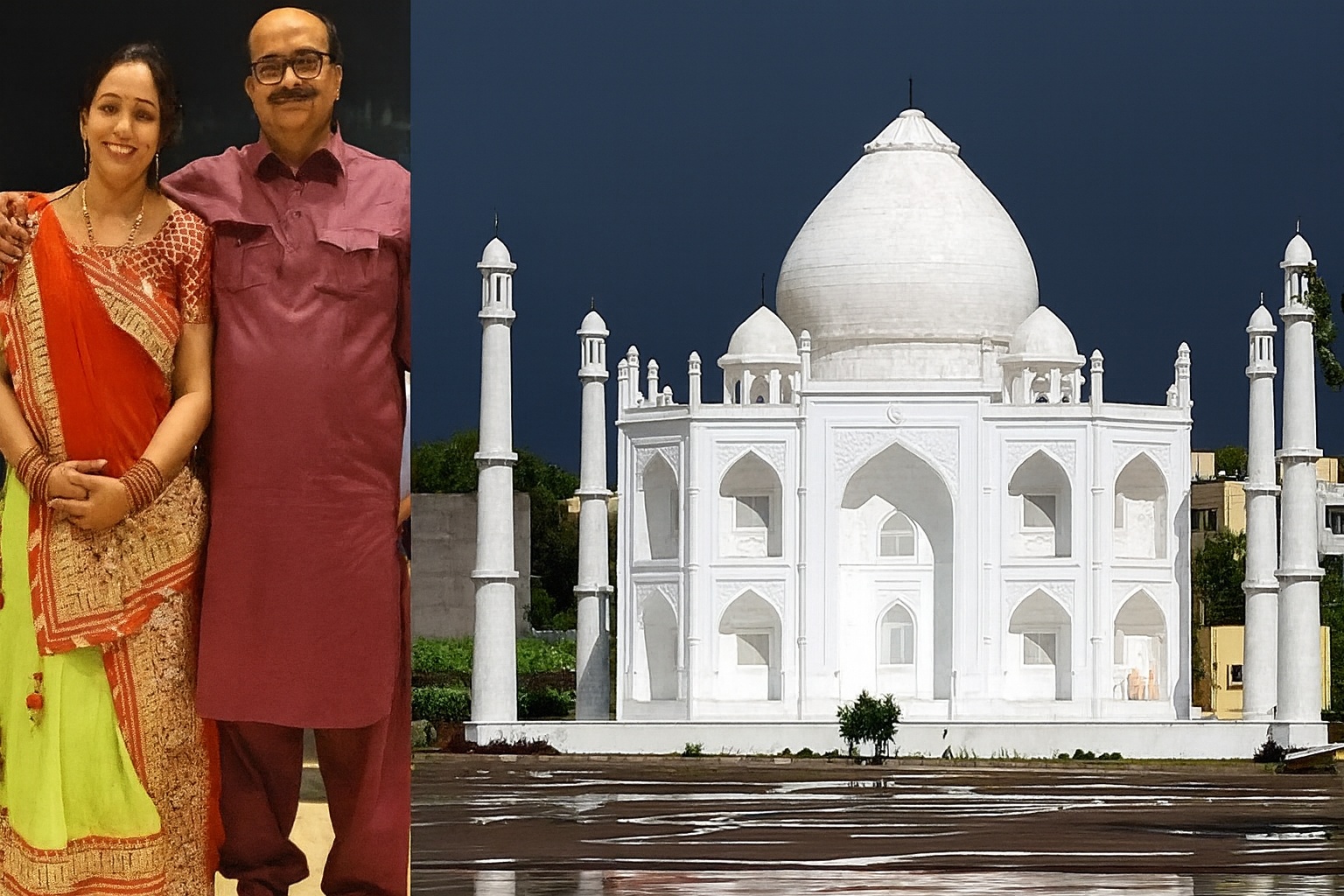
Indian Man Builds Replica of Taj Mahal Alone in 22 Years in Tribute to His Wife, Creating a True Monument of Eternal Love That Moved the World.
In the small town of Bulandshahr in northern India, a simple man proved that love can transcend time, pain, and even the limits of architecture. His name is Faizul Hasan Qadri, a former postman who dedicated over two decades of his life to building, with his own hands and limited resources, a replica of the Taj Mahal — the world’s most iconic symbol of love.
The monument, built in memory of his late wife, Tajammuli Begum, has become a symbol of devotion and persistence. Made without government support or sponsorship, the project was driven by faith, ingenuity, and an unwavering commitment. And thus, in the midst of a modest village, a new Taj Mahal rose — not of empire, but of humanity.
The Origin of the Dream
The story began in 1982, when Faizul Hasan Qadri, then 45, lost his wife after decades of marriage. Without children and devastated by loneliness, he promised himself that he would build a mausoleum so that their love would never be forgotten.
-
A 68-year-old pizza delivery driver went off route to buy a soda that was missing from a visually impaired customer’s order, refused an extra tip, and now Dan Simpson has over R$ 546,000 in donations from people around the world who want to ensure he can retire peacefully on April 30.

-
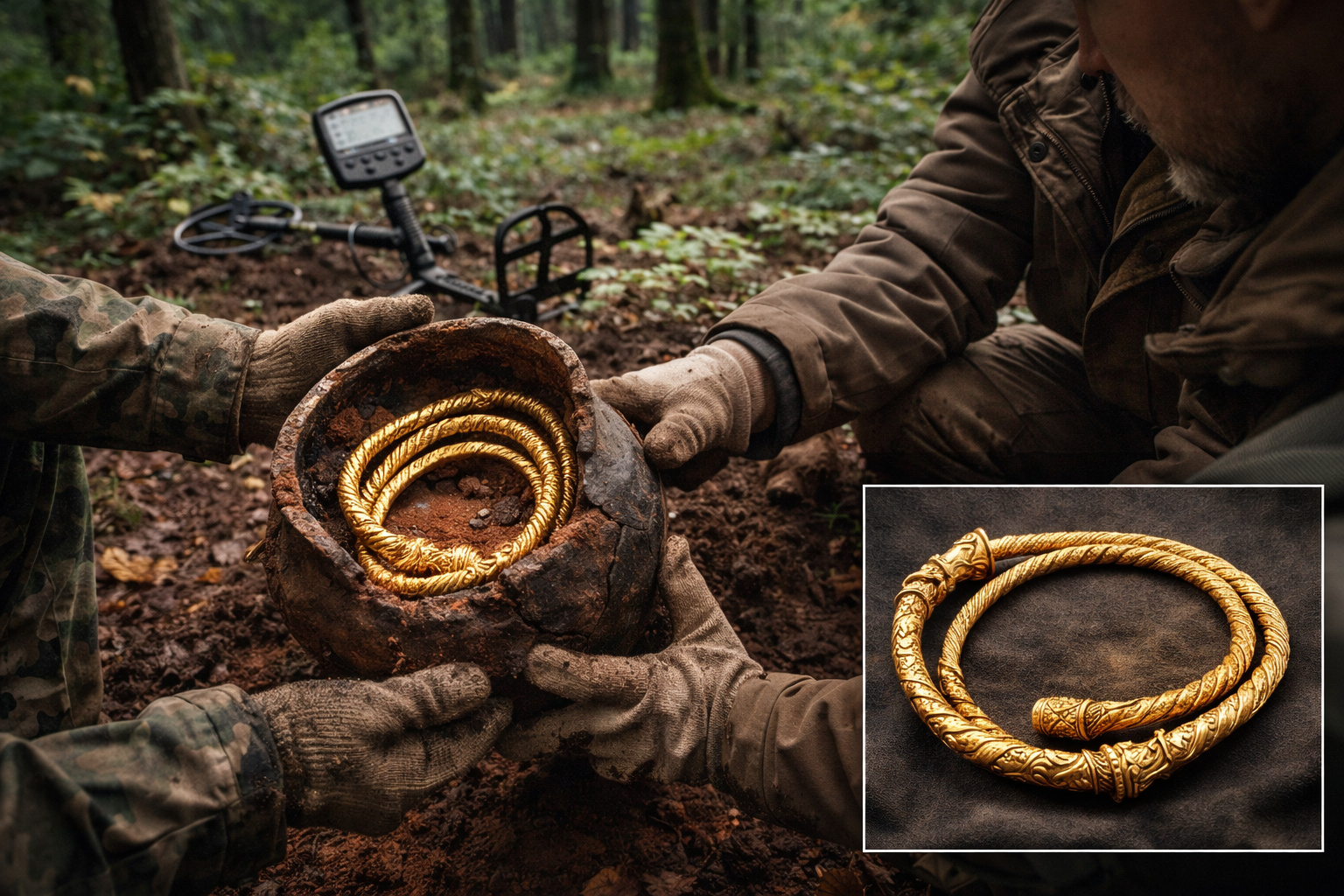
Amateur archaeologists were searching a forest in Poland with metal detectors when they found a ceramic pot buried for over 1,500 years. Inside was a pure gold necklace weighing 222 grams, folded to fit in the vessel, and when experts examined the piece, they discovered it was the first Gothic torque ever found in Polish territory.
-
Millions of people have been eating pomegranates for centuries without knowing that this ancient fruit contains punicalagins, which scientists are studying for their possible effects on memory and vascular health.

-
Argentina patrols the South Atlantic with ships built in France and monitors over 1.1 million km² with 87 m OPVs, a range of 7,500 miles, 360° radar, and a 30 mm cannon against illegal fishing in the 200-mile zone.

Inspired by the original Taj Mahal — built in the 17th century by Emperor Shah Jahan in memory of Mumtaz Mahal — Qadri decided to create a scaled-down version, but with the same purpose: to transform pain into eternal beauty.


“I had no children to carry my name, so I decided that this monument would be our legacy,” he said in an interview with BBC News India in 2013, when the project was already attracting national media attention.
Building a Dream with His Own Hands
Without training in engineering or architecture, Qadri started alone, studying images and old plans of the Taj Mahal. He hired local masons only for specific steps, personally supervising every brick and every arch.
The work was made almost entirely with red sandstone and white marble, the same materials used in the original monument. The size, however, was reduced: the “mini Taj” is about a third of the real scale, with 8-meter minarets and a central dome 12 meters high.
The total cost, according to Qadri himself, exceeded 1.5 million rupees (approximately R$ 90,000 at the time) — an impressive amount for someone living on a modest pension.
“Every time I placed a stone, I felt like I was talking to her again,” the widower told The Times of India in an interview. “The work kept me company.”
The “Taj Mahal of the Poor”
As the years went by, the construction became a local attraction. Residents began to call the monument “Garib ka Taj Mahal” — which in Hindi means “The Taj Mahal of the Poor”.
But for Qadri, there was no comparison that diminished the symbolic value of what he did. The site is not just a mausoleum, but also the actual tomb of his wife, where he himself would be buried decades later.
The man refused several offers of financial help, including donations from local politicians and Indian businessmen. “If I accepted, the monument would cease to be an expression of my love and would become a work of others. I wanted it to be entirely ours,” he stated to India Today.
22 Years of Work, A Lifetime of Love
Between 1982 and 2004, Qadri dedicated practically every day to the project. He arrived at the site at dawn and worked until sunset. Even with health problems, he never interrupted the process.
In 2011, after nearly 30 years of dedication, the mausoleum was completed. The location began to receive visitors from all over the country — and even from abroad — who were impressed by the symmetry, gardens, and serene environment.
The couple was buried side by side, in the center of the structure, under the white dome that Qadri had erected in her honor. Today, the monument remains open for visitation and continues to be cared for by local residents, who see it as a symbol of the strength of love and faith.
International Recognition
The story of Faizul Hasan Qadri went viral in India following a report by BBC News in 2013, even being reproduced on international portals like The Guardian and Al Jazeera. The emotional response was so great that he began to be called “the last romantic of India”.
When asked what motivated him, Qadri responded simply:
“Love is eternal. It is not the rich who prove it, but those who build something with their heart.”
The phrase traveled the world and inspired dozens of reports, books, and short films. In 2018, the man passed away at 82, and his body was buried next to his wife, as he had wished — completing the perfect circle of his promise.
A Story of Love and Resilience
The grandeur of Qadri’s gesture lies not in the physical scale of the monument, but in its symbolism. The “mini Taj Mahal” represents the universality of love and loss, showing that one does not need to be an emperor to build something eternal.
His story echoes that of the original Taj Mahal, built out of love, but with an essential difference: while Shah Jahan had armies of craftsmen and imperial resources, Qadri built with common hands, faith, and inhuman patience.
It is this simplicity that makes his achievement even more powerful — a reminder that the true human legacy is not made of luxury, but of purpose.
The Monument Today
Today, the Taj Mahal of Bulandshahr is visited by tourists, students, and couples seeking inspiration. Although smaller, its beauty and serenity rival the grandeur of the original. Many locals consider the site a sanctuary of love, and some say that the couple’s spirit still watches over the place.
The government of Uttar Pradesh officially recognized the cultural value of the construction and designated volunteers to preserve the space, ensuring that the monument remains standing for generations.
What Faizul Hasan Qadri left for the world was not just a monument — it was a lesson. In times when everything is ephemeral, he proved that dedication can transform pain into art and absence into eternal presence.
His “Taj Mahal of the Poor” is, paradoxically, one of the greatest spiritual riches ever erected by an ordinary man. And, like the original Taj, it is proof that true love is not measured by power, but by time, patience, and faith.







-

-

-

-

-

8 pessoas reagiram a isso.