





 Portuguese
  English
  Spanish
  5 min of reading
  0 comments


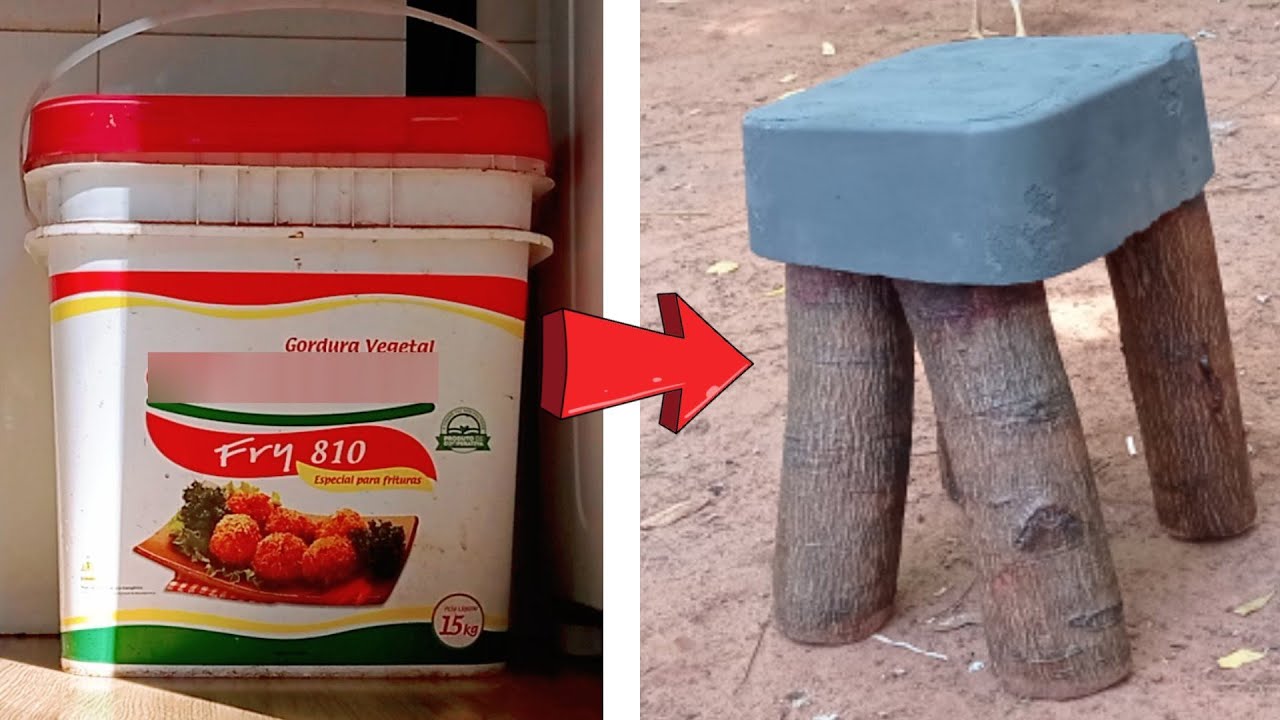
Masons and Artisans Use Plastic Buckets as Improvised Molds to Shape Concrete, Creating Durable Benches and Supports with Low Cost and Reuse.
The use of plastic buckets as improvised molds for shaping concrete has ceased to be just an internet curiosity and has become part of the practical repertoire of masons, artisans, and construction workers in Brazil. The technique, simple and low-cost, has been documented in national tutorials and is mainly applied in the making of benches, stools, supports, and small tables, combining reuse, economy, and structural resistance.
Brazilian publications specializing in handicrafts and home construction show that the method does not require industrial molds, professional concrete mixers, or complex tools, making it an accessible alternative for those needing to create solid pieces with limited resources.
The Brazilian Technique of Shaping Concrete in Common Buckets
According to tutorials published by national portals such as Revista Artesanato and Artesanato Passo a Passo Já, the process consists of using common plastic buckets as the main mold for the concrete. The bucket defines the shape of the piece, while the mixture of cement, sand, gravel, and water creates the final structure after the curing period.
-
The largest bridge in Finland has just been inaugurated and cars simply cannot pass on it; only trams, bicycles, and pedestrians are allowed to cross the 1.2 km giant with a 135-meter pillar over the Baltic Sea.

-
A spaceship-shaped building that cost around 1 billion marks and was once the largest congress center in Europe has been abandoned in Berlin since 2014, and now the city is looking for someone willing to renovate and operate it for 99 years almost for free.
-
Finland hides entire cities underground with gyms, playgrounds, and sports fields 25 meters deep, and now the whole world is lining up to learn how to build bomb shelters like the Finns.
-
China is building an artificial island in the middle of the sea, covering 20 km², to construct the largest offshore airport in the world, the Dalian Jinzhouwan. This $4.3 billion project is anchored on more than 3,000 pillars embedded in the rock beneath the ocean and is scheduled to open in 2035.


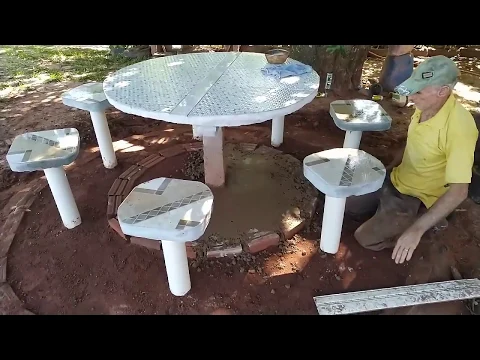

In Brazil, this technique mainly appears in the making of concrete stools, widely used in outdoor areas, backyards, balconies, workshops, and even inside homes as rustic or industrial-style decorative pieces. The same principle can be adapted for side tables, plant supports, and structural bases.
The simplicity of the method is precisely what makes it popular. The bucket acts as a reusable mold, eliminating the need to purchase or manufacture wooden or metal molds.
How Concrete Takes Shape Without Industrial Molds
In Brazilian tutorials, the process follows a straightforward logic. First, the bucket is cleaned and prepared, often with a thin layer of oil or release agent to facilitate the removal of the piece after drying.
Next, the concrete is prepared manually, respecting simple proportions widely known among masons.
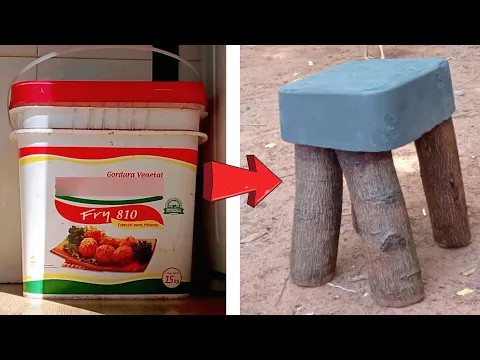
The mixture is poured into the bucket until the desired height is reached. Depending on the project, PVC pipes, short rebar, or metal pieces are inserted to form legs, joints, or structural reinforcements. After that, the concrete remains undisturbed for several days until it gains enough strength to be removed from the mold.
According to Brazilian materials consulted, the average initial curing time ranges between 48 and 72 hours, but the total strength of the concrete is only achieved after about 28 days, a standard recognized in construction.
Benches and Stools: The Most Common Use in Brazil
The most recurring example in national tutorials is the concrete stool molded in a bucket, widely promoted as a cheap and durable alternative. These pieces are used in both indoor and outdoor environments, supporting heavy weight and requiring minimal maintenance.
The Revista Artesanato, for example, presents a complete step-by-step guide for making this type of stool, highlighting that the cost of the material is low and that the final result is comparable to pieces sold in home decor stores.
The finish can vary according to the objective. Some pieces maintain the raw appearance of concrete, while others undergo sanding, painting, waterproofing, or the application of specific varnish for outdoor areas.
Tables, Supports, and Decorative Pieces Emerge from the Same Logic
The same technique applied to benches can be adapted for side tables, pot supports, table bases, and decorative elements. By varying the size of the bucket, the proportion of the mixture, and the type of internal reinforcement, it is possible to create taller, wider pieces or those with specific shapes.
In workshops and rural areas, the method is also used to manufacture sturdy supports for tools, simple tops, and auxiliary structures. The use of the bucket as a mold ensures standardization and reduces molding failures, even without advanced experience.
Why the Technique Became Popular Among Masons and Informal Workers
In the Brazilian context, the popularization of this practice is linked to three main factors: low cost, ease of execution and resistance of the final result. Masons and informal construction workers often use improvised solutions to meet quick demands, especially in small or residential projects.
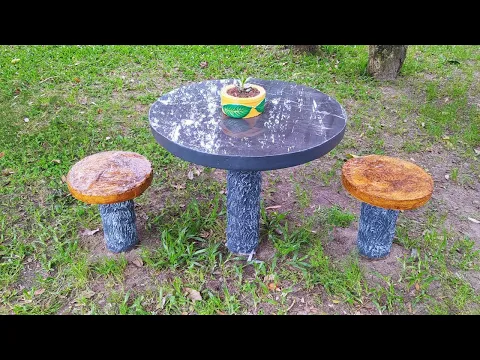
The bucket, present at virtually every construction site, becomes a versatile tool. Instead of just being a container for mixing, it takes on a structural role in the molding process.
Additionally, the technique reduces wood waste, eliminates the need for nails or screws for molds, and allows for the reuse of plastic containers already present at the construction site.
Safety and Care Recommended in Brazilian Tutorials
The national sources also warn about basic safety precautions. Concrete is heavy, and removing the piece from the bucket requires attention to avoid cracks or accidents. The use of gloves, safety goggles, and a ventilated area is recommended during mixing.
Another highlighted point is the importance of proper curing. The piece should not be used immediately after demolding, as the concrete is still gaining strength. Respecting the drying time is essential to ensure durability.
When these precautions are followed, the result is a solid, stable, and resistant piece, suitable for everyday use.
A Simple Technique That Combines Economy, Resistance, and Reuse
The use of buckets as improvised molds demonstrates how simple solutions remain relevant in everyday Brazilian construction. Without advanced technology, industrial machines, or large investments, ordinary workers can transform concrete into functional furniture and structures.
More than a craft trick, the practice has established itself as an accessible technique, documented in national publications and replicated in different contexts. What once seemed improvisation has come to represent a legitimate way to create durable, functional pieces adapted to the reality of those building with what they have on hand.







-

-

4 people reacted to this.