





 Portuguese
  English
  Spanish
  6 min of reading
  0 comments


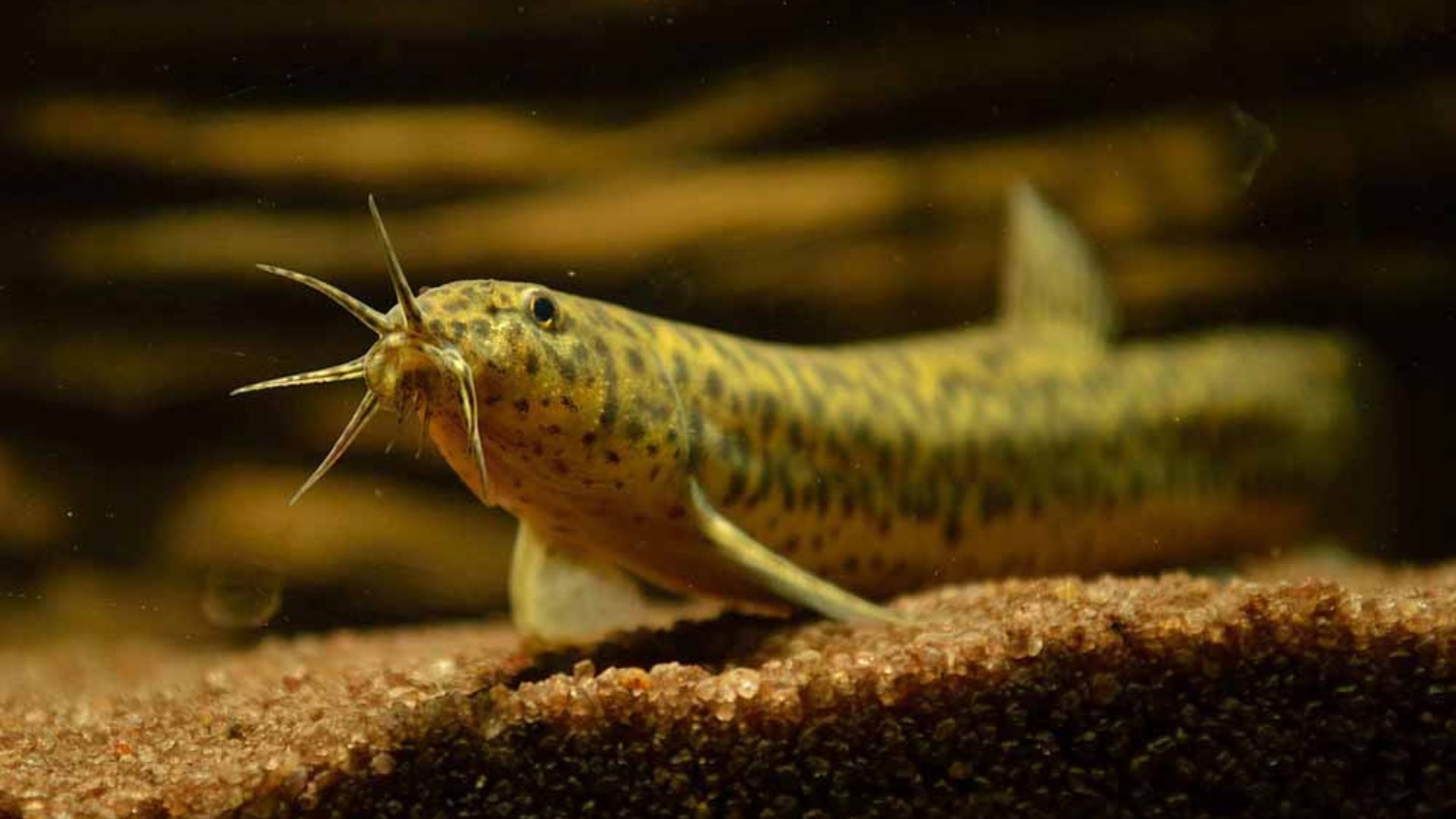
Discreet Bottom Dweller Fish Can Keep Particles and Nutrients in Circulation, Reducing Water Transparency and Complicating the Recovery of Shallow Lakes and Reservoirs. Feeding Behavior Near Sediment and High Environmental Tolerance Help to Explain Persistent Impacts on Water Quality.
In shallow lakes, floodplains, reservoirs, and stretches of slow-moving rivers, water transparency is often treated as an environmental thermometer: when the water loses clarity, the most recalled explanation involves rain, erosion, wind, and sediments carried from the basin.
What appears less frequently in public debate is the role of organisms that, through their routine of feeding and movement, manage to keep particles and nutrients in circulation, sustaining a state of turbidity that is difficult to reverse.
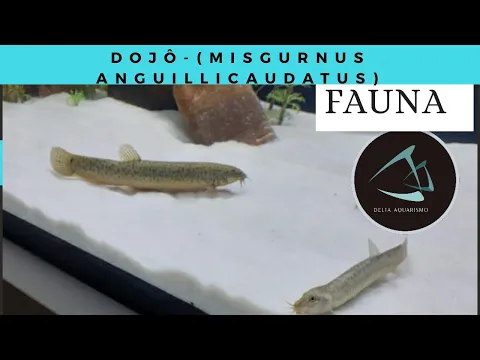
It is at this point that the oriental loach, Misgurnus anguillicaudatus, comes in as an example of “quiet ecological engineering” with high impact.
-
Hidden beneath the dense forest of the Sierra Nevada, Betoma emerges in a neighbor of Brazil as the greatest archaeological discovery of the century, revealing a colossal ancestral city covering over 18 km², with 8,334 stone structures and the potential to rewrite the history of South American civilizations.

-
Goodbye iron: new technology from Xiaomi promises to revolutionize the way we iron clothes with 500 kPa steam, continuous flow of 120 g/min, heating in 65 seconds, and six smart modes for different fabrics.

-
Rio Pardo, the most mysterious city in Rio Grande do Sul: untouched Pampas castle, the missing treasure of the Devil Boy, bride’s saint, invisible tunnels, and a 200-year curse today.

-
China retires the J-7 fighter after years of military protection and can now transform military items into drones, following more than 60 years of operation of the J-7, derived from the MiG-21, with thousands of units produced and strategic use in the PLAAF and PLANAF.


Oriental Loach and Turbidity in Shallow Lakes
Described in technical sheets from the United States Geological Survey (USGS) as a fish associated with muddy or silty-clay bottoms, the oriental loach exhibits behavior that favors sediment disturbance in search of food.
By “working” the bottom repeatedly, it can contribute to the worsening of water quality parameters through mechanisms that include increased turbidity, elevated nutrient concentrations, and the release of contaminants present in the sediment, according to the literature synthesis compiled by the USGS non-native species database.
Suspended Sediments and the Physical Effect of Disturbed Bottoms
The logic behind the effect is physical and straightforward.
Part of the organic matter and fine particles accumulates at the bottom of lentic environments and slow waters, forming a layer that, when relatively stable, tends to remain deposited.
The oriental loach feeds near the substrate and interacts with this material while searching for small benthic invertebrates and detritus.

The movement and the act of foraging stir the sediment, resuspending particles that make the water more opaque and increase the volume of suspended solids, especially in shallow systems, where the water column is small and the influence of the bottom is constant.
Tolerance to Low Visibility and Survival in Low Oxygen
This fish does not rely on sight to find food, according to ecological descriptions compiled by the USGS, and responds to chemical stimuli to trigger feeding behavior.
This feature helps to understand why it can remain active and efficient in environments where the water is already turbid, or where visibility is reduced during certain periods.
Tolerance to conditions considered “marginal” also appears prominently in the technical profiles: the oriental loach is presented as a species capable of dealing with low dissolved oxygen and with environmental variations that limit other species, including the ability to use its intestine as an accessory breathing organ, which allows it to survive in oxygen-poor waters and even to bury itself in soft substrates in adverse situations.
Less Light, Fewer Macrophytes, and Water Harder to Clear
When turbidity increases, the change goes beyond appearance.
In shallow environments, the entry of light into the water column regulates the growth of submerged macrophytes, which stabilize sediments, provide shelter, and support food chains associated with the bottom.
USGS profiles cite experimental results in which bioturbation by the oriental loach was associated with damage to the growth of submerged macrophytes under low light conditions.
The chain of effects is relevant because turbidity reduces light, less light weakens submerged plants, and the loss of plants leaves the sediment even more exposed to resuspension by wind, waves, and the very activity of fish that stir the bottom.
Nutrients at the Bottom Turn into Fuel in the Water Column

In addition to particles, the chemical component comes into play.
Nutrients like nitrogen and phosphorus can become trapped in sediment and, when reintroduced into the water by bottom disturbance, become more available to microscopic producers.
In the USGS synthesis on impacts, there are references to experiments and studies in which the presence of the oriental loach was associated with increased turbidity and nitrogen compounds in stagnant water, as well as records of elevated parameters such as total suspended solids, total nitrogen, ammonia, total phosphorus, and phosphate in experimental conditions.
In journalistic terms, this is a mechanism that helps to “pump” material from the bottom to the water column, reconfiguring the system’s rules without requiring large visible external changes.
Impacts on Macroinvertebrates and the Base of the Food Chain
The ecological effect extends beyond plants and nutrients.
USGS also cites studies indicating that the species may reduce the abundance of macroinvertebrates in certain contexts, which affects the food base for native fish and the energy dynamics in aquatic environments.
In freshwater ecosystems, insect larvae, small crustaceans, and other invertebrates play a central role in processing organic matter and supporting fish, amphibians, and bird fauna.
A change in this component can indirectly alter the pattern of species that are able to thrive in murkier waters and more unstable bottoms.
Introduced Species, Aquarism, and Dispersal Routes

The story of the oriental loach outside its native area also helps explain why it frequently appears in discussions about biological invasions.
USGS describes pathways of introduction linked to human activities, including releases associated with aquarism and escapes from breeding establishments, as well as uses as bait or for food in certain locations.
The combination of environmental tolerance, ability to explore muddy bottoms, and skill in surviving under low oxygen conditions creates a profile compatible with altered environments, especially those that receive loads of fine sediments and nutrients.
Why Turbidity May Have a Persistent Biological Component
This point is important because turbidity rarely has a single cause.
The same body of water can receive sediment from erosion, have resuspension from wind, and still carry a biological component that sustains the turbid state.
The USGS synthesis draws attention to the role of the oriental loach as an agent that, by disturbing the sediment, can contribute to maintaining conditions of low water quality, with higher turbidity and nutrients.
In shallow environments, where small changes in clarity already alter light entry, the result can be a persistent reorganization of the ecosystem, with impacts appearing in submerged vegetation, habitat structure, and the community of species that can establish themselves.
Management, Restrictions, and Prevention of New Introductions
From a management perspective, the difficulty lies in the fact that the effect can go unnoticed when attention is focused solely on external sources, such as soil being carried by the basin.
Measures to reduce sediment at the entrance of the lake or reservoir may be necessary, but they are not always sufficient to clear the water if the bottom continues to be disturbed continuously.
Technical profiles from the USGS also cite state regulations in parts of the United States that restrict possession, transport, and introduction of the species, reflecting concerns about new outbreaks and expansion due to human activities.
Prevention, in this scenario, is often treated as an essential part because dispersal can occur silently, and the species can establish itself in environments that seem unfavorable for other fish.
“Naturally Turbid” Water and Invisible Factors at the Bottom
There is also a component of public perception that favors the “erasure” of the biological factor.
The oriental loach is discreet, lives near the bottom, and its presence is not always noticed outside of monitoring.
While algal blooms tend to draw attention due to the appearance of the water, sediment disturbance produces a more ambiguous signal, easily interpreted as “natural mud”.
The literature compiled by technical bases indicates that, under certain conditions, the activity of a benthic fish can be sufficient to change water quality parameters, elevating turbidity and nutrients and affecting the recovery of submerged plants.
If a fish that lives by burying and stirring the bottom can alter light, suspended solids, and nutrients in the water column, how many lakes and reservoirs are still being treated as “naturally turbid” without the role of the oriental loach even being considered?








-

2 pessoas reagiram a isso.