





 Portuguese
  English
  Spanish
  3 min of reading
  0 comments


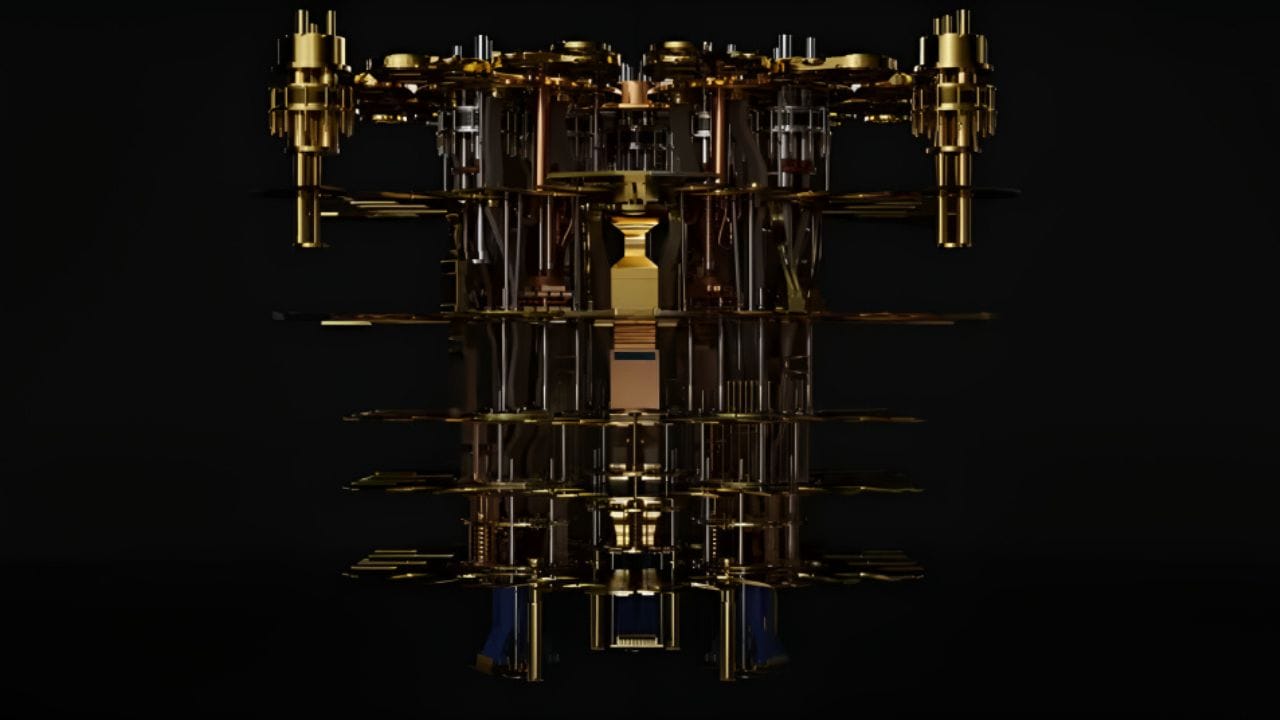
Challenging The Limits Of Physics And Impacting The Future Of Quantum Computing, This Study Reveals A Commitment In Timing Devices That Could Establish A Rigid Limit On The Performance Of Large-Scale Quantum Computers.
Quantum computers utilize a set of principles to achieve what no other computer can. In the quantum realm, physics operates very differently from that of the computers we use today. At this scale, bits of information, called qubits, can simultaneously be in the values 0 and 1. These qubits only need to decide on a value when measured, a state known as superposition, which can be thought of as the “Schrodinger bit“.
Measurements And Precisions
This exponentially increases the number of configurations that a set of qubits can have, and the number continues to grow as more qubits are added. Time measurement, an essential aspect of quantum computing, is intrinsically linked to entropy, which is the measure of disorder in a system. As entropy increases, a system becomes more disordered, marking the passage of time.
The precision and resolution of a clock are its two fundamental properties; precision indicates the accuracy of each tick, while resolution refers to the smallest measurable time intervals. However, no clock can achieve perfect precision and resolution simultaneously due to the finite energy available to it. This limitation sets a fundamental limit for quantum computers.
-
Expedition 501: Scientists drill into the ocean floor and discover a giant reserve of fresh water hidden beneath the sea, extracting nearly 50,000 liters and revealing an invisible system that could reshape the map of water scarcity.

-
Archaeologists find an intact tomb over 2,500 years old, with more than 100 preserved objects, weapons, jewelry, and human remains never touched.

-
Volcanic lava transforms into threads as fine as human hair that travel over 30 kilometers by wind and fall like cutting rain on roofs and backyards in Hawaii and Iceland.

-
NASA issues a warning for the feared Godzilla El Niño that could change the planet’s climate in 2026 with extreme warming of the Pacific capable of causing devastating droughts in some regions and historic floods in others simultaneously.


Quantum Computing Depends On The Manipulation Of Quantum States Within A Specific Time Period
These states are altered by exposing them to precise forces for exact durations. The precision of these operations is crucial for the proper functioning of quantum computers. However, inherent limitations in time measurement represent a significant challenge.
The research team’s results highlight a trade-off between clock speed and precision. A clock can operate quickly or with high precision, but not both. This trade-off is the result of the finite energy available to the clock, limiting its ability to achieve high resolution and precision.
The quest for perfect timing and the advancement of quantum computing are intertwined with the fundamental limits of physics. The trade-off between precision and resolution in time measurement establishes a limit on the capabilities of quantum computers.
For us laypeople and mere mortals, it is difficult to distinguish a quantum computer; the channel Ciência Todo Dia created a documentary on the ‘definition’, which is worth checking out.


As Technology Advances, We May Have To Deal With These Limitations
This research, published in Physical Review Letters, not only challenges our understanding of time and quantum computing but also invites us to explore the depths of physics and its constraints on our technological aspirations.
The discovery is a reminder that while quantum computers offer revolutionary possibilities, they are still subject to the fundamental laws of physics. This balance between speed and precision may be crucial for the future development of quantum computers and for our broader understanding of the quantum universe. As we continue to explore the limits of quantum computing, these findings may pave the way for new approaches and innovative solutions.








Seja o primeiro a reagir!