





 Portuguese
  English
  Spanish
  5 min of reading
  0 comments


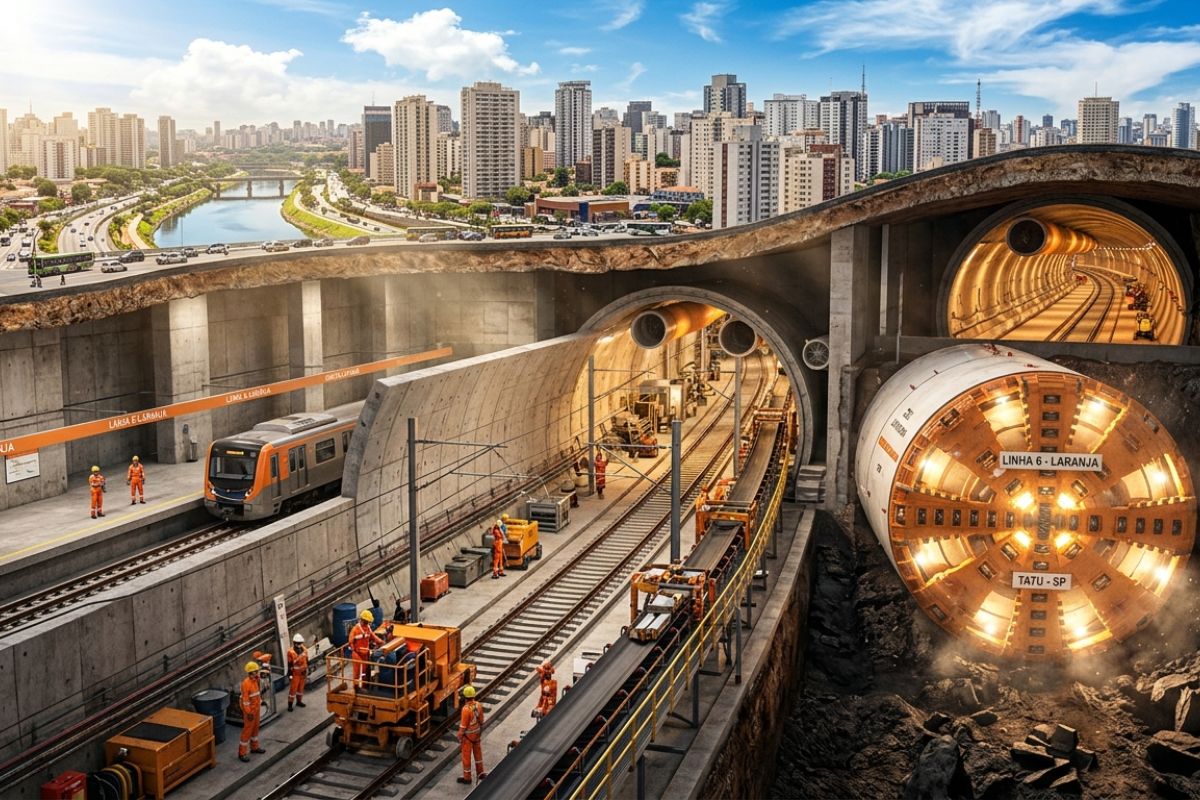
Line 6-Orange will have 15 stations, promises 23 minutes from Brasilândia to São Joaquim, projects 633 thousand passengers per day and enters the phase where the construction site needs to become an operational metro
Line 6-Orange arrives in 2026 as one of the most ambitious underground works in the country, with a length of 15.3 km and 15 stations completely underground. The project, which spent years associated with a standstill, now enters the decisive stretch, with tunnels excavated, systems being implemented, trains already received in the yard, and a partial opening scheduled for October 2026.
In practice, Line 6-Orange was designed to connect high-density neighborhoods that heavily rely on buses to a much faster connection with the central region. The promise is to shorten a journey that could take about 1 hour and a half to 23 minutes, in addition to reorganizing flows by integrating with other lines and the railway network.
What Line 6-Orange delivers in numbers and why this matters for mobility
The Line 6-Orange will have a length of 15.3 km and 15 stations, connecting Brasilândia to São Joaquim station. The projected demand is 633 thousand passengers per day, an indicator that positions the line as a high-pressure axis from the first day of operation.
-
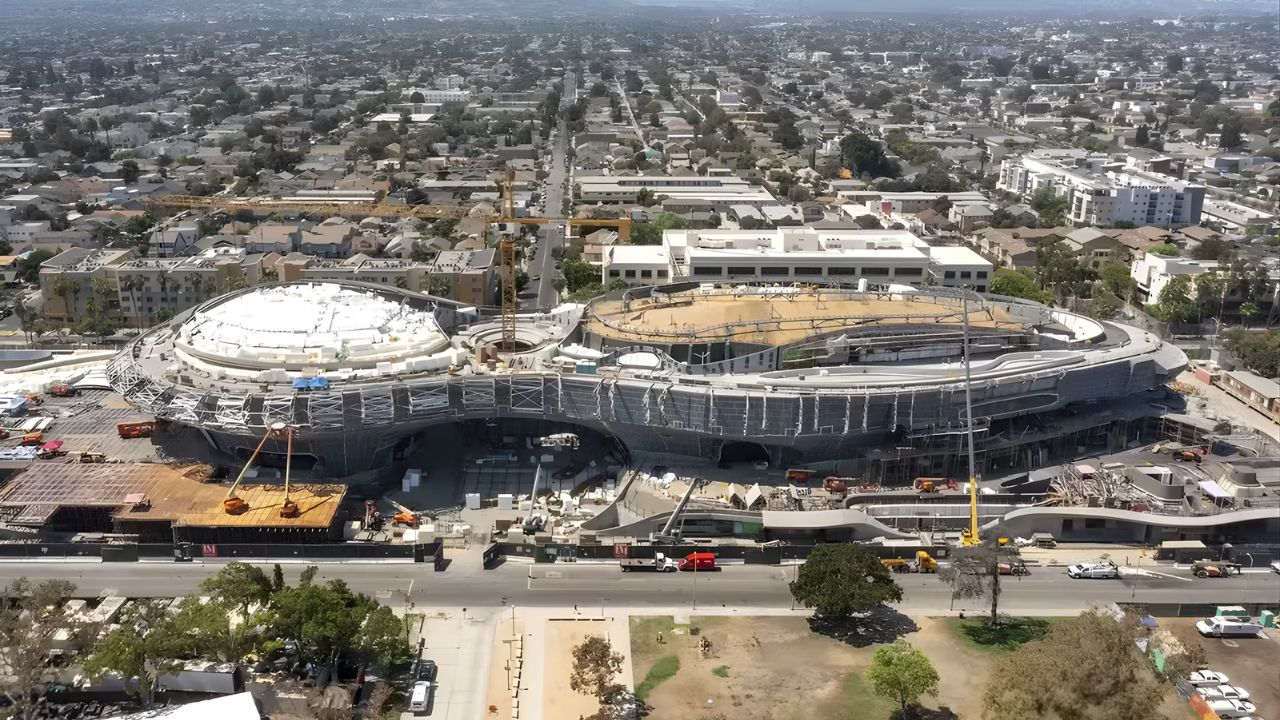
Created by George Lucas with over $1 billion, a futuristic museum in the shape of a spaceship with 1,500 curved panels is about to open in Los Angeles and will house one of the largest private collections of narrative art in the world.
-
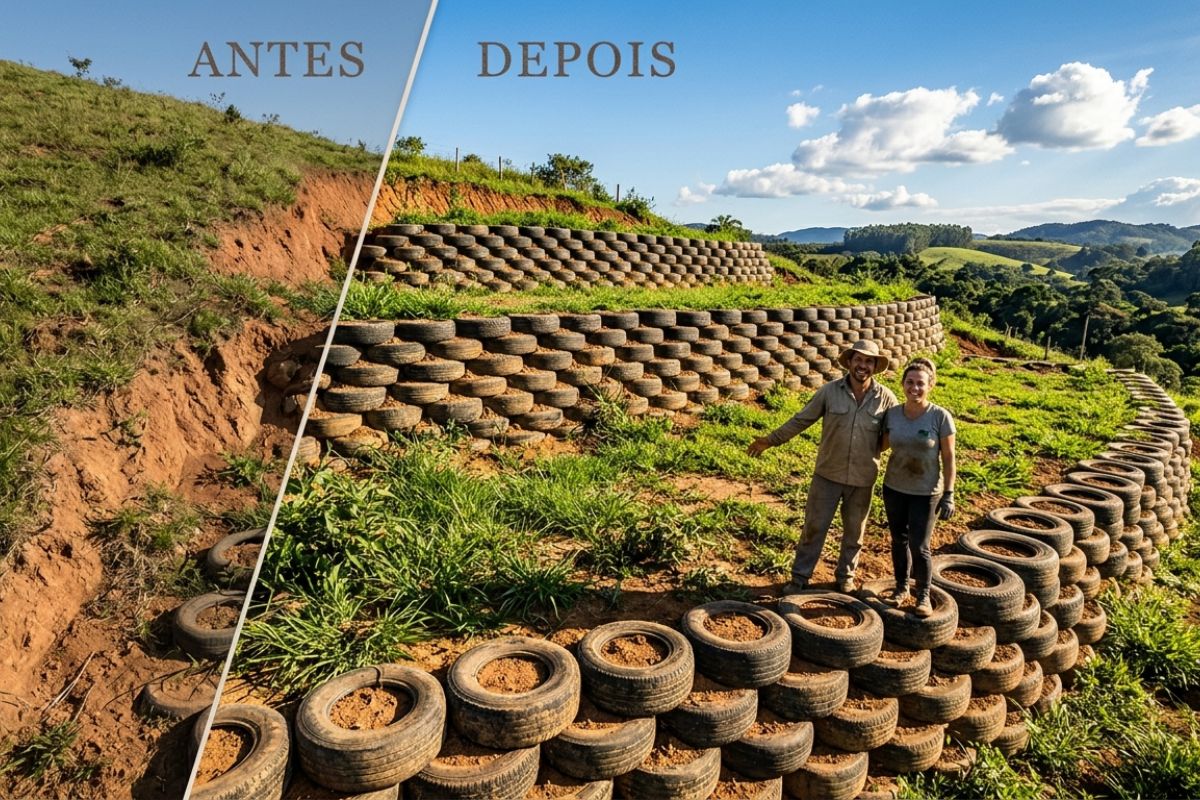
Couple shows how they built a retaining wall on their property using 400 old tires: sloped land turned into plateaus, tires are aligned, filled, and compacted with layers of soil, with grass helping in support and at almost zero cost.
-
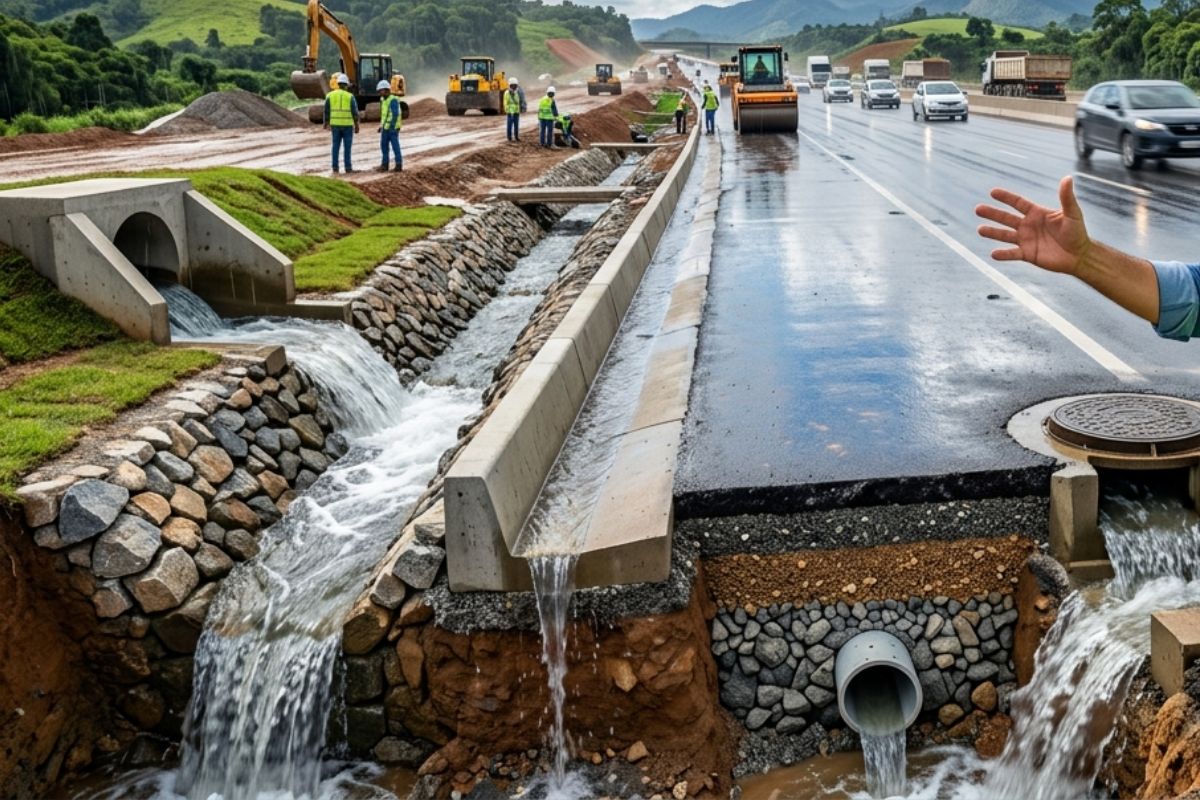
Engineer explains drainage during the rainy season: the difference between surface water and deep water, ditches, gutters, and water outlets on the road, as well as drains and drainage mattresses, to prevent erosion, aquaplaning, and flooding at the construction site today.
-
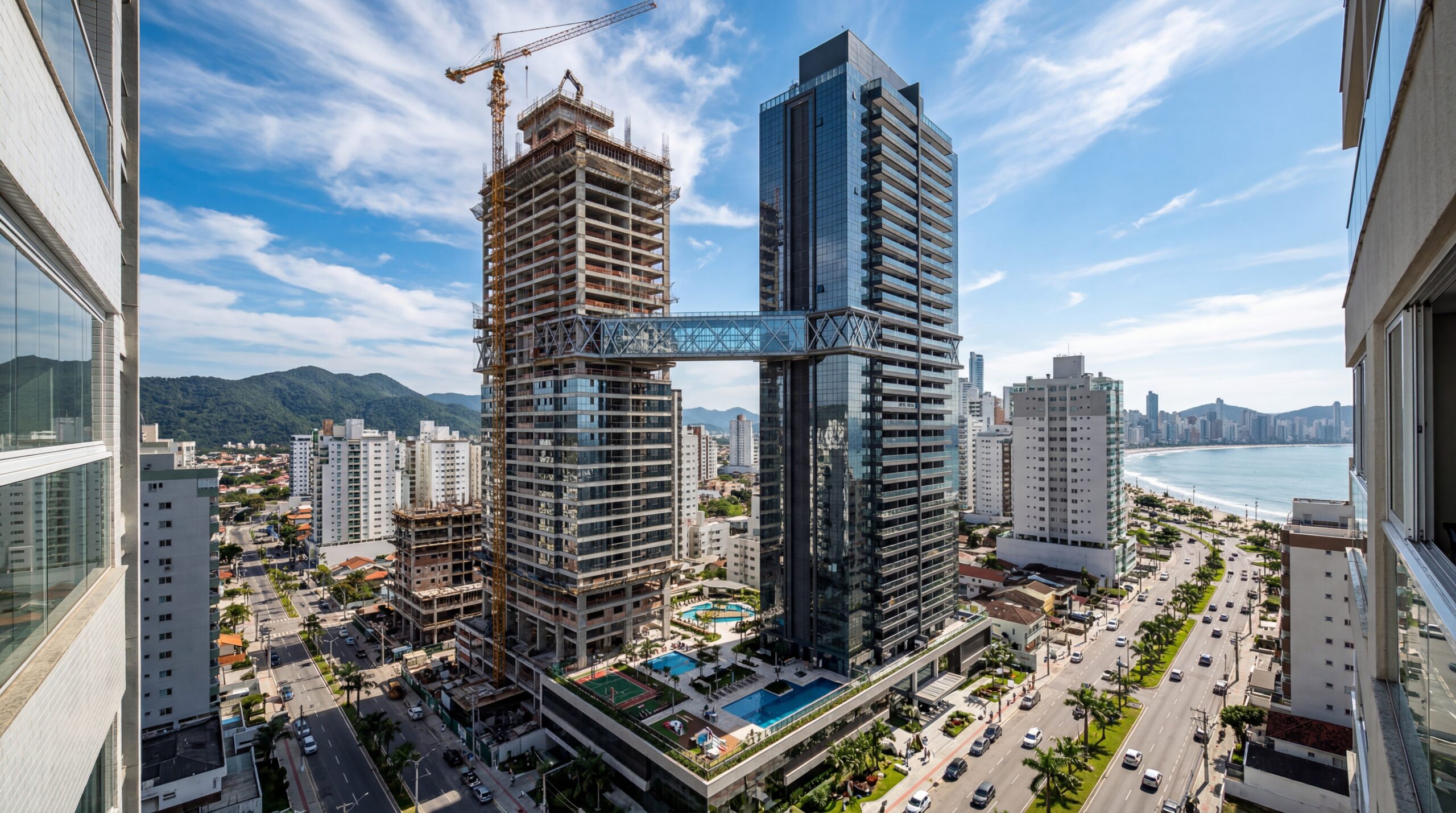
With 55 floors, 177 meters in height, a 15-meter walkway between the twin towers, ventilated facade, and 6,300 m² of leisure space, Ápice Towers already has one tower completed and another nearly at the top.

The real impact appears when looking at the network, and not just the layout. The Line 6-Orange anticipates integration at São Joaquim with Line 1-Blue, at Higienópolis Mackenzie with Line 4-Yellow, and at Água Branca, connection with Lines 7-Ruby and 8-Diamond. It was not conceived as an isolated branch, but as a piece of metropolitan reorganization.
Why Line 6-Orange got stuck and how the work was unblocked
The work began in 2015 under a public-private partnership model, but the initial momentum lasted little. In 2016, the responsible consortium announced a complete halt to civil works, citing difficulties in obtaining long-term financing, and the project entered a limbo.
In 2018, the government published a decree of expiration of the PPP, formalizing the rupture of the previous arrangement. The turnaround came in 2020 when Acciona took over the concession, construction, and future operation through the Linha Universidade concessionaire, with an official resumption announced in October.
Line 6-Orange came out of the risk of becoming a “billion-dollar skeleton” and returned to having a schedule with measurable milestones.
Tunnels ready and work in assembly: the phase in which Line 6-Orange changes its appearance

A decisive milestone was the completion of the tunnel excavation, finished in February 2025. In deep works, this moment changes the perception of the project: it stops being just demolition, containment, and excavation and becomes the implementation of a railway system.
With the underground axis ready, Line 6-Orange entered the stage where the excavated void needs to become a real metro. This includes tracks, power, signaling, ventilation, drainage, platform doors, technical areas, and finishing of the stations. It is the least “cinematic” phase, but the most critical for delivering operation.
Trains in the yard and system synchronization
Another milestone was the arrival of the first train at the Morro Grande yard in July 2025. The delivery of rolling stock changes the type of pressure on the schedule, as it requires fine synchronization between civil work, electrification, testing, and operation.
By the end of 2025, the overall progress of Line 6-Orange was already above 77%, with permanent way under construction, yard gaining operational infrastructure, and compositions arriving in sequence. The project began to display tracks and trains, not just shafts and machines.
Partial opening in October 2026 and the litmus test of the initial section
In 2026, Line 6-Orange concentrates energy on preparing for the initial opening of the section between Brasilândia and Perdizes scheduled for October.
This stage includes eight stations and serves as a definitive test of the schedule, as the project stops being judged by percentage and starts being measured by real service delivered to the passenger.
To meet the objective, the work enters a compressed schedule, with teams on extended routines and night shifts. When a construction site operates 24 hours, the challenge is no longer to open tunnels, but to close pending issues, install systems, test interfaces, and eliminate bottlenecks.
Depth, construction methods, and the challenge of building “inverted buildings”


The Line 6-Orange is completely underground, which increases the complexity in a ready, vibrant, and dense city. Some stations will have rare depths in the São Paulo network, such as Itaberaba Hospital Vila Penteado at 65.7 m, Higienópolis Mackenzie at 64.86 m, Bela Vista at 61 m, and PUC Cardoso de Almeida at 61 m.
The work also alternated construction methods as required by the section. Part of the layout used VCA in stations like Brasilândia, Maristela, and Santa Marina, while deeper and more delicate points resorted to NATM, such as Itaberaba Hospital Vila Penteado, Água Branca, PUC Cardoso de Almeida, Higienópolis Mackenzie, and Bela Vista. This explains why Line 6-Orange could not be built as a single formula repeated station by station.
Autonomous trains and planned operation
The operation of Line 6-Orange anticipates autonomous trains, without a driver on board, with a capacity of up to 2,044 passengers per composition, a speed of up to 90 km/h, and an estimated interval between 75 and 90 seconds. The projected operational fleet is 22 trains of six cars.
This design reinforces the logic of high capacity: short intervals, high frequency, and integration with other lines, to redistribute flow and reduce the burden of buses in sections where demand is historically high.
The most sensitive points: Maristela and 14 Bis Saracura
Even with the main axis overcome, Line 6-Orange still has points that concentrate tension. Maristela was left out of the initial opening and was pushed to 2027 due to geological problems.
The most delicate section is the 14 Bis Saracura station, which combines geotechnical difficulty with historical and archaeological heritage underground, linked to the old Quilombo Saracura.
The resumption depended on approval from Iphan, and even with clearance, returning to the heavy rhythm requires backfilling, reorganization of the construction site, and a new construction sequence. In 2026, the drama of Line 6-Orange stops being “the entire line” and becomes “the central core,” where every meter requires more care than speed.
Why Line 6-Orange can change the routine of a part of the city
When it starts operating, Line 6-Orange is likely to directly affect the routine of neighborhoods that have spent decades dependent on buses and slow connections.
The reduction of travel time between Brasilândia and São Joaquim to about 23 minutes changes daily commuting, redistributes demand, and reinforces integrations that bring universities, hospitals, services, and dense residential areas closer together.
And you, do you think Line 6-Orange will truly transform the Brasilândia-Center axis or will the biggest challenge still be to maintain the schedule and delivery of the most sensitive stations?




Seja o primeiro a reagir!