





 Portuguese
  English
  Spanish
  5 min of reading
  0 comments


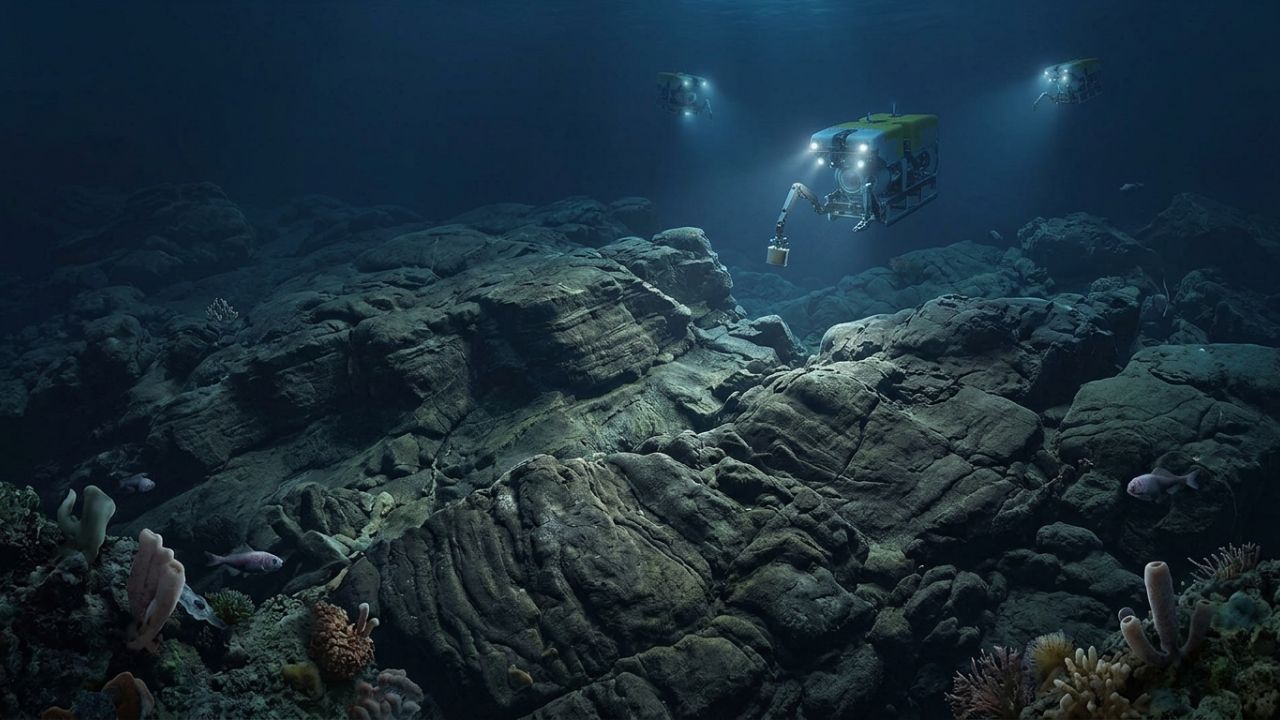
Fragments of a microcontinent up to 3 billion years old are found beneath Mauritius and reveal a lost world linked to India and Madagascar.
In 2013, an international team of researchers led by geologist Lewis D. Ashwal from the University of the Witwatersrand revealed a discovery that would change the geological understanding of the Indian Ocean. Studying volcanic rocks on the island of Mauritius, located in the Indian Ocean east of Madagascar, scientists identified mineral crystals much older than the rocks that housed them.
According to a study published in the journal Nature Communications, these zircon crystals had ages of up to 3 billion years, a fact incompatible with the relatively recent volcanic origin of the island, formed about 8 to 10 million years ago. The most striking data is that these minerals could not have formed there, indicating the presence of extremely ancient continental crust hidden beneath the ocean floor.
This evidence led to the identification of a lost microcontinent, named Mauritia, a fragment of crust that would have separated during the fragmentation of the supercontinent Gondwana.
-
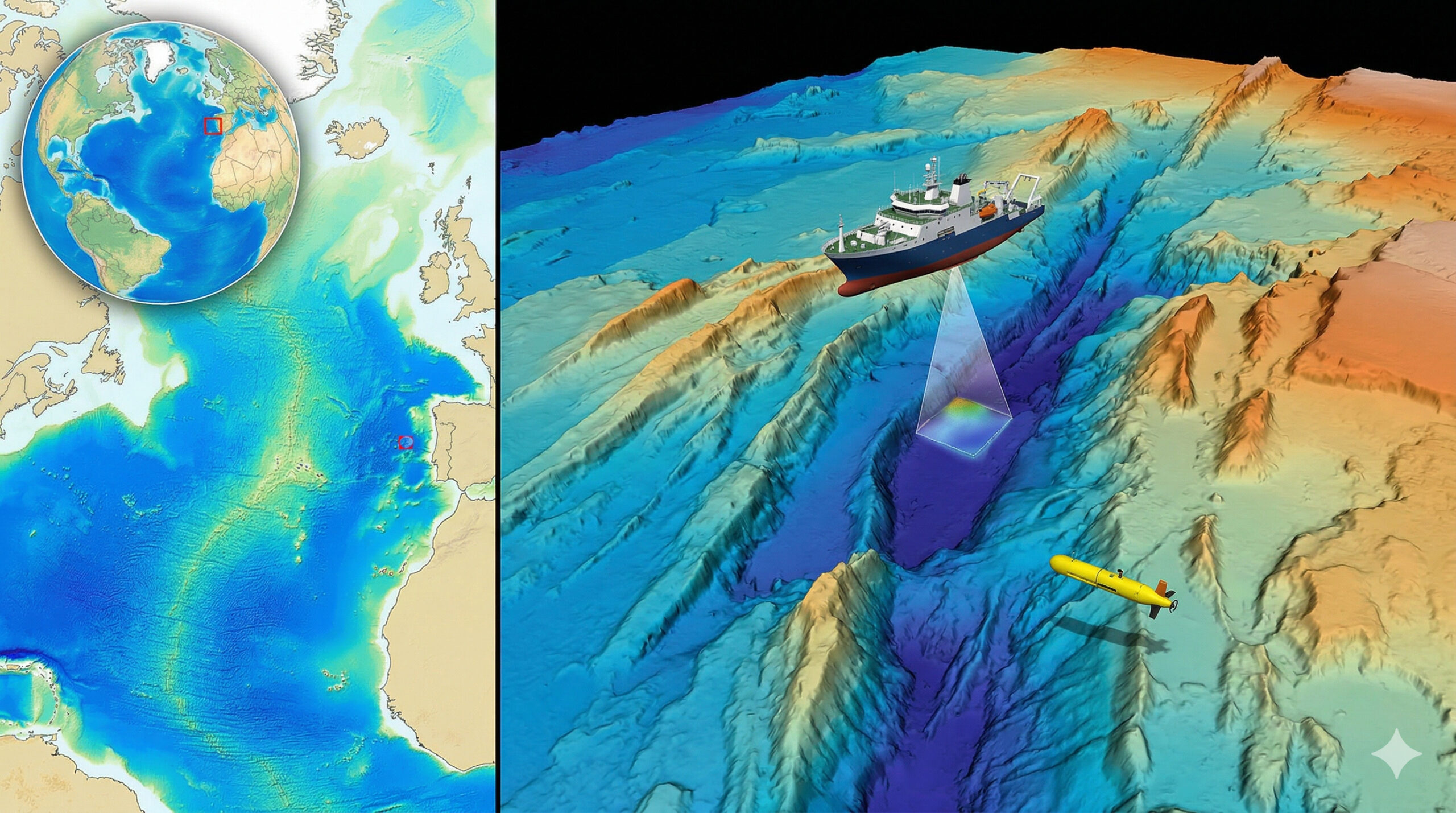
Sonar and geological mappings revealed, 1,000 km from Portugal, an underwater system of 500 km that rivals the Grand Canyon, with deep canyons and valleys sculpted on the Atlantic floor, formed 37 million years ago when tectonic plates tore the ocean like a “zipper” during the separation between Africa and Europe.
-
Solution for plastics: understand how the cockroach emerges as an ally against pollution and drives innovative sustainability pathways with real benefits for the environment.

-
The United States Navy revealed a sixth-generation fighter concept with a bat-like shape that promises to fly at four times the speed of sound and operate from aircraft carriers with stealth technology never seen before.

-
China is sending 600 state-of-the-art buses to transform Nicaragua into a benchmark for public transportation in Latin America, and the first giant batch of 180 units has already arrived in the country, surprising everyone.


What are zircons and why do they reveal lost worlds
Zircon crystals are considered one of the most precise tools in geology for dating ancient events. This is because they withstand high temperatures and pressures, preserve chemical information for billions of years, and can be dated with great accuracy using isotopic methods.
When scientists found zircons aged up to 3 billion years in young volcanic rocks, it became clear that these minerals had been transported from a much older source. This discrepancy was the starting point for the hypothesis that fragments of continental crust were hidden beneath the island.
The origin of the microcontinent Mauritia
Mauritia is considered a fragment of continental crust that was part of the supercontinent Gondwana. About 200 million years ago, Gondwana began to fragment, separating land masses that today form Africa, South America, Antarctica, India, and Australia.
During this process, the region that today corresponds to the Indian Ocean underwent intense tectonic activity. Mauritia would have separated between Madagascar and India, later being fragmented and partially covered by volcanic activity, which completely concealed its existence for millions of years.
How can a continent disappear beneath the ocean
The idea of a “sunk” continent may seem contradictory, but in the case of Mauritia, the process was more complex. Continental crust does not sink easily like oceanic crust, as it is less dense. However, it can fragment into smaller blocks, partially sink, or be covered by lava and sediments.
In the case of Mauritia, what occurred was a combination of tectonic fragmentation and volcanic coverage, especially associated with the hotspot activity that also formed the Mascarenhas islands, including Mauritius. This process created a “layer” of more recent rocks that completely hid the ancient crust.
The role of volcanism in the concealment of the microcontinent
The island of Mauritius is of volcanic origin, formed by activity related to a hotspot in the Earth’s mantle. This type of volcanism creates large volumes of lava that accumulate over time.
These volcanic layers act as a kind of “geological lid,” covering older structures that become invisible at the surface.
It was precisely this coverage that made it difficult to identify Mauritia for so long. Only with detailed mineralogical analyses was it possible to detect signs of the older crust hidden below.
Additional evidence supports the existence of Mauritia
After the initial discovery of the zircons, other studies began to reinforce the microcontinent hypothesis. Subsequent research identified:
- Anomalies in crust thickness in the region;
- Geophysical signals compatible with continental crust;
- Distribution of similar fragments in nearby areas.
These pieces of evidence indicate that Mauritia is not an isolated block, but part of a larger fragmented structure spread beneath the Indian Ocean. This type of configuration is known as a dispersed microcontinent.
The connection between Mauritia, India, and Madagascar
Before the fragmentation of Gondwana, India and Madagascar were connected as a single continental mass. During the separation process, fragments of this region were left behind. Mauritia is interpreted as one of these fragments, trapped between tectonic plates that continued to move over millions of years. This reconstruction helps explain the current position of Madagascar, the Indian subcontinent, and islands in the Indian Ocean.
The identification of Mauritia reinforces an important idea in modern geology: the ocean floor is not composed solely of oceanic crust, but can also hide fragments of ancient continents. This alters how scientists interpret the evolution of tectonic plates, the formation of oceans, and the distribution of mineral resources. Moreover, it shows that there are still hidden geological structures that have not been fully mapped.
Microcontinents: forgotten pieces of Earth’s history
Mauritia is not an isolated case. Other microcontinents have been identified around the world, such as:
- Zealandia, in the Pacific;
- fragments beneath Iceland;
- continental blocks in the Atlantic.
These discoveries show that the fragmentation of continents is much more complex than previously thought, with parts being separated, displaced, and hidden over millions of years.
What Mauritia reveals about Earth’s past
The existence of Mauritia offers a window into a remote period of the planet’s history. The zircons found record conditions that existed billions of years ago, long before the formation of the current continents.
These minerals act as time capsules, preserving information about the composition and evolution of the primitive Earth’s crust. This allows scientists to reconstruct events that occurred over extremely long time scales.
A lost world hidden beneath our feet
The discovery of Mauritia shows that entire parts of the Earth’s crust can remain hidden for millions of years, invisible beneath layers of lava and ocean.
By revealing that a microcontinent up to 3 billion years old still exists beneath the island of Mauritius, science expands the understanding of the planet’s dynamics and demonstrates that the visible surface of the Earth represents only a fraction of its true history.
More than a geological curiosity, Mauritia serves as a reminder that the planet continues to hold traces of ancient, fragmented, and hidden worlds, waiting to be discovered.







Seja o primeiro a reagir!