





 Portuguese
  English
  Spanish
  5 min of reading
  0 comments


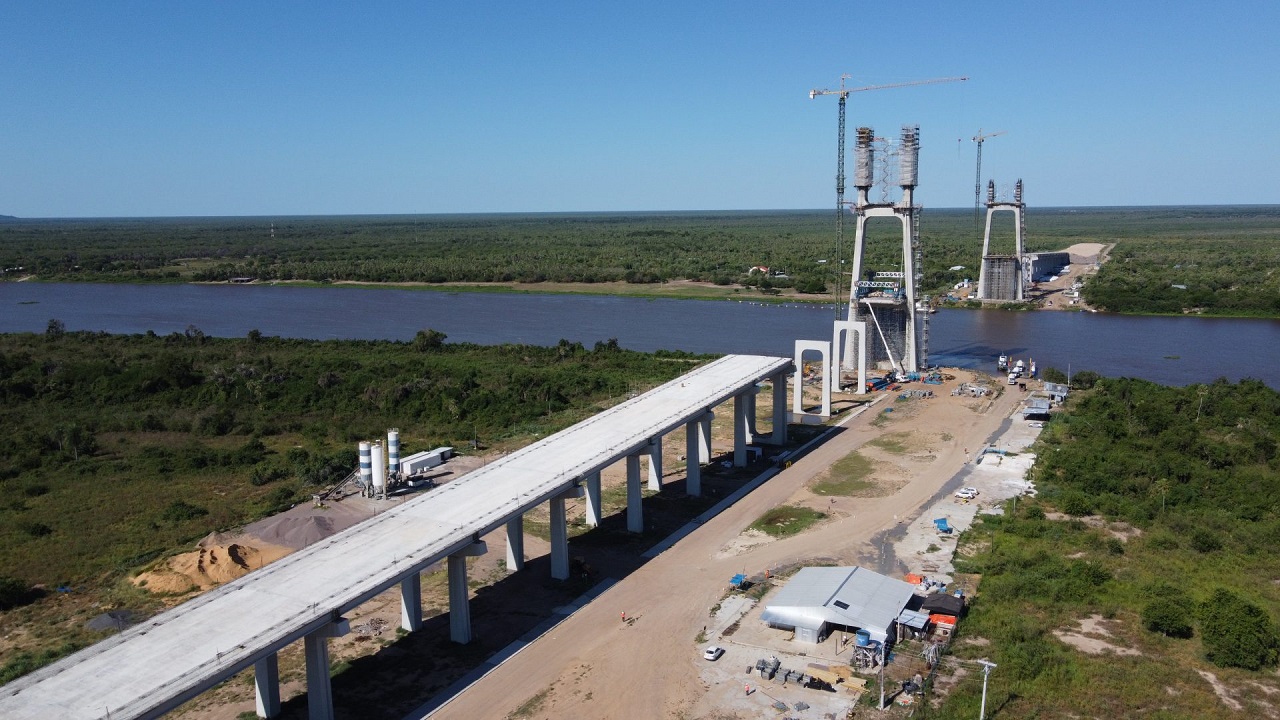
Bioceanic Corridor Advances in 2025 with Works in Brazil, Paraguay, and Chile, and Is Already the Target of Competition Between China and the U.S. for Billion-Dollar Contracts.
The construction of the Bioceanic Corridor is no longer a distant dream: in 2025, the project that promises to connect Brazil to the Pacific Ocean begins to take shape with works on different fronts. Stretching about 2,400 km, the corridor will connect the state of Mato Grosso do Sul, passing through Paraguay and Argentina, to reach Chile, shortening the route to the Asian market.
The impact is monumental. Today, the transportation of Brazilian agricultural and mineral production to Asia mostly relies on Atlantic ports, requiring long sea crossings through the Panama Canal or the route around the Cape of Good Hope. With the new land connection, it is estimated that the shipping time will decrease by up to 15 days, with a reduction in billion-dollar logistics costs for exporters of soy, corn, beef, iron ore, and even automobiles.
But behind the engineering works lies something bigger: a geopolitical dispute between China and the United States for control of the infrastructure that could redefine South American integration.
-
USA and China compete for Brazil over resources that could be worth trillions — rare earths put the country at the center of a global dispute

-
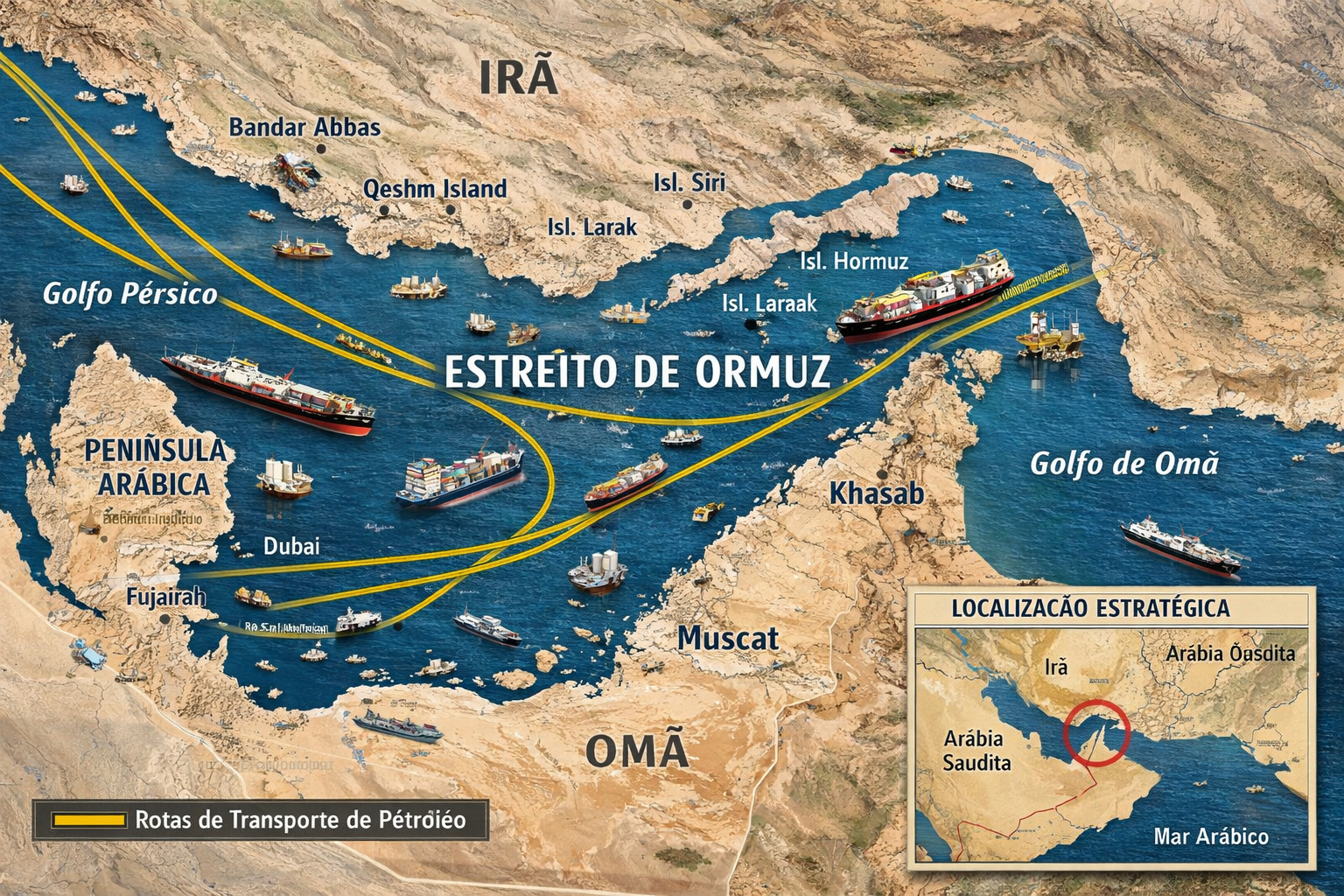
Global summit with over 40 countries pressures Iran for a blockade in the Strait of Hormuz and warns of direct impact on oil, food, and the global economy.
-
Russia has broken the U.S. maritime blockade to send oil to Cuba and is now loading a second ship while Trump says that “Cuba is next” in a possible military action against the island.

-
Spain challenges the USA and closes its airspace for operations against Iran, raising global tension and provoking the threat of a trade rupture.


The Ongoing Works: Highway, Railway, and Bridge
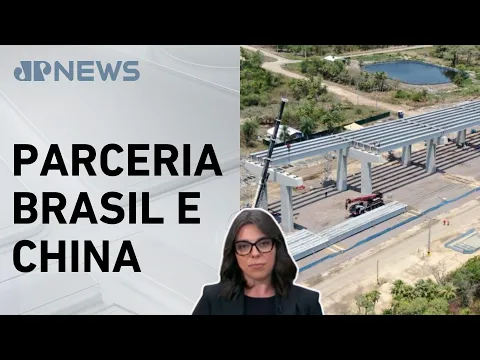
The corridor is not just a project on paper. By 2025, Paraguay will have completed 275 km of Route PY15, between Carmelo Peralta, on the border with Brazil, and Loma Plata, in Chaco. This is the backbone of the future bioceanic highway. Additionally, the international bridge over the Paraguay River, which will connect Carmelo Peralta (Paraguay) to Porto Murtinho (Brazil), is already under construction. The project is seen as a symbolic milestone of the initiative.


On the Chilean side, President Gabriel Boric announced in April the acceleration plan for the section that will connect the ports of Antofagasta and Iquique to the highway network of the corridor. In Argentina, regional authorities are projecting investments to adapt roads and border posts to the intense flow of trucks.
And there is still a greater ambition: the Brazil-Peru bioceanic railway, connecting Mato Grosso to the port of Chancay on the Peruvian Pacific coast. In July 2025, Brazil signed a memorandum of understanding with China for technical studies on the route and viability of the railway. Although the Peruvian government has not yet formally authorized the project, the movements already reveal the scale of the dispute.
The Interest of China: Strategic Route for Grains and Minerals
For China, the Bioceanic Corridor is strategic for a simple reason: to ensure faster and cheaper access to Brazilian commodities, especially soy, corn, beef, and iron ore. The Asian giant is currently the main destination for these products, and having a direct route to the Pacific means reducing dependence on congested Atlantic ports and decreasing logistical risks.
It is no coincidence that Chinese state-owned companies and consortiums have already expressed interest in participating in bids for logistics terminals, highway concessions, and even financing the Brazil-Peru railway. Beijing sees the corridor as an extension of its Belt and Road Initiative, a global infrastructure project focused on securing supply chains.
The Reaction of the United States
As China advances, the United States reacts. Washington sees the corridor as a strategic risk: the possibility of Brazil and its neighbors becoming excessively integrated into China’s sphere of influence. American companies in logistics and construction are pushing for participation in the works, and diplomats have already warned about the danger of “ceding sovereignty” to Chinese state-owned enterprises in strategic assets.
The U.S. is attempting to counter by offering lines of financing through the DFC (U.S. International Development Finance Corporation) and proposing partnerships to modernize alternative highways and railways. But so far, China has shown more willingness to put money on the table quickly.
Brazil at the Epicenter of the Dispute
For Brazil, the corridor represents both a historic opportunity and a strategic dilemma. On one hand, the project could transform national logistics, reduce export costs, and increase the global competitiveness of agribusiness. On the other hand, there is the risk of deepening dependence on China and losing maneuvering room against the U.S. and the European Union.
Mato Grosso do Sul will be the main connection point of the route in Brazil, but states like Mato Grosso, Goiás, and Rondônia are also expected to benefit, as their production chains may use the corridor as an exit door to the Pacific.
The Numbers Behind the Project
- Total length: ~2,400 km between Brazil and Chile
- Projected investments: tens of billions of dollars in highways, railways, and ports
- Reduced transport time: up to 15 days to reach the Asian market
- Expected flow: millions of tons of grains and minerals per year
- Ongoing works: 275 km completed in Paraguay + Porto Murtinho–Carmelo Peralta bridge under construction
These numbers explain why the project attracts the attention of powers and sparks debates about sovereignty, dependence, and integration opportunities.
The Risk of a New “Logistics Trap”
Experts warn that the corridor may create a strategic paradox. If Brazil and its neighbors manage to diversify partners and attract capital from different countries, the corridor could be a historic victory.
But if China becomes the sole financier and dominant operator, South America risks falling into a new dependency, this time logistical, in addition to the existing one in commodity trade.
A Geopolitical Board in Motion
The competition between China and the U.S. for control of the corridor shows that the project is much more than infrastructure: it is a geopolitical board in motion.
By 2025, the Bioceanic Corridor will have ceased to be just a paper project. Works are advancing in Paraguay, Chile is speeding up its highway plan, and Brazil is signing agreements with China for railway studies. The challenge is to ensure that this integration brings real competitiveness gains without turning the region into a hostage of external interests.
Brazil is once again at a crossroads: to be the protagonist of a project that could change its logistics history or fall into the trap of giving too much space to a single partner.








Seja o primeiro a reagir!