





 Portuguese
  English
  Spanish
  5 min of reading
  0 comments


One of the greatest archaeological enigmas in the world remains closed in China, surrounded by ancient records, modern measurements, and technical preservation limits that keep intact a funeral complex associated with the first Chinese emperor.
More than 2,200 years after the death of Qin Shi Huang, the ruler who unified China in the 3rd century BC, the central chamber of his mausoleum remains closed under a large burial mound in Shaanxi province, near Xi’an.
The site has never been opened by archaeologists.
According to studies and institutions monitoring the site, this is due to the historical value of the complex and the risks of irreversible damage if the sealing is breached.
-
With 220 meters, 721 feet, and 25 thousand gross tons, the world’s largest sailing cruise ship sets a record before its debut and promises to reinvent luxury at sea with giant sails and futuristic engineering.

-
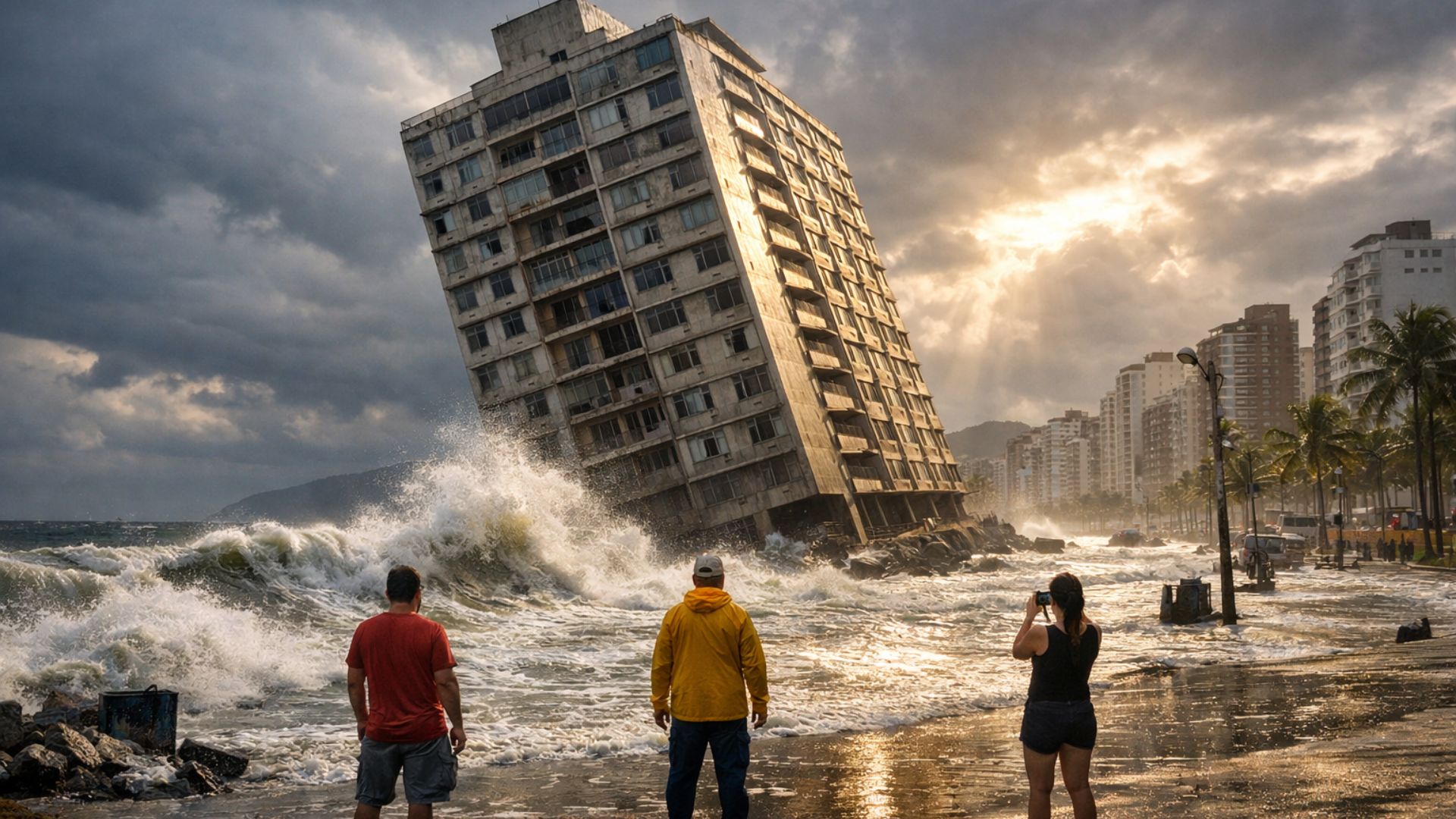
A Brazilian city is being invaded by the sea, buildings are leaning, and the solution could cost R$ 200 million with support from BNDES to prevent flooding, modernize drainage, and protect more than 200,000 residents within 5 years.
-
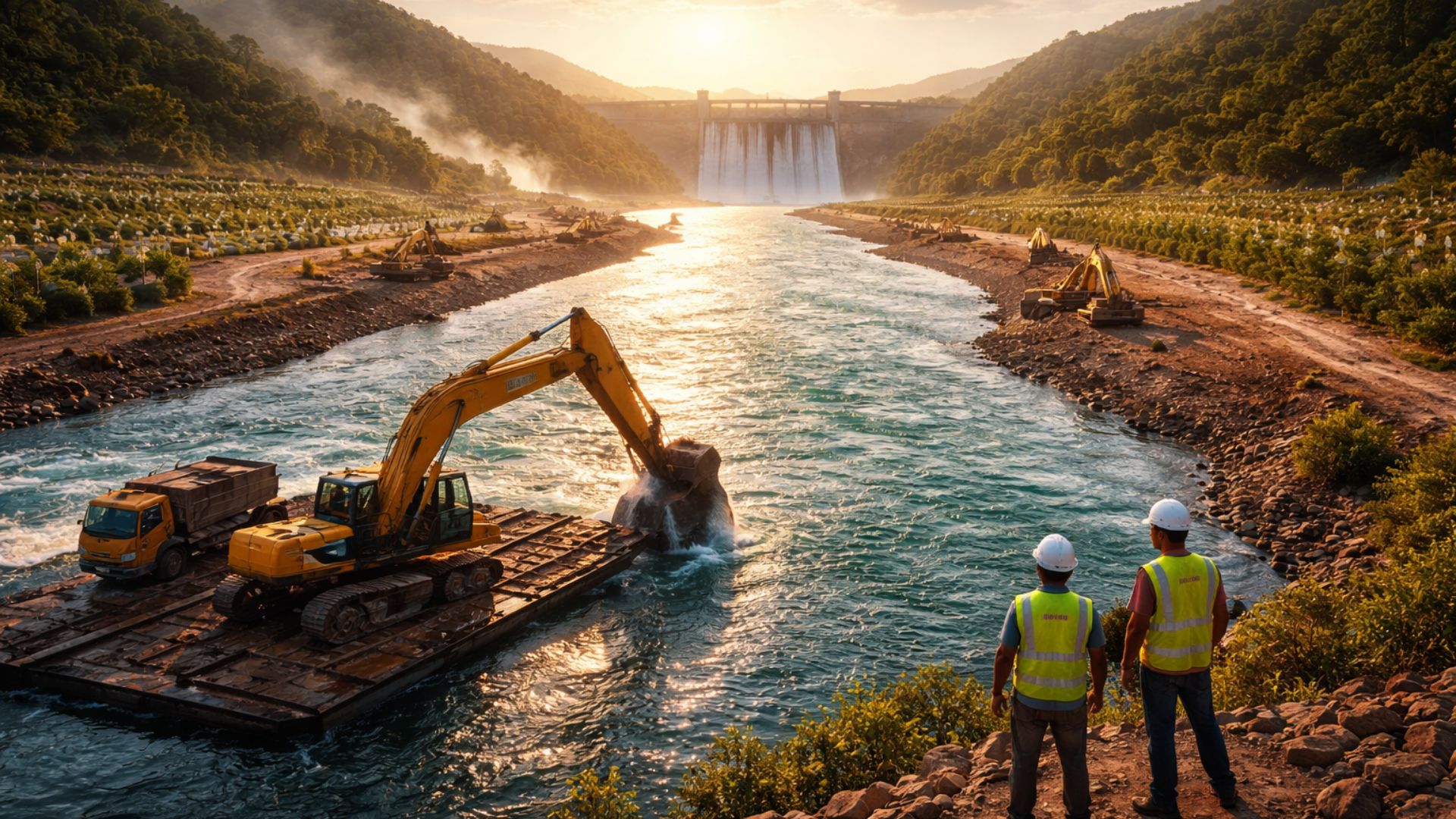
Lula’s government puts R$ 1 billion on the table to revitalize watersheds with 60 projects, including the São Francisco and Parnaíba rivers, sanitation, navigation, urban drainage, pollution control, and actions in strategic areas of Furnas.
-
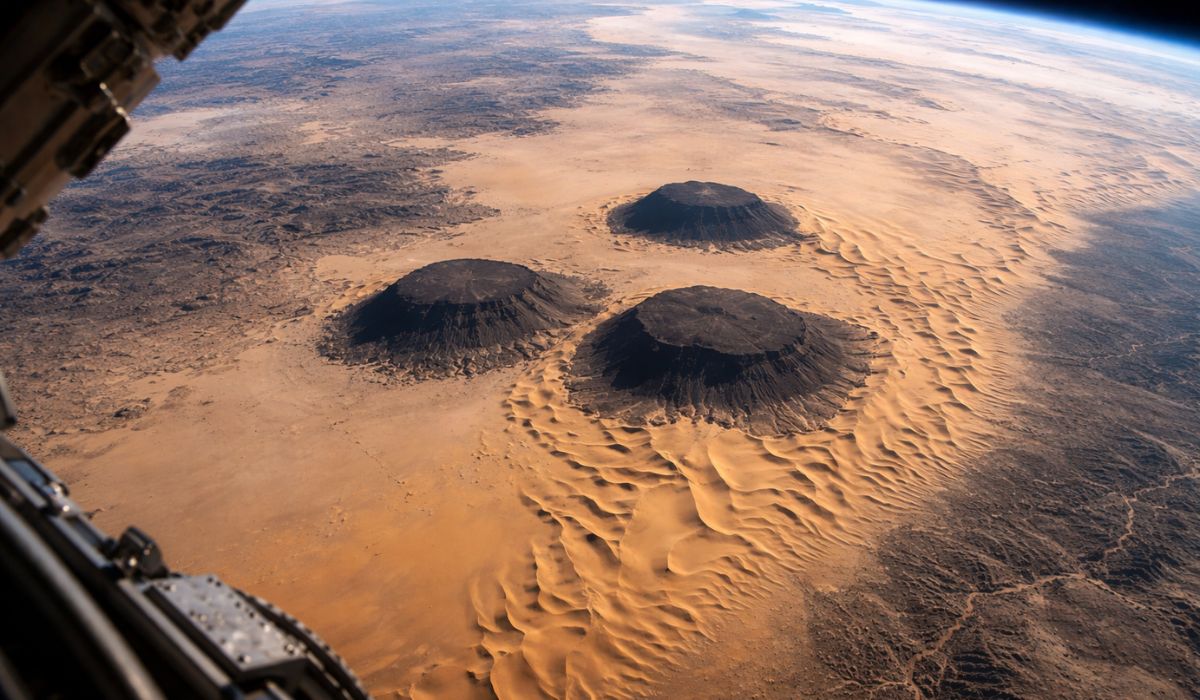
Seen from space, a trio of black mesas formed hundreds of millions of years ago and remnants of the Paleozoic era created rare dunes in the heart of the Sahara and a strange sand-free zone that continues to intrigue scientists today, transforming the desert into an almost Martian landscape.
Among the factors supporting this caution is the anomalous presence of mercury in the area, detected by modern research.
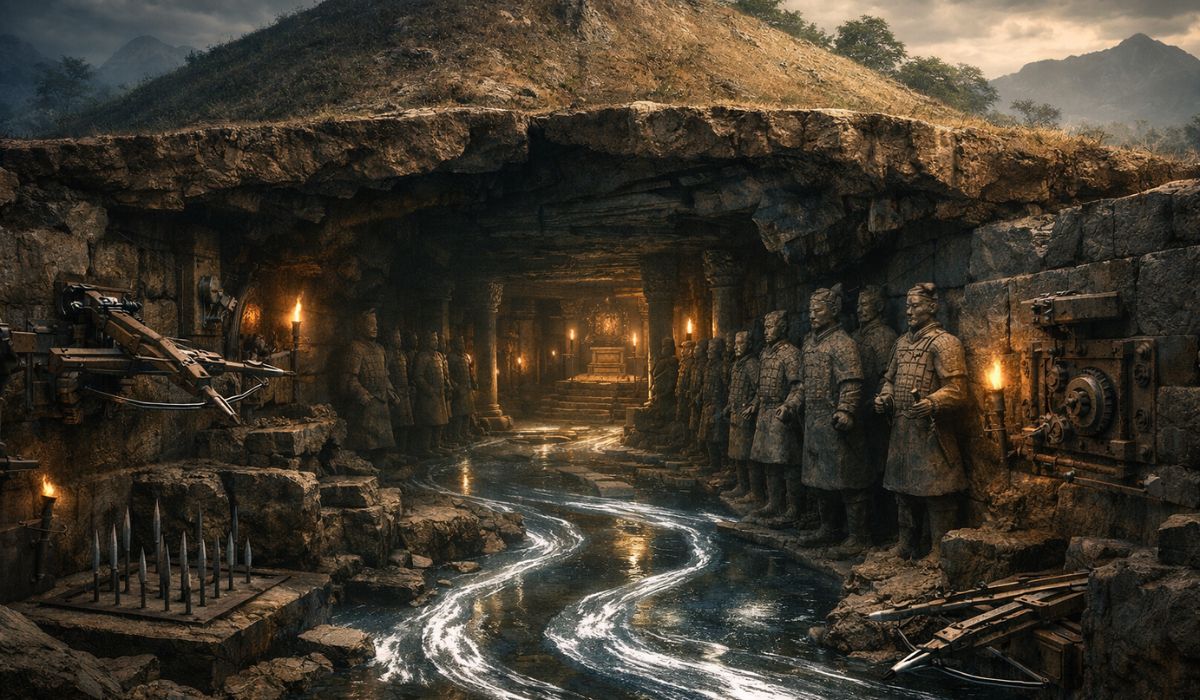
This finding gave new weight to ancient accounts that the underground palace would have artificial waterways of this metal inside.
Ancient records about the tomb of Qin Shi Huang
The most well-known description of the mausoleum appears in the records of the historian Sima Qian, written about a century after the emperor’s death.
According to this account, workers from different regions of the empire were mobilized to build an underground city beneath the tomb.
The passages attributed to the work describe a space designed to replicate the sovereign’s world.
Above, there would be representations of constellations.
Below, the terrestrial relief.
Among these elements, rivers and seas would have been simulated with mercury.
The same records also mention defensive mechanisms prepared to target intruders.
For a long time, this picture was treated by some scholars as possible literary exaggeration, due to the grandiose tone of the accounts about Qin Shi Huang.
Still, the preservation of the burial mound and the discoveries in the surrounding areas have kept the ancient text at the center of archaeological debate.
The mausoleum, in this context, is not seen as an isolated tomb.
It is a vast complex, with hundreds of associated structures and the terracotta warriors found in 1974 nearby.
Mercury in the tomb of the first emperor of China
In recent decades, the discussion has reached a new level with scientific measurements.
A study published in 2020 recorded high concentrations of atomic mercury in the atmosphere above the mound, at points that coincide with previous results from soil samples.
According to the authors, the data is consistent with the hypothesis of large amounts of mercury inside the tomb, possibly released slowly through microscopic cracks over time.
In the literature on the subject, there is an estimate of about 100 tons or more, but the exact volume has not yet been confirmed by direct access to the central chamber.
This point requires precision.
Mercury, under normal conditions, is a liquid metal, not a gas.
The risk, according to specialists, lies in the release of toxic vapor, especially in closed environments with little ventilation.
Therefore, researchers’ concerns are not limited to the symbolism of the “rivers” described in ancient texts.
The focus is also on the effects that the substance could cause in a potential attempt to enter the burial chamber.
The traps described in ancient texts
The most well-known part of the narrative involves the so-called automatic beasts, mechanisms that, according to written tradition, would have been installed to shoot at looters.
However, since the main chamber has never been opened, there is no direct archaeological verification that these devices are preserved.
There is also no evidence that such mechanisms remain operational.
What exists, based on documentation, is the ancient record of the existence of these traps and the indication that the funeral complex was designed to protect the emperor even after death.
According to specialists, distinguishing historical account, material evidence, and hypothesis is essential in this case.
The lack of access to the interior of the chamber prevents this point from being treated as a proven fact.
Why the central chamber remains closed
The decision to keep the tomb untouched is mainly linked to preservation.
The experience with the terracotta warriors served as a warning for Chinese archaeology.
Many statues reached the surface with traces of paint, but exposure to air and changes in humidity caused rapid loss of that layer.
This history reinforced the assessment that opening the main chamber could cause immediate damage to organic materials and sensitive surfaces.
According to institutions linked to the preservation of the site, current technology still does not guarantee the complete conservation of what is inside.
Furthermore, the mausoleum has been on the UNESCO World Heritage list since 1987 and remains under official protection in China.
In this context, the value of the complex lies not only in the objects that may still be found but also in the integrity of the archaeological site.
What is already known without opening the tomb
Even without direct excavation of the central chamber, the interior of the complex has ceased to be a completely unknown territory.
Non-invasive studies, environmental measurements, and decades of excavations in the surrounding area have allowed for the reconstruction of part of the scale of the funeral project.
The site includes hundreds of archaeological points distributed over a wide area.
Among them are the pits that housed soldiers, horses, chariots, and weapons.
The organization of the complex indicates that the mausoleum was designed as a symbolic extension of the imperial power of Qin Shi Huang.
UNESCO documents also record an annual flow of over 2 million visitors to the museum and the areas open for visitation.
The number helps to gauge public interest in the complex but also increases the responsibility regarding any decision related to the central chamber.
Limits of archaeology in the Chinese mausoleum
The mausoleum of the first emperor of China continues to attract attention because it brings together central themes of contemporary archaeology: the limits of excavation, the preservation of heritage, the effects of toxic substances underground, and the use of non-destructive technologies to investigate the past.
Although the tomb remains closed, new measurements on mercury and studies on the funeral landscape continue to expand knowledge about the site.
According to researchers, the challenge is to advance the investigation without compromising the preservation of what remains intact.
In this scenario, the central chamber remains one of the most protected and least known areas of world archaeology.





Seja o primeiro a reagir!