





 Portuguese
  English
  Spanish
  5 min of reading
  0 comments


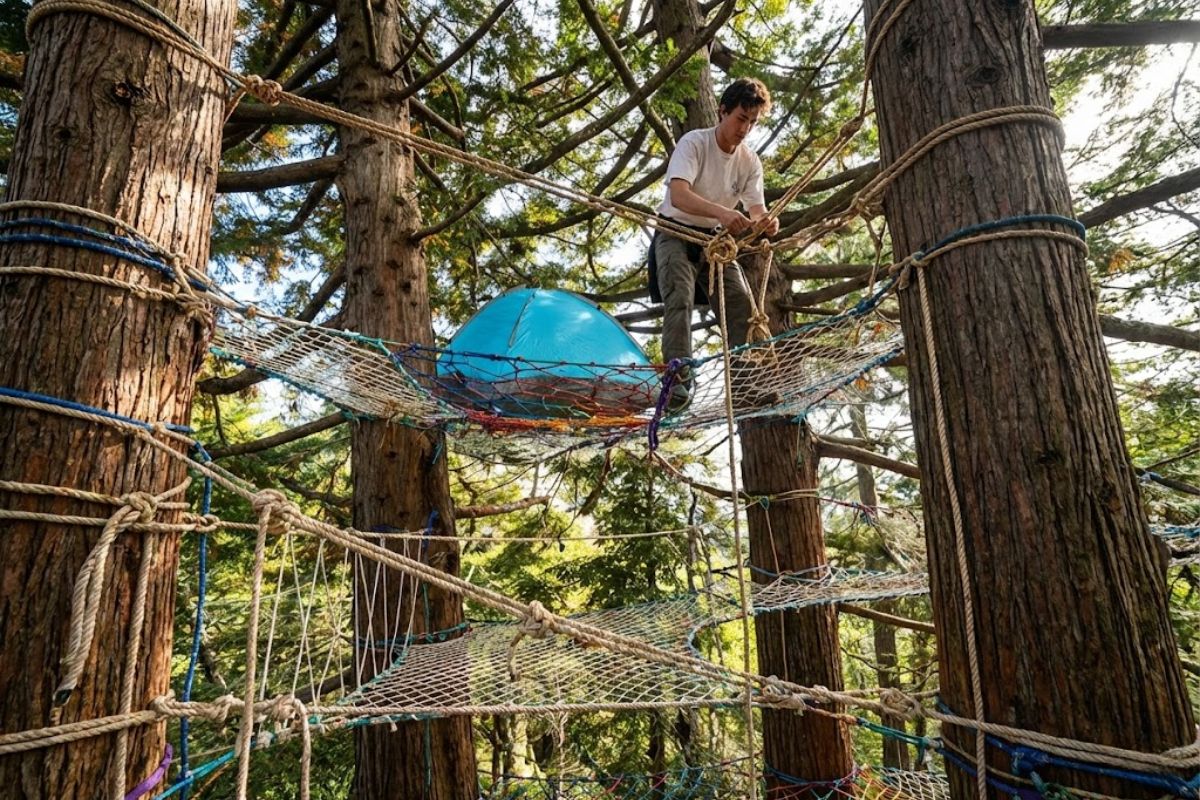
In The Construction Of A Tree House Made Only With Rope, In San Francisco, California, United States An Inexperienced Man Crosses Three Days Of Training, Learns Essential Knots, Tests Load At Height, Participates In A Collective Assembly And Discovers In Practice How Technique, Planning And Self-Control Decide If The Night Ends In Conquest Or Frustration.
The proposal seemed simple on paper, but the execution of the tree house showed another reality: without wood, without nails, and without rigid platforms, all stability depended on correct knots, force distribution, and precise reading of the branches. The challenge was not just to build a structure, but to trust it tens of meters off the ground.
Over three days, the project went from visual curiosity to a complete test of method. Among knot training, anchoring point selection, and risk assessment, what was at stake was more than just spending a night suspended; it was proving that properly applied tension can turn into functional architecture.
From Idea To Method, Why A Tree House Only With Rope Requires Practical Engineering

Initially, the biggest difficulty was conceptual. In a conventional tree house, rigidity comes from planks, screws, and defined supports. Here, the logic is inverted: resistance arises from the set of tensioned cables, the friction between wraps, and the geometry formed by the trunk, branches, and connection points. The structure does not “stand up,” it “stays in tension”.
-
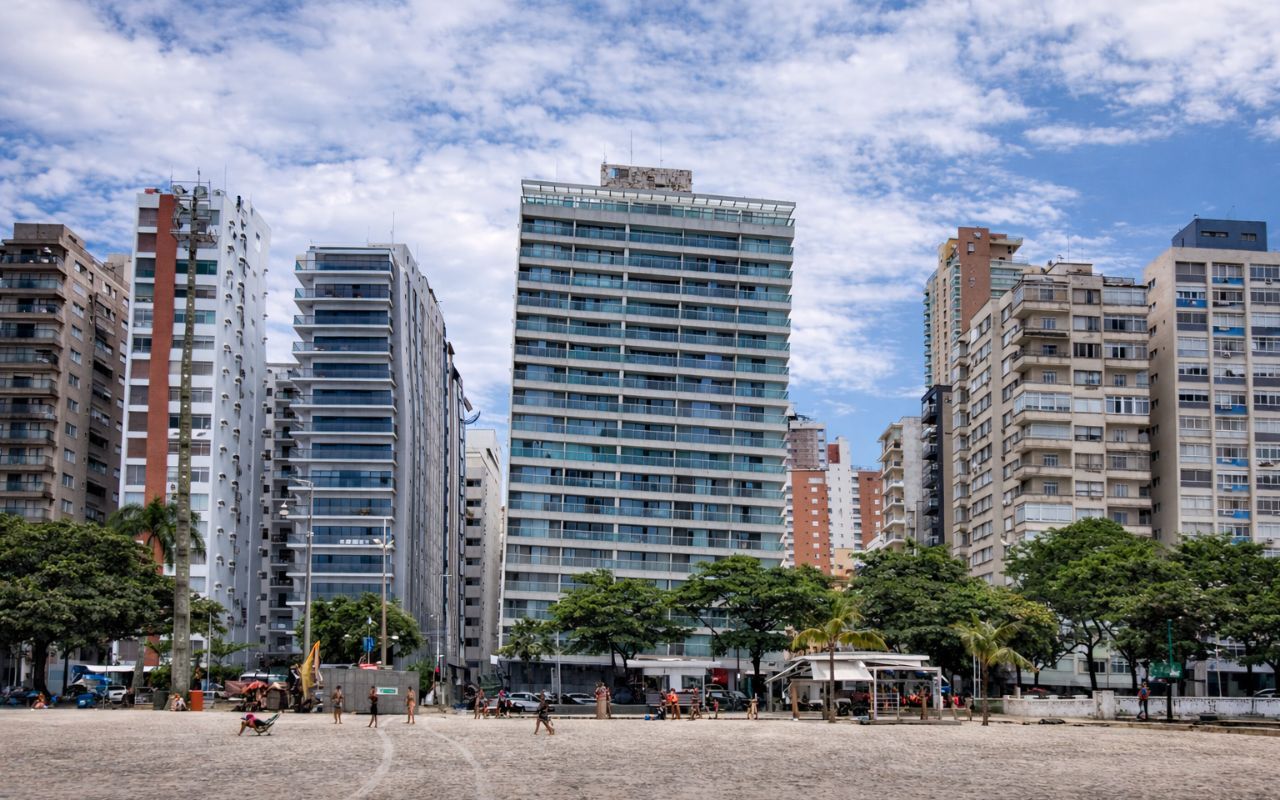
The Brazilian city has 319 crooked buildings built on sandy soil without proper deep foundations, houses the largest beach garden in the world, with over 5 km, and is still considered the birthplace of surfing — meet Santos, in São Paulo.
-
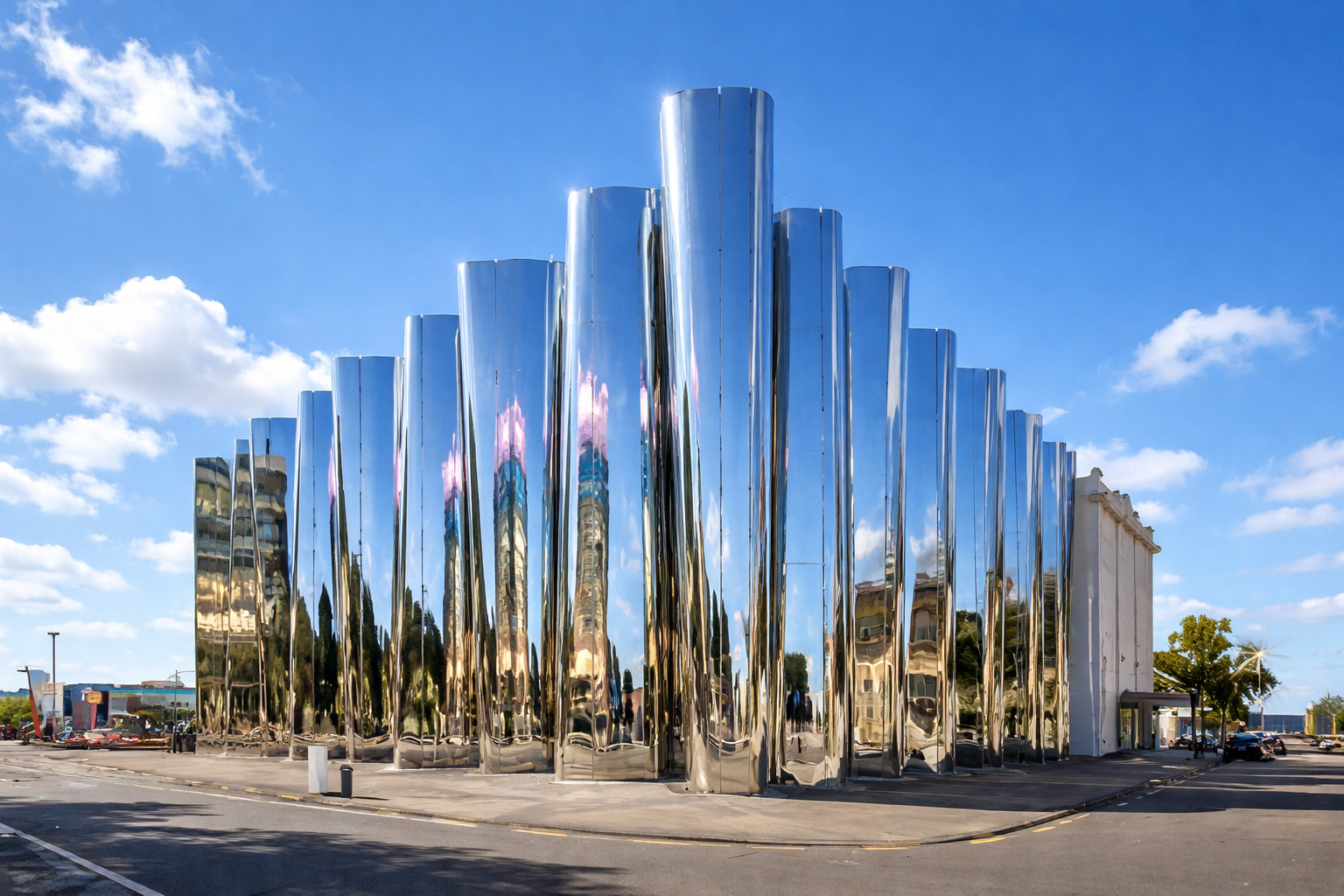
New Zealand builds a shimmering building that vibrates, featuring a 62-seat cinema, moving sculptures, and an environment where sound, light, and energy are felt in the body.
-
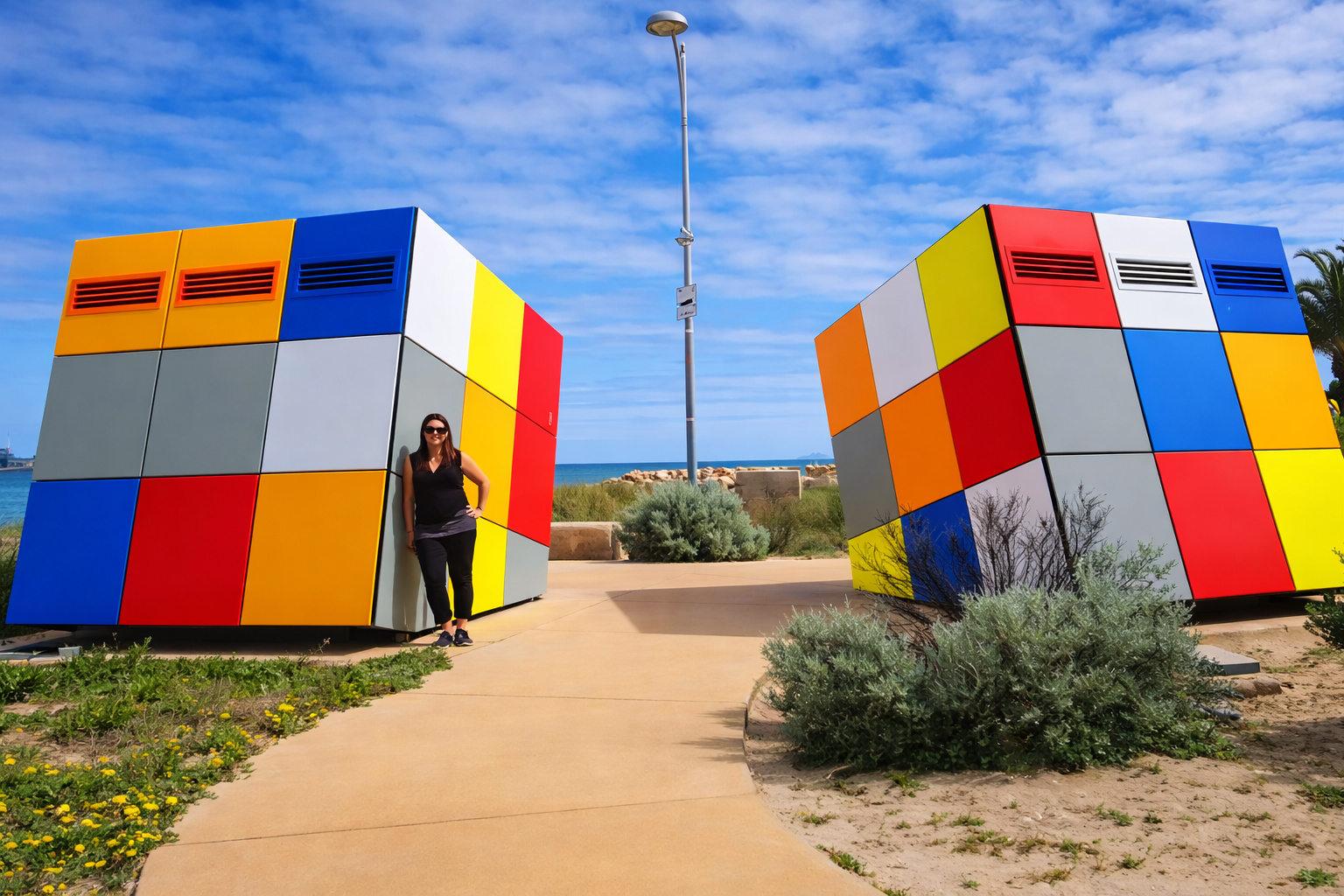
Two colored cubes of 2.5 m transform a public bathroom into a selfie spot in Western Australia, costing up to 75% less than traditional construction and helping to reduce vandalism in public spaces.
-
Santa Catarina produces up to 7 times more than it consumes in some sectors, and its century-old industries founded by grandparents and great-grandparents now compete on equal footing with Germany and the United States in the international market.


This type of assembly requires technical sequence. First, anchoring points capable of supporting continuous and dynamic load are selected.
Next, a primary mesh is assembled, which functions as the skeleton for support. Only then does the secondary weaving come in, responsible for comfort, redundancy, and fine adjustment. Without this order, the net may seem ready, but it responds poorly when bearing real weight.
Another critical factor was the learning curve. Learning knots “by watching” is different from learning knots “under load.” When the participant began to repeat the movements under pressure, they realized that small mistakes completely changed the final outcome. A poorly tied knot doesn’t fail in the first minute; it fails when you are already relying on it, making the process more demanding than it appears in videos.
Who Builds, Where They Build And How Height Changes Decision Making

The construction occurred in stages with Charlie, the specialist in weaving these structures with ropes, with initial practice on smaller structures and gradual advancement to higher points. This progression was essential to reduce human error.
At lower levels, the focus was on hand technique, knot tying rhythm, and knot consistency. At higher levels, the focus shifted to fear management, movement efficiency, and communication between the weaver and the supervisor.
The location also influenced everything. In large trees, the distance between anchoring points increases, requiring longer cables and greater control of sagging, the natural curvature of the rope when it bears load. The wider the span, the more crucial the balance between comfort and rigidity becomes. A net that is too tight loses absorption; a net that is too loose loses stability.
Height turned simple decisions into strategic ones. Carrying materials, repositioning the body, changing support points, all began to consume more time and energy.
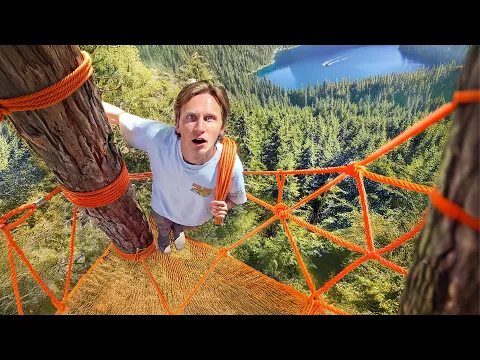

The team also needed to think about redundancy, that is, keeping secondary lines capable of holding the structure should any part lose efficiency during the night.
Safety, Load Testing And The Suspended Night, The Point Where Theory Turns Into Truth

Before the night, the tree house needed practical validation. The test was not just “climb up and see.” There was reading of mesh deformation, observation of knot behavior under continuous tension, and progressive adjustment of weight distribution. This included reinforcements in areas with greater load concentration, especially at the main resting point.
Personal safety came as a mandatory layer. Even with the net ready, retention equipment was considered to avoid falls in case of loss of balance during sleep.
In flexible structures, safety is not a sign of weakness; it is an operational protocol. Confidence increased because the risk was treated objectively, not ignored.
When the night arrived, the psychological aspect became as important as the technical one. Sleeping suspended requires accepting noises, movement, and constant awareness of height.
Still, the experience showed that a rope structure, when well assembled, can support real use predictably. The dawn confirmed what the test had already indicated; the tree house was not improvisation, it was method applied with discipline.
What This Experiment Reveals About Technique, Courage And Personal Limits

The project made it clear that courage without procedure is not enough. The tree house only worked because there was progressive learning, error review, and respect for the timing of technique. Instead of “getting it right the first time,” the process advanced through repetition, correction, and consistency. The final confidence was built knot by knot, not by impulse.
It also became evident that the outcome depends on collaboration. Even when one person appears as the protagonist, there is a support network behind, with those who guide, observe, correct, and help decide what can or cannot be done at height. This collective factor reduces risk and improves the quality of the assembly.
In the end, the experience combined three dimensions: practical engineering, emotional resilience, and environment reading. The tree house became a symbol of something greater, stepping out of comfort, taking calculated risks, and transforming an improbable idea into a habitable structure without resorting to the most obvious path.
If you had to choose, would you trust your technique or your emotional control more to spend a night suspended? And what personal limit would you be willing to test first, height, improvisation, or discipline?






-

-

-

-

-

-

133 pessoas reagiram a isso.