





 Portuguese
  English
  Spanish
  5 min of reading
  0 comments


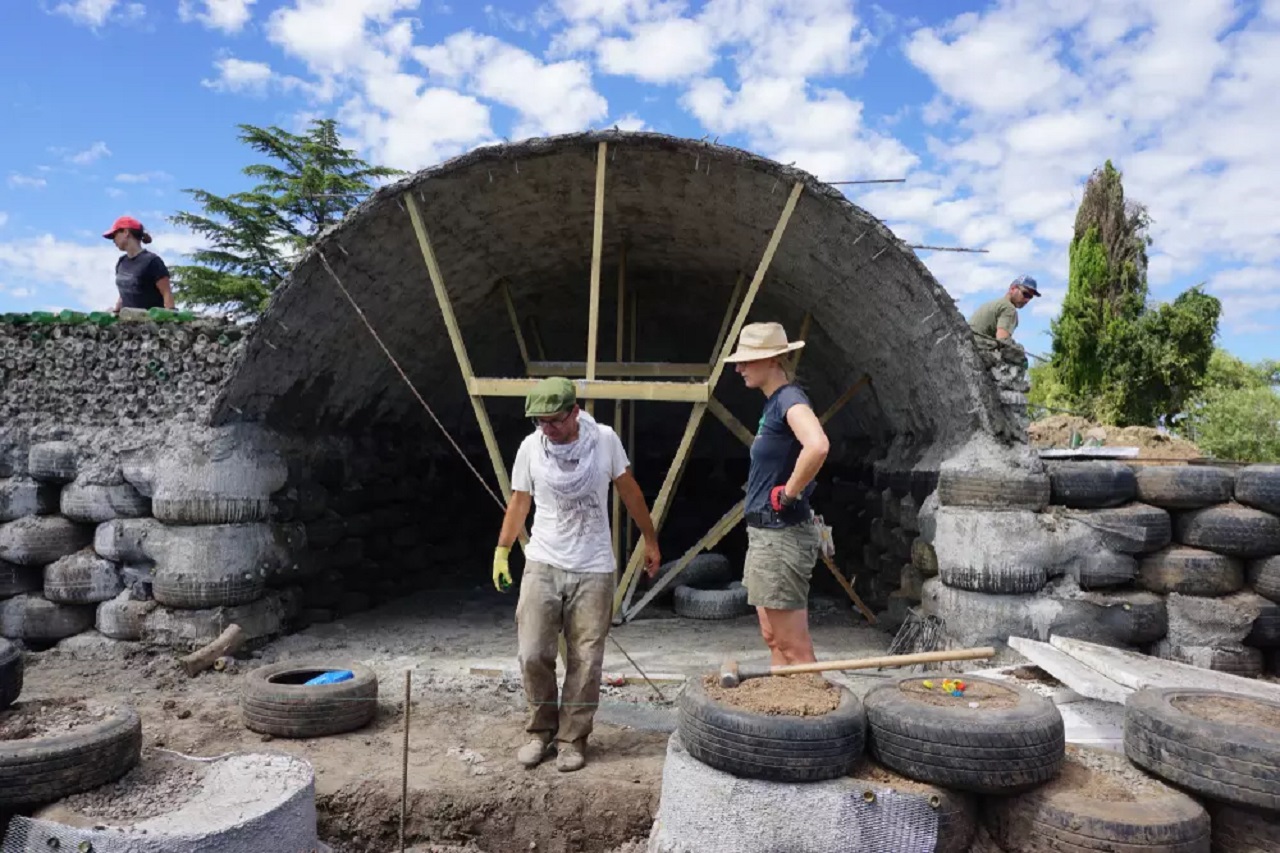
Earthship Houses Use Tires Filled with Soil as Bricks, Reduce Costs, Control Temperature Without Air Conditioning, and Transform Waste into Structure.
The concept may sound strange to those who have never heard of it: taking discarded tires, filling them with soil by hitting with a mallet until they become compacted like stones, and stacking them in layers to form structural walls. It seems like an improvised solution, but it has become a construction method studied, tested, and applied for over five decades in New Mexico, in the United States. There, in the arid environment near Taos, the first Earthships emerged, a type of building that was born from a very concrete problem: the immense volume of used tires and the need to create housing with lower costs, higher thermal resistance, and low dependence on urban infrastructure.
The Compact Tire Technique as Structural Brick


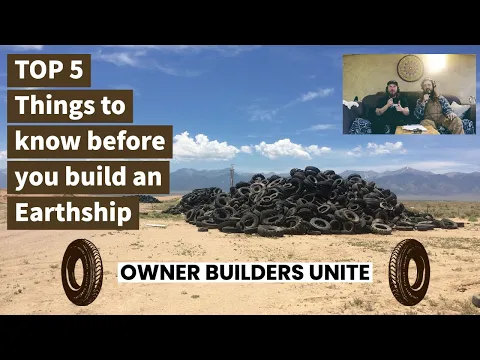
The tire is not used empty. Each unit is filled with moist soil until achieving a compaction that makes the whole work as a “brick” of up to 130 kg, depending on the diameter of the tire and the type of soil.
This weight is precisely what provides the so-called thermal mass, a principle highly valued in bioclimatic architecture: heavy materials absorb heat during the day and release it slowly at night, keeping the inside of the house with more stable temperatures.
-
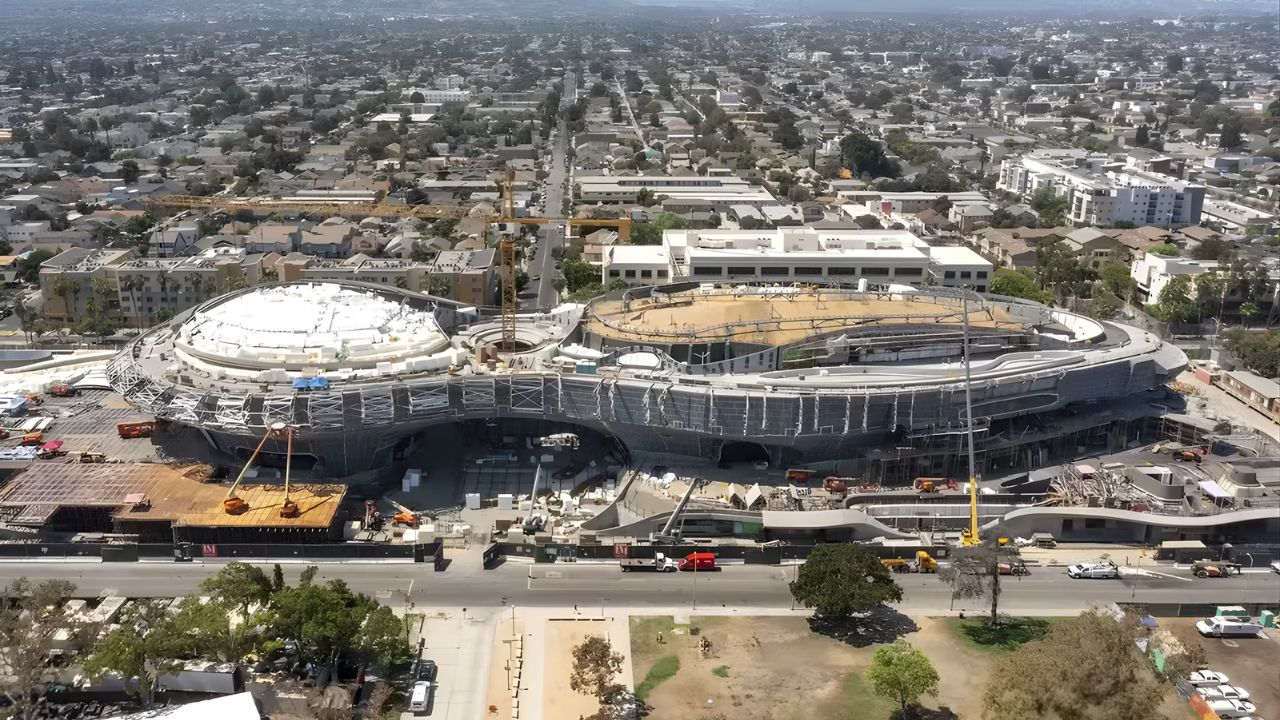
Created by George Lucas with over $1 billion, a futuristic museum in the shape of a spaceship with 1,500 curved panels is about to open in Los Angeles and will house one of the largest private collections of narrative art in the world.
-
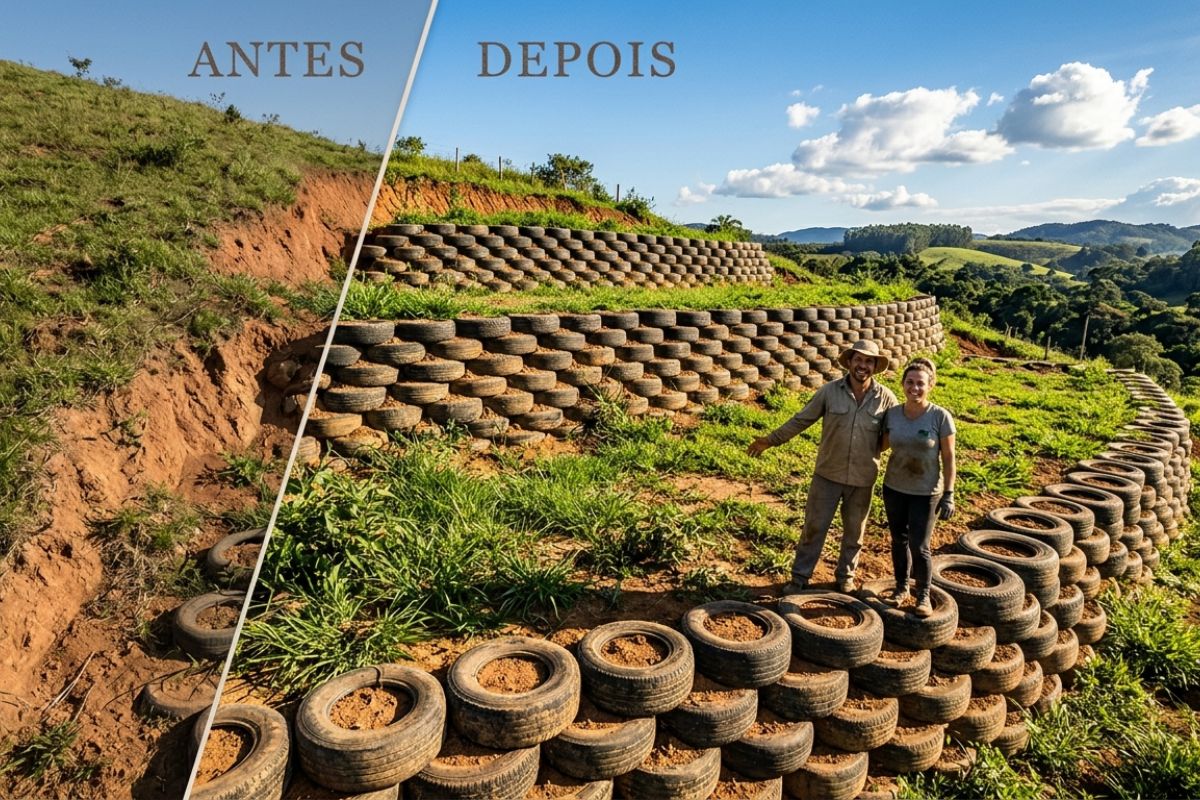
Couple shows how they built a retaining wall on their property using 400 old tires: sloped land turned into plateaus, tires are aligned, filled, and compacted with layers of soil, with grass helping in support and at almost zero cost.
-
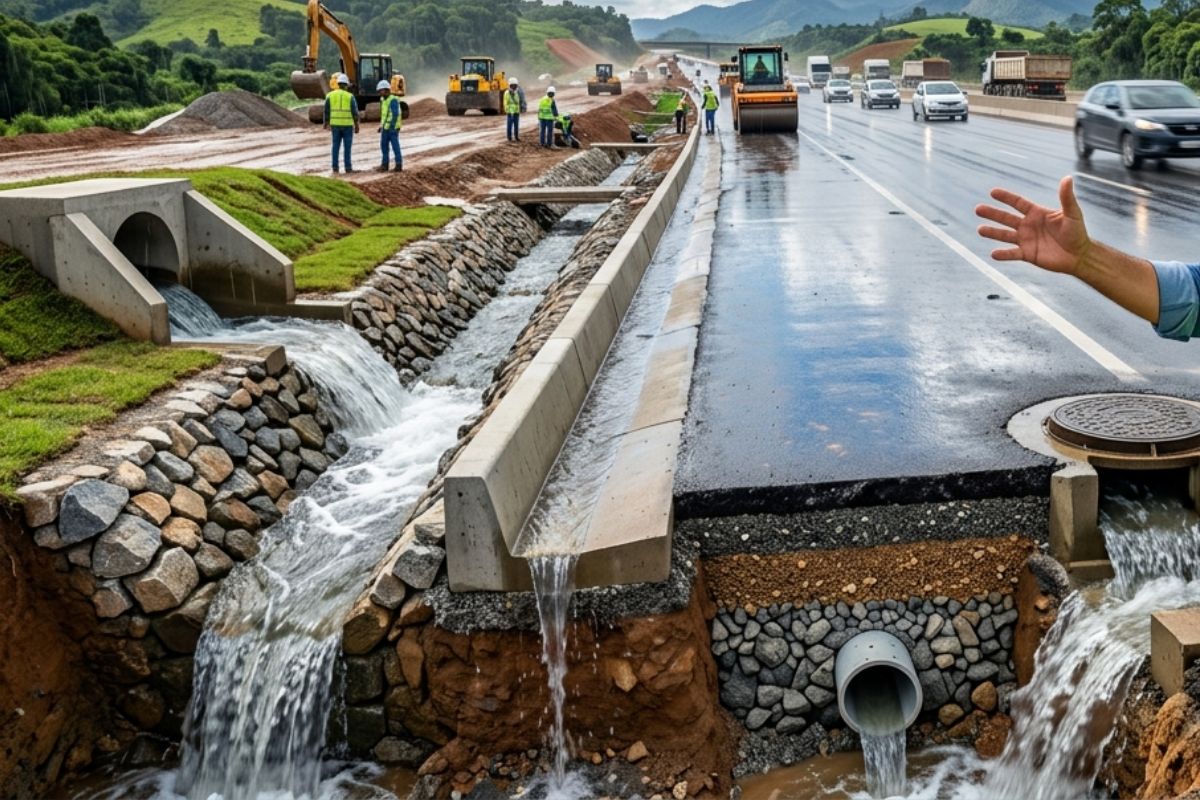
Engineer explains drainage during the rainy season: the difference between surface water and deep water, ditches, gutters, and water outlets on the road, as well as drains and drainage mattresses, to prevent erosion, aquaplaning, and flooding at the construction site today.
-
With 55 floors, 177 meters in height, a 15-meter walkway between the twin towers, ventilated facade, and 6,300 m² of leisure space, Ápice Towers already has one tower completed and another nearly at the top.


While a conventional masonry wall may require complementary insulation systems, the filled tire walls function as large thermal batteries.
In the summer of New Mexico, where outside temperatures can exceed 35 °C and drop below 10 °C at night, this characteristic prevents thermal spikes and drastically reduces the need for artificial cooling.
A Construction System Born from Improvisation, but That Evolved
The first Earthships began to appear in the early 1970s, envisioned by Michael Reynolds, an architect trained at the University of Cincinnati.
At that time, the United States was already dealing with millions of tires stored outdoors, with a high risk of toxic fires and little prospect for recycling. Reynolds saw there an abundant, durable input with interesting mechanical properties, especially for semi-arid regions.
Over time, the technique stopped being merely alternative and began to be documented, standardized, and adapted for different climates. Although many Earthships remained in the American Southwest, the method began to attract international curiosity.
Inspired projects emerged in Canada, the United Kingdom, France, Australia, and even in tropical countries like Guatemala and Argentina, each adapting the design to local climate requirements.
Cost and Labor: Why Interest Is Growing
Besides the thermal aspect, there is a significant economic appeal. By using tires, local soil, and glass bottles for lighting and partitions, the structural cost tends to decrease.
Estimates from specialized builders indicate a reduction of up to 30% to 40% in material costs when compared to a conventional masonry house of equivalent size, although the final value varies according to finish and municipal regulations.
Labor, however, is not trivial. Compacting hundreds of tires requires physical strength, rhythm, and time. For this reason, constructions usually rely on community efforts, architecture students, or trained teams.
For an Earthship of 90 to 120 m², between 700 and 1,000 tires are typically used over weeks of filling and assembling. After that, the structure receives layers of adobe, cement, or plaster for protection and finishing.
Soil, Glass, and Solar Design: A Thought-Out Set
Earthships were born in the desert and benefited from what is called passive solar design. The tire walls face north in the southern hemisphere (or south in the northern hemisphere), receiving radiation throughout the day to accumulate heat and release it at night.
The opposite façade usually features skylights, glass walls, or internal greenhouses that heat the air during the day. The result is a self-regulating thermal regime.
Instead of industrial ventilation systems, air circulation occurs through convection. Lower openings capture cooler air, while upper tubes expel warm air. The combination works especially well in elevated terrains of New Mexico, with low humidity and large thermal fluctuations.
Sustainability Entered the Discussion, but Is Not the Only Focus
It is common to associate Earthships with sustainability and green architecture, but that is only part of the story. The initial argument was not ecological but rather economic and logistical: there were many tires and few ways to dispose of them.
The method ended up becoming “sustainable” by the logic of reuse. Every tire incorporated into the construction is one less tire in landfills, dumps, or hazardous storage.
The durability is also surprising. Tires do not degrade easily, do not rot, and do not rust.
When sealed with soil and protected from ultraviolet light by plaster, they can remain structurally stable for decades. There are Earthships built in the 1970s that continue to be inhabited, with minimal maintenance, showing that the method is not ephemeral.
A Technique That Sparks Curiosity and Debate
Earthships divide opinions. For some, they represent an interesting path to more affordable housing adapted to the local climate. For others, they sound like alternative experiments with high labor costs and low urban appeal.
The fact is that for more than 50 years, hundreds of houses have remained standing in the desert, with permanent residents, proven thermal performance, and reduced structural costs.

In practice, the image of a tire filled with soil serving as a brick stirs the imagination. The idea of transforming solid waste into a habitable wall creates a cognitive shock: conventional buildings use bricks, concrete blocks, and steel; Earthships use tires, soil, and glass. It is precisely this inversion that yields great stories, public curiosity, and international coverage.
In the end, the compacted tire method shows that construction, a historically rigid sector, still has room for experimentation. It connects engineering, climate, economy, and solid waste. And, above all, it proves that simple and unexpected solutions can arise from concrete problems, such as the absurd volume of tires that the entire world is trying to discard.









-

-

-

-

-

-

58 pessoas reagiram a isso.