





 Portuguese
  English
  Spanish
  4 min of reading
  0 comments


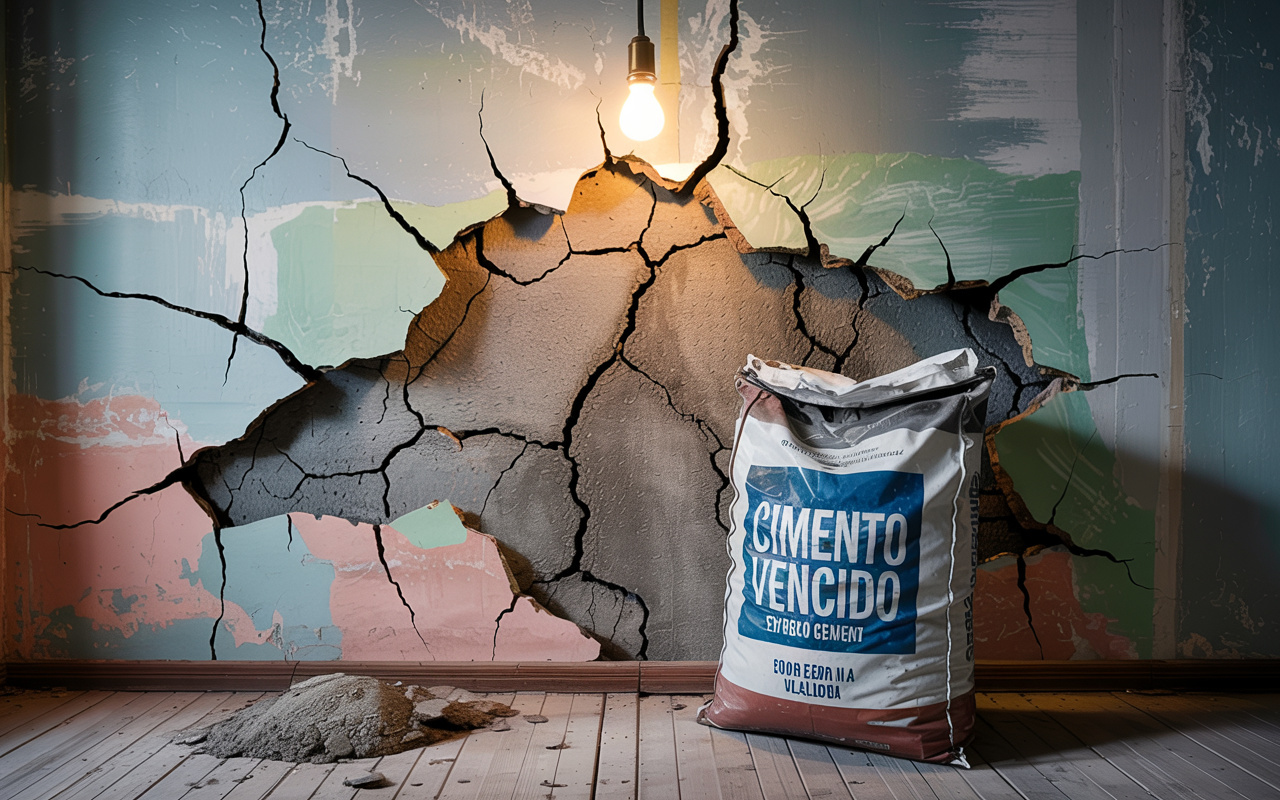
A Common Error In Construction Can Compromise The Entire Structure Of The House: Using Expired Cement. It Loses Chemical Reaction, Weakens The Mortar And Causes Cracks, Even Though The Finish Seems Flawless.
You look at the freshly painted wall in your house. Smooth, aligned, without a flaw in sight. But a few weeks later, small cracks start to appear. Then, bigger cracks. What seemed like just an aesthetic problem turns into a structural nightmare. What went wrong? Often, the culprit is at the beginning of the work: the use of expired cement in the mortar. This is a common error among bricklayers, often due to a lack of knowledge or poorly calculated savings. But the impact can be serious — and silent.
Why Does Cement Have Expiration?
Contrary to what many people think, cement is not “just powder”. It is an active compound, mainly made of calcium silicate, which reacts with water to form a solid and resistant material: concrete.
This reaction is called hydration of cement. It needs to happen correctly, with fresh cement, to ensure the adherence and strength of the mortar or concrete.
-
Created by George Lucas with over $1 billion, a futuristic museum in the shape of a spaceship with 1,500 curved panels is about to open in Los Angeles and will house one of the largest private collections of narrative art in the world.

-
Couple shows how they built a retaining wall on their property using 400 old tires: sloped land turned into plateaus, tires are aligned, filled, and compacted with layers of soil, with grass helping in support and at almost zero cost.

-
Engineer explains drainage during the rainy season: the difference between surface water and deep water, ditches, gutters, and water outlets on the road, as well as drains and drainage mattresses, to prevent erosion, aquaplaning, and flooding at the construction site today.

-
With 55 floors, 177 meters in height, a 15-meter walkway between the twin towers, ventilated facade, and 6,300 m² of leisure space, Ápice Towers already has one tower completed and another nearly at the top.


When cement goes past its expiration (usually 90 days after the manufacturing date), it:
- Absorbs moisture from the air, even inside the bag
- Starts to react with moisture before use
- Forms lumps and loses the ability to hydrate properly
- Becomes weak and loses adherence, compromising the entire mix
What Happens When Expired Cement Is Used?
Even if the mortar looks normal when applied — and even allows for a nice finish — the problem lies inside. With the chemical reaction compromised, the cement cannot “really stick” the bricks together, nor form a resistant structure.

Result:
- Microcracks in the first weeks
- Cracks over the months
- Walls that feel hollow or have low resistance to touch
- Finishes that peel off easily
- In extreme cases, collapse of partition walls
Appearance can be deceiving — but the structure is compromised.
Common Error In Construction: Using Leftover Old Bags Or Cement Stored Too Long
In many construction sites, especially small renovations, the bricklayer or helper takes that bag of cement that was “leftover” at the back of the storage. They do not always check the manufacturing date. Sometimes, the bag even looks “good” — the powder is loose, and the smell is normal.
However, without laboratory tests, it is impossible to know how much the hydration capacity has been compromised. If just part of the batch is inactive, the mortar loses performance and creates points of weakness in the structure.
This is a common error among bricklayers, but it can be costly in the future.
How To Identify Expired Cement?
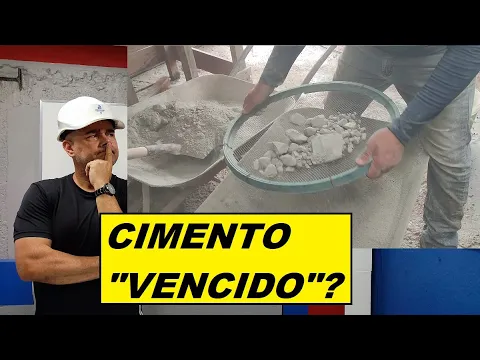

If you are the owner of the project, it is worth checking the bag before use. Here are some tips to detect expired or compromised cement:
- Manufacturing date: usually printed on the bottom side of the bag
- Average expiration: 90 days in dry places; can drop to 60 days in humid environments
- Presence of hard lumps inside the bag
- Dulled smell, similar to mold
- Difficulty in achieving a homogeneous mix with sand
Important: Cement does not clearly show that it is “spoiled.” It can even be used and yield a mixture. But the final result will be weaker — and that only becomes apparent once the wall is already finished.
Cracks In The Wall: Blame The Finish Or The Cement?
One of the biggest mistakes in diagnosing cracks is attributing the problem to the finish or the weather. In many cases, the painting is perfect, the plastering was done well — but the wall starts to open cracks weeks later.
If the cement in the mortar was already expired, it did not stick properly to the bricks. Thus, any natural movement of the house (settlement, thermal variations, vibration) causes small ruptures. Over time, this turns into cracks.
And then repainting or applying finishing paste won’t help. The problem is structural.
What Is The Difference Between Old Cement And Weak Cement?
- Old Cement: has lost part or all of its hydration capacity, even before use
- Weak Cement: can be new cement, but of low quality or poorly dosed in the mix
Both cause similar problems: hollow mortar, cracks, low strength. That’s why it’s essential to choose reliable brands, check the manufacturing date, and always prepare the mix with the correct proportion of sand, water, and cement.
Practical Tip To Prevent Problems
- Buy cement as close as possible to the date of use
- Store the bags in a dry, elevated place protected from moisture
- Use cement within up to 60 days after purchase
- If the bag has been open for a long time, do not use it in structural parts (like masonry)
- Prefer to use old cement only for temporary laying or paving
Using expired cement may seem like a saving at the beginning of the work. But the future losses from cracks, leaks, and renovations are much greater. And the worst: even with a perfect finish, the wall may be compromised on the inside.
Therefore, build responsibly. Cement is just one of the elements of construction — but it is the one that holds everything up.










Seja o primeiro a reagir!