





 Portuguese
  English
  Spanish
  4 min of reading
  0 comments


Online Course at USP Teaches How to Apply Artificial Intelligence in Scientific Research, Focusing on Productivity, Ethics, and Automated Analysis of Articles. Classes Take Place in October and Offer Free Certification to Participants.
The University of São Paulo has opened registrations for a free online mini-course that teaches how to apply artificial intelligence in the academic research process.
Held by the Institute of Mathematical and Computer Sciences (ICMC) in São Carlos, the course “Artificial Intelligence Tools for Supporting the Research Process” takes place on October 11, 2025, has a duration of 4 hours, offers 150 spots, and grants a USP certificate to participants.
The classes occur in two blocks, from 9 AM to 11 AM and from 1:30 PM to 3:30 PM, transmitted via Google Meet.
-
UFPB launches a selection process with 28 vacancies for those who dream of pursuing a postgraduate degree in Neuroscience.
-
Take a technical course at the Federal Institute: there are more than 100 open slots in free technical courses on Occupational Safety, Metallurgy, and Tour Guide; opportunities in the EJA modality at IFES Campus Vitória.
-
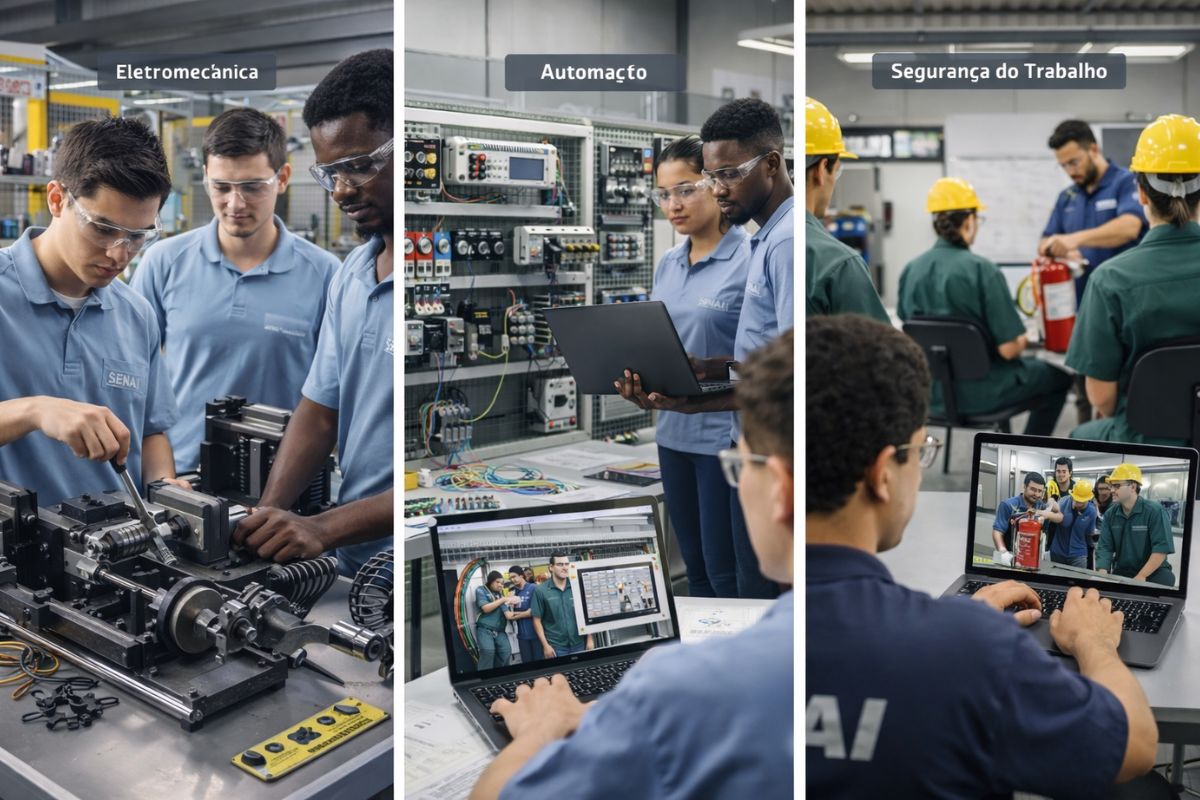
New classes for technical courses at Senai will start in May with in-person and distance learning vacancies in Electromechanics, Automation, and Occupational Safety for those looking to quickly enter the job market in Paraná.
-
Senar offers more than 450 vacancies in free technical courses in the areas of Agriculture, Forestry, Animal Science, Agribusiness, and Occupational Safety in Agriculture; the opportunities are available in both in-person and hybrid formats through Senar MS.
Targeted at anyone conducting research in any field of knowledge, the program proposes practical training on the use of AI in the scientific routine.
The aim is to equip students and professionals to employ tools for searching, indexing, and analyzing scientific documents, as well as to present prompt engineering examples to leverage language models as assistants in planning, reviewing, and writing academic texts.
The organization emphasizes that the content has been designed for direct application, focusing on productivity and traceability of work.
Course Content: Artificial Intelligence Applied to Research
Throughout the meeting, participants will engage with AI resources that range from information retrieval to automated analysis of articles, emphasizing how to integrate these solutions into the research workflow.
Among the topics covered are criteria for advanced searching in scientific databases, indexing strategies, and organization of collections, as well as prompting techniques to guide large language models in writing, reviewing, and checking the consistency of manuscripts.
The material includes a tutorial with reusable example prompts for different stages of academic work.
In terms of tools, the activity addresses the use of LLMs such as ChatGPT, Gemini, and DeepSeek, as well as agents that can act as co-assistants in exploring literature, generating outlines, and verifying references.
The focus is on practice: when to use each resource, what parameters to observe, and how to document the process to ensure methodological transparency.
Target Audience and Prerequisites
The mini-course is designed for undergraduate and graduate researchers, as well as professionals dealing with scientific investigation in different fields.
There are no formal prerequisites; however, familiarity with reading scientific articles is recommended for better engagement.
The idea is to cater both to those starting to experiment with AI in academia and to those who already use some solutions and seek to consolidate best practices.
Format and Support Materials
The transmission will be online, via Google Meet, in a synchronous format.
ICMC plans to provide support materials, exercises, and a tutorial in the form of a technical report.
Participation will be monitored through forms and an online questionnaire, a necessary procedure for issuing the certificate at the end.
The instruction will be led by professors Fábio Manoel França Lobato (Federal University of the West of Pará) and Ricardo Marcondes Marcacini (ICMC/USP), who work on topics such as text mining, information retrieval, and applications of AI in science.
Ethics and Best Practices in Using AI
In addition to technical procedures, the course incorporates guidelines on ethics and best practices in the use of AI in research.
Highlights include the necessity of documenting prompts, validating primary sources, checking tool biases, and respecting academic integrity guidelines.
The goal is for participants to learn how to extract efficiency without compromising the reliability and reproducibility of results, which are essential principles in any field of knowledge.
Certification and Impact on Academic Career
Those who complete the required activities and meet attendance criteria will receive a certificate issued by USP, a document useful for demonstrating an update in digital competencies applied to research.
In a scenario of rapidly expanding applications of AI in academia, the training provides a compact yet pragmatic overview of how to integrate tools into the research cycle — from literature review to writing and reference management.
For research groups, the training can also support the standardization of workflows with AI and the adoption of internal guidelines for responsible use.
How to Register for the Course
Registrations are open until September 30 or until spots are filled. The process must be done for free in the USP system, and selection occurs on a first-come, first-served basis.
After registration, accepted participants will receive the access link and instructions via email to attend the live classes.







-

Uma pessoa reagiu a isso.