





 Portuguese
  English
  Spanish
  5 min of reading
  1 comment


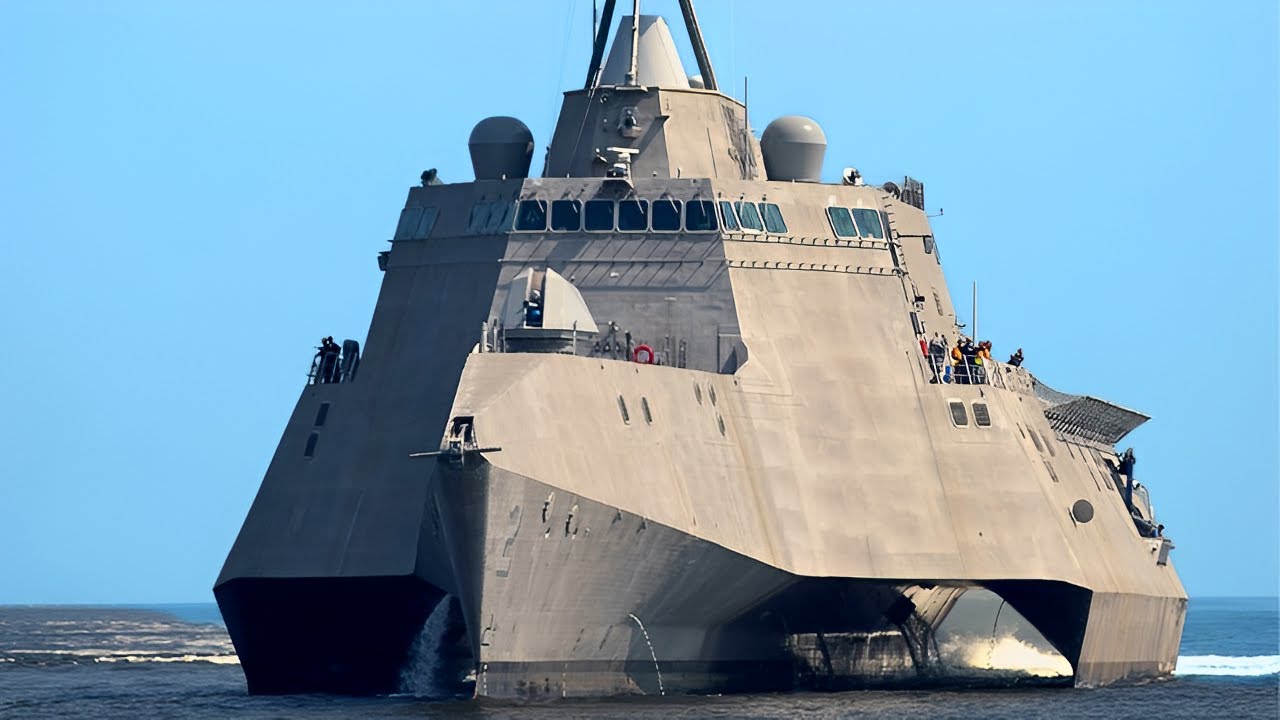


With 127 Meters and Aluminum Trimaran Hull, the USS Independence Remains a Benchmark in Modular Naval Warfare, Operating as a Mine Hunter, Anti-Submarine Vessel, or Surface Attack Ship.
In July 2014, the USS Independence was in San Diego testing its mine countermeasures package when the order arrived: the ship would participate in RIMPAC, the world’s largest naval exercise, in Honolulu. Problem: RIMPAC didn’t need a mine hunter. It needed a surface warship. In 96 hours, the crew removed all mine detection equipment, installed the surface warfare package with missiles and engagement systems, and the ship sailed from San Diego to Hawaii without refueling — a crossing of approximately 3,700 kilometers — to participate in the exercise as an opponent to four allied ships at once.
In four hours of combat simulation, the Independence operated alone against four vessels. It remained undetected for almost two hours. The concept that made this possible had no precedent in naval history: a warship that is not defined by its mission, but by the mission you install on it.
The Problem the U.S. Navy Tried to Solve
Every conventional warship is built for a function. A destroyer is a destroyer: its structure, torpedo tubes, radar systems, and anti-aircraft missiles are permanently integrated into the hull. To turn it into a mine hunter, you would need, in practice, to build another ship.
-
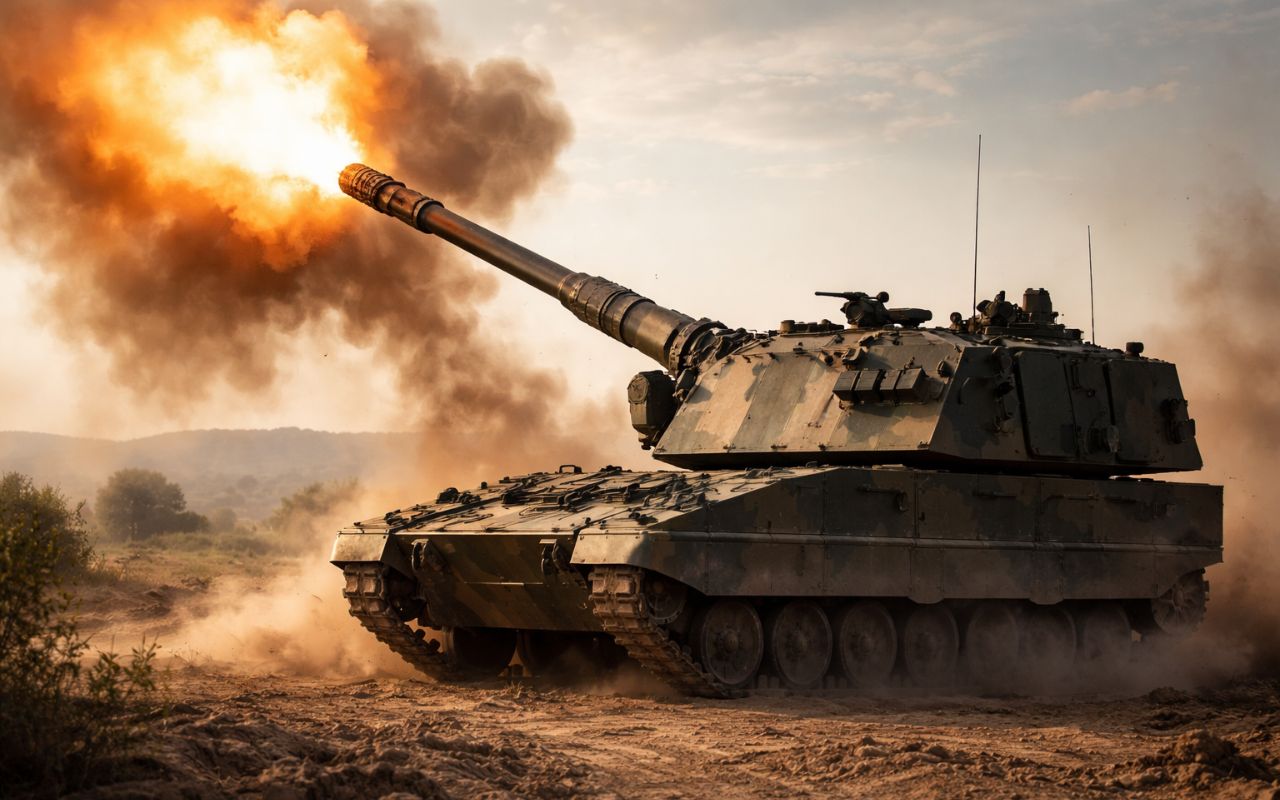
The German “steel monster” weighing 55 tons fires up to 10 projectiles per minute at over 40 km and avoids counterattacks on the battlefield by moving quickly to escape enemy attacks; meet the Panzerhaubitze 2000.
-
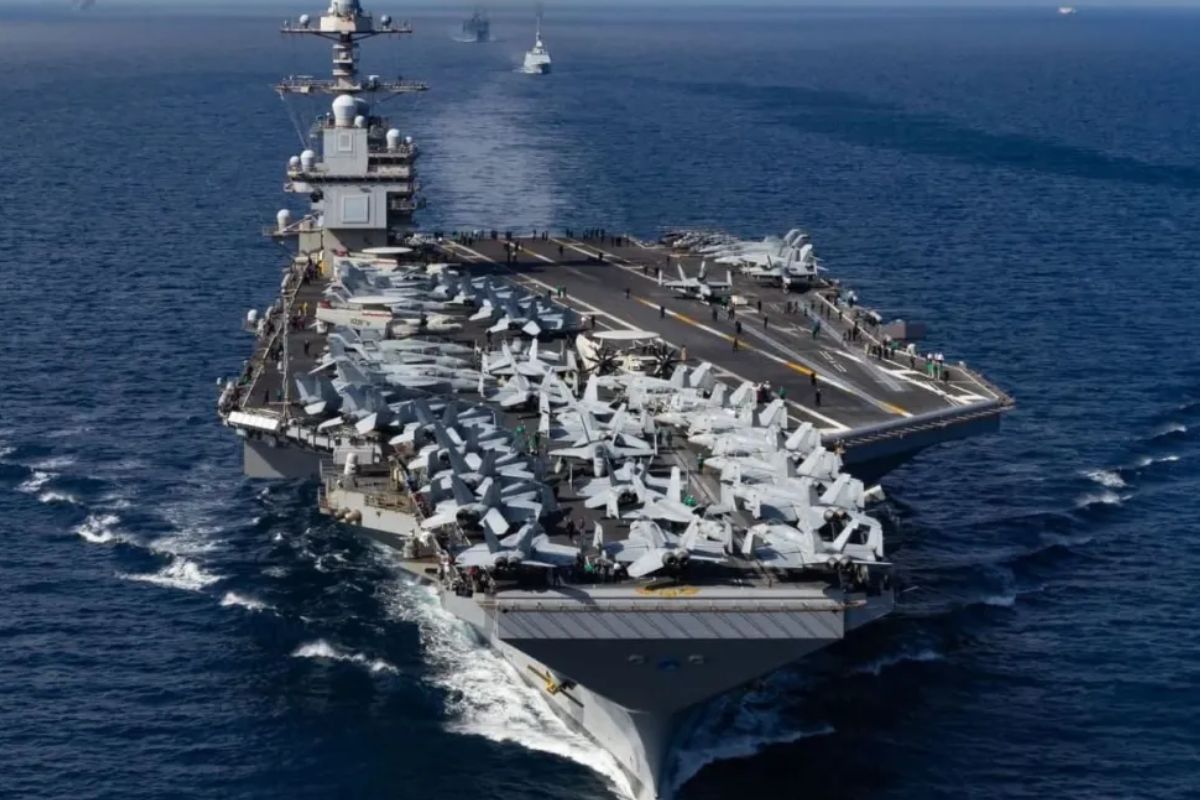
USS Gerald R. Ford, the largest aircraft carrier in the world, returns to sea after a fire in the laundry in the Red Sea; repaired in Crete, it resumes missions of Operation Epic Fury against Iran.
-
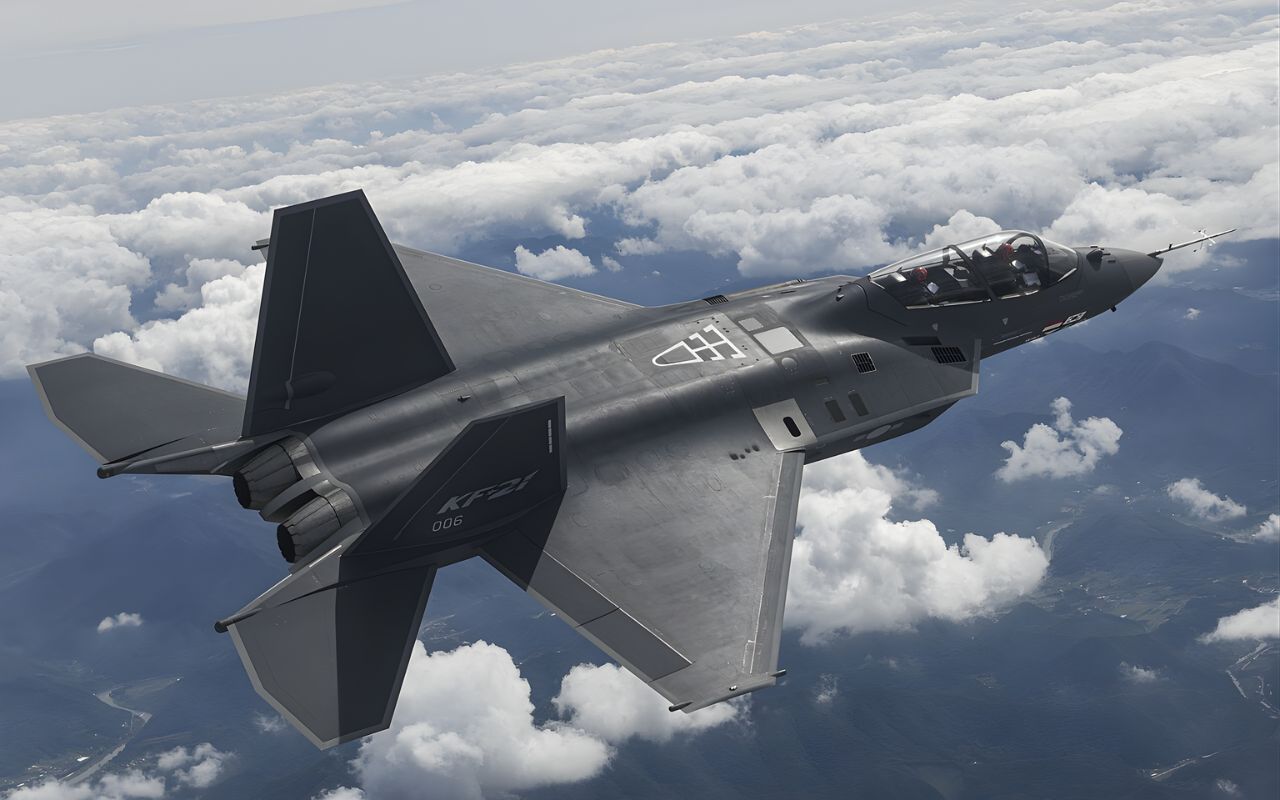
Military power: South Korea’s new KF-21 fighter jet will be a key component in replacing the aging aircraft of the air force, placing the country on the map of air military powers.
-
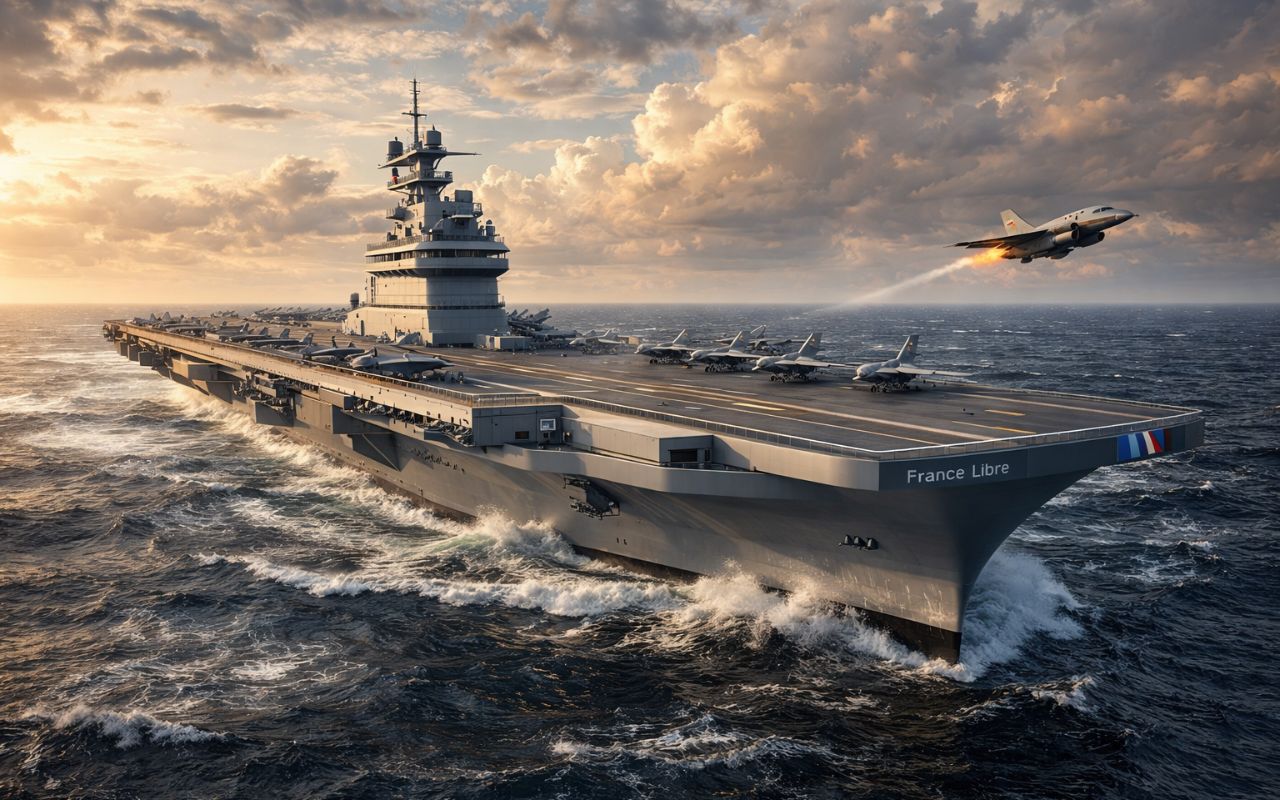
With 310 meters, 80 thousand tons, and capable of operating for 45 years, the new nuclear aircraft carrier France Libre will be the largest in France and will enter service in 2038.


This created a growing logistical problem for the U.S. Navy starting in the 1990s. The dissolution of the Soviet Union emptied the threat of large surface fleets.
The new operational environment — coasts of Somalia, straits of Southeast Asia, bays of the Middle East — required fast, shallow-draft ships capable of hunting mines in ports, pursuing fast attack boats, and tracking submarines in shallow waters where large destroyers simply cannot navigate.
The answer was the Littoral Combat Ship program, a coastal combat ship. And the hull chosen for one of the two variants was the trimaran of the USS Independence.
What the Trimaran Does That a Conventional Hull Cannot
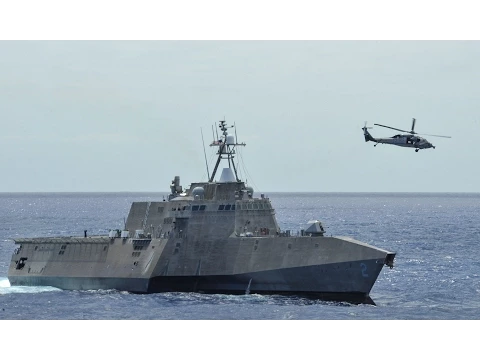
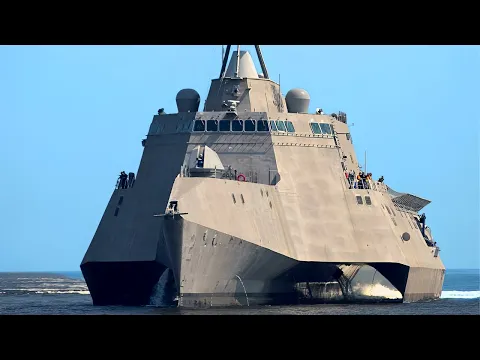
The Independence has three parallel aluminum hulls: a long, narrow central hull flanked by two smaller floats.
This geometry produces concrete effects. The narrow central hull generates much less hydrodynamic resistance than an equivalent monohull, allowing speed without the weight penalty. The side floats offer transverse stability, the ship does not roll in the waves the same way a monohull does, which allows operating the flight deck in sea state 5, with waves up to four meters.
The result: 127 meters in length, a draft of only 4.3 meters — which allows entry into ports and coasts where twin draft destroyers cannot — and a top speed of 44 knots via gas turbine water jets, equivalent to 81 km/h. In economical diesel mode, the speed drops to 18 knots with a range of 4,300 nautical miles, approximately 7,900 kilometers.
The flight deck has 1,030 square meters, larger than that of many destroyers and cruisers of the U.S. Navy that have double the displacement. Two MH-60 Seahawk helicopters can operate simultaneously. The hangar also accommodates MQ-8 Fire Scout aerial drones.
But the defining characteristic of the ship is not on the flight deck.
The Hold That Changes Function
Below the main deck is a mission compartment with 11,000 cubic meters of usable volume — equivalent to the cargo interior of some amphibious assault ships.
This compartment was designed with standardized interfaces for weapons, sensors, and vehicles. Mission modules fit into these interfaces like pieces of a modular system. Each package is physically transported to the ship, connected to the interfaces, and activated. The mission crew — specialists in the specific equipment — travels with the module.
Three Main Packages:
Mine Countermeasures Package (MCM): Includes the AN/AQS-20 towed sonar for underwater scanning, the Remote Minehunting Vehicle, an unmanned submarine that identifies and neutralizes mines without putting divers at risk, and the Unmanned Influence Sweep System, which simulates the magnetic and acoustic signature of a large ship to safely detonate influence mines.

In December 2010, the Independence detected mines in a simulated field in two consecutive passes and completed the search, detection, and destruction phases, the first time all three components of the package were integrated on board simultaneously.
Anti-Submarine Package (ASW): MH-60R helicopters with sonobuoys, dive sonar, and Mk 54 torpedoes. Variable depth sonar and towed array for passive detection of submarines in shallow waters where conventional deep-water sonar loses effectiveness.
In September 2014, the Independence tested both active and passive towed sonars simultaneously for the first time to verify that the two systems do not interfere with each other.
Surface Warfare Package (SUW): AGM-114 Hellfire missiles and short-range Griffin munitions launched by helicopters or unmanned platforms to engage fast attack boats. The Naval Strike Missile with a range of over 185 kilometers expands the strike capability against larger surface targets.
The Number the Navy Didn’t Want to Disclose
The original concept promised module swaps “within hours at any commercial port.”
The internal report from the Office of Naval Operations, produced after a war game in January 2012, recorded a more sobering conclusion: for logistical reasons, module swaps could take weeks. And that in the future, the Navy planned to operate each LCS with a single fixed module, with swaps being a rare occurrence.
The RIMPAC 2014 episode — 96 hours to swap from the mine package to the surface warfare package — was described as a “short notice” swap, not as a routine operation.
The tension between the modular promise and operational reality was never resolved. In 2016, the Navy officially abandoned the concept of rotating modularity and designated each ship division for a permanent mission. The Independence and its siblings began to specialize, losing the characteristic that defined them on paper.
What the Independence Proved Before Being Decommissioned
The ship was decommissioned in July 2021, eleven years of service, with a projected lifespan of 25. The decision was based on cost: the Navy calculated that the necessary modernization would make the program economically unviable compared to investing in more robust frigates.
But the eleven years of operation as a test platform left a technical record that influenced later programs.
The Independence was the first ship to test the SeaRAM system, a combination of Phalanx sensors with an eleven-missile Rolling Airframe launcher, which today equips multiple types of ships.

It was the platform where the unmanned underwater vehicle Knifefish and the Unmanned Influence Sweep System completed integration and control tests in 2019, validating the concept of anti-submarine and mine countermeasures operations conducted by autonomous vehicles from surface ships.
And it was where the Navy learned, in a documented way, that modularity in theory and modularity in real-world operation are different problems.
The Independence did not solve the problem it set out to solve. But it mapped exactly where the concept works and where it breaks, which for naval engineering is worth just as much as a solution.







Sub marino