





 Portuguese
  English
  Spanish
  4 min of reading
  26 comments





Usucaption in 2025 Can Ensure Property Ownership of Properties Without Deed in Just Five Years, Provided the Interested Party Presents the Documentation Required by Law.
The usucaption in 2025 has become one of the fastest and most effective ways to regularize urban and rural properties occupied for decades in Brazil. With just 5 years of peaceful, continuous, and productive possession, and the presentation of 7 essential documents, the interested party can obtain the definitive deed. According to law graduate Micaela Sanches, the institute is now a tool of social justice that ensures legal security for thousands of families and small producers.
The process is provided for in the article 191 of the Federal Constitution and in articles 1,239 and 1,240 of the Civil Code, and can be carried out either judicially or directly at a notary office, in the extrajudicial format, when there are no disputes.
The advancement of the rules in 2025 consolidated the modality as one of the main mechanisms for accessing property in the country.
-
The government is considering a temporary subsidy for cooking gas following the spike in oil prices due to the war in Iran and warns about the impact of 20% of imports on the prices paid by families.

-
The lack of truck drivers in the country is already halting shipments and threatening deadlines: 88% of transport companies are unable to hire, with an average of eight trucks idle, and the port complex of Itajaí is now feeling the impact.

-
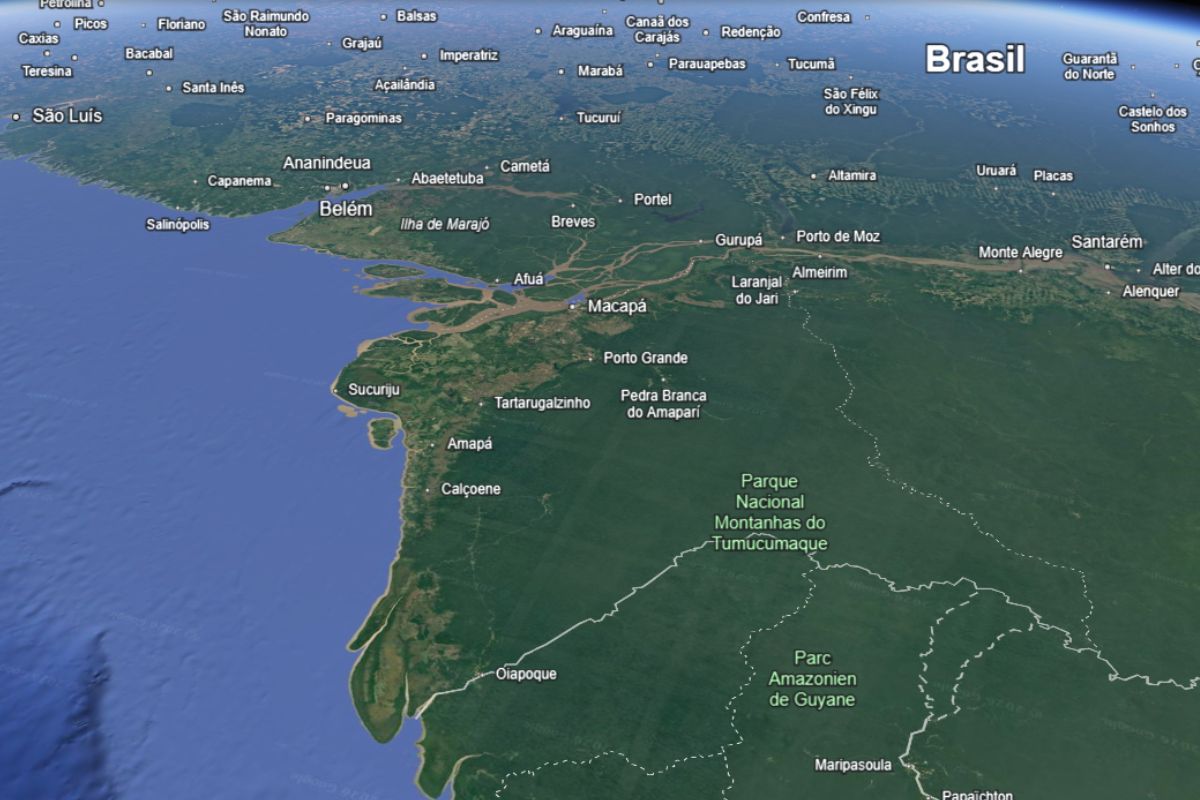
Petrobras is about to transform a forgotten city in the far north of Brazil into the capital of oil: Oiapoque is already feeling the effects even before the first drop of oil comes out from the seabed.
-
The Economist says that Brazil has a secret weapon in the oil war during this crisis: ethanol, biodiesel, and flex-fuel vehicles. With Petrobras holding costs, fuel prices are rising 10% to 20% here, compared to 30% to 40% in the USA.

What Is Usucaption in 2025
The usucaption in 2025 is a process that allows the transformation of possession into full ownership. The interested party must demonstrate that they exercise continuous possession, without opposition, and in a productive manner.
In rural areas, the maximum area is 50 hectares; in urban areas, the size varies according to the chosen modality.
In practice, the process involves property registration offices, the Public Ministry, and, in contentious cases, the Judiciary.
Lawyers, engineers, and surveyors are essential, especially in the preparation of plans and descriptive memorials, technical documents required for formalization.
Timeline of Usucaption
The institute of usucaption has ancient roots but has been reinforced over the past decades. In 1988, the Constitution recognized the rural modality, with a minimum period of five years.
In 2002, the Civil Code regulated other forms, such as urban usucaption. In 2015, the New Code of Civil Procedure created the extrajudicial modality at notary offices, which reduced costs and waiting times.
Today, in 2025, this modality is the most sought after, precisely for avoiding the slowness of the Justice system when there is no opposition from neighbors or heirs.
In the extrajudicial route, regularization can occur in a few months.
The 7 Essential Documents
To ensure approval, it is essential to gather:
- Detailed declaration of the occupied area;
- Plan and descriptive memorial signed by a qualified professional;
- Property registration certificates;
- Documentary proof of possession (receipts, invoices, informal contracts);
- Formal testimonies about the occupation;
- Negative tax certificates;
- Consent of the adjoining owners in extrajudicial cases.
According to Micaela Sanches, without this set, the request hardly progresses, as each document plays a decisive role in proving peaceful and quiet possession.
Impact on Families and Farmers
The usucaption in 2025 has a direct impact on the lives of thousands of Brazilian families.
Those who obtain the deed can access rural credit, financing, and public policies, as well as transfer the asset to heirs with legal security.
Another effect is economic: regularized properties start to collect IPTU (urban property tax) or ITR (rural property tax), strengthening municipal revenue.
The institute also reduces violent land disputes and brings predictability to the real estate market.
Risks and Obstacles of the Process
Despite advancements, there are challenges. If there is opposition from neighbors or heirs, the process is sent to court, where it can take years. Another common obstacle is irregularities in plans and descriptive memorials, which lead to request rejections.
Additionally, it is not possible to usucapir public properties, according to article 183, §3 of the Constitution.
The interpretation of terms like “peaceful and quiet possession” can also generate disputes, leaving room for litigation. Therefore, specialists recommend professional assistance from the beginning.
In summary, the usucaption in 2025 is one of the most powerful instruments of land regularization in Brazil, but it requires technical and documentary rigor to succeed.
With 5 years of peaceful possession and the 7 required documents, families and small farmers can turn possession into definitive ownership, ensuring asset security and access to new rights.
And you? Do you believe that the usucaption in 2025 is fulfilling its social function, or are there still obstacles that hinder property regularization in Brazil?
Leave your opinion in the comments; we want to hear from those who have faced this process in practice.







Essa b0sta de constituição que só favorece ****.
Usucapião deveria ser crime, o cara tem a escritura do imóvel, pagou por ele e investiu nele. E vem um **** derruba tudo e lhe toma a propriedade.
Brasil foi feito e arquitetado para **** mesmo.
Só leva essa **** de usucapião nas costas quem abandona o imóvel, não paga nada e, como ninguém cobra dele nada, acha que está se dando bem. Quando, na verdade, tem um esperto pagando tudo do imóvel e com um monte de correspondências naquele endereço. Só esperando dar 5 anos pra dar entrada. Malandragem demais, atrapalha.
Estou nesse processo de Uso Capiãopela defensoria pública desde de2013.Espero que seja resolvido sem mais demora.