





 Portuguese
  English
  Spanish
  5 min of reading
  0 comments


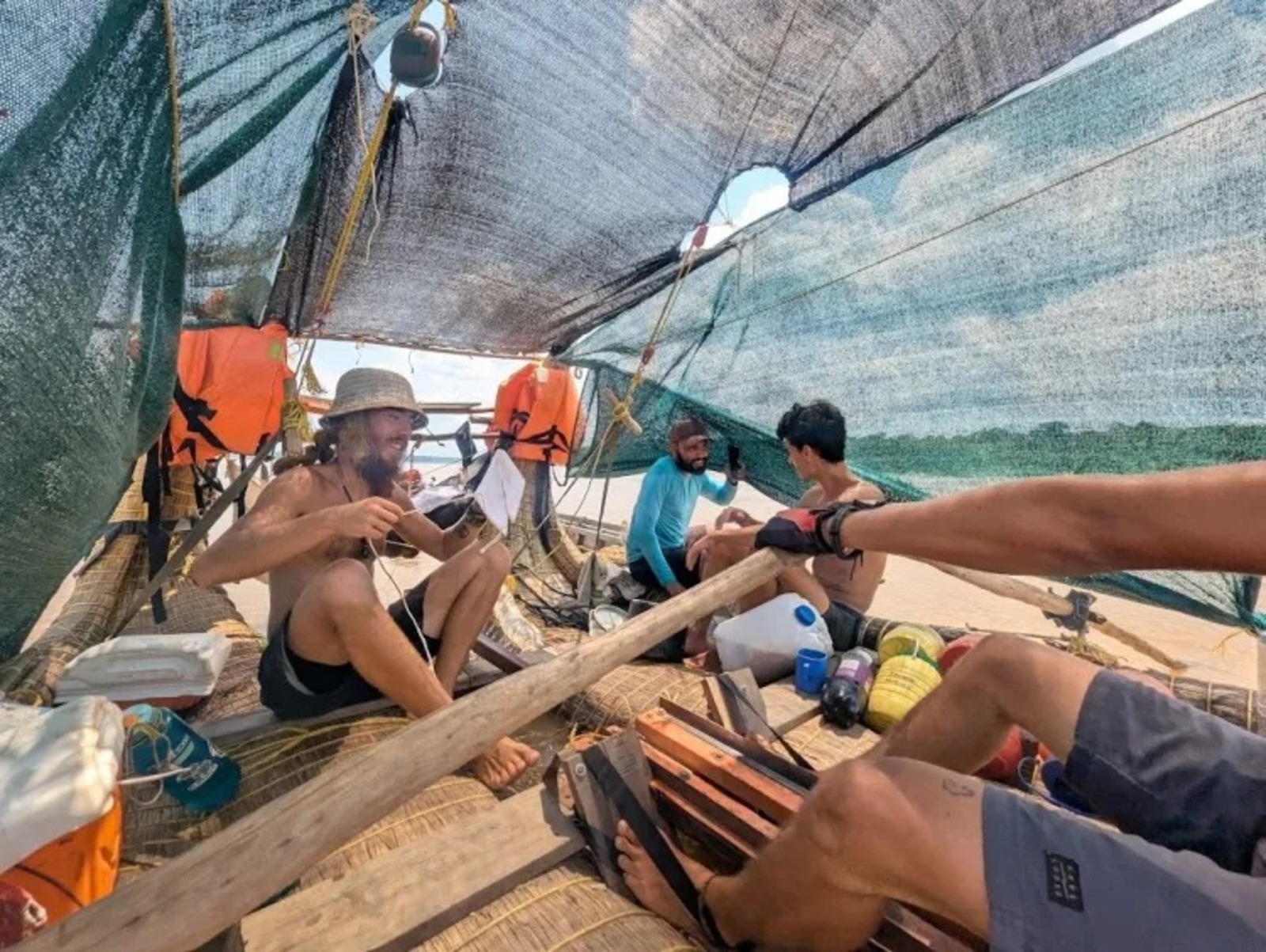
Coming from Bolivia, the navigators travel more than 3,500 km towards Macapá in tribute to the 200 years of Bolivian independence. The raft, made of Andean reed, deteriorates more each day in the turbulent waters of the Amazon
Since the beginning of July, three young French navigators have faced an unusual and risky crossing through the Amazon rivers. Aboard a raft made of totora, a type of Andean reed used for centuries on Lake Titicaca, they have been sailing for three months, coming from Bolivia, destined for the city of Macapá, in Amapá. The expedition celebrates 200 years of Bolivian independence and is about to be completed.
The Final Stretch of the Journey
The group, which started with four members, is now less than 100 kilometers from the final destination. The intention is to reach the mouth of the Amazon River, where fresh waters mix with the Atlantic.
However, the challenge has become increasingly dangerous because the vessel, built with bound bundles of totora, is deteriorating rapidly.
-
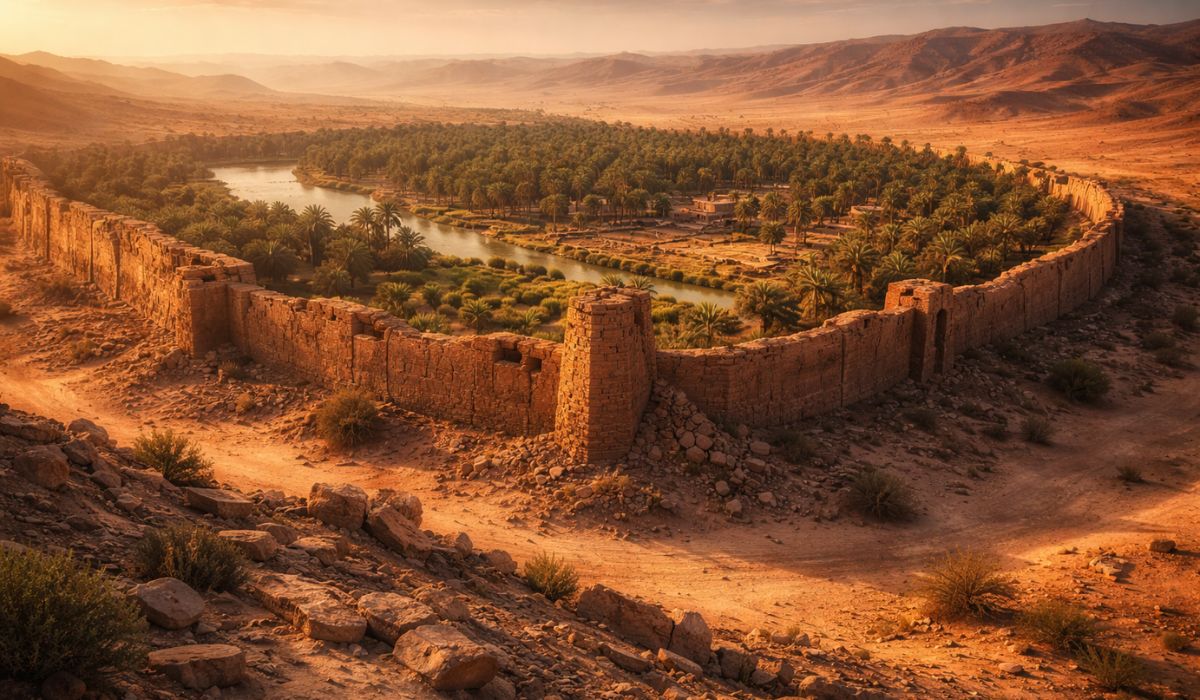
Archaeologists found in the desert an oasis 5,000 years old surrounded by giant walls, in a discovery that reveals a civilization much more complex, powerful, and organized than previously thought.
-
Giving your CPF at the supermarket has become routine, but in 2026 the rule will change: see how your data is used and when it is worth informing.

-
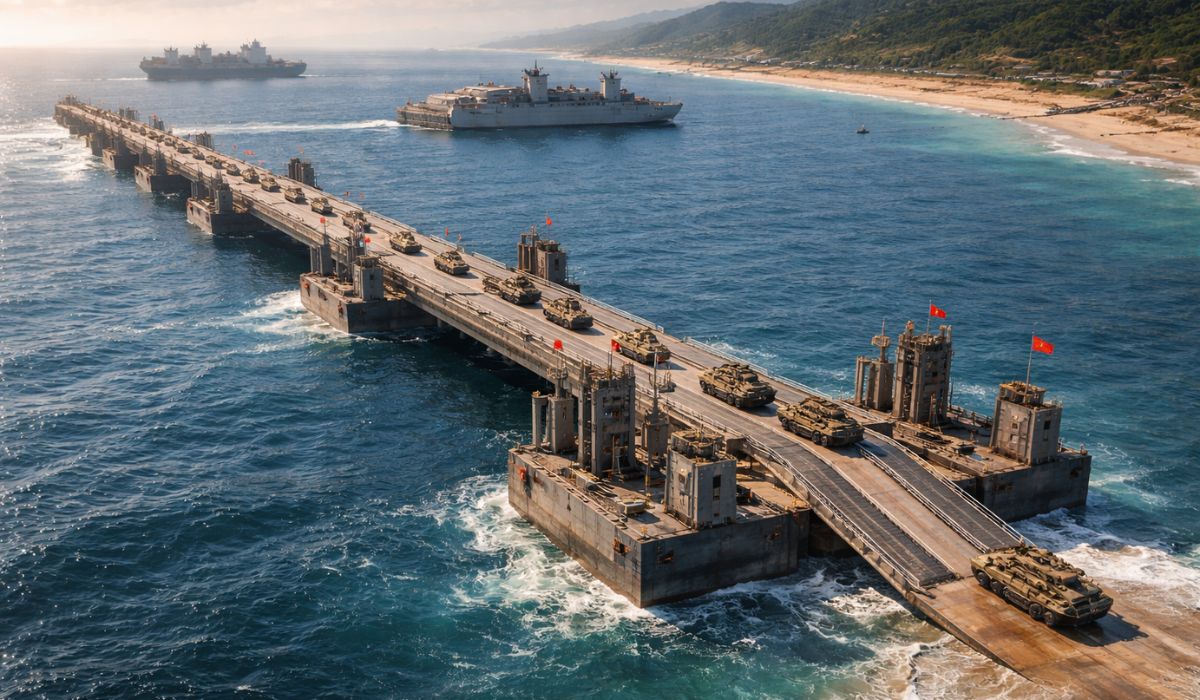
China has launched mysterious invasion barges into the sea with giant ramps that connect like Lego pieces and can form floating bridges of nearly 1 km to transport armored vehicles directly to the beach, in a kind of secret weapon for Taiwan.
-
Neither green in the fridge nor overripe forgotten in the fruit bowl: this is the correct way to store bananas.

As the days go by, the raft has been soaking, sinking more and more. In the great Amazon rivers, high waves crash against the fragile straw hull, frequently flooding it.
The expedition leader, Frenchman Fabien Gallier, explained that the situation is critical.
“Every wave that comes washes over the raft and floods everything. We are pushing forward, but slower, because the boat has become heavy. Additionally, we are rowing only, as the winds are against the direction we want to go,” he reported.
A Slow and Dangerous Crossing
At the beginning of the trip, the bundles of totora kept the vessel about 40 centimeters above the surface.
Now, only 20 centimeters remain, causing any small wave to flood the boat. “We are wet all the time,” said Fabien, who shares the adventure with Erwan Rolland and Benjamin Vaysse.
The documentarian Télio Nouraud left the group to reduce the weight of the vessel, which today weighs more than double what it did at the start of the expedition.
Despite the discomfort, the trio remains enthusiastic. They endure shifts of up to ten hours a day rowing, under strong sun and constant rain.
The concern for the integrity of the raft is constant, but the group trusts it will hold on until the end.
“Even if it falls apart, the raft won’t sink because the totora always floats,” Fabien stated, remembering that the builders of the vessel had already warned that the material has a short lifespan.
A Living Vessel
The navigators spent two months on Lake Titicaca building the raft alongside a traditional family of artisans from the region, known for preserving this ancestral technique.
They knew that the boat wouldn’t last long, especially in Amazon waters, where temperatures and currents are more severe than in the Bolivian mountains.
On average, a raft made of totora lasts up to four months on Lake Titicaca. In the warm waters of the Amazon, the decomposition process is faster.
Even so, the French continued undeterred, aware that deterioration was part of the experience.
“We knew this would happen. The rivers of the Amazon would soak and speed up decomposition. But it’s part of the adventure. We are sailing with an organic and living boat,” said Fabien.
According to him, the raft has transformed into a small floating ecosystem. “Every day, mushrooms sprout among the bundles, and we use them to eat.
We also have ants and termites on board. It’s a true ecosystem,” joked the Frenchman, who had previously traversed Brazil by bicycle, from Oiapoque to Chuí.
A Historic Feat, If They Endure
Currently, the six-meter-long by 2.5-meter-wide vessel is about 100 kilometers from Macapá.
If they manage to arrive, the group will be the first to sail with a reed boat from the Andes to the Atlantic Ocean, covering more than 3,500 kilometers.
The forecast is that they will complete the journey in two or three days, “if the raft holds up,” as the navigators themselves say.
Legacy of Legendary Expeditions with Rafts of This Nature
The boldness of the French evokes historic adventures that also used rafts and floats.
The most famous of these was Norwegian Thor Heyerdahl, who in 1947 sailed from Peru to French Polynesia with a vessel made of logs and totora.
The aim was to prove his thesis that the peoples of Polynesia would have come from South America.
Interestingly, Heyerdahl’s raft was built by the ancestors of the same family that helped the French in the current expedition.
Besides this, other experimental journeys have also utilized primitive vessels to reconstruct historic crossings or conduct scientific studies. For Fabien, these rafts are unique because they “allow a close bond between man and nature.”
The Raft of Sex and the Social Aspect of Expeditions
Among the most controversial adventures carried out in rafts is that of Mexican anthropologist Santiago Genovés in 1973.
He placed five men and six unknown women inside a raft and crossed the Atlantic, from the Canary Islands to Mexico, to study human behavior under stress.
During the journey, the researcher encouraged relationships and conflict situations among the crew, turning the experience into a controversial social experiment nicknamed by the press as the “Raft of Sex”.
Despite the criticisms, the study inspired modern confinement television formats, such as reality shows, including Big Brother, by exploring human coexistence in confined spaces under constant pressure.
A Tribute to Resistance and Nature
The expedition of the French, therefore, follows a long tradition of experimental sailings. More than an adventure, the project symbolizes the union of courage, simplicity, and respect for nature.
With the raft becoming increasingly soaked, the navigators paddle through the waters of the Amazon, unsure if they will reach Macapá.
But, as Fabien Gallier emphasizes, “even if we don’t manage to reach the ocean, we will have lived something extraordinary.”
For them, what matters is the journey — and the story that the totora, slowly disintegrating in the current, will continue to tell for a long time.
With information from UOL.






-

-

-

-

-

-

28 pessoas reagiram a isso.