





 Portuguese
  English
  Spanish
  5 min of reading
  0 comments


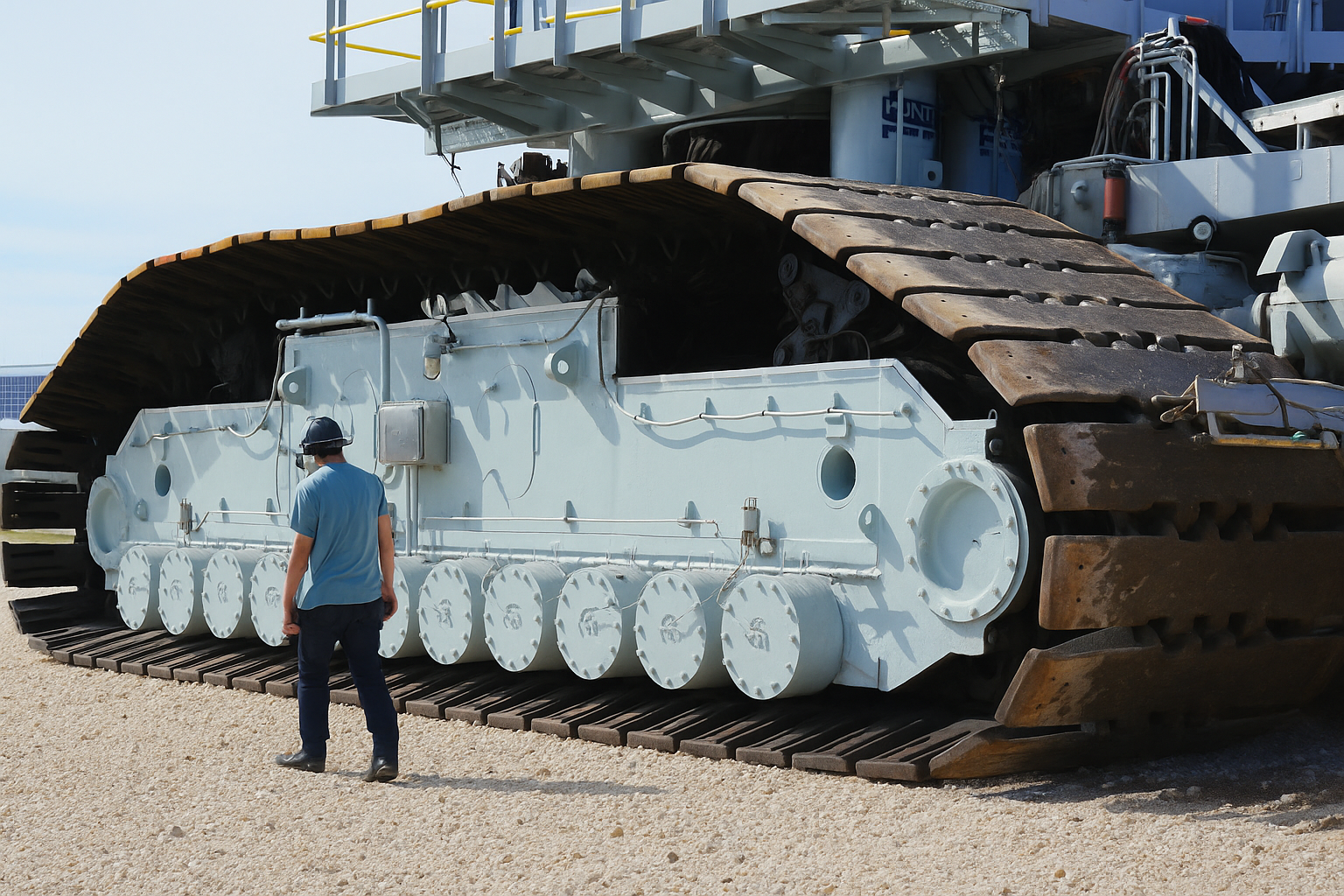
With almost 3,000 Tons, This Gigantic Vehicle Is Essential for Space Launches in the United States. Meet NASA’s Crawler Transporter — a Historic Machine That, Even After More Than Half a Century, Remains One of the Most Impressive in the World.
There Is No More Critical — and Delicate — Task Than Safely Transporting a Gigantic Rocket to the Launch Pad. To Achieve This, NASA Has a True “Monster” on Tracks: the Crawler Transporter, a Tracked Vehicle Built in the 1960s, That Is Still Used in Modern Space Missions, Such as the Artemis Program.
There Are Two Models, the Crawler-Transporter 1 (CT-1) and the Crawler-Transporter 2 (CT-2), Both Built in 1965 With One Purpose: To Carry the Saturn V Rockets for the Apollo Missions to the Launch Base. Since Then, These Vehicles Have Become Icons of American Engineering — and They Continue to Operate, Now Transporting the Powerful SLS (Space Launch System) and the Orion Capsule.
Crawler Transporter: The Definition of Giant
Nasa’s Crawler Transporters Are Impressive Not Only for Their Size but for Their Complexity:
-
Attracting around 250,000 people a year, a lighthouse 200 meters from the sea, on a 60-meter high cliff, on the North Sea coast in Denmark, becomes one of the most impressive examples of how nature can threaten historical buildings.

-
The narrowest house in the world is only 63 centimeters wide, but inside it can accommodate a bathroom, kitchen, bedroom, office, and even two staircases.

-
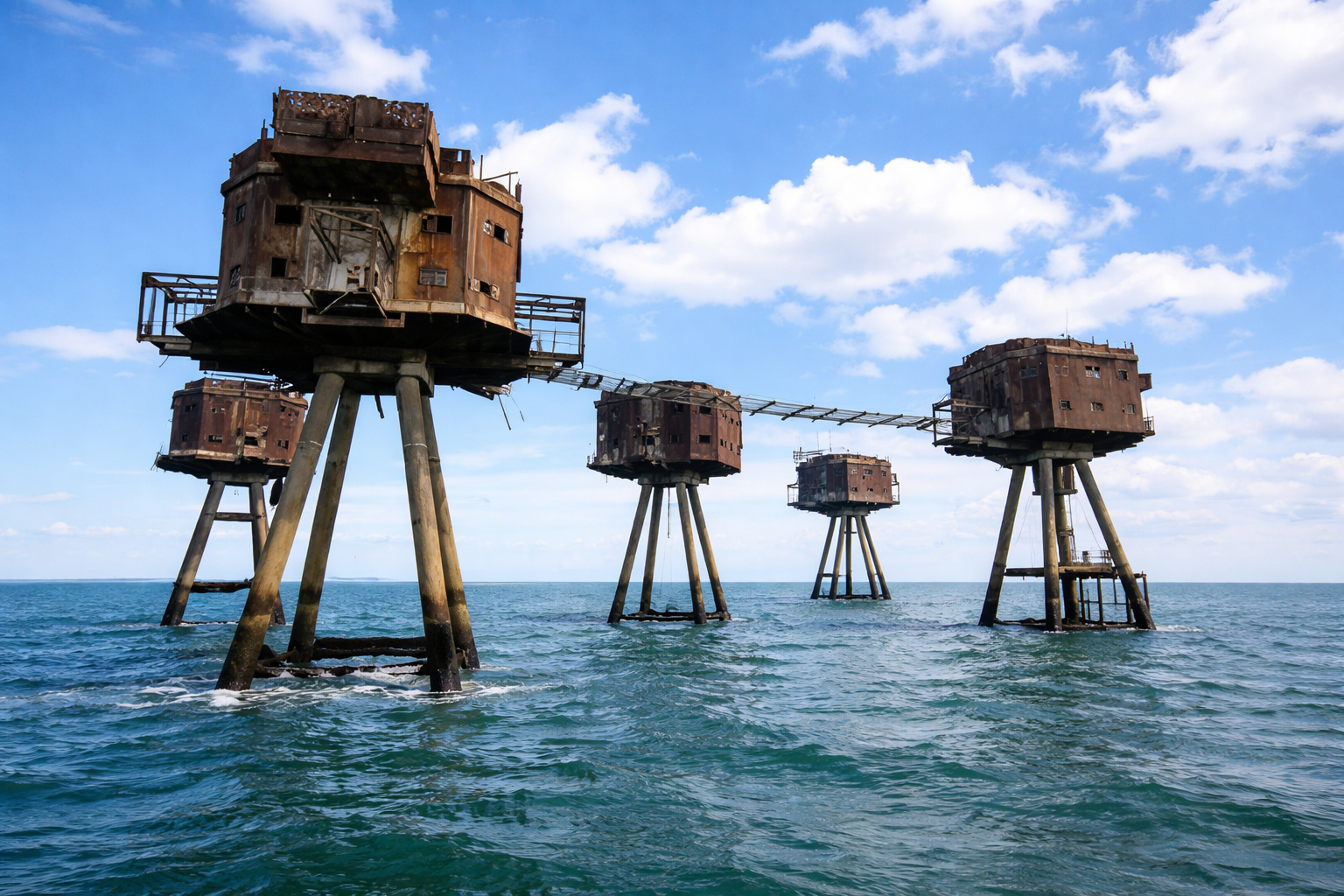
In the middle of the sea, these enormous concrete and steel structures, built by the British Navy to protect strategic maritime routes, look like they came straight out of a Star Wars movie.
-
For years, no one could cross a neighborhood in Tokyo because of the tracks, but an impressive solution changed mobility and completely transformed the local routine.

| Specification | Detail |
|---|---|
| Weight | Over 2.7 Million Kg (About 3,000 Tons) |
| Length | 40 Meters |
| Width | 34.7 Meters |
| Adjustable Height | From 6 to 8 Meters, Depending on the Need |
| Maximum Speed (Loaded) | 1.6 km/h |
| Maximum Speed (Empty) | 3.2 km/h |
| Fuel Consumption | 165 Gallons of Diesel per Kilometer |
| Standard Route | 12.8 km Round Trip Between the VAB and the Pad |
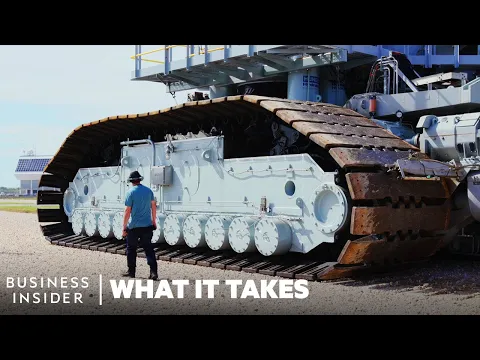
These Machines Do Not Have Wheels — They Have Tracks. Each Transporter Has Eight Tracks, Each Composed of 57 Steel “Shoes”, Weighing 953 Kg Each.
Why Is the Crawler Transporter So Special?
Transporting a Rocket Is Not the Same as Carrying a Regular Load. A Rocket with Fuel and Sensitive Systems Can Exceed 3,000 Tons, Requiring Stability, Precise Traction, and Absolute Motion Control.


The Crawler Transporter Was Designed for This: To Achieve Movement with Millimeter Precision, Even at Extremely Low Speeds. This Control Is Vital to Ensure the Integrity of the Load — Which Costs Billions of Dollars and Represents Years of Scientific Work.
In Addition, the CT Is Equipped With Automatic Leveling Systems, Which Keep the Rocket Perfectly Straight During the Journey, Compensating for Ground Inclinations with Real-Time Height Adjustments.
From the Moon to Mars: Evolution and Upgrades
Although It Is Over 50 Years Old, the CT-2 Has Been Modernized Several Times. With the Arrival of the Artemis Program, Which Aims to Bring Humans Back to the Moon and, Eventually, to Mars, NASA Invested in a Complete Overhaul of the Crawler Transporter 2.
The Upgrades Included:
- New Diesel-Electric Engines, More Powerful and Efficient
- Modernized Hydraulic Systems
- Control Cabin Upgrade with State-of-the-Art Onboard Computers
- Increased Load Capacity to Support the Heavier SLS Compared to the Saturn V
According to Charlie Blackwell-Thompson, Launch Director for the Artemis Program, Recent Tests Have Proven the “Excellent Performance” of the Crawler, Even Under Adverse Weather Conditions. “It’s a Machine That Has Never Failed to Impress Us,” She Stated in an Interview.
How Does Rocket Transport Work at NASA?
The Process Is Thorough and Involves Hundreds of Professionals. The Journey Begins at the Imposing Vehicle Assembly Building (VAB), Where the Rocket Is Assembled Vertically.
From There, the Crawler Transporter Positions Itself Under the Mobile Platform With the Rocket and Begins the Movement. The Trip, Although Only 6.4 km to the LC-39B Pad, Can Last Up to 8 Hours.
During This Journey:
- Engineers Monitor Temperature, Inclination, and Vibration
- Technicians Follow the Route on Foot or in Support Vehicles
- Stops Are Planned for Millimeter Direction and Height Adjustments
After Delivery, the Crawler Moves Away, and the Rocket Remains on the Pad for Weeks, Undergoing Tests, Refueling, and Finally, Launch.
The Impressive Mileage of the CT-2
According to Official NASA Data, the Crawler Transporter 2 Has Already Traveled 3,806 km Since It Started Operation. It May Seem Like a Small Number, but Considering It Usually Only Covers About 12.8 km per Mission, It Is a Significant Milestone.
This Number Represents Decades of Historic Launches, From Apollo 11, Which Took Humans to the Moon, to the Space Shuttles and, Currently, Artemis I.
Fuel: A True Diesel Devourer
One of the Most Curious Facts Is the Fuel Consumption of the Crawler Transporter. Approximately 165 Gallons of Diesel (About 625 Liters) Are Needed Just for It to Travel 1 km.
Although It Is Not Economical at All, This Characteristic Is Compensated for by the Level of Control and Stability That the Vehicle Provides. After All, Transporting Rockets Requires More Than Efficiency — It Requires Absolute Reliability.
Curiosities About the Crawler Transporter
- The Steering System Is Controlled From Two Cabins Located at the Ends of the Structure
- It Uses A GPS and Laser Sensor System to Maintain the Perfect Route
- The Ground It Travels Over Is Reinforced With Special Stones Known as Tennessee River Rock, Which Reduce Friction and Prevent Sparks
- It Is So Large That NASA Considers It “The Largest Self-Propelled Land Vehicle in the World”
The Role in the Artemis Program
In the Current Context, the Crawler Transporter Has Regained Prominence. It Is Responsible for Transporting the New SLS (Space Launch System) and the Orion Capsule, Which Comprise the Artemis Mission — An Initiative That Promises to Bring Humans Back to the Moon in 2026, and Eventually Establish a Presence on Lunar Soil as Preparation for Arriving on Mars.
In the Artemis I Mission, Carried Out in 2022, the Crawler Transporter Played a Central Role. It Transported the SLS Through Different Testing Stages, a Wet Dress Rehearsal, and Finally the Final Move Before Launch.
The Success of the Mission Was Only Possible Thanks to the Efficiency and Robustness of This Colossal “Truck.”
Inspiration for Global Engineering
The Design of the Crawler Transporter Has Served as an Inspiration for Heavy Transport Technologies in Various Areas, Including Mining, Oil Extraction, and Military Infrastructure.
Its Track Traction Model, Weight Distribution, and Navigation Control on Unstable Platforms Make It a Reference Even Today. And Even After Five Decades, No Other Land Vehicle Matches It in Function and Scale.
Where Is the Crawler Today?
Both Models (CT-1 and CT-2) Remain at the Kennedy Space Center in Florida. The CT-2 Is Operational, While the CT-1 Is Maintained as a Technical Reserve and Historical Piece, Occasionally Used for Training and Special Events.
NASA Continually Invests in Its Maintenance, Anticipating Its Operation for at Least Another 20 Years, With Planned Upgrades as New Rockets and Space Technologies Are Adopted.
A Legend About Tracks That Carries the Future on Its Back
The Crawler Transporter from NASA Is Much More Than a Technical Curiosity. It Is A Living Part of the History of Space Exploration, Responsible for Transporting Humanity’s Greatest Dreams — Literally.
With Over 3,000 Tons, Colossal Fuel Consumption, and Turtle Speed, It Is the Giant That Ensures Everything Is in the Right Place at the Right Time, With Millimeter Precision.
With Each Mission, It Shows That Even a Machine of Half a Century Can Carry the Weight of the Future on Its Shoulders — and Remind Us That the Path to the Stars Begins on Tracks, Rocks, and Lots of Engineering.







-

-

-

-

-

-

58 pessoas reagiram a isso.