





 Portuguese
  English
  Spanish
  5 min of reading
  12 comments


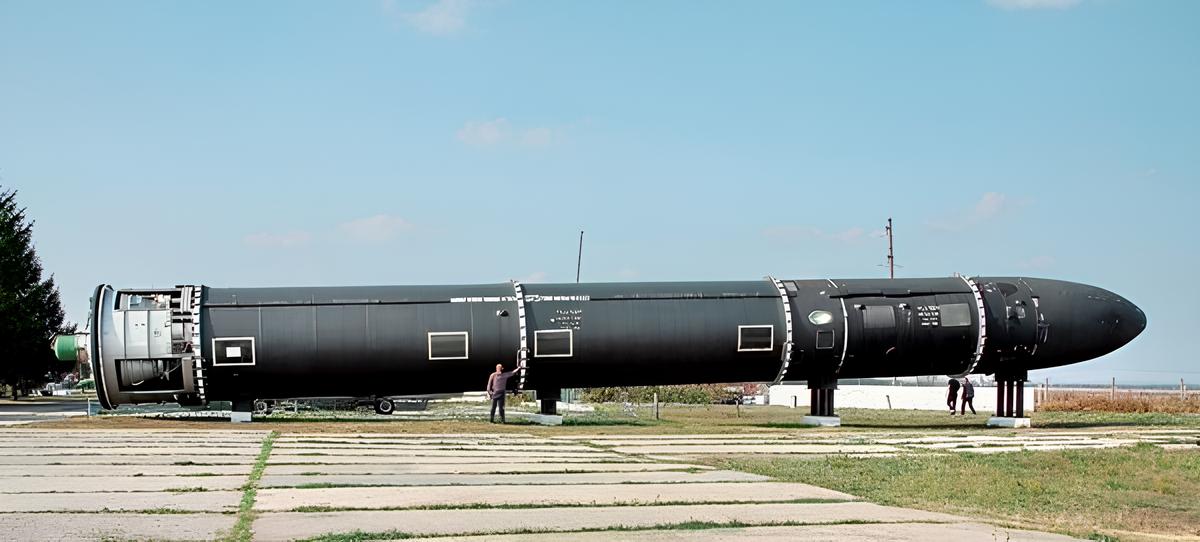


RS-28 Sarmat Combines Range of 18,000 Km and MIRV Architecture with Orbital Dispersion System Designed to Saturate Strategic Anti-Missile Shields.
In April 2022, the Russian Defense Ministry announced the first complete test of the RS-28 Sarmat, a new heavy intercontinental ballistic missile intended to replace the aging R-36M2. The launch took place from the Plesetsk Cosmodrome in northern Russia, with a simulated impact on the Kamchatka Peninsula. The information was officially released by the Kremlin and subsequently analyzed in reports from the U.S. Department of Defense and the Congressional Research Service.
The RS-28 Sarmat is not just a long-range missile estimated at up to 18,000 km. The central element of its engineering lies in the MIRV architecture, which stands for Multiple Independently Targetable Reentry Vehicle. The technical focus is not only on the vector but on the penetration and anti-missile saturation system that accompanies the payload. It is an architecture designed to disperse warheads and penetration devices in a coordinated manner, aimed at circumventing strategic shields.
MIRV Architecture and Anti-Missile Saturation Logic
The MIRV technology emerged during the Cold War, when the United States and the Soviet Union developed systems capable of carrying multiple nuclear warheads on a single ballistic missile. Each warhead, after the boost phase, can follow an independent trajectory towards distinct targets.
-
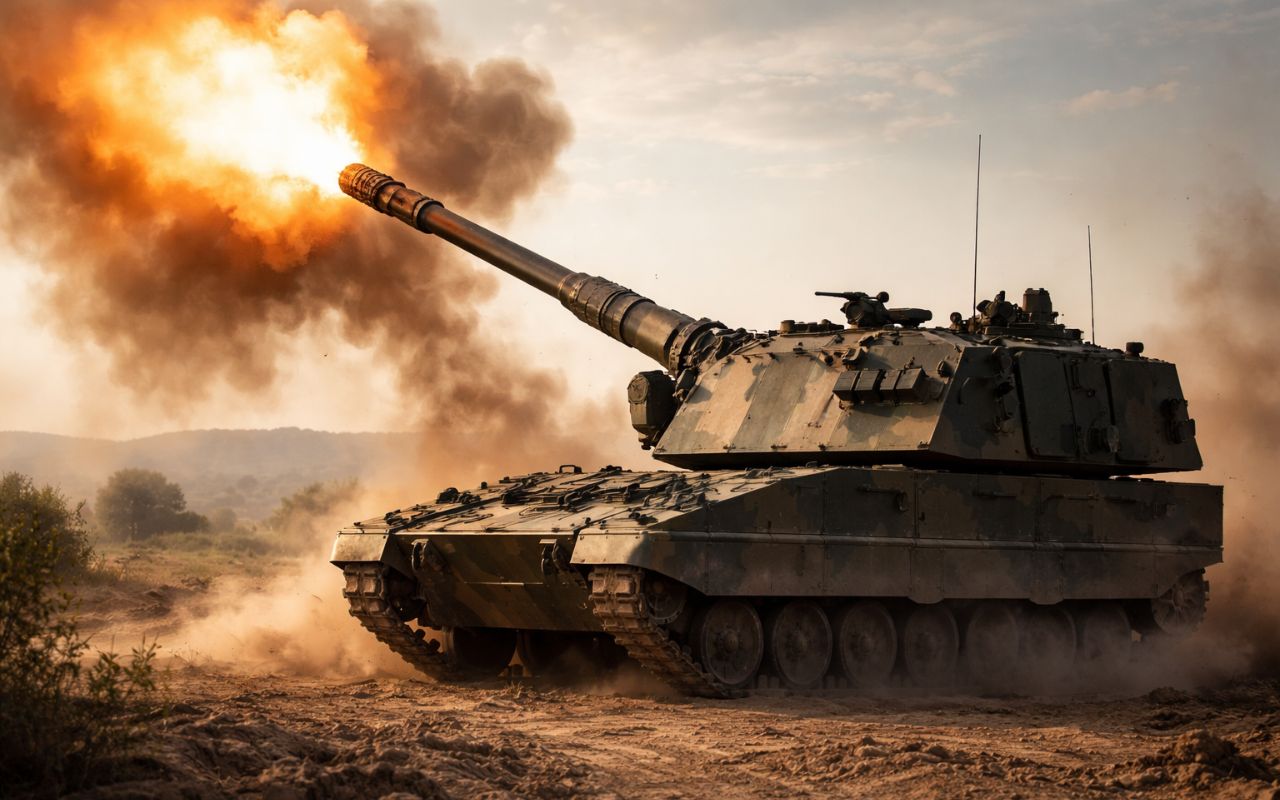
The German “steel monster” weighing 55 tons fires up to 10 projectiles per minute at over 40 km and avoids counterattacks on the battlefield by moving quickly to escape enemy attacks; meet the Panzerhaubitze 2000.
-
USS Gerald R. Ford, the largest aircraft carrier in the world, returns to sea after a fire in the laundry in the Red Sea; repaired in Crete, it resumes missions of Operation Epic Fury against Iran.

-
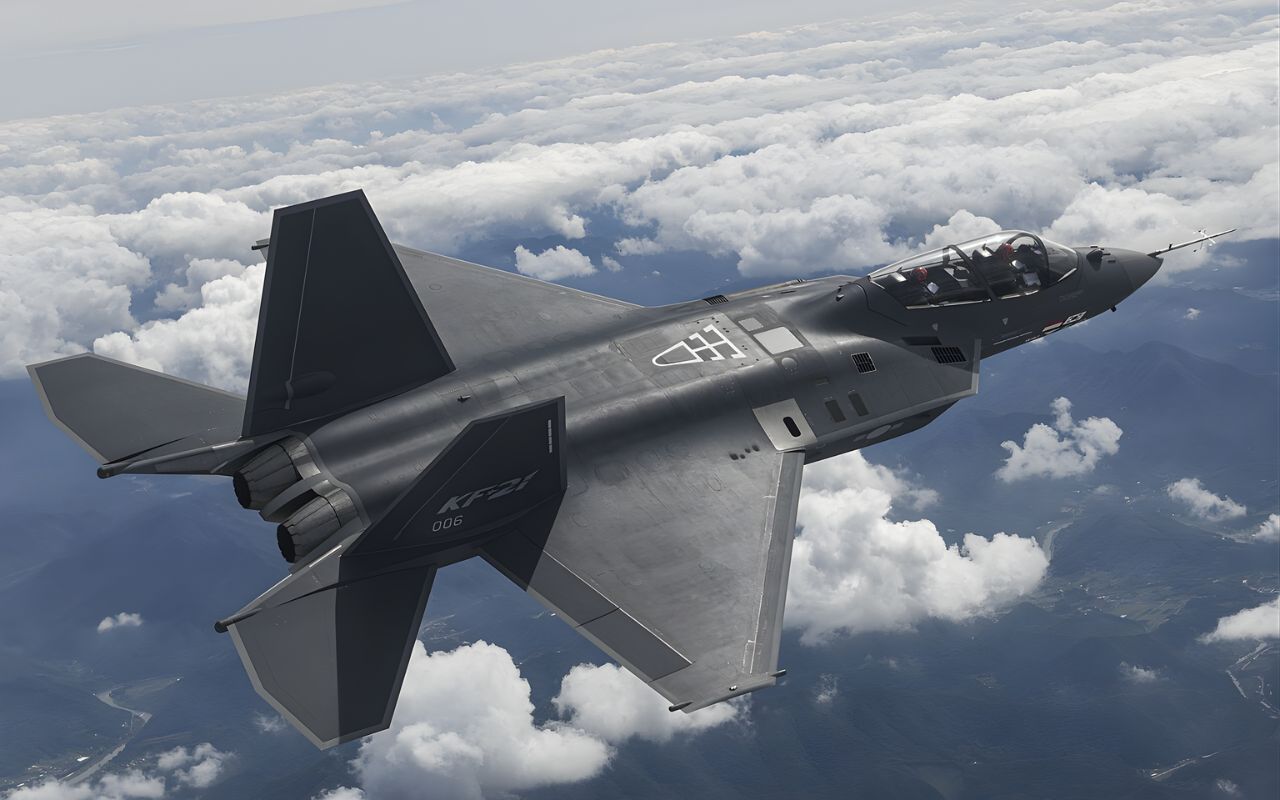
Military power: South Korea’s new KF-21 fighter jet will be a key component in replacing the aging aircraft of the air force, placing the country on the map of air military powers.
-
With 310 meters, 80 thousand tons, and capable of operating for 45 years, the new nuclear aircraft carrier France Libre will be the largest in France and will enter service in 2038.


In the case of the RS-28 Sarmat, public estimates indicate a capacity to carry up to 10 or more high-yield warheads, although the exact operational number depends on specific configurations and limits set by strategic treaties. In addition to warheads, the system may include penetration devices, such as decoys and electronic countermeasures.

The anti-missile saturation logic works as follows: instead of a single object re-entering the atmosphere, the system releases multiple reentry vehicles almost simultaneously, accompanied by false targets.
Defense systems need to identify, track, and intercept each object individually. The increase in the number of targets reduces the probability of complete interception.
This structural engineering requires a highly precise post-boost stage, responsible for guiding each warhead to its specific trajectory. The post-boost module acts as an orbital dispersion platform, making small adjustments in speed and direction before releasing each reentry vehicle.
Orbital Dispersion System and Strategic Maneuver
The RS-28 Sarmat is classified as a heavy intercontinental ballistic missile, with liquid propulsion. After the initial boost phase, the upper stage carries the payload to a suborbital trajectory. It is at this moment that the dispersion system comes into play.
The post-boost module can slightly alter the trajectory before releasing the warheads, defining distinct reentry angles. This dispersion expands the potential impact area and allows attacks on multiple geographically separate targets.
Furthermore, strategic analysts highlight that the Sarmat was designed with theoretical capability for unconventional trajectories, including routes over the South Pole, a strategy similar to the old Soviet FOBS concept.
Although the current system is not officially classified as fractional orbital bombardment, the possibility of alternative trajectories increases the challenge for radars predominantly positioned in the Northern Hemisphere.

The orbital dispersion engineering relies not only on power but on mathematical precision. Small variations in speed and exit vector can result in differences of hundreds of kilometers in the reentry point.
Anti-Missile Penetration and Countermeasure Devices
The U.S. Ground-based Midcourse Defense anti-missile system was designed to intercept warheads during the mid-flight phase, in the exo-atmospheric space. The presence of multiple objects released by a single missile complicates this interception.
In addition to real warheads, MIRV systems can include inflatable decoys, simulated thermal signature emitters, and other devices that confuse infrared sensors and tracking radars. The engineering of the RS-28 Sarmat was designed to maximize this complexity.
Saturation occurs when the number of objects to be intercepted exceeds the practical capacity of the defensive system. Each interceptor has a high cost and limited availability. By multiplying targets, the attacker increases the likelihood that part of the payload will breach the shield.
This concept does not depend solely on nuclear power, but on system architecture. It involves engineering applied to the logic of second-strike capability, a central element of nuclear deterrence.
Strategic Scale and Replacement of the Soviet Legacy
The RS-28 Sarmat was developed to replace the R-36M2, known in the West as SS-18 Satan. The old system was considered one of the heaviest missiles ever deployed, with significant payload capacity.
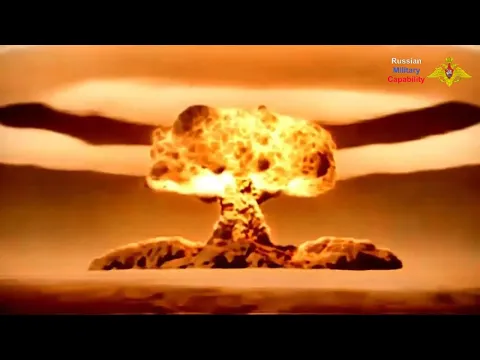
The modernization sought to increase precision, trajectory flexibility, and penetration capability. The Sarmat is integrated into the structure of the Russian Strategic Missile Forces, the land component of the country’s nuclear triad, which also includes ballistic submarines and strategic bombers.
It is important to differentiate between maximum technical capability and operational deployment. The estimated range of 18,000 km represents theoretical design capability. The number of installed warheads depends on strategic parameters and current treaties.
The system’s engineering was conducted by the Russian state-owned Makeyev Design Bureau, traditionally known for developing strategic vectors. The program faced delays, reflecting the technological complexity and economic constraints faced by the Russian defense sector.
Geopolitical Implications and Nuclear Balance
The development of the RS-28 Sarmat occurs in the context of global nuclear modernization. The United States, China, and Russia are investing in new vectors, hypersonic vehicles, and early warning systems.
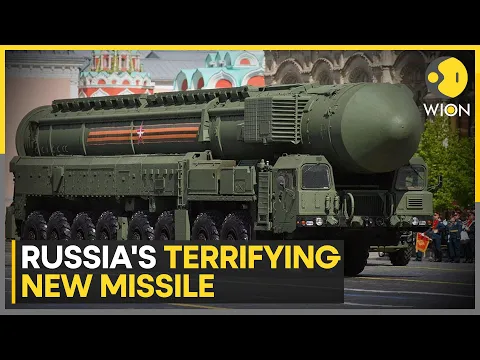
The introduction of advanced MIRV architecture and the possibility of alternative trajectories strengthens the deterrence logic based on second-strike capability. Even in the face of anti-missile shields, the saturation engineering seeks to ensure that part of the strategic force remains effective.
Analysts highlight that systems like the Sarmat do not only alter offensive capacity but also influence defense investment decisions. Shields need to evolve to handle multiple objects, more sophisticated sensors, and faster interceptors.
The structural engineering behind the MIRV is not merely a matter of power. It involves orbital calculation, mass distribution, inertial control, and the design of redundant systems.
The RS-28 Sarmat represents the continuity of a Soviet and Russian tradition of heavy vectors with high payload capacity. More than the missile itself, the strategic core lies in the orbital dispersion architecture and the concept of anti-missile saturation.
In a scenario of increasing technological competition, the ability to launch multiple independent warheads and penetration devices reinforces the role of aerospace engineering as a central element of global nuclear balance. The logic remains the same since the Cold War: it is not just about hitting a target, but ensuring that the adversary’s defensive system cannot prevent the response.









Investimento inútil. Eu gastaria o recurso em formação Superior em Medicina, práticas energéticas sustentáveis, produção de alimentos, uso de recurso para sanar o problema da fome, da miséria, restauração da natureza pois, desenvolver dispositivos que futuramente vira Arsenal para uma possível destruição humana em massa gerado pela ganância, corrupção ,capitalismo desenfreado e o planeta morrendo por contaminação, superaquecimento e pela ambição de uma minoria que acham que serão eternos. E as pandemias dos vírus em ascendência e mutação continua que expõe a todos sem excessão. Queremos chegar mais rápido até onde? É mais rápido salientar que nossa capacidade e infinita porém com objetivos sem noção do que é prioridade para a nossa vida humana e a do Planeta em que vivemos. Só temos este. É se matar aos poucos.
Só mentira, não sabem nem se é 17.000 ou 18.000 km de alcance!!! Reportagem de ****!!!
Eu fico pensando: com tanta fome, miséria, doenças, etc…E o homem gastando essas cifras astronômica para acabar consigo mesmo. É muita ****, viu? Cadê a sabedoria humana?