





 Portuguese
  English
  Spanish
  4 min of reading
  0 comments


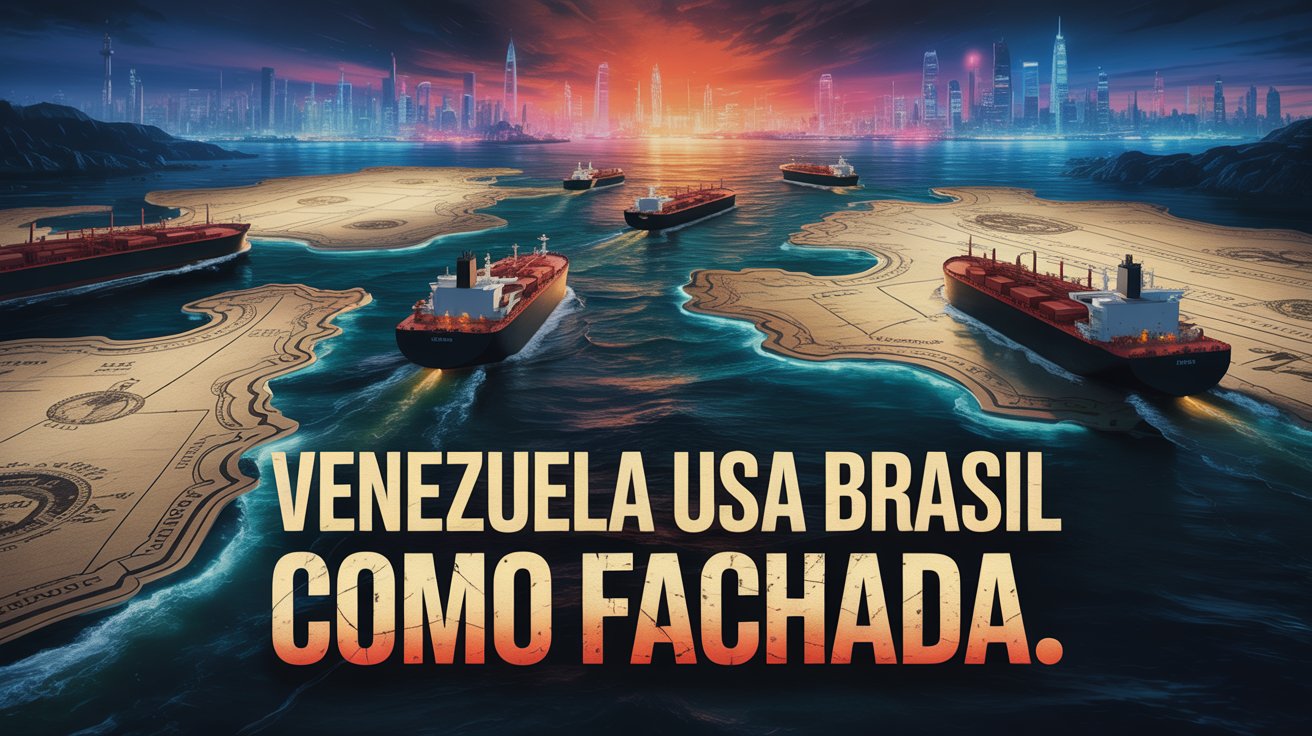
How Data Manipulation And Relabeling Of Oil Can Transform International Trade And Challenge Economic Sanctions With The Support Of Strategic Intermediaries And Questionable Practices.
Venezuela has found an innovative and discreet way to export oil to China, using Brazil as a cover.
In order to bypass the strict sanctions imposed by the United States, Nicolás Maduro’s regime has turned to international traders to relabel Venezuelan oil as if it were originating from Brazil.
This scheme, which involves over US$ 1 billion in oil shipments, has raised concerns regarding international trade and the possible geopolitical consequences of this strategy.
-
Elon Musk’s Starship megafrocket puts $8 billion at risk, raises alarms in the market, and could affect technology, mining, and space internet startups in the coming years.

-
A Brazilian millionaire couple restores a farm over 150 years old in the interior of São Paulo and transforms the historic property with Portuguese tiles, antique furniture, and new spaces into a refuge that blends tradition, comfort, and sophistication.

-
Submerged city in a lake in Minas reveals intact streets, preserved vehicles, and houses after more than 60 years, impressing divers.

-
Yellowstone has started to rise again in an area of the caldera, and the movement rekindles fears surrounding the U.S. supervolcano, as scientists monitor the deformation and try to understand what is happening underground.


Strategy To Bypass U.S. Sanctions
Since 2019, U.S. sanctions have been an obstacle for Venezuela, which is trying to find ways to keep its economy running, primarily through oil exports.
The sanctions aim to weaken Nicolás Maduro’s regime, preventing the country from generating revenue through its main natural resource: oil.
However, Venezuela has relied on the help of international traders to circumvent these restrictions.
The main strategy used has been the relabeling of Venezuelan oil.
Instead of following the traditional route, the oil is now marked as Brazilian and exported directly to China, which facilitates transportation and avoids detection by U.S. authorities.
This process, which began to be implemented in July of last year, results in a four-day reduction in logistics, with vessels transporting oil directly to China, without needing to stop in Malaysia, a known transshipment point.
Malaysia And The Role In The Smuggling Chain
Malaysia has established itself as one of the most important centers for transshipping oil from sanctioned countries, such as Venezuela and Iran.
This route allows oil from such countries to be disguised, making it appear to originate from non-sanctioned locations.
The transshipment strategy has been a recurring practice for countries facing international sanctions, aimed at concealing the true origin of the oil.
However, with the changes implemented in July 2024, oil tankers began to alter not only the origin of the product but also their location signals.
The tankers started to send false information about their departure points, leading Chinese authorities to believe that the oil was being shipped from Brazil when, in fact, it came from Venezuela.
This technique has generated a series of controversies, as it involves direct manipulation of geographic data, raising questions about transparency in international trade routes.
Impacts On Commercial And Geopolitical Relations
The impact of this scheme goes beyond oil trade between Venezuela and China.
The use of Brazil as a cover has direct implications for international relations, especially between Western powers and the countries involved.
The U.S. sanctions aim to weaken the chavista regime, but with the support of international intermediaries, Venezuela has managed to maintain its export flow.
Moreover, the growing oil trade between Venezuela and China has been a source of concern for the United States.
The Asian country has become a strategic ally for Maduro’s regime, buying large volumes of oil, allowing Venezuela to continue generating revenue despite the restrictions imposed by the U.S.
China, in turn, has been seeking to diversify its oil sources, especially after increased international pressure on energy trade.
Revealing Numbers About Oil Export
According to Chinese customs, between July 2024 and March 2025, China imported approximately 2.7 million metric tons of mixed Brazilian bitumen, which is equivalent to about 67,000 barrels per day.
This volume of oil was purchased for over US$ 1.2 billion, revealing the magnitude of the relabeling scheme and the high values involved.
These numbers are a clear indication of how sanctions can be circumvented and how the global oil market continues to be shaped by complex geopolitical factors.
Although most of this oil has been recorded as Brazilian, the true origin is far from simple.
The lack of transparency in international oil trade has been a constant, with many other sanctioned countries resorting to similar methods to bypass economic restrictions.

Future Prospects And Consequences Of The Scheme
The implementation of these questionable practices raises several questions about the effectiveness of international sanctions and transparency in the oil market.
The manipulation of location data and the relabeling of products are not new practices, but with the increasing complexity of trade routes and heightened global surveillance, the consequences for the involved countries can be significant.
As oil trade between Venezuela and China continues to grow, other countries may follow this same path, exacerbating international tensions and challenging economic control mechanisms.
For U.S. authorities, this type of operation poses a continuous challenge in terms of enforcement and sanction application, while for China, oil remains an essential source of energy to sustain its economic growth.
The Question Of Sanctions: Are They Effective?
The episode involving Venezuelan oil is a clear example of how international sanctions can be bypassed with the help of intermediaries willing to engage in questionable practices.
The manipulation of information and the relabeling of products are not just technical issues, but involve political and economic aspects that directly impact international relations.
The big question is to what extent U.S. sanctions can truly weaken Maduro’s regime, if he continues to find ways to circumvent these restrictions.
And you, what do you think about Venezuela’s strategy?
Can the sanctions imposed by the U.S. really be effective if methods like this continue to be used? Share your opinion in the comments.




Seja o primeiro a reagir!