






 Portuguese
  Spanish





Vitória, The Smallest Capital of Brazil, Has Only 97 km² and Houses Over 360 Thousand Inhabitants. With a Population Density Comparable to Global Metropolises, It Faces the Challenge of Overcrowding and Lack of Space to Expand.
When talking about Brazilian capitals, common sense usually imagines huge cities, with vast territories and areas for expansion. But the smallest capital in the country challenges this logic. Vitória, capital of Espírito Santo, occupies only 97 km² of area, according to IBGE, and carries a constant challenge: how to house more than 340 thousand inhabitants in such a small space?
This peculiarity makes Vitória a unique example in Brazil. Unlike cities like Brasília, which was planned with wide avenues and areas for expansion, or Manaus, which extends over thousands of kilometers of forest, the capital of Espírito Santo lives compressed between the sea and the mountains, limiting its physical growth and imposing a very high population density.
Population Density Comparable to Global Metropolises
According to the 2022 IBGE Census, Vitória had 322,869 inhabitants for its 97.123 km². This results in a density of 3,916 inhabitants per km², a number comparable to major international metropolises. To give an idea:
-
Tourist Discovers Forgotten Joaquín Sorolla Painting Worth Up to 60,000 Euros While Strolling in Seville

-
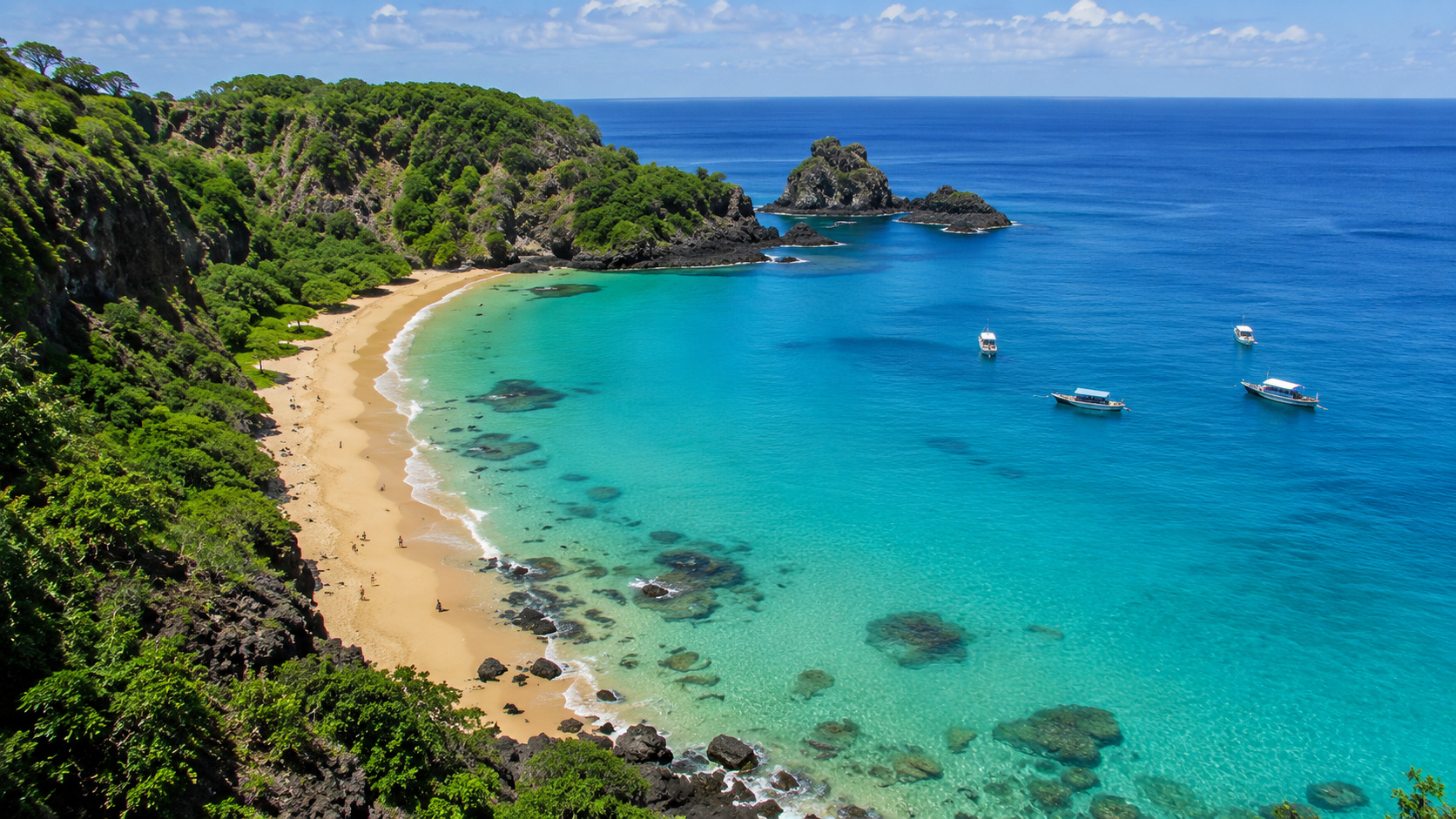
Brazil’s Fernando de Noronha Boasts World’s Most Beautiful Beach, Accessible Only by Descending 208 Cliffside Steps and With No Food Vendors Allowed

-
Wave Rock: Australia’s Giant Granite Wave Stands 15 Meters Tall, Spans 110 Meters, and Showcases 2.7 Billion Years of Erosion in the Australian Desert
-
How to Unclog Showerhead Holes Blocked by Limescale and Hard Water Without Replacing or Hiring a Technician



- New York has an average of 10,000 inhabitants/km², but in a city with 789 km²;
- São Paulo has 8,000 inhabitants/km², but spread over 1,521 km²;
- Vitória, in its reduced scale, concentrates almost 4,000 inhabitants/km² — a very high index for a Brazilian city of this size.

This population concentration generates a series of urban challenges: chaotic traffic at peak times, difficulty in housing expansion, and pressure on public services.
A Territory Surrounded by Natural Barriers
Vitória is not only small in size but also geographically limited. The city is located on an island surrounded by the sea and mountains, which further reduces the possibilities for territorial expansion.
A large part of its area is occupied by hills and slopes, which hinders the full use of urban space. The result is a city that had to verticalize, building taller buildings to accommodate its growing population.
This peculiar geography makes the city have one of the most valued square meters in Brazil. According to real estate market data, neighborhoods like Praia do Canto and Enseada do Suá are among the most expensive in Espírito Santo, reflecting the scarcity of available space.
Vibrant Economy in Limited Space
Despite its territorial limitations, Vitória is a capital with a diverse and vibrant economy.
- Port of Vitória: essential for the export of iron ore, coffee, pulp, and steel, moving billions of dollars a year;
- Service Sector: accounts for more than 80% of the local economy, highlighting technology, finance, commerce, and tourism;
- Industry: proximity to municipalities like Serra and Cariacica expands the industrial network, even though Vitória itself does not have space for large manufacturing complexes.
This economic dynamism turns the city into a strategic center for Espírito Santo and the Southeast region of Brazil, attracting thousands of workers from the metropolitan area daily.
Mobility and Urban Pressure
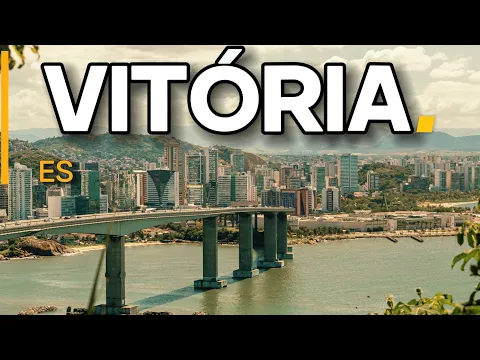
The small territory combined with a large population flow generates great mobility challenges. Access roads, such as the Third Bridge connecting Vitória to Vila Velha, are often congested.
Additionally, the city suffers from a lack of space for new highways or wide avenues. Public transportation becomes essential but faces difficulties in efficiently serving during peak hours.
Verticalization, which has become the main housing solution, also puts pressure on electrical, water, and sanitation infrastructure, requiring constant investments.
Quality of Life: Ups and Downs
Vitória frequently appears in national rankings as one of the capitals with the best quality of life, thanks to indicators like education, life expectancy, and per capita income. But the city also faces serious problems:
- Intense Traffic, exacerbated by limited space;
- Housing Deficit, which pressures peripheral areas and encourages irregular occupations on hills;
- Environmental Vulnerability, as part of the territory is prone to flooding and landslides during rainy seasons.
The contrast between positive income figures and urban challenges shows how physical space is one of the main factors shaping life in the capital of Espírito Santo.
Comparison with Other Brazilian Capitals
To understand the uniqueness of Vitória, just compare it with other capitals:
- São Paulo (SP): 1,521 km² and over 11 million inhabitants;
- Brasília (DF): 5,760 km² of planned area, with 3 million residents;
- Manaus (AM): 11,401 km², but with much lower density;
- Vitória (ES): only 97 km², with 340 thousand inhabitants compressed into the island space.
In other words, while other capitals have ample territory to expand neighborhoods and infrastructures, Vitória needs to reinvent solutions within a tight “geographical box”.
The Future of a City Without Space
Urban planning experts point out that Vitória will increasingly need to focus on smart mobility, planned verticalization, and metropolitan integration. The idea is that, instead of trying to grow within its island, the city connects more efficiently with neighboring municipalities like Vila Velha, Cariacica, and Serra, forming an integrated network.
The expansion beyond the island is already happening in practice: many residents work in Vitória but live in neighboring cities, where the cost of housing is lower and space is more abundant.
Vitória summarizes a dilemma present in several Brazilian cities: how to balance economic growth, quality of life, and limited space. While some capitals still face expansion challenges over vast areas, the smallest capital in the country shows that the problem may be exactly the opposite: not having anywhere else to grow.




Vitorinha meu amor! Muito linda, charmosa, atraente, vibrante. Viver é ver Vitória.