





 Portuguese
  English
  Spanish
  7 min of reading
  0 comments


From the Crooked House of Poland to WonderWorks of Orlando, These Buildings Prove That Architecture Can Be Fun, Surreal, and Bold, Transforming Unusual Ideas into Tourist Attractions That Attract Millions of Visitors Around the World
When it comes to architecture, there are projects that enchant, others that shock, and some that simply defy logic. In the world, certain buildings go beyond the limits of creativity, becoming true tourist attractions. The strangest buildings in the world are those that look upside down, melting, or shaped like unusual objects.
These works result from the unbridled imagination of architects and engineers willing to turn curious ideas into reality.
Below are four striking examples of the most eccentric architecture on the planet.
-
A woman went out for a regular walk and ended up finding a treasure buried for over 900 years, with more than 2,000 medieval silver coins compared by archaeologists to a lottery prize and considered one of the most significant finds in recent years in the country.

-
Scientists revealed 11 signs that very intelligent people exhibit in their daily lives, and most people have no idea that some of these common behaviors are directly linked to an above-average brain.

-
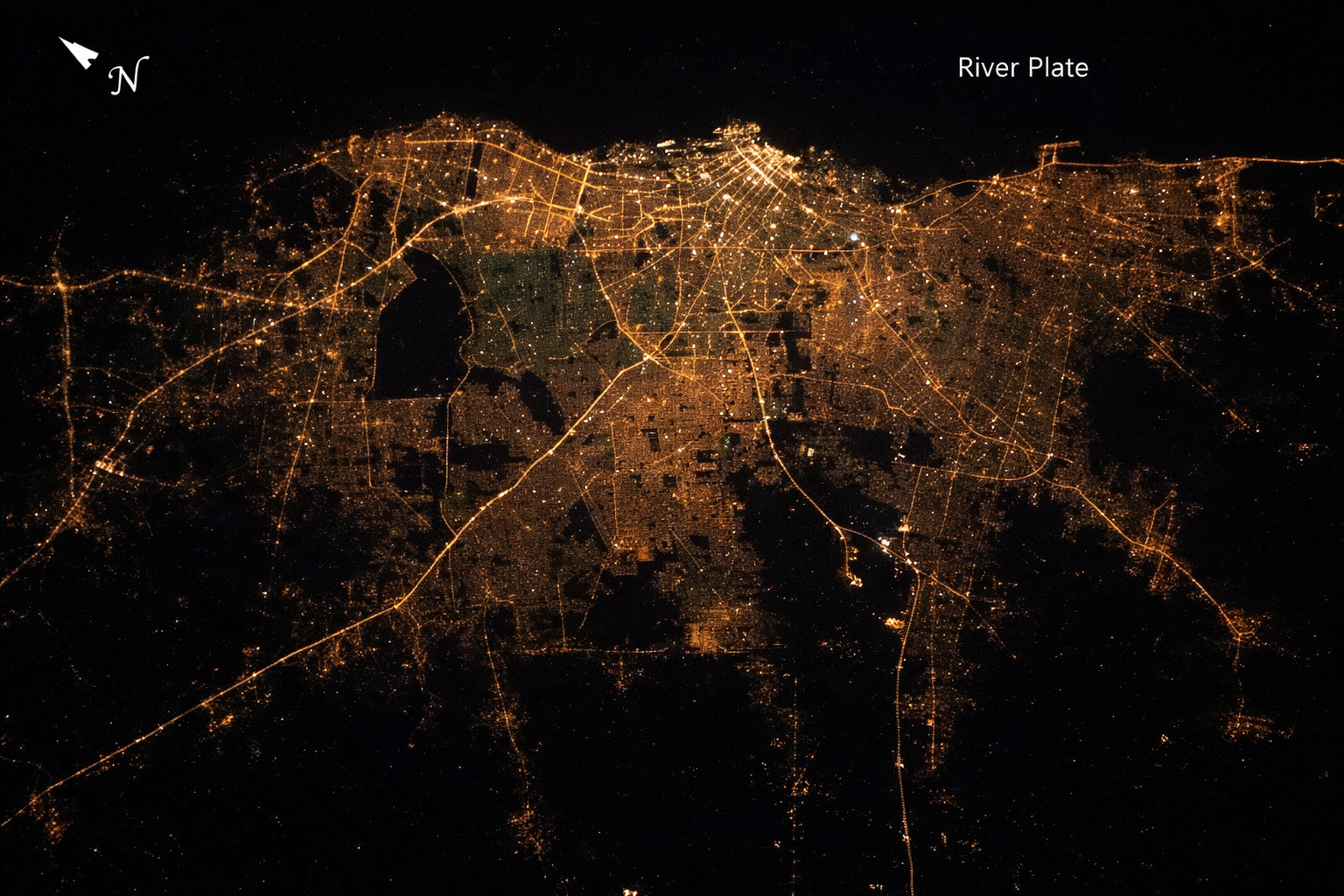
From space, Buenos Aires appears as a colossal spot of light surrounded by kilometers of darkness, revealing at a single glance the exact boundary between the metropolis and the countryside, seen from 400 km altitude.
-
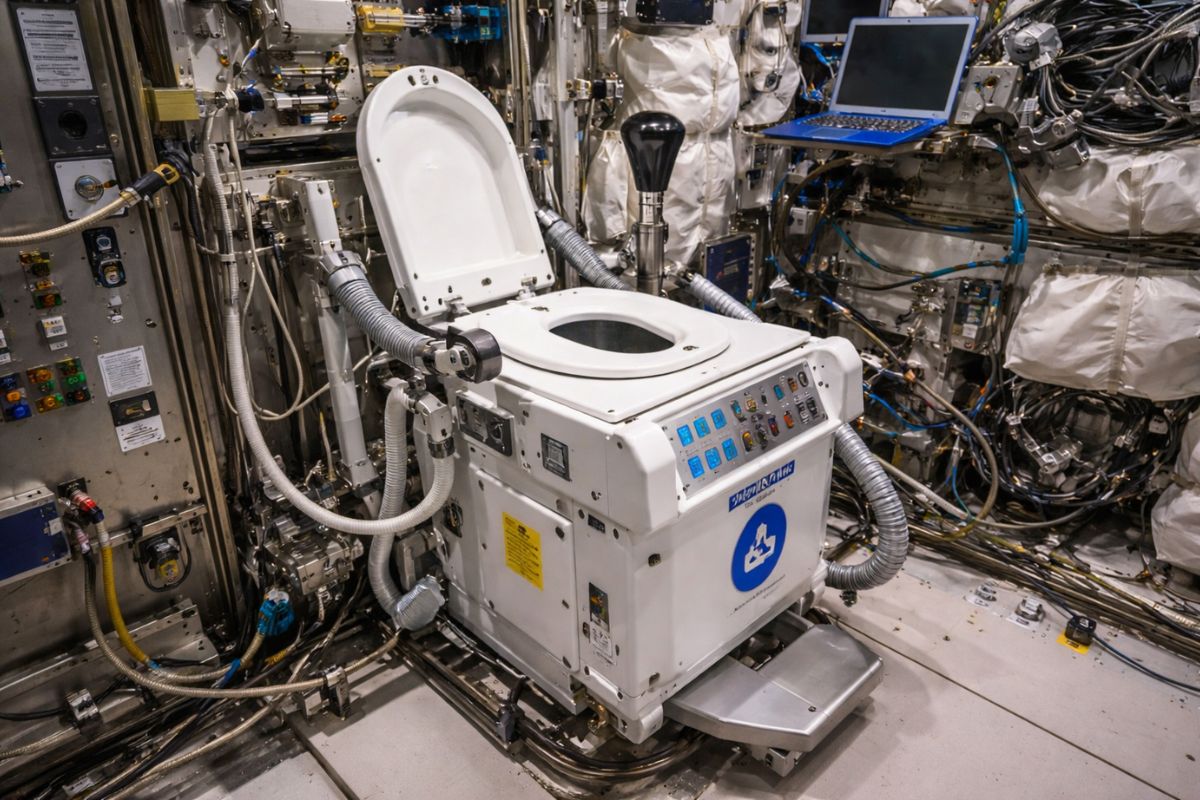
NASA spent over 118 million reais to build a single bathroom that works in zero gravity, and it has just gone to space on the first crewed mission to the Moon in more than 50 years.

National Carpet Museum of Azerbaijan
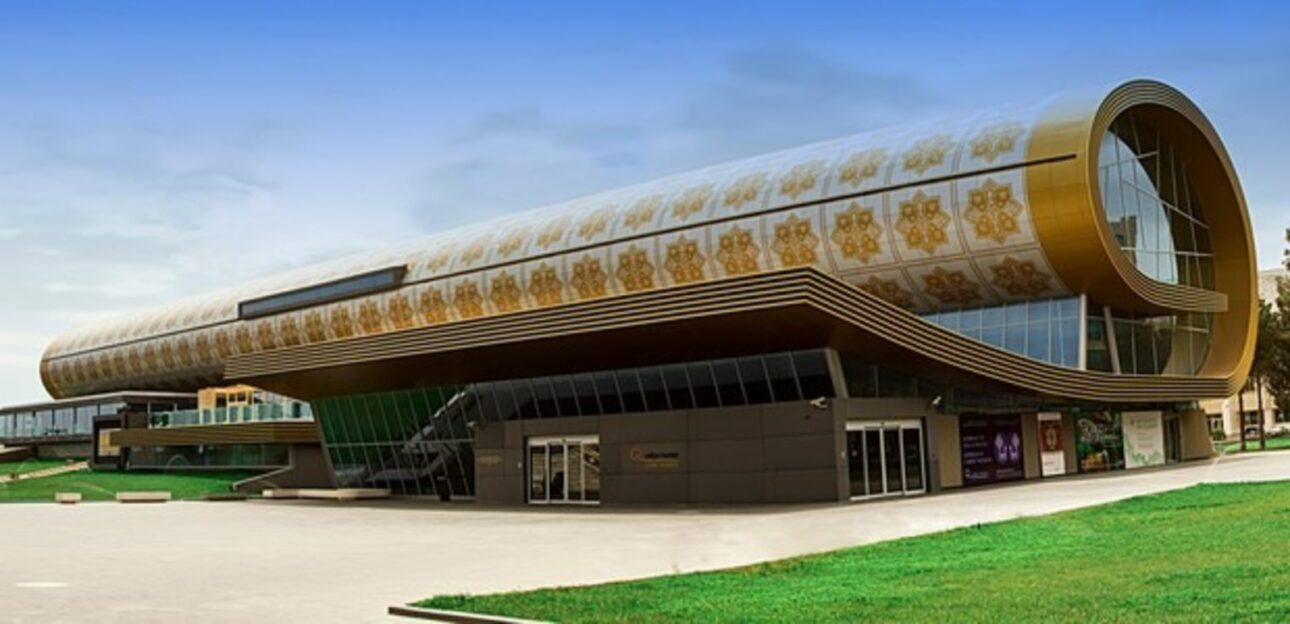
In Baku, the capital of Azerbaijan, a building shaped like a folded carpet catches the eye of passersby along the waterfront.
It’s no coincidence. The building houses the National Carpet Museum of Azerbaijan, which displays the largest collection in the country.
Designed by Austrian architect Franz Janz, the museum took six years to complete. Inside, visitors learn about traditional weaving techniques as well as modern methods.
It’s a mix of art and history literally represented in the structure of the building.
The cylindrical and ornate façade resembles a carpet being unrolled, making the location one of the most recognizable postcards of the capital.
Seminole Hard Rock Hotel & Casino Hollywood
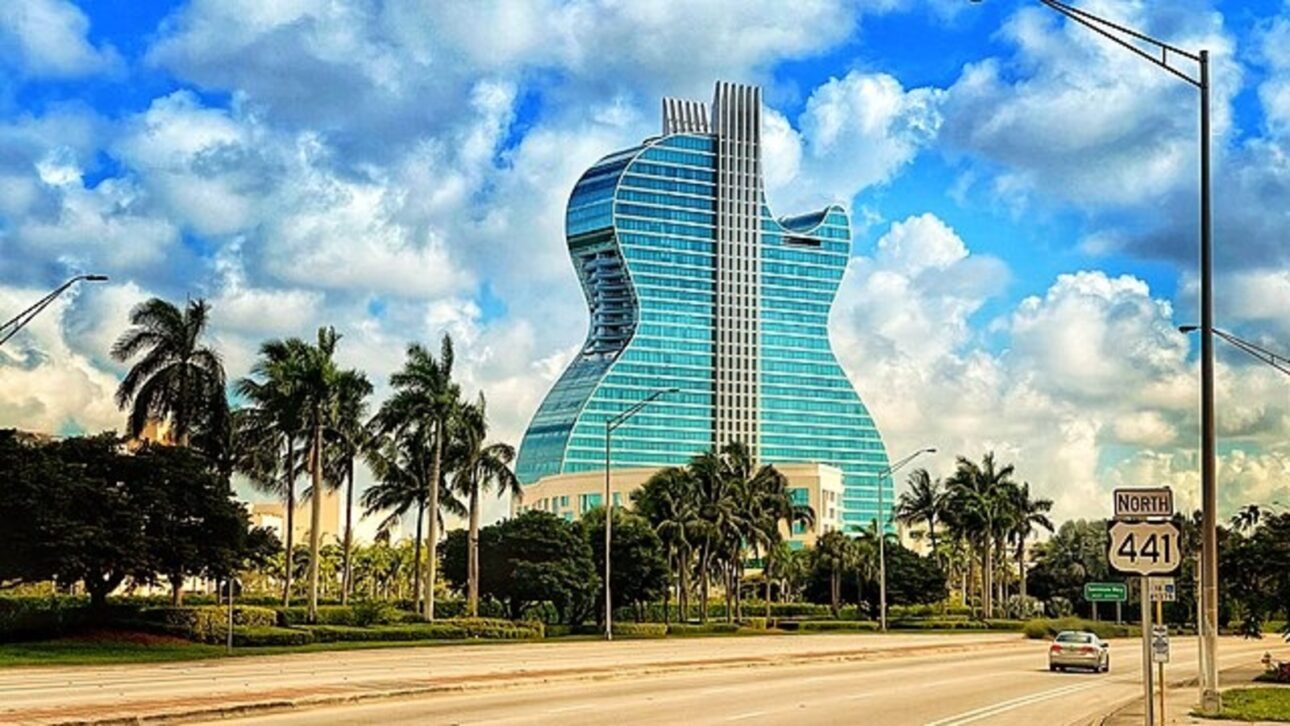
One of the most iconic examples of contemporary architecture in the United States is the Seminole Hard Rock Hotel & Casino Hollywood, in Florida.
The building, inaugurated in 2019, was constructed in the shape of a guitar, with 36 stories and 638 rooms and suites.
Interestingly, the project is not in Nashville, known as the “Music City,” but rather in Hollywood, in southern Florida.
In addition to the hotel, the complex houses a large casino and an entertainment center for seven thousand people, hosting shows and international events.
At night, the building stands out even more with lights that simulate the strings of the instrument, lighting up the city skyline.
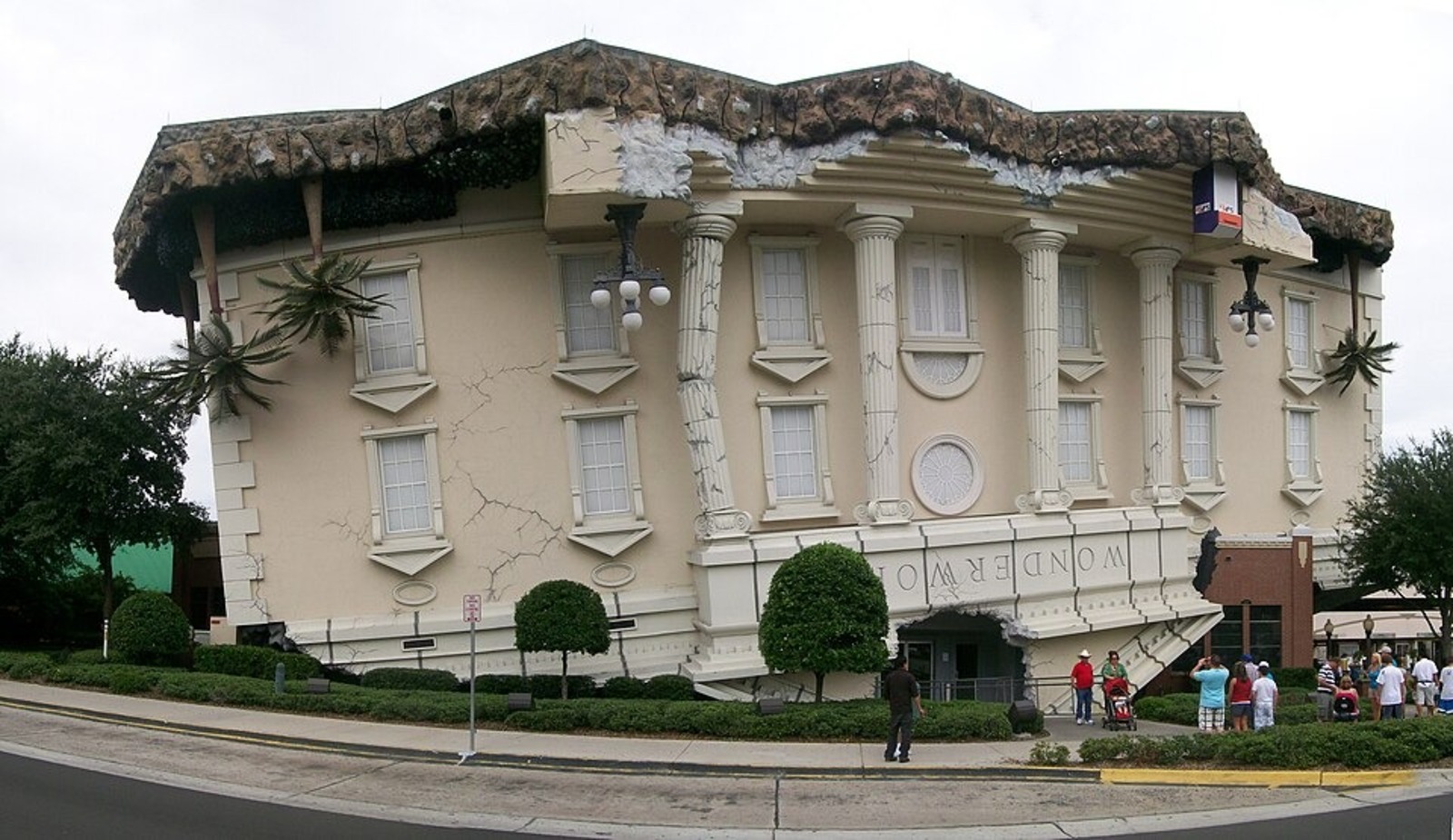
WonderWorks, Orlando, is Among the Strangest Buildings in the World
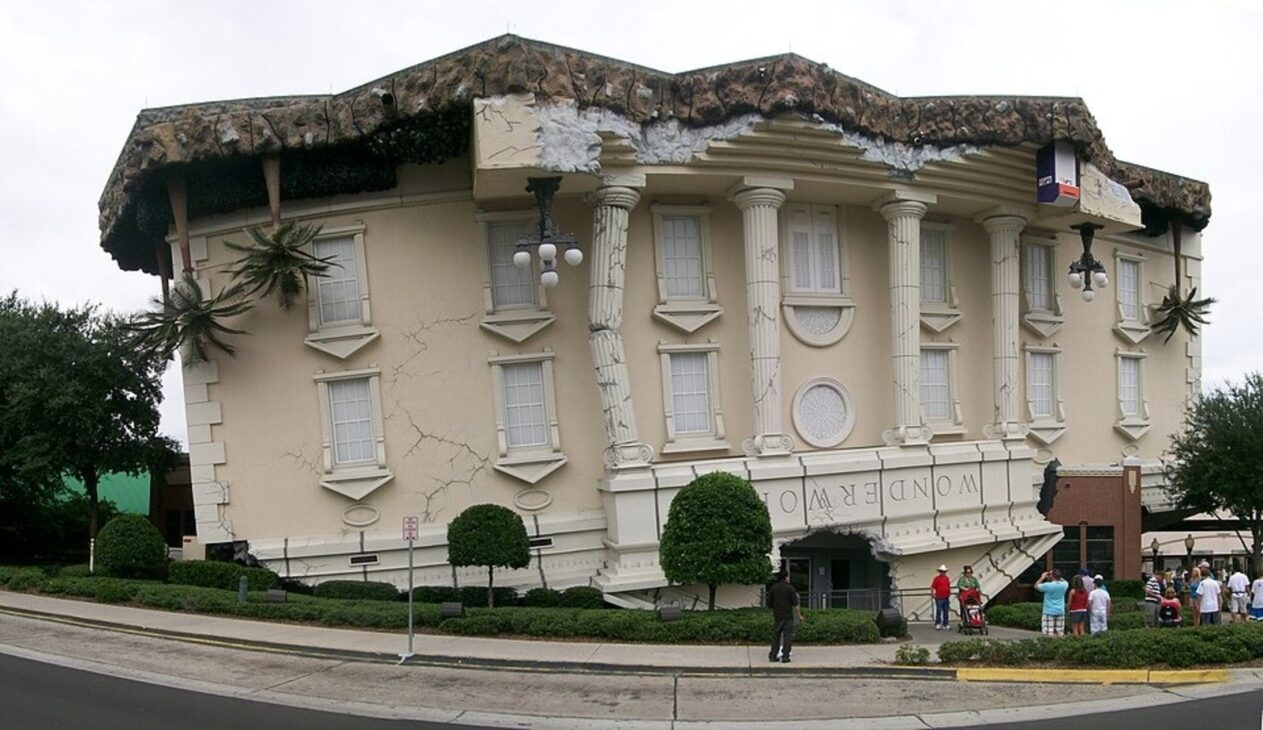
In Orlando, another building seems to have been hit by a tornado. This is WonderWorks, an educational entertainment center whose motto is “let your imagination run wild.”
According to the legend created by the company, the laboratory of the fictional Professor Wonder was sucked into a tornado from the Bermuda Triangle and landed upside down in Florida.
The result is a structure that seems to defy gravity: doors, windows, and columns are all inverted.
The attraction is so popular that the company opened other “upside down” branches in several cities across the United States.
Crooked House, Sopot, is Among the Strangest Buildings
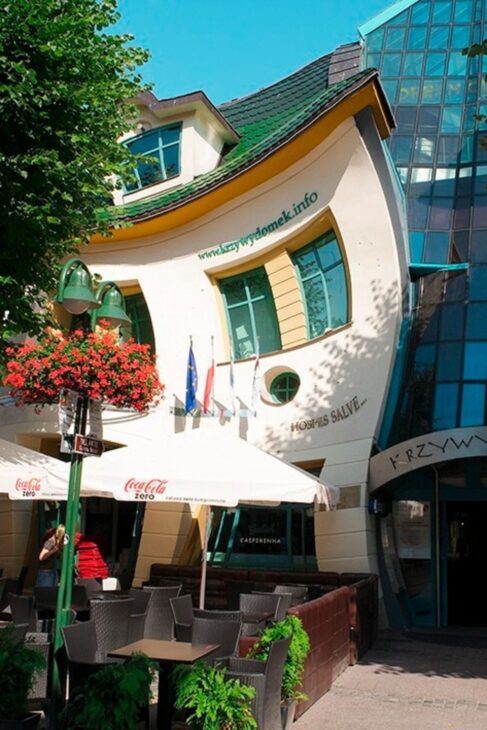
In Poland, the Crooked House (“Krzywy Domek”) appears to melt before the eyes of those passing by. Despite its surreal appearance, the building is completely safe.
Built in 2004 by architects Szotyńscy & Zaleski, the design was inspired by the illustrations from children’s books by artist Jan Szancer.
With about 370 square meters, the building houses shops, restaurants, offices, and even the local version of the Hollywood Walk of Fame.
The combination of curves, slanted windows, and wavy façades makes the Crooked House a symbol of Polish creativity and one of the most photographed buildings in Europe — and also one of the strangest buildings in the world.
National Fisheries Development Board, Hyderabad (India)
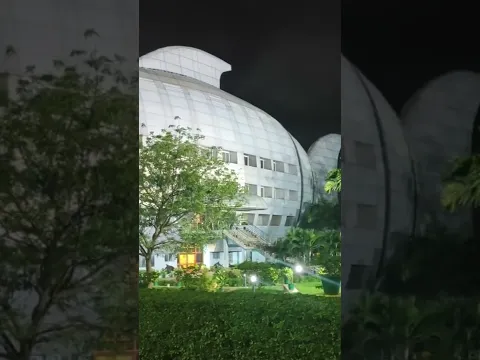

In Hyderabad, India, stands one of the most curious and symbolic constructions in the country: a giant fish-shaped building that houses the headquarters of the National Fisheries Development Board.
Designed to represent the importance of the fishing industry in Indian economy and culture, the building was conceived to realistically mimic the shapes and details of a fish — from the shiny metallic scales to the curved fins protruding from the structure.
During the day, the reflection of the sun on the mirrored façade highlights its fluid lines and creates the sensation of movement, as if the fish were about to emerge from the waters.
At night, blue spotlights illuminate the entire façade, creating a visual spectacle that transforms the building into an almost living figure, appearing to swim through the urban landscape of Hyderabad.
The project combines symbolism and architectural creativity, being a visual tribute to the fishing sector and a striking example of how architecture can unite functionality, art, and cultural identity in a single work.
With information from Casa Vogue.
You Might Also Like: The Most Famous Castle in the World Inspired Disney, Hosted the “Mad King,” and Also Served as a Nazi Base — Discover This Colossus in Germany
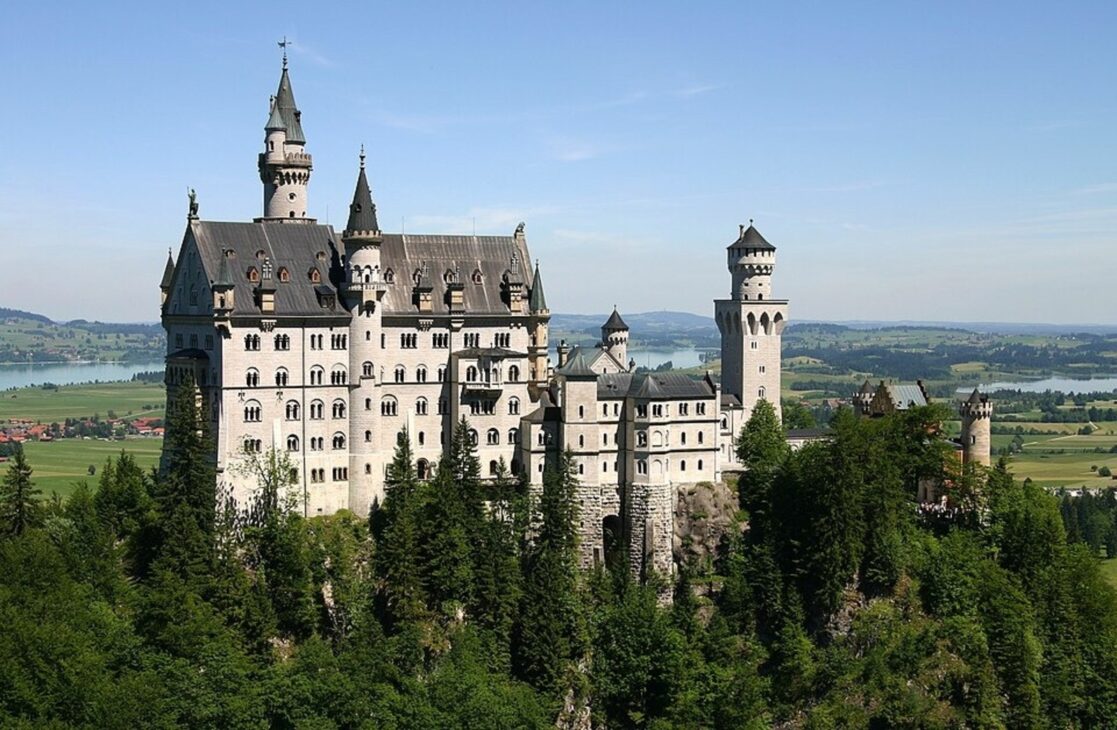
Germany is home to hundreds of castles that witness different periods of European history. Among them, none is as famous as Neuschwanstein Castle, located near the towns of Schwangau and Füssen in southwestern Bavaria.
Its enchanted appearance, past surrounded by legends, and connection to the “mad king” Ludwig II have made it one of the most visited monuments in Europe — and even a direct inspiration for Disney’s Cinderella Castle.
The Extravagant Dream of a King
Ludwig II of Bavaria ascended to the throne at the age of 18 in 1864. Son of King Maximilian II and Princess Maria of Prussia, he soon stood out not for political skills, but for his fascination with art and architecture.
Called the “Fairy Tale King” by some and the “Mad King” by others, he devoted much of his life to constructing grand castles.
The most emblematic of them, Neuschwanstein, was born from his love for German mythology and the music of Richard Wagner.
In 1867, after visiting castles in Germany and France, Ludwig envisioned a construction that reflected the medieval romantic spirit. He hired architects and set designers, but he personally reviewed every detail of the project.
The result was a mix of styles — Gothic, Romanesque, and Byzantine — erected on the ruins of two ancient fortresses.
The work, which lasted nearly two decades, employed hundreds of workers and became the main source of income for the region.
Debts, Isolation, and Decline
In 1884, the king finally moved into the castle. However, his friend and main inspiration for the project, Wagner, had already died.
The construction consumed 3.2 million marks, leading Ludwig II to incur debts of 14 million. Nevertheless, he refused to stop the work.
Critics accused him of using public money, which was not true. Nonetheless, the growing isolation and exorbitant expenses fueled rumors about his sanity.
Pressured by creditors, the king threatened suicide when new credit requests were denied.
In 1886, Bavarian ministers decided to remove him from power. A medical commission led by psychiatrist Bernhard von Gudden declared Ludwig II incapable of governing.
Two days later, he was taken to Berg Castle, on the shores of Lake Starnberg, for treatment.
The Mystery at the Lake
The outcome was tragic. The day after his removal, the king and the psychiatrist went for a walk and did not return.
Both were found dead in the shallow waters of the lake, with part of their bodies still above the surface.
The official report indicated drowning, but there was no water in their lungs — a detail that raised doubts. Theories suggest everything from a heart attack to murder during an escape attempt.
The fact is that Ludwig II lived only 172 days in Neuschwanstein, without seeing his masterpiece completed.
The Castle Open to the Public
After his death, the regent prince Luitpold ordered the castle to be opened to visitors. This decision saved the state’s finances: the money raised paid off all debts in just a few years.
When World War I began, tourism was suspended, and with Germany’s defeat, the Bavarian monarchy came to an end.
The castle, however, survived intact — and would gain another historical role in the following decades.
Nazi Refuge for Stolen Art
During World War II, the Nazis transformed Neuschwanstein into a hideout for works of art plundered throughout Europe.
The location, near the border with Austria and away from major bombing targets, made it ideal.
More than 20,000 pieces were stored there, from paintings to sculptures and documents. The scheme was revealed thanks to French curator Rose Valland, who, infiltrated among the Germans, secretly recorded the fate of the artworks.
Her information allowed the Allies to reach the castle in 1945 and recover the collection.
Neuschwanstein Castle: A Global Symbol and UNESCO Heritage Site
Decades later, Neuschwanstein continued to captivate the public. Walt Disney drew inspiration from its architecture to create Cinderella’s castle and the studio’s logo.
Today, the monument receives over a million visitors each year and was recently recognized by UNESCO as a world cultural heritage site.
What began as a daydream of an isolated king has become one of the most emblematic postcards of Germany — a castle that blends art, tragedy, mystery, and history.
With information from Aventuras na História.





-

-

-

-

-

-

35 pessoas reagiram a isso.