





 Portuguese
  English
  Spanish
  6 min of reading
  0 comments


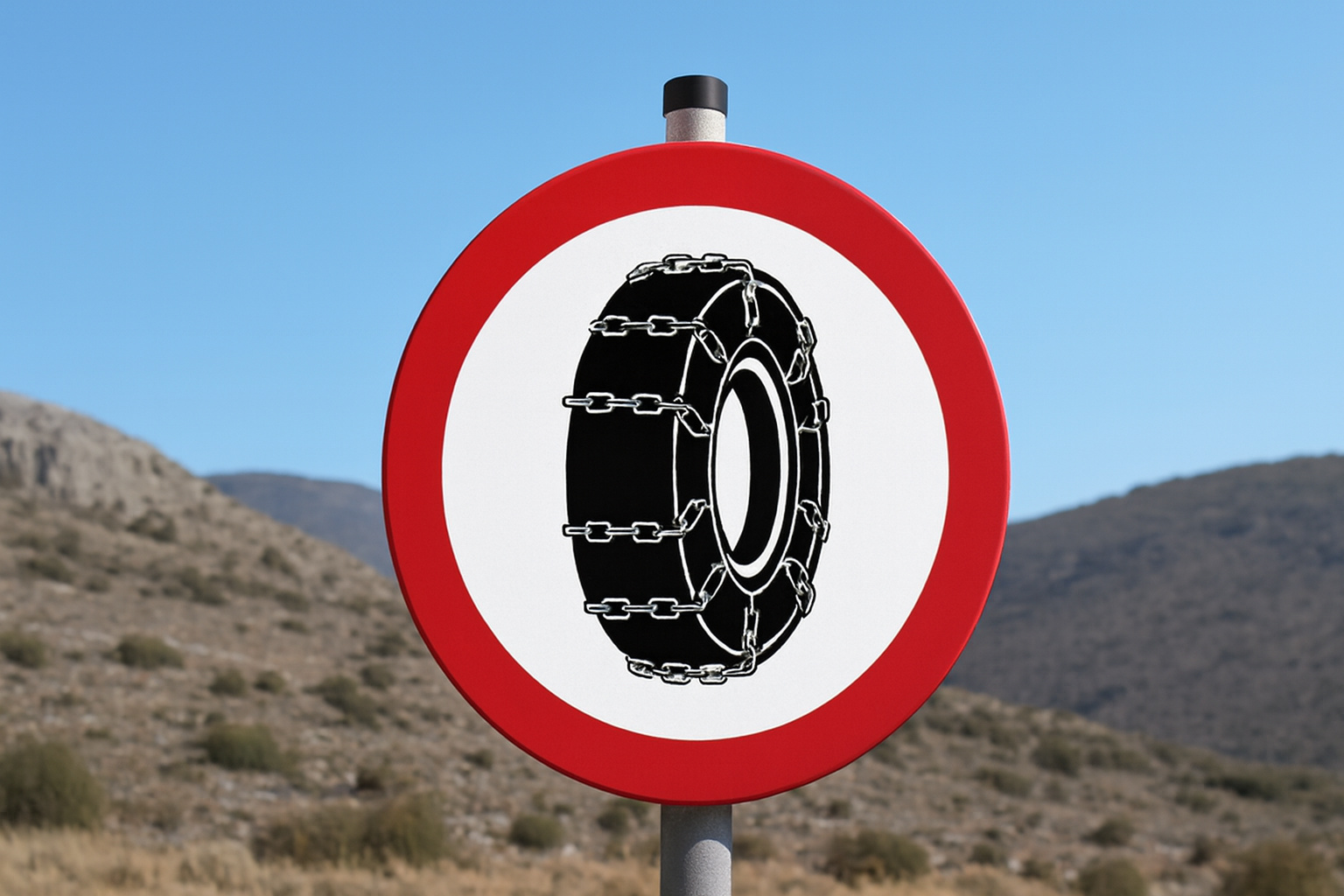
The R-22 Sign is Little Known in Brazil, but It Can Save Lives: It Requires the Use of Chains on Tires in Areas of Extreme Risk and Low Traction.
Imagine the scene: you are driving on an isolated road, the weather suddenly changes, the asphalt loses grip, visibility decreases, and ahead, there appears a circular sign with a red border and the image of a tire wrapped in chains. For many Brazilian drivers, this image is strange. Most have never seen this sign in person, and when they do, they don’t know exactly what to do. But the truth is that this signage carries one of the most serious and technical commands of traffic: the requirement to use chains on tires as a minimum condition for safety to continue driving.
In a country with more than 230 variations of traffic signs, many still little known to the general public, the R-22 sign stands out for being rare in urban routines, but absolutely critical in the places where it appears. Ignoring its meaning can turn a simple journey into a real risk of a serious accident.
The Real Meaning of the R-22 Sign and Why It Is Not Just a Recommendation
The R-22 sign belongs to the group of regulatory signs, meaning those that impose an immediate legal obligation on the driver. Its technical meaning is straightforward: from that point, the driver is required to drive with chains installed on the vehicle’s tires.
-
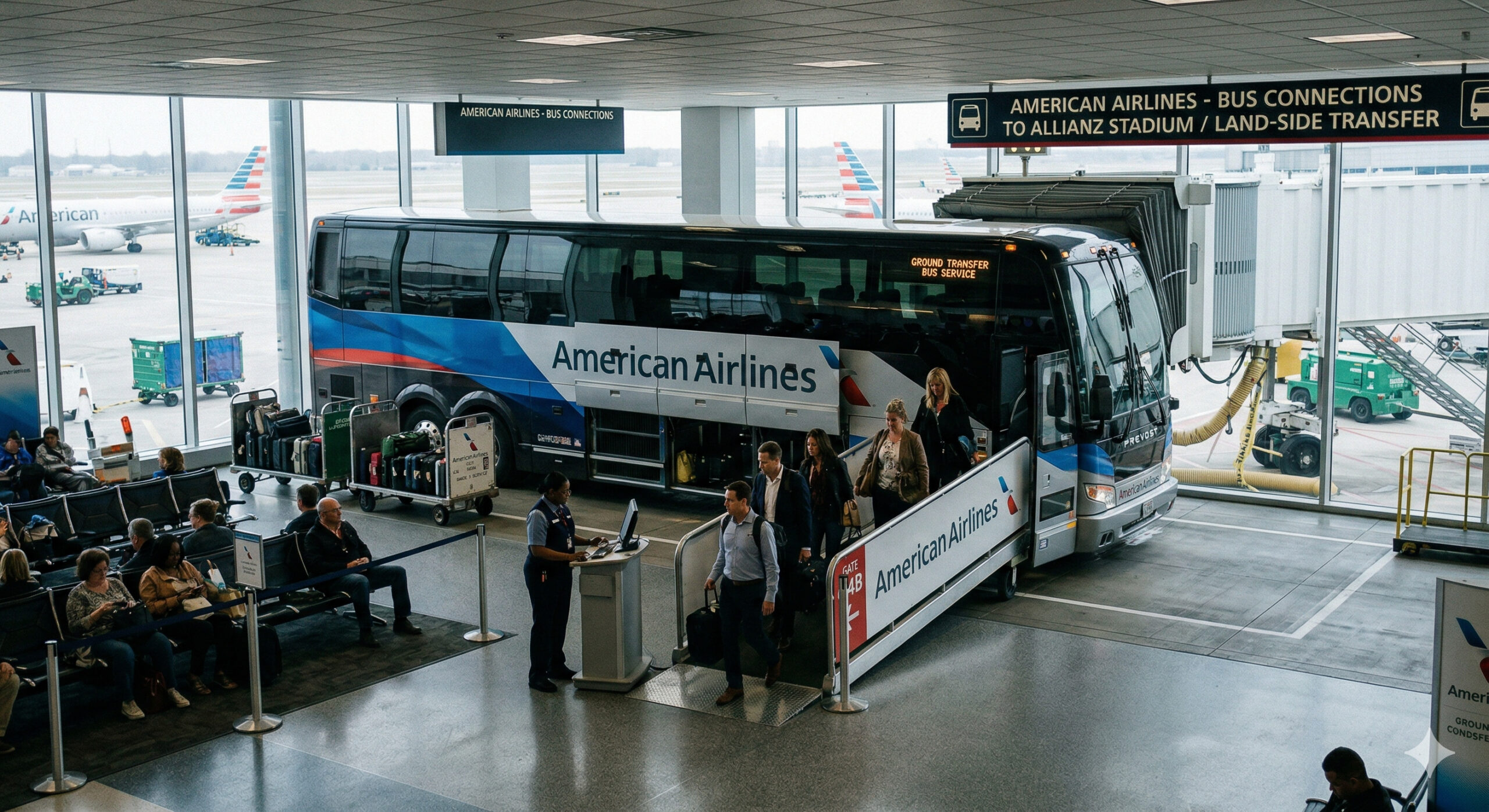
American Airlines starts selling trips as if they were flights, with check-in and baggage check at the airport, but on short routes, passengers board luxury buses connecting cities to major hubs in the U.S.
-
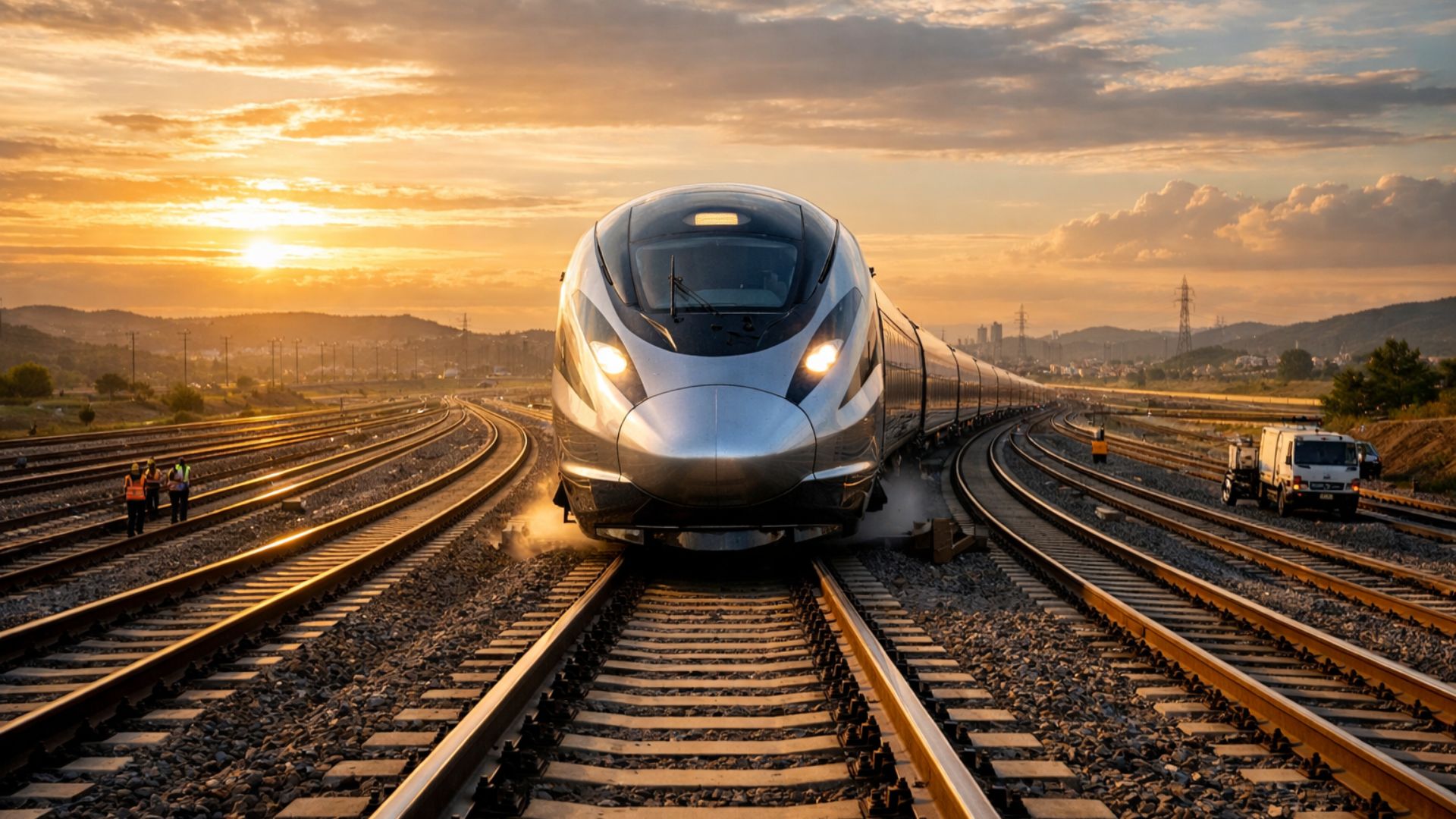
São Paulo surprises the world with a colossal railway network project that promises over 1,000 km of tracks, R$ 194 billion in investments, and 40 projects connecting the capital to the interior with fast and sustainable trains.
-
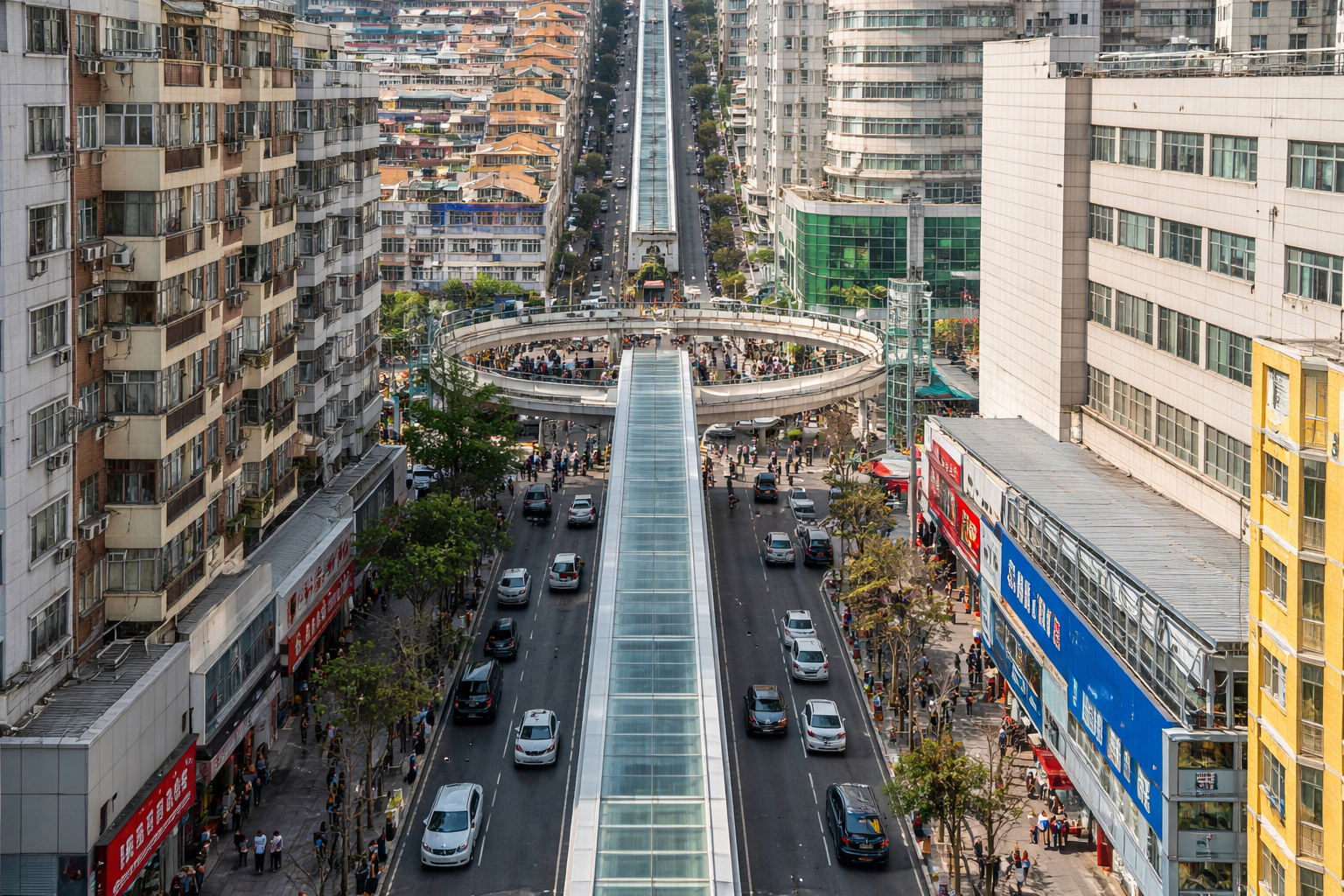
The world’s largest escalator, measuring 905 meters in China, reduces urban travel time from 1 hour to about 20 minutes and transforms mobility in mountainous regions with an engineering solution adapted to the terrain.
-
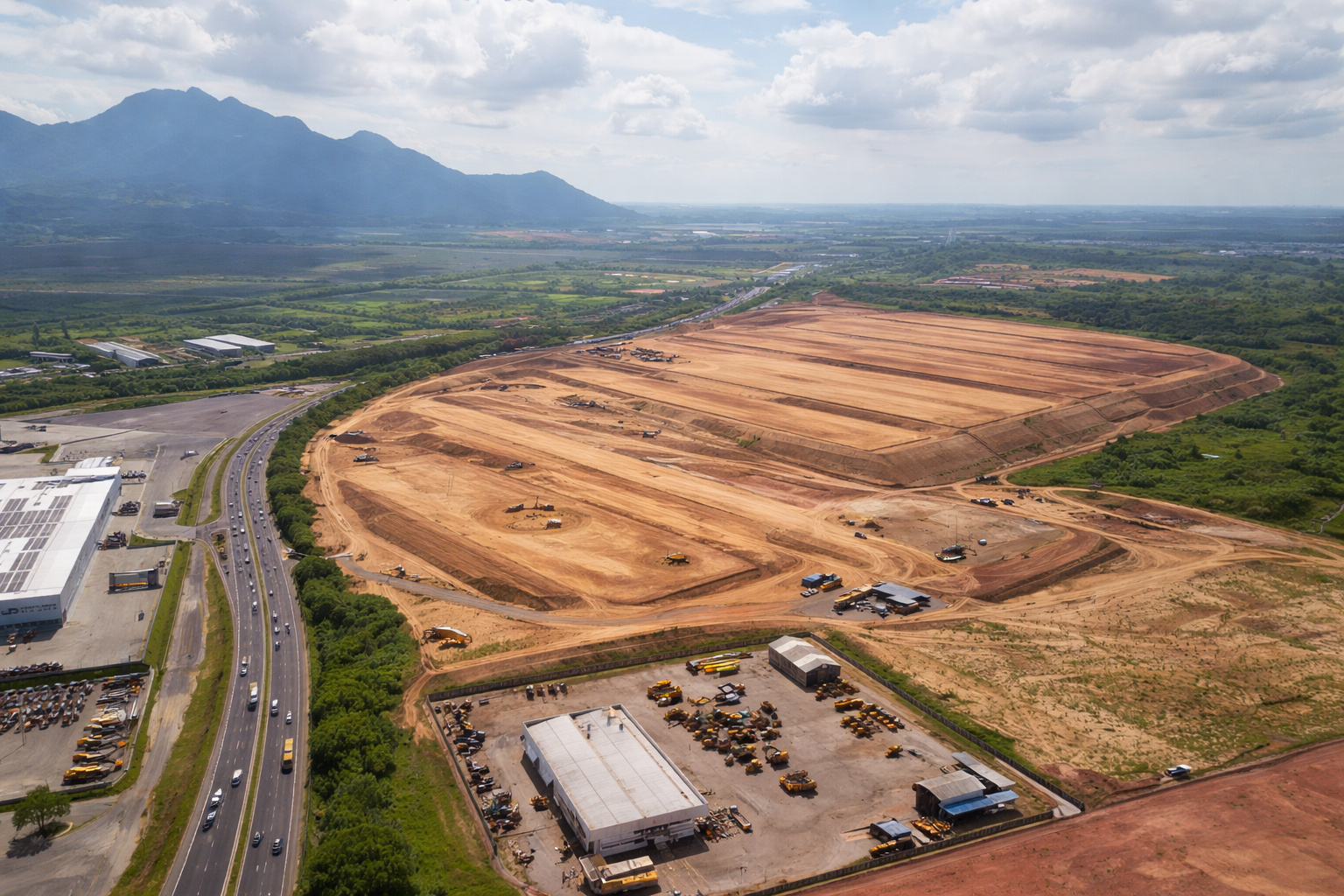
A R$ 300 million logistics giant is taking shape in Serra with over 100,000 m² and raises a question: how can this transform e-commerce and distribution in the state?



This is not a suggestion, generic warning, or mere alert. It is a formal requirement for the vehicle to maintain minimum grip on the ground under extreme road conditions.
The chains drastically increase the friction between the tire and the ground, preventing the car from sliding uncontrollably on slippery surfaces.
The primary function of the R-22 is to reduce the risk of skidding, loss of control, leaving the roadway, and collisions in environments where the coefficient of friction of the ground drops to dangerously low levels.
Why This Sign is So Common Abroad and So Rare in Brazil
The R-22 sign is widely used in countries in Europe, North America, and Asia in regions where snow, ice, and freezing conditions are part of the routine for several months of the year. In these conditions, a simple rubber tire is not sufficient to ensure minimum traction, even at low speeds.
In Brazil, due to the lack of snow as a standard climate, the sign has become rare in everyday use. Still, it exists in the signaling manual and can be legally applied in specific situations, especially in:
– Mountain roads with a high humidity index;
– Areas of constant mud in rural regions;
– Regions with highly slippery clay soil;
– Unpaved roads with a risk of mud traps;
– Areas with a recurrent history of loss of traction.
In other words, the fact that we do not see this sign frequently does not mean it is not valid in Brazil. On the contrary: when it appears, it is a clear sign of critical traffic conditions.
In What Situations Is the R-22 Sign Typically Installed
The application of this sign is directly linked to critical pavement grip. It arises when the authorities responsible for traffic identify that a standard tire is no longer sufficient to ensure stability, even at reduced speed.

Snow and ice are the classic scenarios abroad, but in Brazil, the most common usage occurs in areas with:
– Extreme mud accumulation after heavy rains;
– Steep inclines with extremely smooth soil;
– Dirt roads in mountainous regions;
– Roads with insufficient drainage and soil saturation.
In these scenarios, the sign not only advises: it conditions the vehicle’s circulation to the effective use of chains.
Why Chains Make Such a Difference in Safety
The chains create metal contact points between the tire and the surface, increasing friction, breaking through the layer of mud, water, ice, or dirt, and reducing the tire’s tendency to “skid” unnecessarily.
Technically, the system works through three simultaneous mechanisms:
- increased coefficient of friction;
- improved traction on inclines;
- greater braking efficiency on slippery surfaces.
Without the chains, the tire rotates but does not transfer force to the ground. With them, the torque finally meets resistance, allowing the car to accelerate, climb, brake, and turn with some predictability.
On Which Tires Should Chains Be Installed
The rule is clear: the chains must be installed on the drive wheels, meaning those that receive the engine’s power.
– In front-wheel drive vehicles, the chains go on the front wheels;
– In rear-wheel drive vehicles, on the rear wheels;
– In 4×4 vehicles, installation may be required on more than one axle, depending on the severity of the section.
Installing chains on the wrong axle completely compromises the system’s effectiveness, and can even aggravate the vehicle’s instability.
What Should Drivers Do When They Encounter the Sign in Practice
When a driver encounters the R-22 sign, the correct posture does not involve improvisation or attempts to “pass without chains.” The safe protocol involves three immediate actions:
First, dramatically reduce speed and look for a safe place to stop.
Second, correctly install the chains according to the manufacturer’s specifications and the type of vehicle traction.
Third, proceed through the remainder of the section with moderate acceleration, gentle braking, and no sudden movements of the steering wheel.
The chains improve traction, but do not eliminate the extreme risks of the surface. They reduce danger but do not transform a critical road into a normal one.
The Risk of Ignoring This Signage
Ignoring the R-22 sign is one of the most dangerous actions a driver can take on a critical road. Vehicles without chains in these conditions are subject to:
– uncontrollable skidding;
– total loss of steering in curves;
– inability to brake on descents;
– heightened risk of chain collisions;
– leaving the roadway with overturning.
In countries where this signage is common, driving without chains in marked sections results in heavy fines, vehicle seizure, and civil liability in the event of accidents.
Why Brazilian Drivers Know So Little About This Sign
The low familiarity of Brazilians with the R-22 sign is a direct result of the country’s climatology and the predominance of paved roads.
As the extreme need for chains is rare, the sign is restricted to specific regions and occasional seasons, which reduces its presence in theoretical exams and the practical learning of most drivers.
This creates a dangerous situation: when the sign finally appears, the driver does not recognize its true meaning and tends to underestimate the risk.
The Importance of This Sign in Preventing Extreme Accidents
Although little known, the R-22 is one of the most important signs from the perspective of traffic engineering for climatic and geographic risk areas. Unlike signs that merely alert, it conditions the continuation of the journey to a technical adaptation of the vehicle.
In practice, it acts as an invisible barrier against tragedies caused by loss of control on terrains where a standard tire simply fails to fulfill its function.
The presence of the R-22 sign teaches a fundamental lesson: not every road can be approached with the same type of driving and equipment. There are sections where the vehicle’s technical adaptation is not optional; it is mandatory to preserve lives.
In a country of continental dimensions, with heavy rains, mountainous areas, rural zones, and unpaved roads, knowing this type of signage becomes survival knowledge in traffic.










-

Uma pessoa reagiu a isso.