





 Portuguese
  English
  Spanish
  5 min of reading
  0 comments



Regional Goals, New Investments and Export Growth Place Volkswagen at the Center of the Latin American Automotive Competition, Focused on SUVs, Pickups and Local Production to Increase Presence in Strategic Markets.
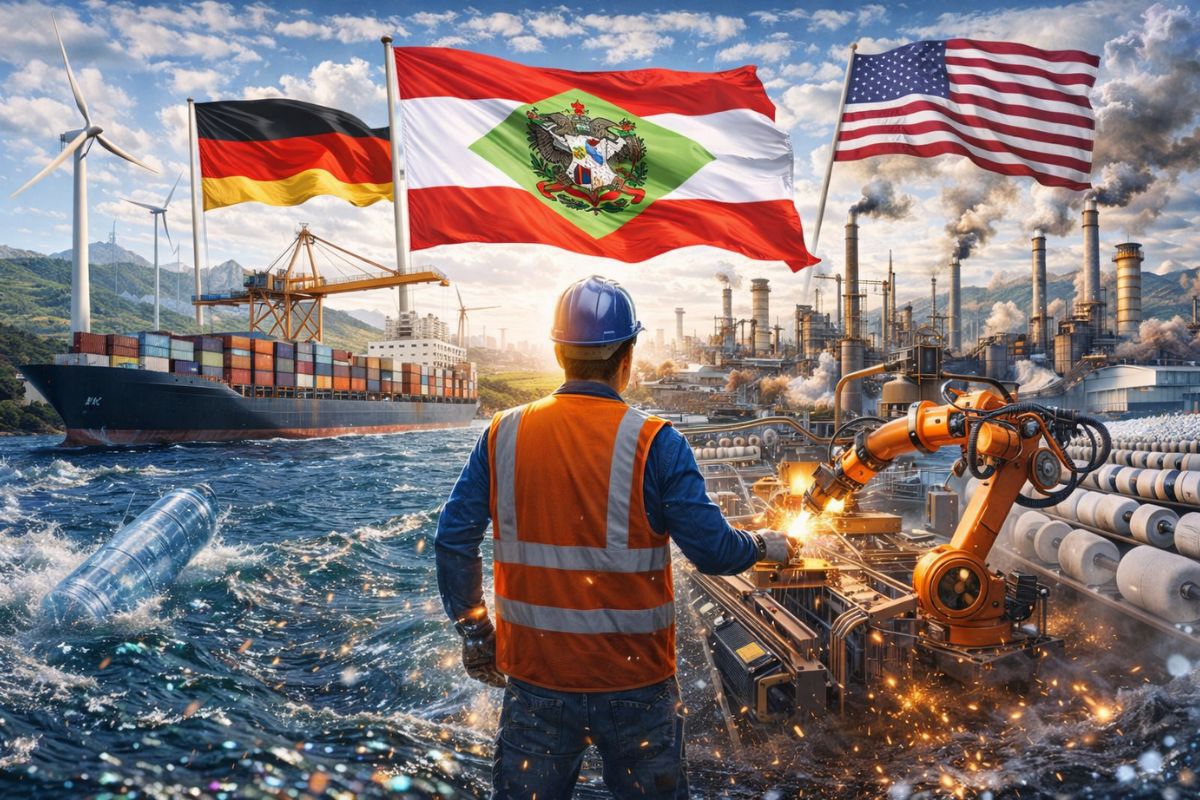
Volkswagen has placed the commercial leadership of Latin America at the center of its regional strategy and has made this objective a medium-term priority.
The goal was reiterated by Alexander Seitz, the brand’s chief executive for the region, during the Volkswagen Road Show held in Peru, at a moment when the manufacturer accelerates launches, increases exports and repositions its industrial operations in Latin American markets.
The strategy was presented based on recent performance indicators.
-
A 2024 Toyota Corolla hybrid with only 12,500 km ended up in the junkyard, and when the dismantling staff saw the car, they were shocked because they know that this model easily exceeds 300,000 km without serious mechanical issues.

-
If you want a car with an SUV look but don’t have the money to buy a new one, there are 5 used models starting at R$ 17,900 with raised suspension and body protection that can handle dirt roads without fear.
-
With a new look, more power, more technology, a larger size, and the farewell to a controversial item, the BYD Dolphin 2027 is getting ready to arrive in Brazil in 2026, stronger and more competitive than ever.
-
Is financing a car really worth it? Discover the impact of 25% annual interest and how you could end up paying up to R$ 39,000 more for your vehicle.


In 2025, South America was Volkswagen’s fastest-growing region in the world, with 569,174 vehicles sold, a 14.6% increase compared to the previous year.
Brazil played a significant role in this result and remained the brand’s third largest global market, behind China and Germany.
Summarizing the plan, Seitz stated that Volkswagen aims to lead in Latin America.
The statement helps explain why the company has focused efforts on higher-volume segments, particularly SUVs and pickups, while adjusting its offerings to different realities within the region.
In this movement, the automaker seeks to increase its presence not only in larger markets like Brazil and Argentina but also in countries like Colombia, Chile, and Peru.
The proposal, according to the company, is to advance more evenly across different fronts of the Latin American operation.
Volkswagen Investments in South America Gain Weight in the Strategy
The Volkswagen discourse comes alongside a broader portfolio renewal.
The automaker has raised its investment forecast for South America to R$ 20 billion by 2028 and has launched an offensive of 21 new models in the region during this timeframe.
Out of this total, the company’s recent communication associates 17 models with the Brazilian market.
The strategy repositions the country as a base for development, production, and export, according to information released by the automaker itself.
This movement helps explain the growing importance of the South American operation within the group.
In March 2025, Volkswagen confirmed an investment of US$ 580 million in Argentina to enable a new medium pickup, the successor to the Amarok, with production planned in Pacheco starting in 2027.
In the project presentation, the manufacturer defined the vehicle as a product designed in South America and for South America.
This formulation reinforces the company’s focus on adapting products and industrial decisions to the characteristics of regional markets.
In practice, the company combines two fronts.
On one side, it enhances higher turnover products, focusing on price, connectivity, and safety.
On the other, it maintains brand attributes, such as engineering, finish, and technological updates, according to the strategy outlined by the company.
Tera, SUVs and Pickups Expand the Brand’s Competition in the Region
Within this reorganization, the Tera has gained prominence in the automaker’s commercial strategy.
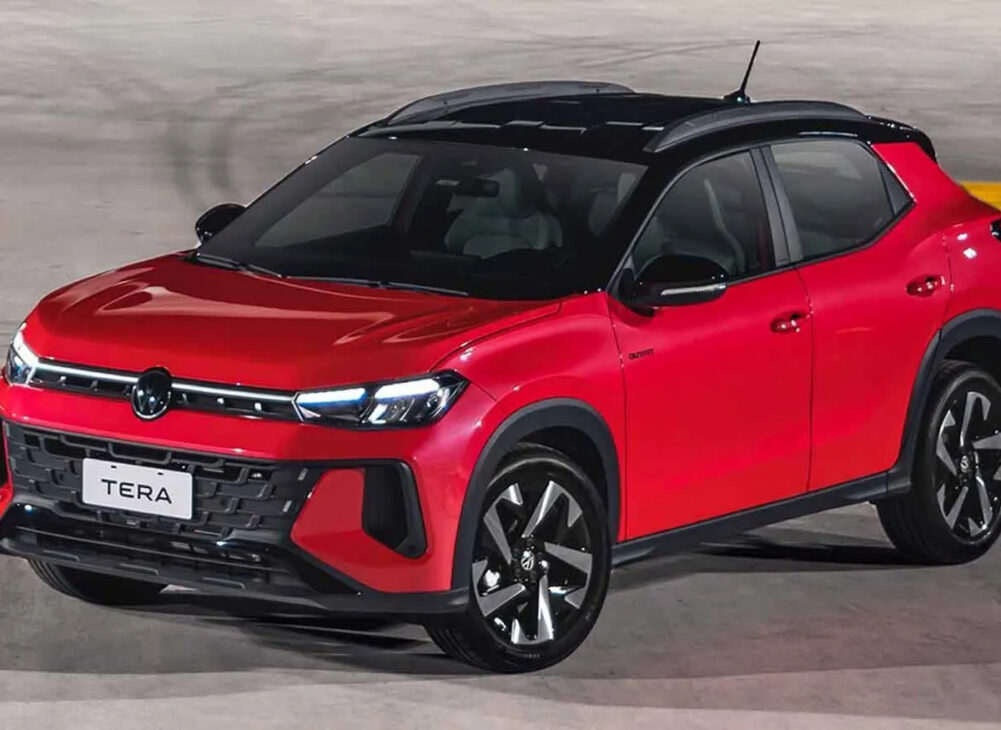
The compact SUV began to be exported in July 2025 and was classified by Volkswagen as the fifth product of its offensive of 21 launches for South America by 2028.
Produced in Brazil, the model was presented by the company as an important piece to increase presence in Latin American markets with strong demand for entry-level sports utility vehicles.
The bet aligns with the growth of this segment in different countries in the region.
Surrounding it, the brand has built a range that includes Nivus, Taos, Tiguan, T-Cross, as well as the Amarok and the electric ID.4 in selected markets.
With this portfolio, Volkswagen maintains its leadership in the SUV segment in Brazil and seeks to expand its regional share with models positioned across different price ranges.
The strategy aims to serve various consumer profiles without compromising industrial scale.
At the same time, the company maintains presence in segments considered strategic for profitability and volume, such as pickups.
In the Argentine case, the confirmation of the new Amarok indicates the intention to preserve space in a market historically relevant for this type of vehicle.
The decision also reinforces the integration between local production and regional planning.
Volkswagen Exports from Brazil Sustain the Regional Offensive
Another central point of the plan lies in exports.
In 2025, Volkswagen do Brasil exported 116,495 vehicles, a growth of 29% over 2024.
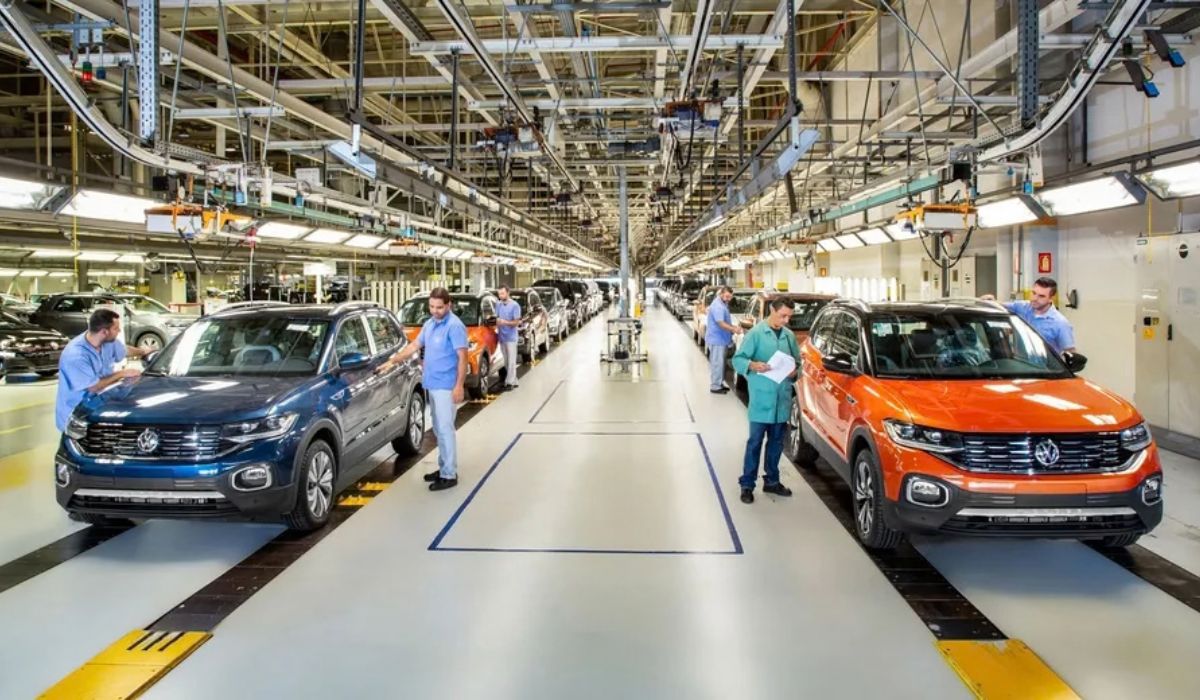
The result consolidated the Brazilian operation as an industrial supply platform for other Latin American markets.
In this advance, the Polo led exports, followed by the Tera, which has become one of the main export products of the Brazilian operation.
Argentina emerged as the external market that grew the most during this period, with expansion also in other destinations in the region, such as Colombia and Chile.
The data helps explain why Volkswagen has begun to present Brazil not only as its main regional market but also as the center of development and dissemination of its South American strategy.
This perspective is reinforced by industrial investments and the increase in the flow of vehicles to neighboring countries.
For the company, returning to the top of sales in Latin America depends on more than just an isolated market.
The calculation involves production capacity, distribution and adaptation of the portfolio to the characteristics of each country, in an environment of increasing competition.
Volkswagen Strategy Aims for Market Share in Latin America
By making public its intention to return to Latin American leadership, the automaker also expresses the importance of this goal in its regional planning.
The announced investments, the expansion of exports, and the renewal of the lineup are presented by the company as part of the same growth strategy.
So far, Volkswagen has increased launches, reinforced its presence in SUVs, and raised the significance of its South American operation within its global structure.
The company’s upcoming results in the region should indicate to what extent this set of actions will be sufficient to increase market share.





-

Uma pessoa reagiu a isso.