





 Portuguese
  English
  Spanish
  4 min of reading
  0 comments


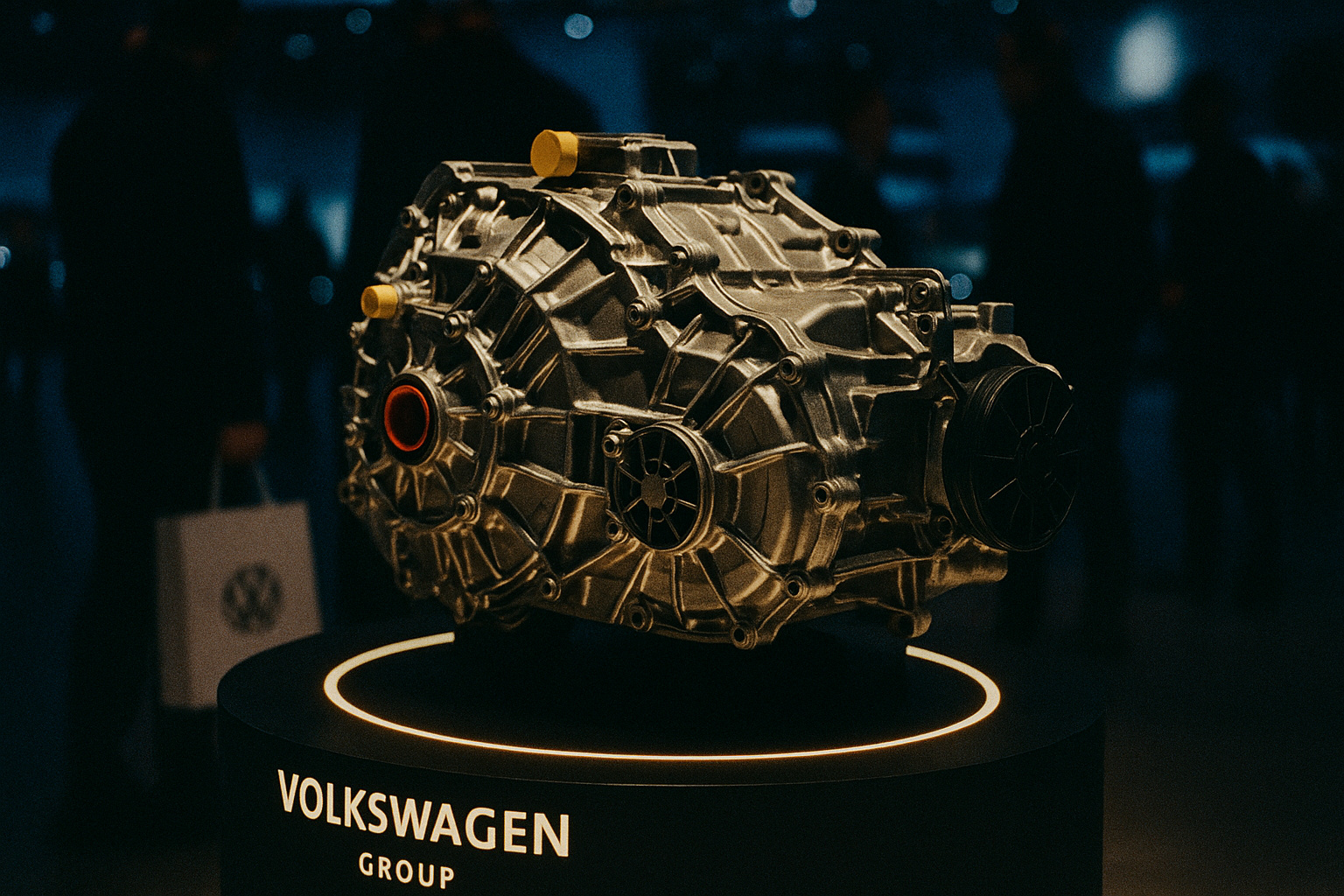
New Electric Compact From VW Arrives With Innovative Technologies, Two Battery Options, Silicon Carbide Inverter, and MEB+ Platform, Promising Efficiency, Safety, and Lower Global Production Costs
During the IAA Mobility 2025, held in Munich, Volkswagen presented the public with unprecedented details about the new ID. Polo and its sibling models from the so-called Electric Urban Car Family, which also includes Cupra Raval and Skoda Epiq. The highlight was the revelation of the APP290 Permanent Magnet Synchronous Motor, paired with the new silicon carbide (SiC) inverter developed in-house. This combination promises significant gains in energy efficiency and superior battery utilization, consolidating the compact as one of the most technologically advanced in its category.
The information was initially disclosed by the portal InsideEVs, which closely followed the technology workshop promoted by the brand during the event. According to the publication, VW is adopting a strategy of unifying components that should reduce costs, increase standardization, and enhance competitiveness against rivals like BYD Dolphin and Renault 5 E-Tech.
Two Battery Options and Up to 450 km of Range
The Volkswagen ID. Polo will be sold with two battery configurations:
-
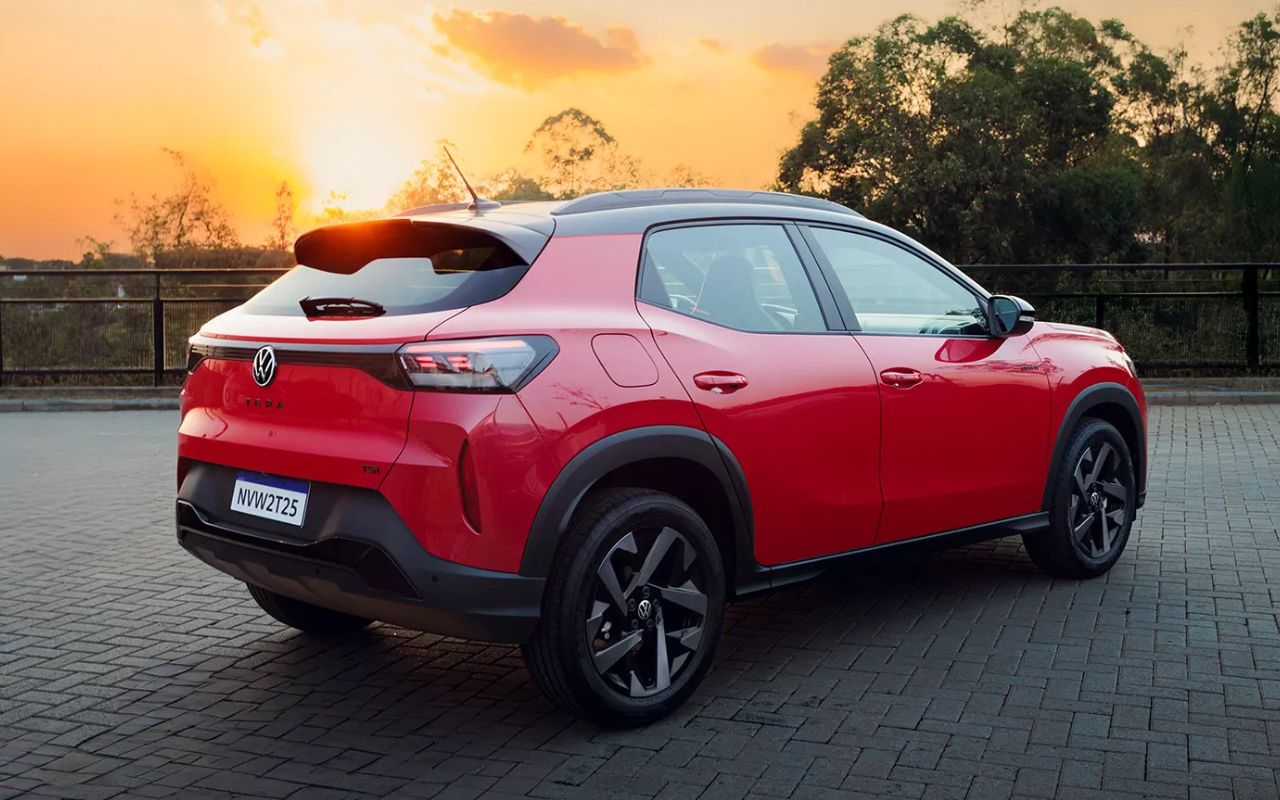
It surpassed the T-Cross, Creta, and Tracker: with nearly 8,000 units sold, the Volkswagen Tera was the best-selling SUV in March 2026.
-
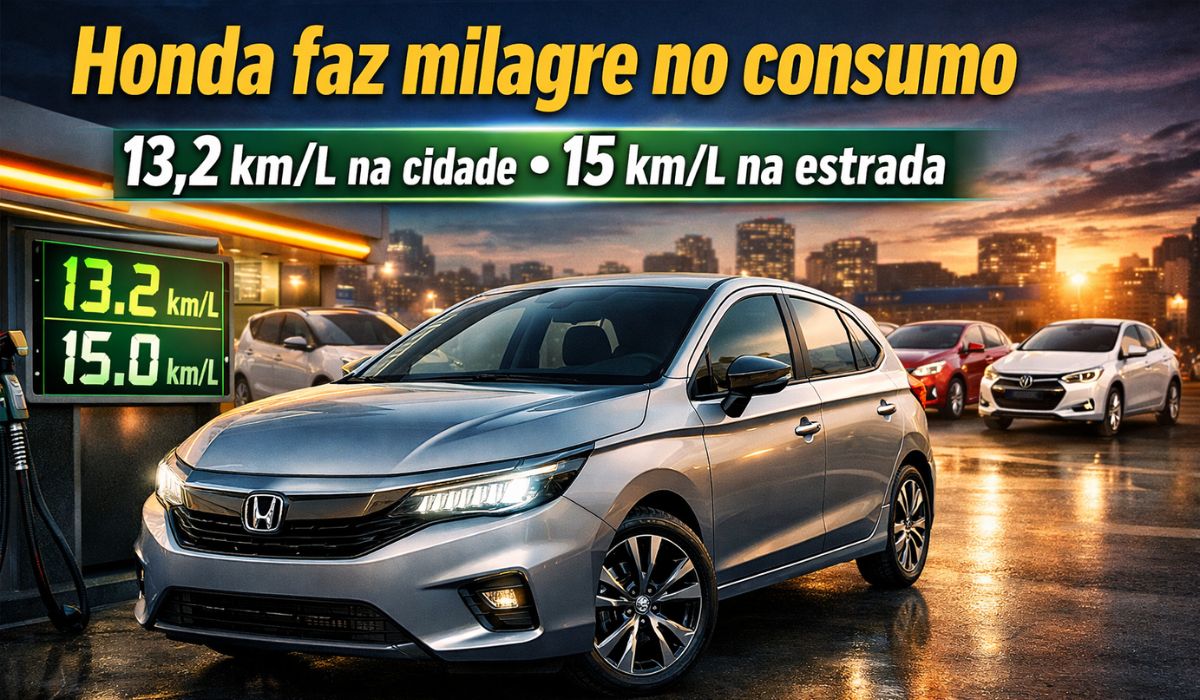
Honda performs miracles in fuel consumption with a hatch that marks 13.2 km/l in the city and 15 km/l on the highway, leaving Polo, HB20, 208, and Onix behind and becoming a reference among compact cars without resorting to turbo or hybrid systems.
-
Six diseases that seem common but can prevent the renewal of the driver’s license for the elderly throughout Brazil and surprise experienced drivers — could any of them affect you without showing clear signs?

-
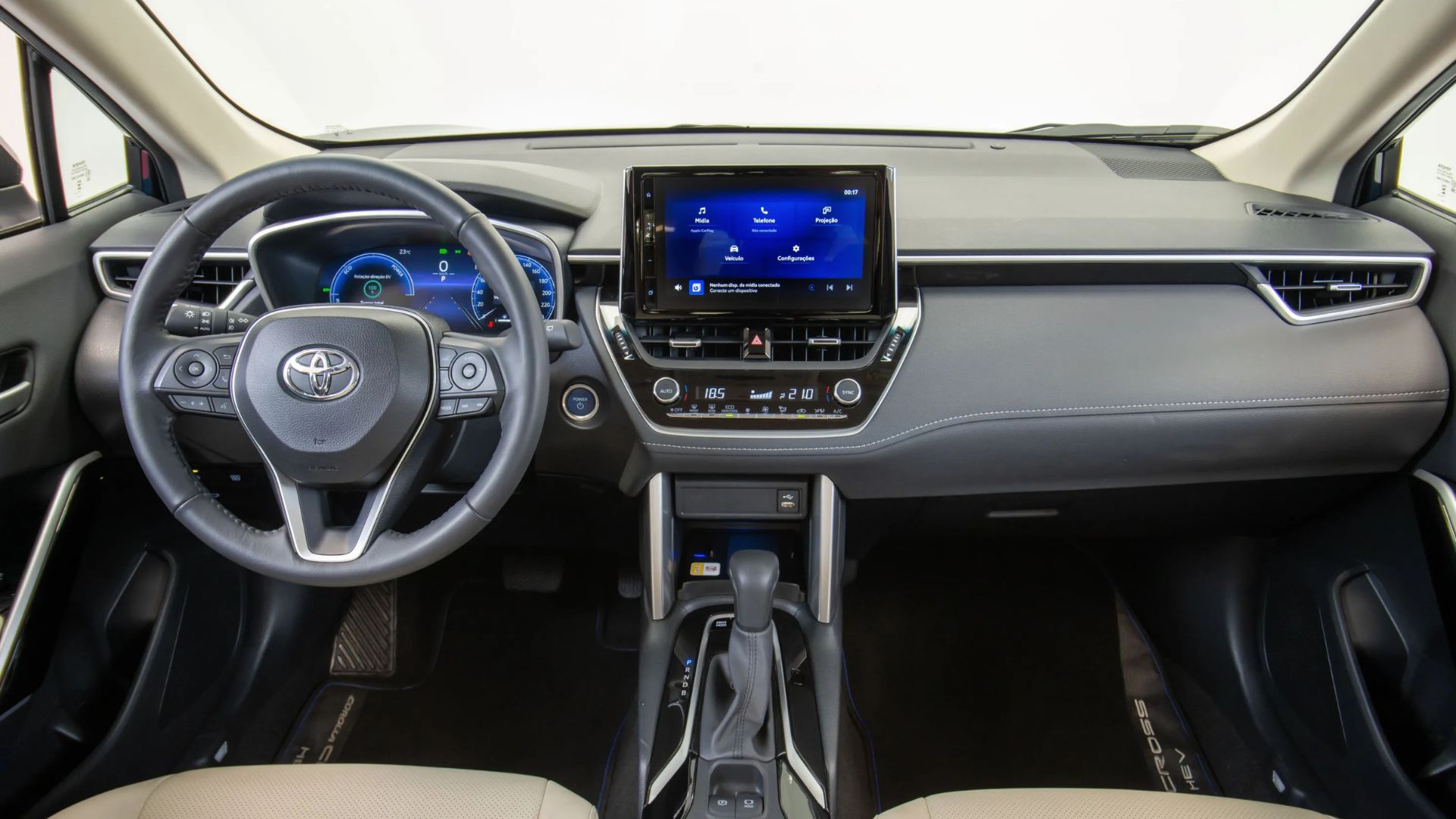
With 122 hp, fuel consumption of up to 17.7 km/l, and a trunk capacity of 440 liters, this hybrid SUV impresses even though it costs up to R$ 47,000 more than the Yaris — meet the Toyota Corolla Cross.

- NMC 56 kWh, with a range of up to 450 km according to the WLTP cycle;
- LFP 38 kWh, designed for around 300 km of range.
Both offer fast charging from 10% to 80% in less than 25 minutes, with performance resulting in rates close to 1.6 kWh/min for the NMC pack and 1.1 kWh/min for the LFP version. This brings the charging times of Volkswagen’s electric compacts closer to those of combustion vehicles in urban journeys, reducing one of the main objections from consumers.
This advancement was only possible thanks to the adoption of the Cell-to-Pack (CTP) concept, which eliminates intermediate modules, increases energy density, and improves cooling. In case of overheating, special valves direct gases outside the cabin, raising safety levels.
MEB+ Platform and Unified Cell “Einheitszelle”
Another decisive point presented in Munich was the evolution of the MEB+ modular platform, now extended to the entire ID. lineup, including models such as ID.3, ID.4, and ID.7.
The major differentiator is the introduction of the “Einheitszelle”, or unified cell, a new standard for prismatic cells that allows for production flexibility and compatibility with different manufacturers. Production will be divided into two fronts: half of the cells will be produced by Volkswagen itself at facilities in Salzgitter (Germany), Valencia (Spain), and St. Thomas (Canada), while the other half will come from renowned Asian suppliers like Samsung SDI and SK On.
This standardization will facilitate a significant reduction in costs and greater technological uniformity, ensuring that battery performance does not depend on a single supplier.
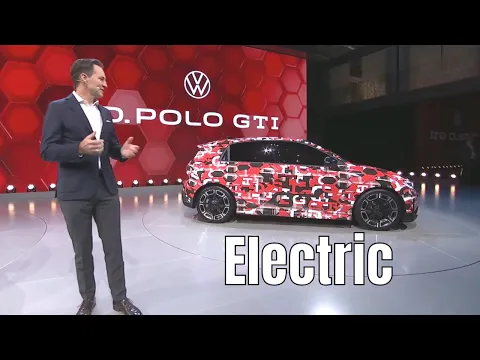

APP290 Motor: 218 Hp of Power and Unmatched Efficiency
At the heart of the VW ID. Polo is the APP290 motor, delivering up to 160 kW (218 hp) of power and an estimated torque of 290 Nm, with simple water cooling. While it is more compact than the APP550 used in larger models from the brand, the new engine aims to provide a balance of efficiency, performance, and cost.
The silicon carbide (SiC) inverter is considered a revolution in the electric compact segment. Developed in-house, it comprises four main components—SiC chips, DC-link capacitor, AC filter, and printed circuit board—integrated into a high-efficiency system. The result is cleaner, faster, and more reliable energy conversion, increasing the vehicle’s range and responsiveness.
NMC vs LFP: Which Battery to Choose?
The choice of battery is another decisive factor for future customers. The NMC 56 kWh version combines nickel, manganese, and cobalt, prioritizing energy density and extended range, ideal for those traveling longer distances. In contrast, the LFP 38 kWh option stands out for greater durability, thermal safety, and reduced cost, making it perfect for urban use and daily routines.
Both benefit from the Cell-to-Pack (CTP) design, optimizing space and ensuring ultra-fast charging times without compromising lifespan. The technology of superior cooling is another positive aspect, enhancing safety in high-energy-demand situations.
Impact on the Brazilian Market
Still without an official arrival forecast in Brazil, the ID. Polo symbolizes Volkswagen’s commitment to global electrification. According to an article published on the portal VW-Technologieworkshop am 10. September, the standardization of prismatic cells and the adoption of the MEB+ platform could enable local production in the medium term, reducing import costs and making electric compacts more accessible in the country.
If confirmed, the model could compete directly with vehicles such as BYD Dolphin, Renault Kwid E-Tech, and JAC E-JS1, bringing advantages of range up to 450 km, charging in less than 25 minutes, and advanced safety technologies.
The Volkswagen ID. Polo and its siblings from the Electric Urban Car Family mark a new chapter in electric mobility. With the APP290 motor of 218 hp, high-efficiency SiC inverter, NMC and LFP batteries with ultra-fast charging, and a MEB+ platform with unified cell, the German automaker shows it is ready to lead the urban electric compact segment.
This technological package not only places the brand in a prominent position against competitors but also paves the way for mass adoption of electric vehicles, both in Europe and in emerging markets like Brazil.










Seja o primeiro a reagir!