





 Portuguese
  English
  Spanish
  4 min of reading
  0 comments


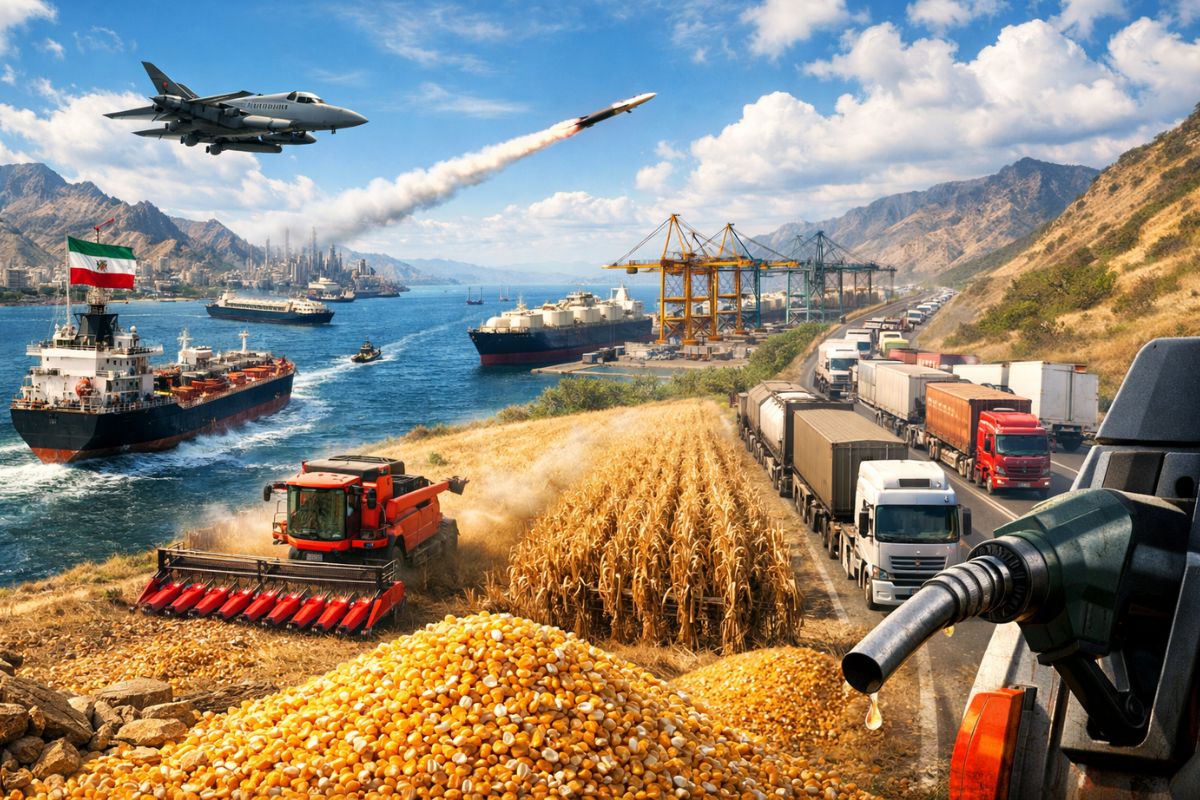
With the war and the risk in the Strait of Hormuz, the country fears impact on the nitrogen fertilizers it imports, on corn exports to Iran, and on diesel costs, while internal measures try to reduce dependence
The war in the Middle East raises a direct alert about agriculture and consumption: when a strategic corridor is blocked, the effect reaches the fields and the final price. The central concern is twofold, as Brazil depends on routes and inputs that pass through the region and, at the same time, has increased grain sales to that market.
According to the analysis presented, the Strait of Hormuz is vital for the entry of fertilizers and for the dynamics of export, which creates risks for costs, freight, and crop planning this year. In the midst of this, imported diesel, the logistics chain, and measures to increase national fertilizer production come into play.
War and Strait of Hormuz: why this bottleneck weighs on Brazil
The war is cited as a factor impacting the expectation of the volume of grains harvested this year, with a tendency to be a little below last year’s record. The reason is the chain effect: inputs, logistics, and costs rise when the route becomes riskier.
-
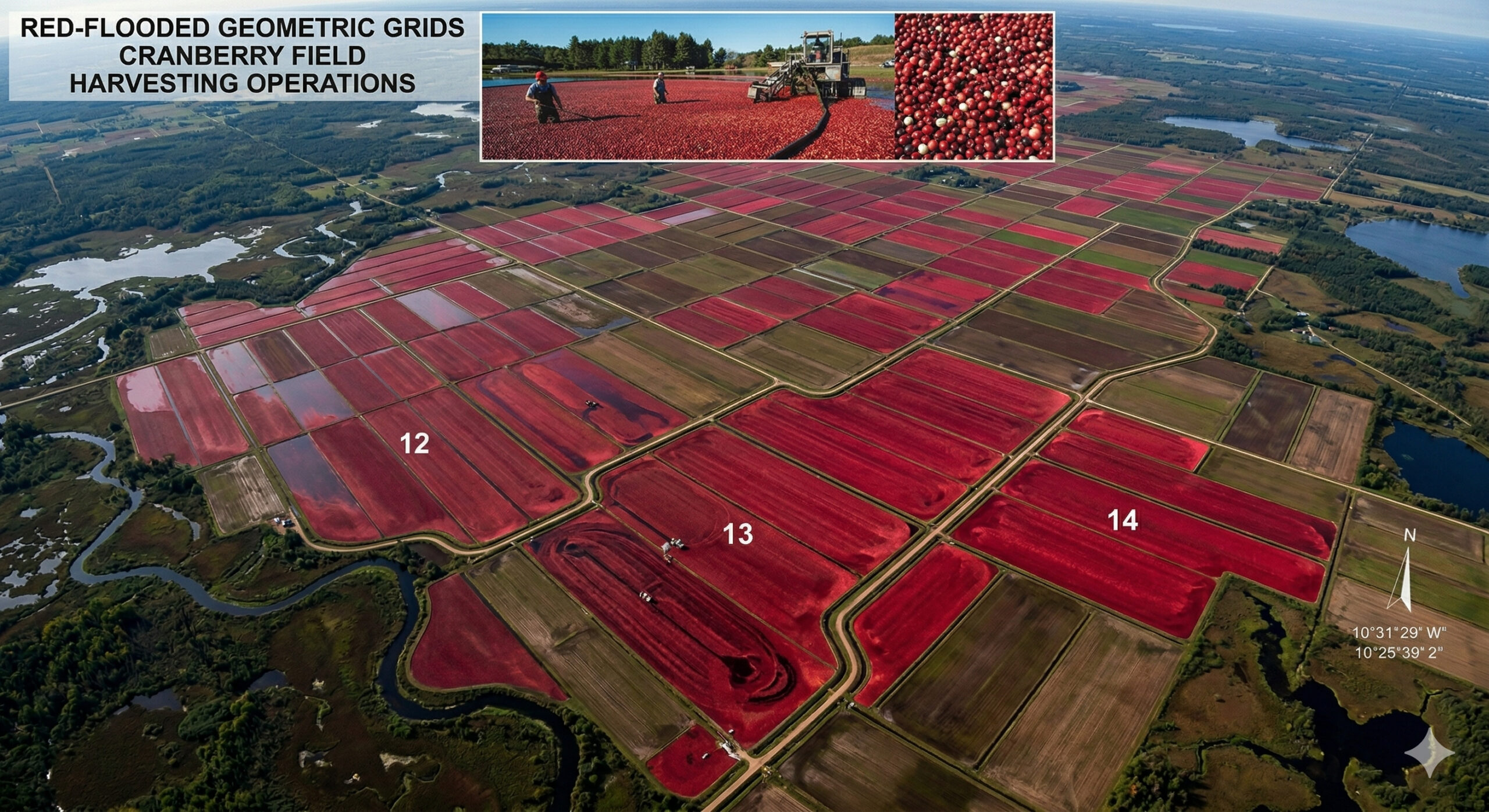
Geometric cranberry bogs in Wisconsin flood entire fields and turn red during harvest, creating an agricultural mosaic so intense and out of the ordinary that it transforms wetlands in the United States into one of the most stunning landscapes ever seen from space.
-
At 96 years old, the last survivor of a colony of Japanese immigrants who arrived in the Amazon in 1929 saw his community create an agricultural method that transforms destroyed pastures into forests that produce food year-round and attract researchers from around the world.

-
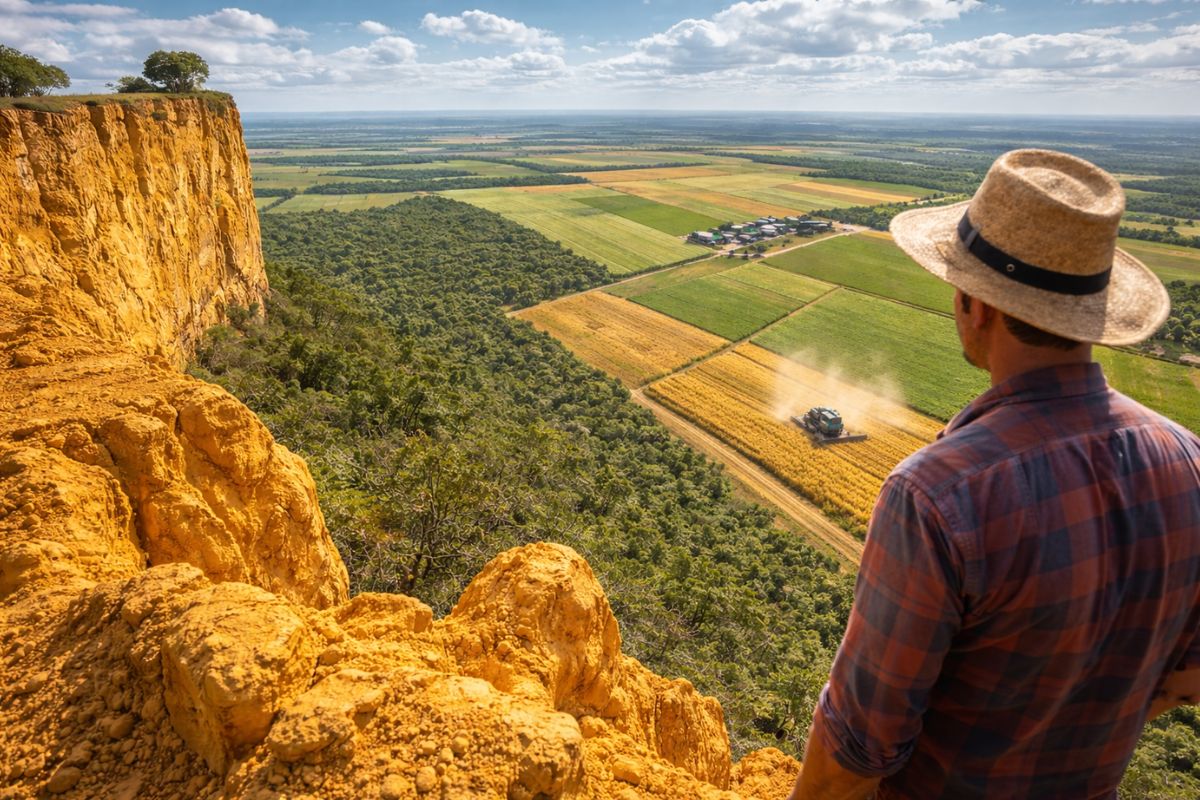
This rare yellow clay at the top of a plateau in northern Pará is transforming one of the poorest regions of Brazil into a new agricultural frontier, with producers already harvesting three crops a year from the same soil.
-
Brazil has avoided deforestation of 50 million hectares in the last three decades thanks to increased productivity in the field, and now low-carbon agriculture wants to prove that the country is part of the climate solution and not the problem.

The key point is the Strait of Hormuz. According to what was explained, a crucial flow for Brazil passes through there, as the country is a major importer of fertilizers and, at the same time, one of the largest exporters of food.
War and fertilizers: 35% of nitrogen fertilizers pass through the route
The war increases attention on a component considered essential for productivity in the field: nitrogen fertilizers. It was reported that Brazil imports 35% of an important group of fertilizers, the nitrogen fertilizers, associated with ammonia, within the set of macronutrients mentioned.
Within that number, it was stated that about 20% of that 35% comes from Iran, while officially 7% to 8% enter due to embargoes, using “hubs” in the region for shipment to Brazil. The message is clear: if the route becomes unstable, the risk of cost and supply increases.
War and the internal response: reopening factories and seeking self-sufficiency


The war appears as a trigger to accelerate an agenda of lesser dependence. It was stated that Petrobras is reopening nitrogen fertilizer factories that had been closed, and that 3 out of 4 units have already been reopened, which would represent 20% self-sufficiency.
The projection presented is that, with the opening of the fourth factory, Brazil would become 35% independent in this nitrogen component. The logic is to reduce external vulnerability when the war alters the risk of supply.
War and export: corn to Iran has become part of the problem
The other side of the war is not only what comes in but also what goes out. It was highlighted that Brazil has become, in recent years, a major exporter of corn to the Middle East, especially to Iran.
In the speech, it was reported that Iran has increased its imports of corn from Brazil by 280% in five years. It was also mentioned that 20% to 23% of Brazil’s corn production goes to Iran and that, adding neighboring countries like Saudi Arabia and the United Arab Emirates, 27% of the corn produced in Brazil goes to these destinations. With the war, this flow becomes a concern for producers and for the logistics of distribution.
War, diesel, and logistics: costs and risks rise together
The war also touches on the issue of fuel. It was stated that Brazil still imports 30% of its diesel, which makes the country sensitive to shocks in the energy and transport chain. When diesel prices rise, freight feels it first, and consumers feel it later.
Along the same lines, it was stated that freight has increased significantly due to the risks associated with the war, with mention of a variation “from 25% of the value of the cargo to up to 1% of the value of the cargo” within the context of risk and cost.
The practical point in the narrative is that the war pushes uncertainty into the logistics of agriculture, affecting fertilizers, corn, and other exported items.
War and measures to secure prices: PIS/Cofins, subsidies, and incentives for production
To deal with the pressure of the war on fuels, it was mentioned that the government took a swift measure related to taxes, with exemption from PIS/Cofins that represented 32 cents per liter and a subsidy of an additional 0.32 per liter, totaling 0.64 per liter as reported relief.
It was also mentioned a decree this year to regulate fertilizer production in Brazil and a bill related to the contribution of mineral exploration of limestone, with a reduction cited from 1% to 0.25.
Limestone was described as an efficiency booster, as it improves the utilization of fertilizer in the soil, reducing the total need when well applied.
Finally, it was said that BNDES is acting in mining, especially in phosphate and potassium, to support the quest for self-sufficiency. The idea, within this framework, is to lessen the weight that the war may have on the cost of agriculture and food prices.
Quick question: with the war raising risks in fertilizers, corn, and diesel, do you think Brazil should prioritize even more internal production of inputs, even if that requires greater investments now?





Seja o primeiro a reagir!