





 Portuguese
  English
  Spanish
  4 min of reading
  0 comments


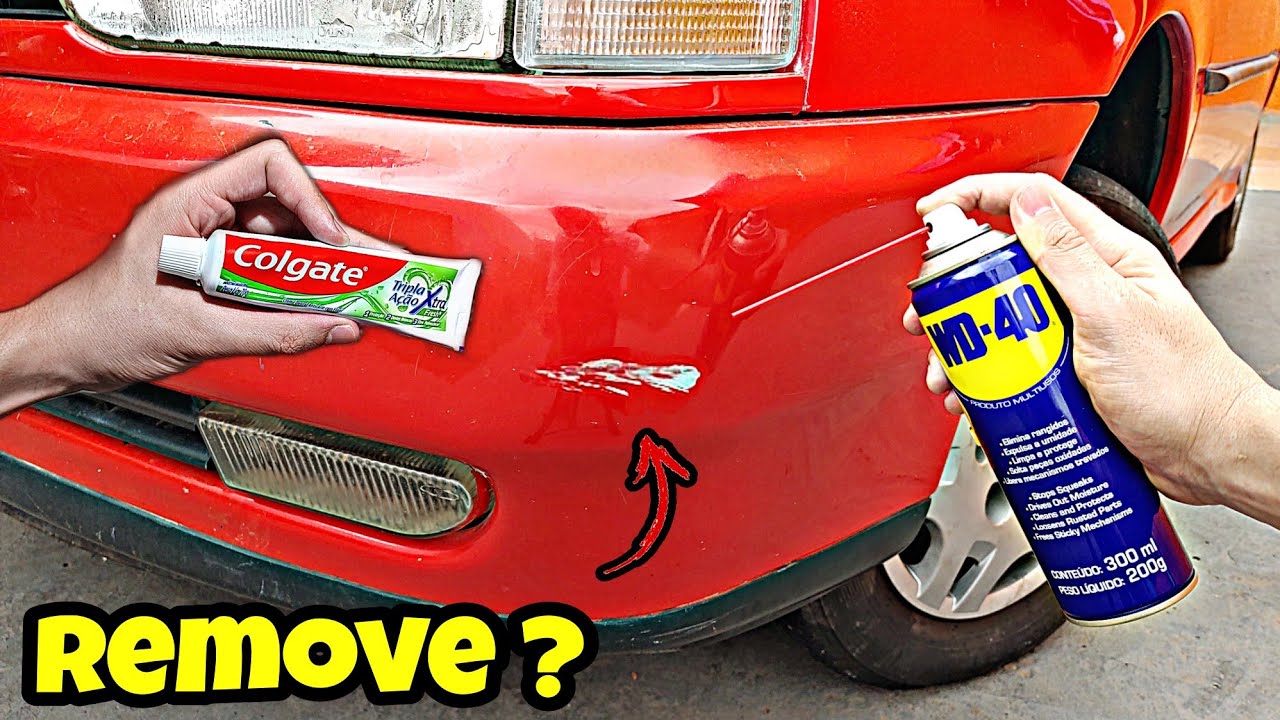
WD-40 Is Known For Its Versatility, But Does It Really Work To Remove Scratches From Car Paint? Discover The Truth Behind This Popular Trick And Find Out If It’s Worth Using To Make Your Vehicle Look Renewed.
Many people ask if using WD-40 removes automotive scratches. Because of this, a Brazilian YouTuber had the idea to test whether WD-40 can really be the solution for scratches, scrapes, and gouges on car paint.
The goal is to see if WD-40 can remove these scratches, even on a bumper with a deep scratch. Additionally, the YouTuber also tested toothpaste on the scratch to see if it actually helps.
-
The Toyota Hilux is R$ 75.5 thousand cheaper and bets on the 2.8 turbodiesel engine with up to 204 hp and 50.9 kgfm to catch up with the VW Saveiro, which leads with 4,472 sales.

-
The new Renault Koleos has a screen exclusively for the passenger that is invisible to the driver, heated rear seats, and 29 assistance systems, but its Chinese competitors cost R$ 40,000 less and deliver more power.

-
The car stored for 38 years: when opening the barn door, what appears is breathtaking and looks like a scene from a movie!

-
Fiat works miracles in the Brazilian market, lowers the price of its 0 km hatch to R$ 69,990, reestablishes the model as the cheapest car in the country, and reignites the battle against Kwid and C3.

For car owners, there’s no worse feeling than seeing that scratch on the paint. It’s something that catches anyone’s attention and often becomes the first detail we notice when looking at the car.

When we think about reselling the vehicle, this can be a big problem. The good news is that there are ways to mitigate this damage, although there is no miraculous solution that will completely erase scratches. But the question is: can WD-40 help in any way?

WD-40: Myth Or Reality?
First of all, it’s important to clarify that WD-40 is not a miraculous solution. The famous multipurpose spray is indeed very effective for various functions, but removing scratches from paint is not one of them.
WD-40 may help reduce the visibility of superficial scratches, but it won’t make them disappear completely.
When used correctly, it can provide a temporary effect, softening the appearance of micro-scratches. To do this, simply clean the affected area well, apply the product, and polish with a clean, dry cloth. The result isn’t perfect, but the difference in appearance can be noted.
Step By Step To Remove Scratches
There are some techniques that can be attempted if WD-40 doesn’t completely resolve the problem.
The first step would be to use touch-up pens or specific pastes to remove scratches. These products are quite popular and can be found in automotive supply stores.
The pens are especially useful for small, superficial scratches, but when the scratch is deeper, they are not sufficient to achieve the desired finish.
If the scratches persist even after using the pens, it’s time to resort to other methods. A polisher can be a good option to breathe new life into the car’s paint.
When using a polisher, it’s necessary to apply the polish on the scratch carefully, choosing the right type of pad for the polisher.
For tougher scratches, a firmer polish can be used, always remembering to finish with wax so that the car shines and the repaired area looks as natural as possible.
Sanding And Painting: When The Scratch Is Deep
In more severe cases, where the scratch is so deep that it affects the car’s paint, sanding and repainting the area will be necessary.
This is a more complex process and requires more attention, as it involves using sandpaper and even specific paints for your car model.
Care must be taken not to damage areas around the scratch. First, the damaged area should be cleaned, followed by careful sanding to ensure the new paint adheres properly. After sanding, it’s important to protect the parts that won’t be painted with adhesive tape.
Then, painting can be done with spray, and if necessary, a second coat of paint can be applied. Lastly, polishing is essential to ensure that the repaired area integrates perfectly with the rest of the car.
Protect The Scratches From Rust
And what to do if you can’t remove the scratches or if you simply don’t care about repairing the damage? In this case, protecting against rust is an important alternative.
As the scratch may have damaged the varnish that protects the paint, the exposed area may start to suffer from corrosion.
Using WD-40 can help protect the affected area from rust, as the product creates a protective layer that prevents moisture from acting. To do this, just spray WD-40 on the scratched area and polish with a clean, dry cloth.
These methods may not restore your car to perfect appearance, but they help minimize the damage and, in some cases, even prevent larger problems in the future.
Whether with WD-40, touch-up pens, or polishers, there is always a solution available for those looking to give their car a new look without spending much.
In summary, WD-40 can be a good option to reduce the visibility of superficial scratches, but for deeper scratches, other techniques, such as using polishers and paint repairs, are more effective.
Therefore, don’t expect miracles from WD-40, but know that it can be a useful tool to give that final touch to the appearance of your car’s paint.








-

-

2 pessoas reagiram a isso.