





 Portuguese
  English
  Spanish
  5 min of reading
  0 comments


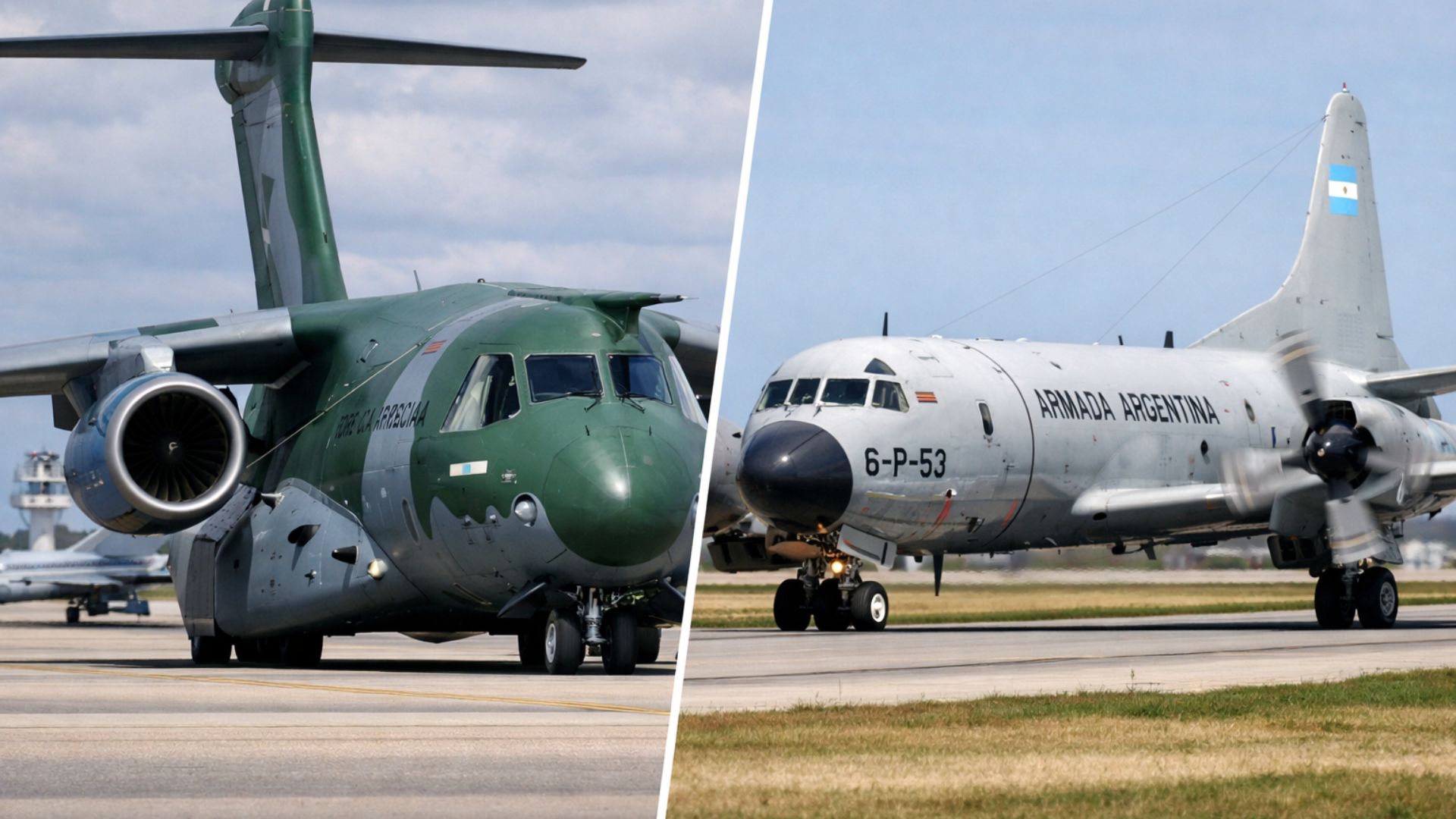
Parallel movements in the defense sector reveal distinct strategies in South America, with direct impact on maritime surveillance, military industry, and international insertion.
Brazil and Argentina have once again drawn attention in the defense sector by adopting different paths to expand military presence and strategic projection, reflecting distinct national priorities and contrasting models of investment in capabilities deemed sensitive for sovereignty and international insertion.
While Buenos Aires is rebuilding its maritime surveillance of the South Atlantic with second-hand P-3 Orion aircraft acquired from Norway, Brazil is watching the KC-390, developed by Embraer, advance among European air forces and consolidate its presence in NATO-linked countries.
The difference between these movements is not limited to the type of aircraft involved but also reveals opposing approaches on how to strengthen military capabilities, whether through the recovery of existing means in the international market or by expanding a locally developed and continuously produced platform.
-
With over 300 million coins produced every day, the mining factory extracts copper from tons of rock, using giant machines, metal alloys, and an inspection system that completes an impressive production process.

-
Why do supermarkets place flowers right at the entrance even with low turnover, high waste, and little direct purchase?

-
A study with a laser sensor reveals up to 23,000 hidden structures beneath the Amazon, pre-Columbian constructions invisible under the forest emerge in mapped areas and indicate a much broader occupation than previously thought.

-
Why is chocolate so “addictive”? Studies show how chemical compounds activate the brain, trigger intense pleasure, and make it difficult to control consumption.

In the Argentine case, the priority lies in restoring a capability considered critical for maritime patrol, search and rescue, and monitoring extensive areas, especially given the need to enhance control over the Exclusive Economic Zone and strategic regions of the South Atlantic.
On the other hand, Brazil’s advancement relies on its own industrial project, focused on tactical transport and in-flight refueling, which has also begun to function as an instrument of diplomatic projection and insertion into international defense chains.
Argentine rearmament and South Atlantic surveillance


The Argentine reconfiguration formally began in October 2023, when the government signed an agreement with Norway to acquire four P-3 Orion aircraft, with a declared focus on maritime surveillance, control of strategic areas, and support for search and rescue missions.
With the arrival of the first unit at Almirante Zar Naval Air Base in September 2024, the Argentine Navy began to restore its exploration aviation, incorporating a long-range vector aimed at monitoring extensive maritime areas under its responsibility.
Subsequently, the incorporation of the first P-3C Orion was officially announced that same month, being presented as a central part of a broader rearmament process aimed at recovering operational capabilities considered strategic for the country.
Later, the arrival of the second aircraft in October 2025 reinforced this movement, consolidating the gradual restoration of a structure that had lost relevance in previous years and is now regaining an important role in naval operations.
These planes belonged to the Norwegian fleet decommissioned after being replaced by the P-8 Poseidon, marking the end of a cycle of over five decades of operation, which highlights the contrast between the origin of the equipment and its new function in South America.
Operational capacity of the P-3 Orion in Argentina
Even having been retired from service by its previous operator, the P-3 Orion remains relevant for the type of mission that Argentina seeks to reinforce, especially due to its ability to operate for long periods over extensive and difficult-to-monitor maritime areas.
Official data indicates that the aircraft has a range of 1,500 nautical miles, equivalent to approximately 2,780 kilometers, with an endurance of up to 12 hours of flight, characteristics that favor prolonged surveillance operations.
In addition to its presence in the area, the incorporated P-3Cs are described as capable of executing maritime patrol, search and rescue, anti-surface warfare, and anti-submarine warfare missions, expanding the operational spectrum of the Argentine Navy.
Another relevant point involves the onboard sensors, including radar and real-time data collection systems, which allow for the identification and tracking of vessels, contributing to enhanced situational awareness in strategic regions.
This recovery process is already reflected in operational employment, as demonstrated in missions conducted in 2026, when aircraft were used in surveillance flights within the Mare Nostrum operations aimed at monitoring maritime activity.
KC-390 and expansion of the Brazilian defense industry
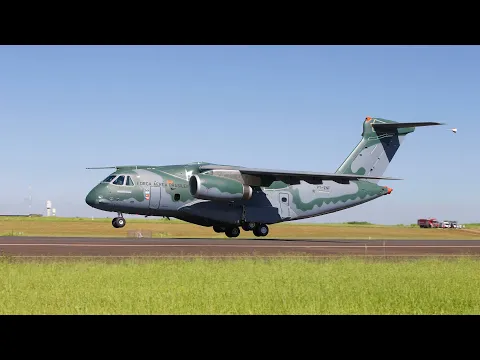
In contrast, Brazil’s trajectory follows a distinct logic, based on the international projection of a cargo aircraft conceived and manufactured in the country, transforming the KC-390 into a relevant asset from both military and industrial perspectives.
Since its entry into service with the Brazilian Air Force in 2019, the model has begun to gain traction abroad, being incorporated by Portugal in 2023 and Hungary in 2024, gradually expanding its presence in the European landscape.
The operational indicators released by the manufacturer reinforce this expansion, indicating a mission capability rate of 93% and a completion rate exceeding 99%, numbers used to support the aircraft’s competitiveness in the international market.
According to Embraer, the KC-390 has already been selected by 11 air forces, including European countries and NATO members, which contributes to consolidating its image as an interoperable platform with standards adopted by the alliance.
Among the operators and buyers are Brazil, Portugal, Hungary, South Korea, the Netherlands, Austria, the Czech Republic, Sweden, Uzbekistan, Slovakia, and Lithuania, expanding the geographical presence of the model.
Brazilian presence in Europe and industrial cooperation
More recently, Brazil’s advancement has begun to include initiatives aimed at structuring support outside the country, expanding operations beyond the sale of aircraft and bringing the model closer to a logic of permanent industrial presence.
In this context, the presentation of the KC-390 to the Polish company WZL-2 in March 2026 was described as an initial step to establish maintenance, repair, and overhaul capability on European territory.
The creation of this infrastructure tends to reduce logistical costs, facilitate technical support, and make the model more attractive to new operators, especially in an increasingly integrated defense environment among European countries.
Thus, Brazil begins to compete not only as a supplier of equipment but also as an active participant in international defense chains, strengthening its presence in strategic markets.
Distinct defense strategies and international projection
The comparison between the two programs highlights distinct approaches to military strengthening, reflecting national priorities and different levels of industrial insertion in the defense sector.
On one hand, Argentina seeks to recover maritime surveillance capability and expand control over strategic areas of the South Atlantic, utilizing a consolidated platform adapted to its operational needs.
On the other hand, Brazil transforms a national project into an instrument of international expansion, combining export, industrial cooperation, and increasing presence in relevant defense industry markets.
In this scenario, the two movements illustrate how different strategies can coexist in the region, each responding to specific demands for sovereignty, monitoring, and insertion in the international defense environment.







Seja o primeiro a reagir!