





 Português
  Inglês
  Espanhol
  4 min de leitura
  0 comentários


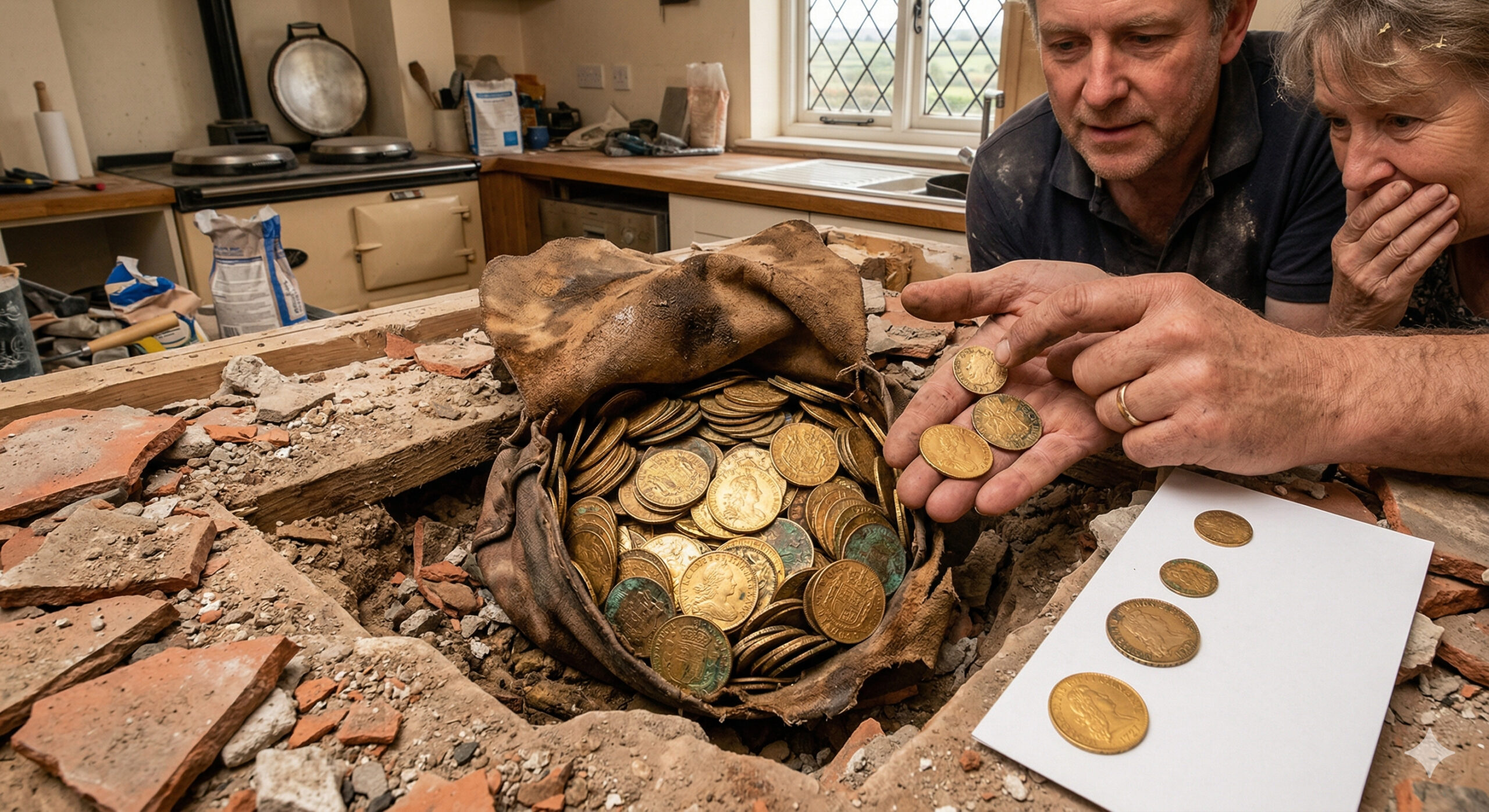
Renovation reveals 260 gold coins hidden for 300 years in England, with rare pieces and million-dollar historical value.
In 2022, residents of a historic home in the North Yorkshire region of England made an unexpected discovery while starting a renovation in the kitchen. Upon removing the old floor, the couple found a container holding more than 260 hidden gold coins, dated between 1610 and 1727. According to a CNN report cited by scientific and historical outlets such as Live Science and Smithsonian Magazine, the collection was found during renovations in an 18th-century house in the village of Ellerby and was subsequently analyzed by numismatic experts, being considered one of the largest finds of its kind in the UK.
The most relevant fact is that the treasure, initially estimated at around £250,000, ended up being sold for over £750,000 at auction, driven not only by the value of the gold but by the historical rarity of the coins and their preservation over centuries. The discovery quickly attracted the attention of historians and collectors, becoming one of the most significant domestic finds in recent years in the country.
Gold coins were hidden under the kitchen floor
The treasure was found inside a small container buried beneath the floorboards, suggesting it was carefully concealed by the former owners of the house.
-
More tolls! The Anchieta-Imigrantes system will start implementing charges in both directions with free flow on July 1st, a fee of R$ 19.35 per segment, the end of toll plazas, and a project for a new 21.5 km lane.

-
A Brazilian city has a water park in the middle of the forest with tickets priced at R$ 29, over 300,000 m², 40 attractions, heated pools, and a record of 700,000 visitors in one year.

-
With an unusual prize, Japan transforms office chairs into a resistance race on the streets, ISU-1 Grand Prix grows, fills stages, and pays 90 kilograms of rice.

-
House in England with a 7.6-meter shark embedded in the roof attracts attention worldwide and becomes a curious attraction in Oxford.


The way the coins were organized indicates that it was not a random discard, but a planned hiding place.

This type of concealment was relatively common during periods of political and economic instability, when owners preferred to store wealth within their own homes.
The absence of formal records regarding the hiding place further increases the mystery surrounding its origin.
Historical period of the coins reveals context of instability
The coins found were minted between 1610 and 1727, a period that encompasses critical moments in British history.
This timeframe includes:
- the English Civil War (1642–1651)
- the execution of King Charles I
- the restoration of the monarchy
- the beginning of the Hanoverian dynasty’s reign
This historical context suggests that the treasure may have been hidden during a period of instability, when there was a real risk of loss of property or confiscation. Storing wealth in the form of gold was a common strategy to preserve assets.
Numismatic analysis reveals value far beyond gold
After the discovery, the coins were analyzed by experts, including the auction house Spink & Son, one of the most traditional in the world.
The evaluation indicated that:
- many coins are rare
- some are in excellent condition
- there are uncommon specimens in the market
This means that the value of the collection far exceeds the value of the metal, reaching figures that can amount to hundreds of thousands of pounds. Numismatics considers factors such as rarity, condition, and historical context.
Why treasures like this continue to be found
Discoveries of this type are not as rare as they seem, especially in regions with a long historical occupation like the United Kingdom.
Throughout the centuries, it was common for people to hide wealth:
- in floors
- walls
- gardens
- cellars
Many of these hiding places were never recovered, either due to the death of the owners or forgetfulness over generations. This explains why modern renovations still reveal treasures buried for centuries.
The role of British legislation in archaeological discoveries
In the United Kingdom, discoveries of this type are regulated by specific laws, such as the Treasure Act. This set of rules determines that:
- the find must be reported to the authorities
- experts assess the historical value
- there may be financial compensation for the discoverers
This system ensures that pieces of historical relevance are preserved and studied, while also recognizing the role of citizens in discoveries.

In addition to the financial value, the treasure offers important information about the period in which it was hidden. The coins help to understand:
- economic circulation
- wealth patterns
- social behavior in times of crisis
Each coin serves as a historical record, connecting the present to events that occurred over three centuries ago. This type of discovery contributes to academic and historical studies.
Why accidental discoveries continue to fascinate
Cases like this attract attention because they combine elements of surprise, history, and material value. The idea that a treasure could be hidden beneath a common floor creates a direct connection between the everyday and the past.
This combination of chance and historical relevance transforms discoveries like this into phenomena of great public interest.
The discovery of the 260 gold coins under the floor of a kitchen in England reveals much more than a high financial value.
It shows how historical events, individual decisions, and the passage of time can transform ordinary objects into relics of great importance.
By remaining hidden for over 300 years, the treasure survived wars, political changes, and generations, emerging only when a modern renovation revealed a story that was literally buried beneath the feet of its new owners.









Seja o primeiro a reagir!