





 Portuguese
  English
  Spanish
  5 min of reading
  0 comments



Global expansion of Starlink encounters local rules and exposes political limits of satellite internet
Starlink, Elon Musk’s satellite internet network, had its requests for telecommunications licenses and radio frequency access rejected in Namibia, in a setback that highlighted the weight of national rules regarding ownership control, oversight, and security in a sector that is often presented as global by nature.
The decision placed a relatively small African market at the center of a larger discussion about how far the expansion of orbital connectivity can advance when it runs into strict local requirements.
Weight of Starlink in SpaceX revenue
The case gained relevance because Starlink has ceased to be just a complementary project within SpaceX and has taken on a decisive position in the financial machinery of the group.
-
The USA accelerates tests on the A-10 with an adapter that allows refueling from multiple tanks, installed in a few hours, increasing compatibility with up to 5 aircraft, reducing dependence on the KC-135, and creating strategic space for Embraer’s KC-390.

-
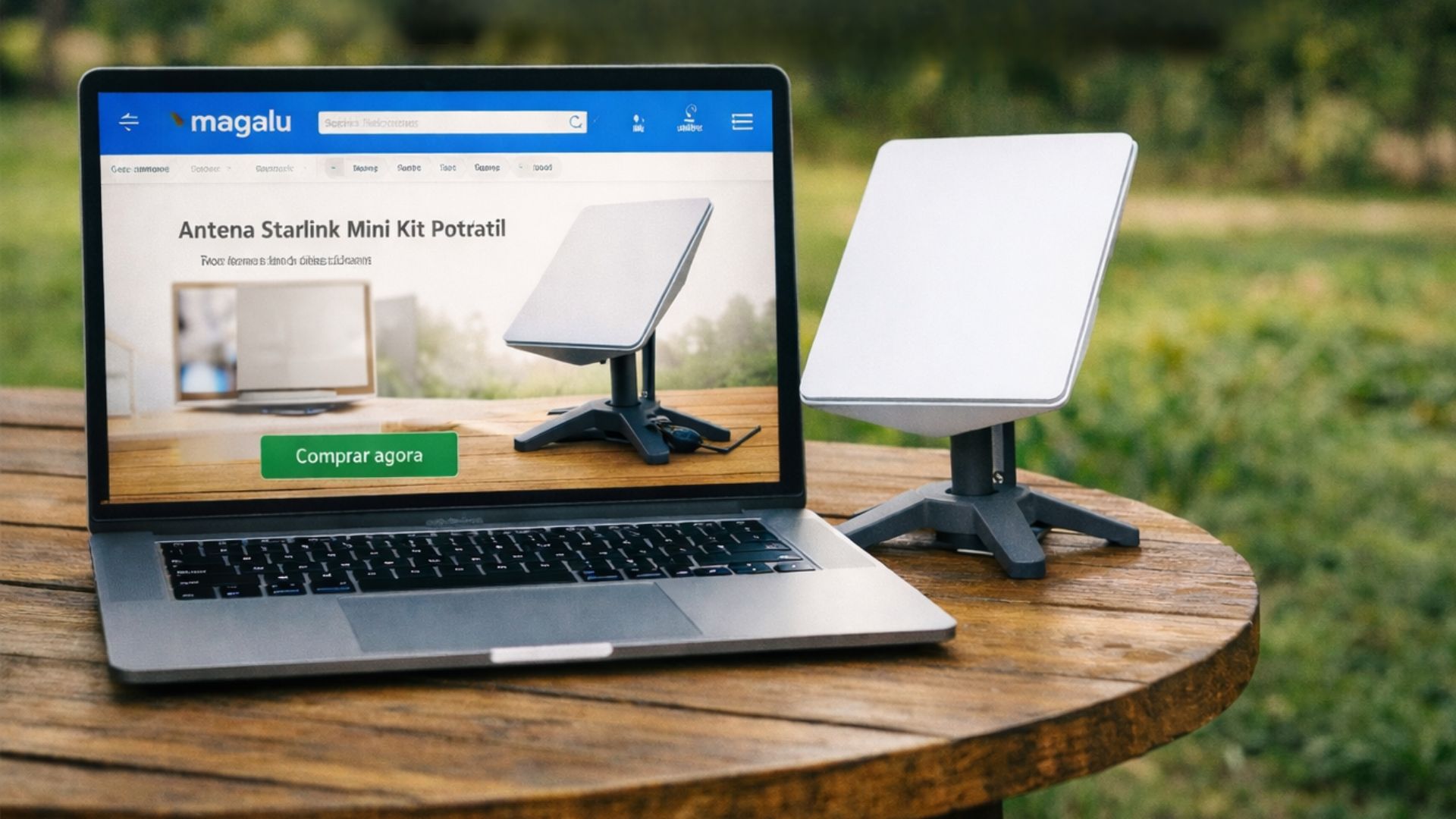
Starlink Mini antenna reaches the lowest price ever seen in April: Elon Musk’s internet hits speeds of up to 280 Mbps and promises to work even in completely remote areas.
-
The most consumed fruit in the world is under pressure: the fusarium fungus tr4 is spreading through Cavendish banana crops, weakening plants, threatening harvests, and prompting experts to intensify research for resistant varieties.

-
Workers were digging normally and came across a 300-year-old cannon, nearly 3 meters long and weighing over a ton, buried in an old dock area in the United Kingdom.

According to Reuters, the constellation has already surpassed 9,500 satellites in operation, serves more than 9 million users worldwide, and accounts for between 50% and 80% of the company’s revenue, which helps explain why regulatory hurdles in new markets have begun to have a direct effect on the company’s growth narrative.
On another front, the same agency reported that the service is also at the center of investor enthusiasm regarding the valuation sought for SpaceX.
Reports published in April indicated that the company aims for a large-scale initial public offering and that the commercial strength of Starlink supports much of this expectation, at a time when the company is trying to convince the market that its cash generation does not solely depend on the space launch business.
Local ownership rules and digital sovereignty

In the justification presented by Namibian authorities, the problem was not limited to a documentary item.
Reuters reported that the Communications Regulatory Authority of Namibia, CRAN, concluded that Starlink met only three of the six criteria required by national legislation and did not comply with the local ownership rule, as the company is entirely controlled by foreign capital and did not obtain the necessary exemption to escape the legal requirement of minimum Namibian participation of 51%.
According to the investigation, the regulator framed the issue as one of regulatory sovereignty and enforcement capability.
CRAN stated that a model of operation with complete foreign control raised material questions about jurisdiction and the enforcement of regulatory obligations related to national defense and public safety, an argument that broadened the political scope of the denial and moved away from the interpretation that it was merely a bureaucratic impasse.
History of non-compliance and formal denial
The Namibian authority also pointed to a history of non-compliance.
According to Reuters, CRAN stated that Starlink had already violated the country’s Communications Act and failed to respond to a summons from the agency, an element cited as part of the company’s compliance examination.
Before the detailed reasoning was made public, the rejection had already appeared in an official notice published in the government gazette, with the denial of both the telecommunications service license and the request for spectrum access.
The regulator itself informed on its communications page that it had completed the analysis of Starlink’s request, reinforcing that the decision went through the local institutional process and was not merely an isolated political manifestation.
Global strategy of Starlink and regulatory impasse
On the company’s side, the central argument was one of operational standardization.
In a document cited by Reuters, Starlink stated at the end of 2025 that it adopts a licensing model with complete control of local operations to preserve commercial agility, reduce costs, and maintain a similar regulatory architecture in all markets where it operates.
The company declared that it operates in 156 markets and acknowledged that to obtain the license in Namibia, it depended precisely on an exemption from the rule requiring a majority of local capital.
In the same statement, the company argued that its entry could increase competition and bring connectivity to rural and remote areas, where terrestrial expansion is often more expensive or logistically more difficult.
Starlink also reported having maintained discussions with local operators such as MTC, Telecom Namibia, and Paratus, and argued that, once authorized, it would be able to offer coverage across the territory without the gradual implementation required by traditional networks.
Regulatory pressures and global impact
This contrast between corporate discourse and the state’s response helps explain why the episode has been observed beyond Namibian borders.
Reuters noted that Starlink already operates in several African countries but faces regulatory challenges and resistance from established operators in some of them.
Namibia, in this context, has become a concrete example that the offer of orbital internet may promise broad coverage and rapid deployment, but remains subordinate to domestic rules regarding ownership, licensing, and public oversight.
Billion-dollar revenue and risks for international expansion
The relevance of this blockage increases when observing Starlink’s financial weight within SpaceX.
A Reuters report published in January stated that the company generated about US$ 15 billion to US$ 16 billion in revenue in 2025 and approximately US$ 8 billion in EBITDA, with the satellite network as the main source of revenue.
In practical terms, this means that each barrier to international expansion has ceased to represent merely a commercial delay and has begun to interfere with the value thesis that supports the company in front of investors.
Not surprisingly, a regulatory denial in a single country gains disproportionate repercussions relative to the size of the market involved.
When SpaceX’s main growth engine depends on expanding international presence, preserving margins, and increasing the subscriber base, requirements regarding local ownership participation, digital sovereignty, and enforcement capability cease to be mere legal details and become central business risks in new territories.
The episode in Namibia also shows that the dispute over satellite internet has already surpassed the strictly technological field.
The discussion now involves who controls the infrastructure, under which jurisdiction the network operates, and what degree of flexibility each government is willing to grant to a global platform designed outside its borders.
At a time when Starlink supports a significant portion of SpaceX’s expansion, the Namibian impasse functions less as an exception and more as a signal that the orbital race will continue to be shaped, country by country, by the laws of each market.








Seja o primeiro a reagir!