





 Portuguese
  English
  Spanish
  5 min of reading
  0 comments


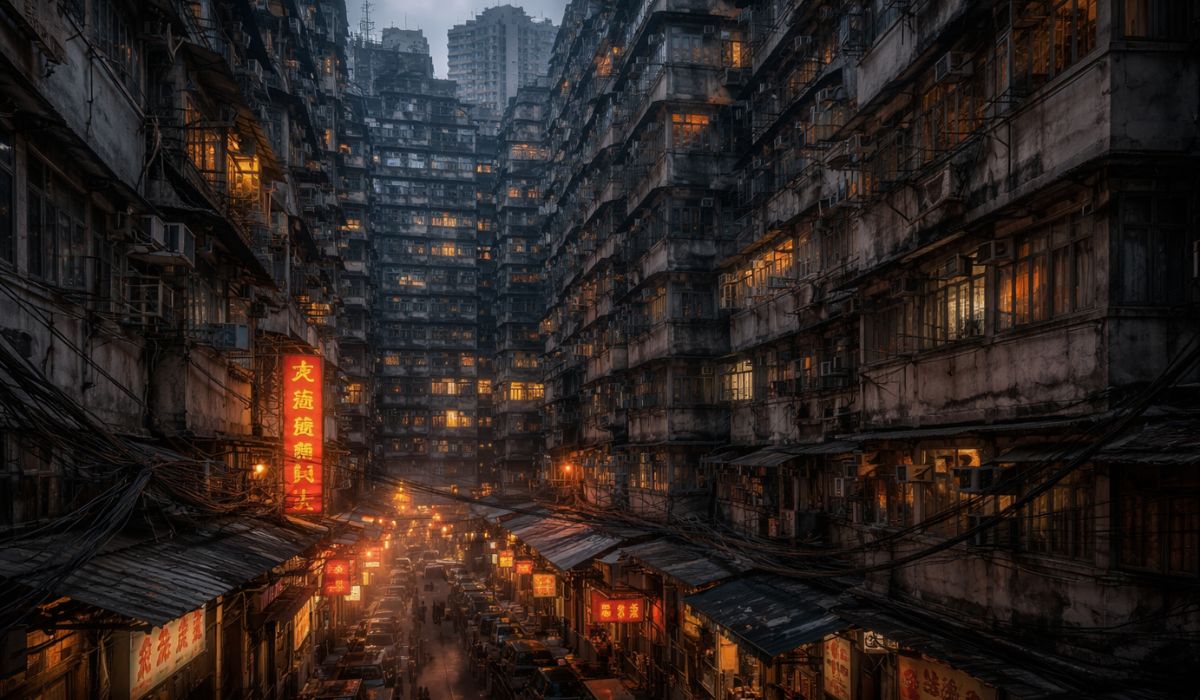
An ancient enclave in Hong Kong gathered extreme density, interconnected buildings, and its own routine amidst political disputes, transforming a small territory into an urban, historical, and cultural reference that still sparks interest decades after its demolition.
The Kowloon Walled City, in Hong Kong, became known for its extreme overcrowding by gathering thousands of residents, businesses, and workshops in a small area, marked by decades of political uncertainty and low oversight.
Formed from an old Chinese military post, the enclave grew vertically and improvised in the post-war period, until it was demolished between 1993 and 1994 after an agreement between the British and Chinese governments.
Today, the space houses the Kowloon Walled City Park, where remnants of the old fortification remain.
-
Constant tingling in the hands that doesn’t go away even when changing position may be the first warning that an essential vitamin for the nerves is lacking in the body, and ignoring this signal for weeks can cause damage that no supplement can reverse later.

-
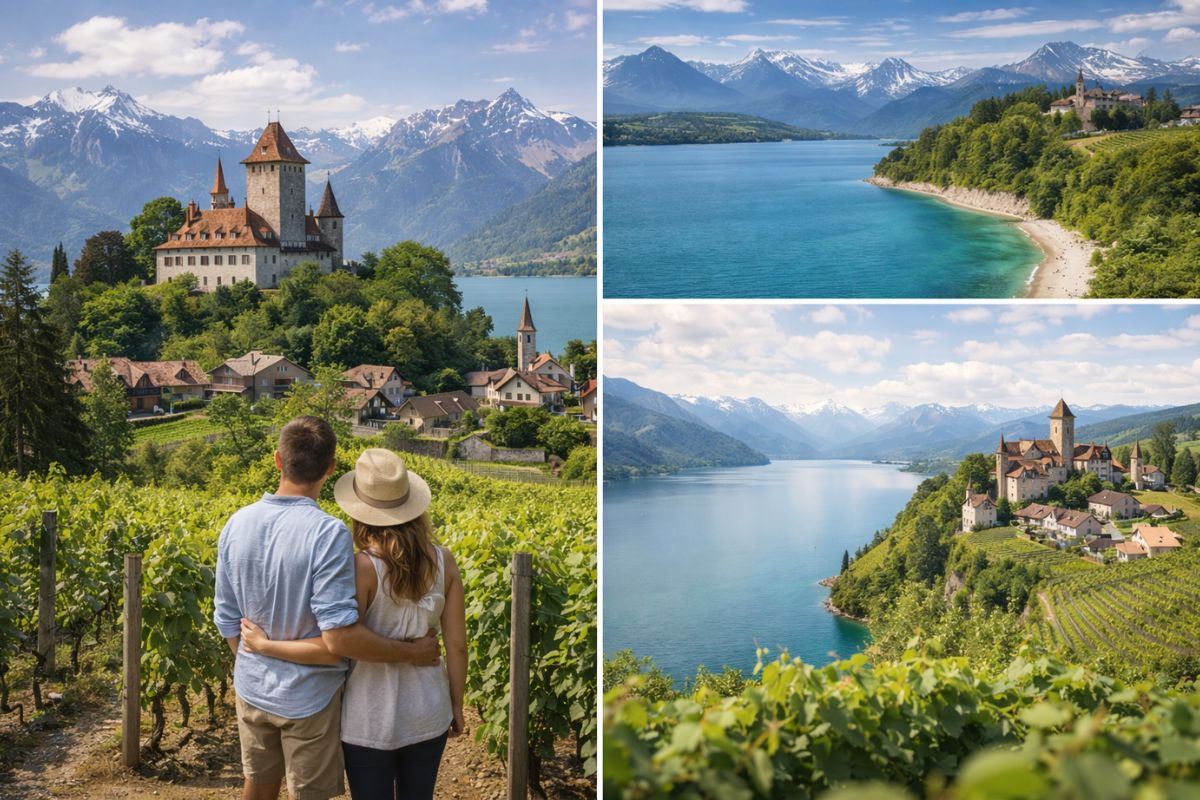
While Paris suffocates with 100 million tourists a year, there are 7 countries in Europe that almost no one visits and that offer castles with views of the Alps, wines at juice prices, untouched beaches, and streets without a single selfie stick in sight.
-
The Sun emits strange “voice” captured by a telescope and antenna, and radio signals from a solar spot the size of Earth are surprising.

-
This is the weaponry that the smallest army in the world uses on a daily basis.

Origin of the Kowloon Walled City in Hong Kong
The origin of Kowloon dates back to 1847, when the Qing dynasty established a garrison city in the area to reinforce coastal defense.
Surrounded by stone walls, the area had military and administrative functions.
The situation changed at the end of the 19th century, with the expansion of British rule over Hong Kong through the Convention for the Extension of Hong Kong Territory, signed in 1898.
Even with the lease of the New Territories to the United Kingdom, Kowloon remained a sensitive point in the relationship between the British and Chinese.
This arrangement created an ambiguous situation that lasted for decades.
In practice, the area ceased to be clearly administered by a single authority, especially after the withdrawal of Chinese officials at the beginning of the colonial period.
Later, during the Japanese occupation in World War II, the original wall was dismantled, and its stones were reused in the expansion of Kai Tak Airport nearby.
Still, the site retained the name and status of an enclave within Hong Kong.

Vertical growth, urban density, and lack of infrastructure
The population expansion mainly occurred from the 1940s onwards, with the arrival of refugees from the Chinese civil war and people seeking cheaper housing outside the formal controls of the colonial government.
Gradually, precarious buildings replaced makeshift structures erected without centralized urban planning.
As the years went by, buildings began to be constructed side by side and, in many cases, connected to each other.
The result was the formation of a continuous concrete structure, with narrow corridors, internal staircases, and little ventilation.
The term “lawless city” became popular during this process, but researchers and historical records indicate that daily life in the area was more complex.
The absence of regulation coexisted with neighborhood networks, local services, and forms of community organization focused on the residents’ daily routines.
In this environment, housing, work, and circulation concentrated in the same urban fabric.
Instead of well-defined areas for each function, there was a constant overlap of uses within a very limited space.

Density was one of the most striking features of the enclave.
The land of the Walled City was about 2.6 hectares, although recurring estimates mention up to 50,000 residents.
An official survey conducted in 1987 recorded about 33,000 residents, a number frequently cited by studies about the area.
Although the data varies according to the source, the consensus is that Kowloon was among the most densely populated urban spaces ever documented.
There was also a height limitation associated with the proximity to the flight path of Kai Tak Airport, which kept buildings generally at 13 or 14 stories.
In the lower parts of the structure, natural light barely reached.
Very narrow internal streets, poor drainage, seepage, and accumulation of waste exacerbated sanitary problems.
There was also frequent concern about air circulation and the risk of fires.
For some residents, however, the Walled City represented a possible housing alternative in a Hong Kong marked by strong real estate pressure.
Informal economy and routine within the Walled City
The local economy developed due to limited oversight.
Unlicensed dental clinics and medical offices set up in the area, alongside small factories, workshops, and businesses catering to the local population.
Promotional materials for the park that now occupies the land mention, among the well-known activities in the old complex, a traditional orthopedic clinic, a dental clinic, and a fish ball factory, a popular food in the local cuisine.
This informal circuit primarily served residents, although it also attracted outside customers seeking lower prices.
Over time, Kowloon gained notoriety for the presence of illegal activities and the involvement of criminal groups, especially between the 1950s and 1970s.
Historical records associate the area during this period with prostitution, gambling, and trafficking.
With the increase in police pressure in Hong Kong, some of these activities lost ground, but the image of an opaque territory remained linked to the Walled City.
Life in the enclave, however, was not limited to criminality.
There were makeshift schools, civil associations, temples, and community areas on rooftops, along with a community routine that sustained the daily functioning of the complex.
Today, the historical park preserves this memory in exhibition rooms that reconstruct facades, establishments, and sections of internal circulation of the old structure.


Demolition of Kowloon and creation of the historical park
The removal of the Walled City gained momentum in the 1980s when the sanitary conditions of the area began to be treated by the government as incompatible with the standards adopted in the rest of Hong Kong.
The Sino-British Joint Declaration of 1984 paved the way for a negotiated solution.
In January 1987, the colonial government announced that the area would be demolished.
The process involved a cadastral survey, payment of financial compensation, and resettlement of residents and merchants.
The demolition began on March 23, 1993, and ended in April 1994.
In place of the old concrete mass, a public park inspired by Jiangnan gardens was established, officially inaugurated in December 1995.
Part of the material history of the enclave was preserved.
Among the remnants are the old yamen, which was the administrative headquarters, and remnants of the South Gate found on the site.
Urban, cultural, and historical legacy of Kowloon
Even after demolition, Kowloon continued to occupy space in urban and cultural imagination.
Photographs, films, video games, mangas, and academic studies transformed the old Walled City into a frequent reference for representations of dense and labyrinthine environments.
For researchers in the fields of urbanism, history, and housing, the case also serves as a basis for debates on informality, housing deficit, sovereignty disputes, and forms of social organization in precarious spaces.
On the land where thousands of people once lived, there are now gardens, preserved ruins, and exhibition areas that help reconstruct part of this trajectory.
The former Kowloon remains a subject of study and public interest for bringing together, in one space, issues related to housing, power, infrastructure, and urban occupation.





Seja o primeiro a reagir!